Small batch CNC turning is ideal for product development, engineering validation, prototype manufacturing, equipment maintenance, and new product trial production. For companies that need custom metal shafts, sleeves, threaded components, connectors, flanges, and precision turned parts, small batch production provides an efficient way to achieve drawing specifications while reducing tooling investment, shortening lead times, and controlling unit costs. Choosing the right turning process, material, tolerance, and manufacturing partner can help move components from CAD drawings to actual assembly faster.
What Parts Are Suitable for Small Batch CNC Turning?
Small batch CNC turning is mainly used for components with rotational features. CNC machines control spindle rotation and cutting-tool movement to perform operations such as external turning, boring, facing, grooving, threading, and chamfering. Compared with manufacturing methods that require dedicated molds or tooling, CNC machining can produce parts directly from 3D CAD models and 2D engineering drawings. This makes the process particularly useful for companies that need to validate product designs quickly.
For production quantities ranging from several pieces to hundreds of components, CNC turning can provide a flexible manufacturing solution when the part geometry is suitable for turning.
High-Demand Small Batch CNC Turned Parts
When purchasing CNC machining services, the following component types are commonly suitable for small batch turning and prototype production:
- Precision shaft components: Motor shafts, transmission shafts, locating shafts, and connecting shafts require careful control of outside diameter, shoulder positions, concentricity, and runout.
- Metal bushings and sleeves: Commonly used in mechanical equipment, automation systems, and transmission assemblies, these parts require accurate control of outside diameter, bore diameter, and wall thickness.
- CNC threaded components: Threaded fittings, threaded sleeves, screws, and connectors require accurate thread diameter, pitch, profile, and effective thread length.
- Stepped shafts: Components with several diameter transitions require carefully planned tool paths and stable workholding references.
- Flanges and round components: CNC turning can efficiently produce outside diameters, end faces, holes, grooves, and threaded sections.
- Small precision turned parts:Compact components used in electronics, medical equipment, robotics, and automation systems often require consistent dimensional accuracy.
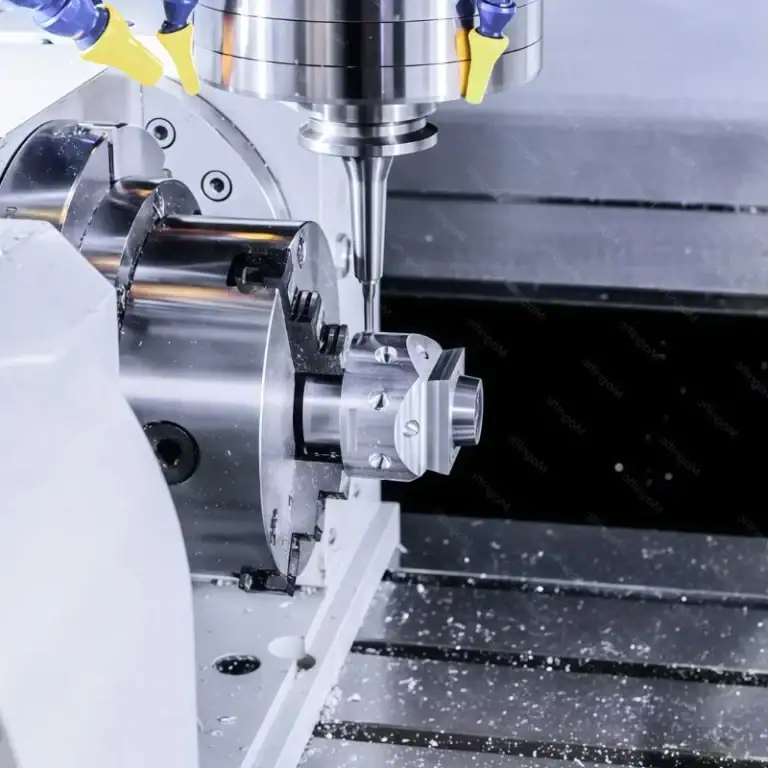
For components that combine turned features with side holes, flat surfaces, or complex non-rotational geometry, CNC turning can be combined with milling or mill-turn machining. TiRapid provides turning, milling, and five-axis machining capabilities for different component structures.
How Should CNC Turning Tolerances Be Set to Reduce Manufacturing Costs?
Tolerance requirements directly affect machining difficulty, inspection requirements, and production costs. A common issue in CNC projects is applying extremely tight tolerances to every dimension simply to achieve “high precision.” In practical manufacturing, not every dimension requires the same tolerance level.
A well-prepared engineering drawing should clearly identify critical dimensions that affect assembly, positioning, sealing, or movement. Non-functional dimensions can usually use more practical tolerances that are easier to manufacture.
Critical Dimensions for Precision CNC Turning
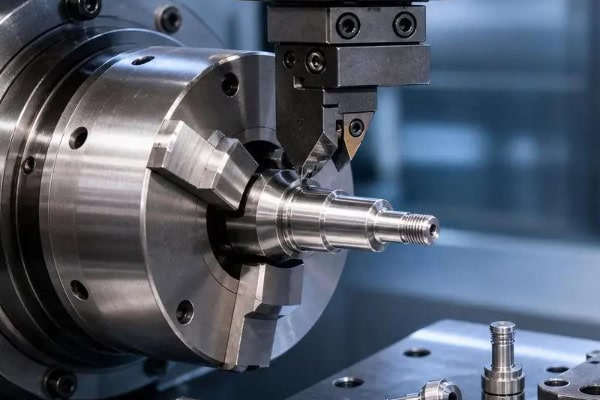
Different components have different functional requirements, so the most important dimensions can vary from one project to another. Clear engineering drawings make it easier for manufacturers to develop stable machining processes.
- Shaft diameter: When a shaft interfaces with bearings, gears, couplings, or bores, the tolerance should be based on the actual fit requirement.
- Bore diameter: Bushings and sleeves require accurate bore dimensions as well as appropriate roundness, concentricity, and surface finish.
- Thread dimensions: Thread diameter, pitch, thread profile, and effective length all influence final assembly performance.
- Shoulder location: Shoulders on stepped shafts often serve as locating surfaces, so axial dimensions require appropriate control.
- Runout and concentricity: These geometric characteristics are particularly important for high-speed rotating components and precision assemblies.
- Surface roughness: Sliding interfaces, sealing surfaces, and bearing seats may require improved surface quality.
Critical dimensions can be inspected using precision measuring equipment, while general dimensions can often be checked with standard measuring tools. This approach helps avoid unnecessary machining expenses while maintaining the functional accuracy required by the component.
Tighter Tolerances Do Not Always Mean Better Parts
If a dimension only requires ±0.05 mm in actual use but is specified as ±0.005 mm on the drawing, additional machining time, tool control, inspection frequency, and scrap risk may be introduced. For batch production, unnecessarily tight tolerances can significantly increase the unit price.
A better approach is to determine critical dimensions according to assembly relationships, movement requirements, sealing performance, mechanical loads, and operating conditions. The machining engineer can then evaluate whether the specified tolerances are practical for the selected material and component geometry.
TiRapid’s published CNC turning information indicates tolerance capabilities down to the ±0.005 mm range for suitable projects. Actual achievable accuracy depends on component dimensions, material, geometry, machining conditions, and drawing requirements.
How to Choose CNC Turning Materials: Aluminum, Stainless Steel, and Engineering Plastics
Material selection affects cutting speed, tool life, machining stability, surface finish, and final component performance. Small batch CNC projects commonly use aluminum alloys, stainless steel, carbon steel, alloy steel, brass, copper, and engineering plastics such as POM, ABS, and PEEK.
TiRapid’s published material information covers a wide selection of aluminum alloys, stainless steels, steels, copper alloys, titanium alloys, and engineering plastics for custom CNC machining projects.
| CNC Turning Material | Main Characteristics | Common Applications |
| 6061 Aluminum | Lightweight and easy to machine | Automation equipment, robotics, structural components |
| 7075 Aluminum | High strength and low weight | Aerospace, robotics, high-performance equipment |
| 304 Stainless Steel | Good corrosion resistance and strength | Machinery, medical equipment, food-processing equipment |
| 316 Stainless Steel | Excellent corrosion resistance | Medical, chemical, and marine equipment |
| 1045 Steel | Balanced strength and machinability | Shafts, mechanical transmission components |
| Brass | Good machinability | Fittings, valves, instrument components |
| POM | Dimensional stability and low friction | Bushings, gears, sliding components |
| PEEK | High temperature and chemical resistance | Medical, industrial, and high-performance components |
Material selection should not be based only on purchase price. Mechanical load, operating temperature, corrosion resistance, friction conditions, dimensional stability, and surface treatment requirements should also be considered.
For projects where the material has not yet been finalized, customers can provide information about the intended operating environment. A CNC machining engineer can then recommend materials that match the component geometry and application requirements.
How Can Small Batch CNC Turning Shorten Production Lead Times?
Small batch projects often have strict delivery requirements, especially for new product development, equipment repair, and engineering validation. Waiting for molds, complex outsourcing processes, or long production schedules can delay assembly and testing.
Providing complete CAD files, engineering drawings, material specifications, and purchasing requirements can help reduce quotation and production preparation time.
Information to Prepare Before Ordering CNC Machining
- 3D CAD model: STEP and STP files can help engineers quickly understand the component geometry.
- 2D engineering drawing: Clearly specify critical dimensions, tolerances, threads, surface roughness, and special technical requirements.
- Material requirements: Provide the exact material grade to avoid material misunderstandings during purchasing.
- Production quantity: Specify whether the project is for prototypes, small batch production, or recurring production.
- Surface treatment: Anodizing, plating, passivation, blasting, and other treatments should be defined before manufacturing.
- Delivery requirements: If the project has a prototype testing or assembly deadline, communicate the target delivery date in advance.
- Critical quality requirements: Important dimensions such as shaft diameters, bore diameters, concentricity, and thread specifications should have clearly defined inspection requirements.
TiRapid supports CAD file uploads for quotation and provides DFM feedback for suitable projects. The company’s published information indicates that quotation and production schedules can be arranged according to the specific part and project requirements.
Why Does DFM Review Help Reduce Rework?
DFM, or Design for Manufacturability, allows potential production issues to be identified before machining begins. Examples include excessively deep holes, very small internal radii, thin walls that may deform, inaccessible cutting areas, or poorly positioned threads.
If these issues are discovered only after machining starts, they can lead to reprogramming, new material preparation, production delays, or drawing revisions.
Engineering communication before production can optimize local design features without changing the core function of the product. This can make the component easier to manufacture and help shorten the production cycle. For recurring orders, early DFM optimization can also establish a more consistent manufacturing standard for future batches.
How to Choose a Cost-Effective CNC Turning Manufacturer?
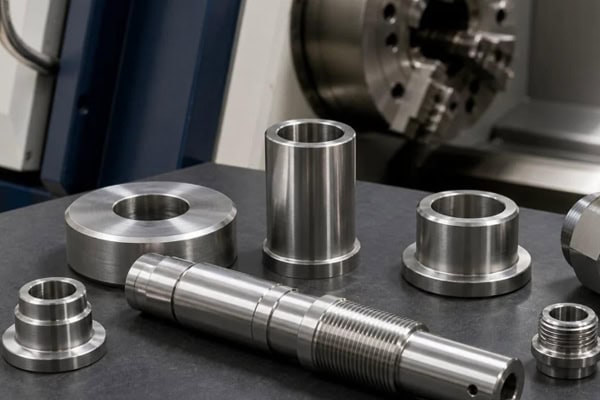
When selecting a CNC turning supplier, comparing quotations alone does not provide a complete picture of manufacturing value. For precision shafts, small batch metal components, and custom turned parts, it is important to consider engineering response time, material sourcing, machine capabilities, quality inspection, surface treatment, protective packaging, and delivery reliability.
A manufacturer capable of handling engineering review, CNC machining, inspection, and final delivery can reduce communication and transportation between multiple suppliers.
Before requesting a quotation, purchasing teams can prepare the 3D model and engineering drawing and confirm whether the supplier can handle the required material, critical tolerances, surface treatment, and inspection specifications.
If a component combines turning and milling features, it is also useful to ask whether mill-turn machining or multi-operation machining can complete the component efficiently. Reducing the number of setups can help improve positioning consistency and reduce potential alignment errors.
For companies requiring small batch CNC turning, precision shaft machining, custom metal parts, CNC threading, or rapid prototype manufacturing, TiRapid provides CNC manufacturing services from engineering support through production. According to its published information, TiRapid has more than 16 years of CNC machining experience, supports ISO 9001 quality management, and serves prototype and small batch production projects.
If you are looking for custom CNC turned parts for research and development, equipment manufacturing, robotics, medical equipment, automotive applications, or industrial automation, prepare your STEP/STP model, 2D engineering drawing, material requirements, quantity, tolerances, and surface treatment specifications to request a suitable quotation and DFM review.