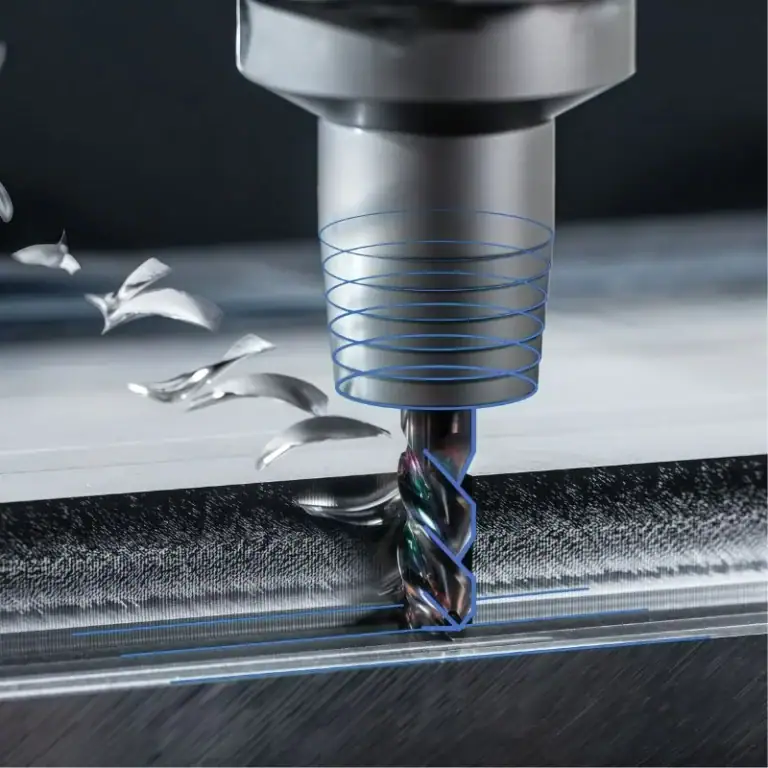
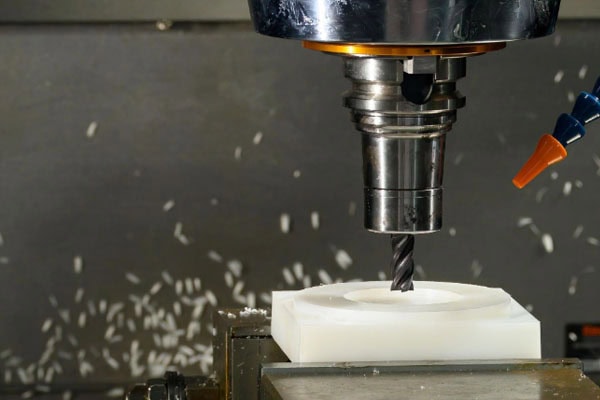
During CNC plastic machining, the feed rate is one of the key parameters affecting machining quality, production efficiency, and dimensional stability of parts. The feed rate refers to the speed at which the cutting tool moves relative to the plastic workpiece. It determines the amount of material removed by the tool within a specific period and also affects the friction, heat generation, and cutting conditions between the tool and plastic material. Compared with metal materials, plastics have lower thermal conductivity, more noticeable thermal expansion, and a higher tendency to deform when exposed to heat. Therefore, machining parameters need to be adjusted according to the characteristics of different plastic materials. When machining plastic parts with CNC equipment, a slower feed rate is not always safer, and a faster feed rate is not always better. If the feed rate is too low, the cutting tool may fail to achieve stable cutting and instead continuously rub against the material surface, causing the machining area temperature to rise and leading to plastic melting, tool sticking, or dimensional deviations.
If the feed rate is too high, the cutting resistance on the tool increases, which can easily cause vibration, edge chipping, and poor surface finish. Therefore, selecting an appropriate feed rate requires comprehensive consideration of the plastic material type, tool structure, spindle speed, and part design. For common engineering plastics such as POM, PEEK, nylon, ABS, and PC, different materials have significantly different feed rate requirements. Materials with higher hardness and better temperature resistance usually require stable cutting parameters, while softer plastics or materials prone to thermal deformation require more attention to chip removal and temperature control during machining.
Specific Effects of Feed Rate on Plastic Machining Quality
Influence on Machining Temperature and Material Condition
The feed rate directly affects the heat generated during tool cutting. When the feed rate is too low, the tool remains in the same machining area for a longer time, increasing the duration of friction between the tool and plastic material and causing higher temperatures. Some heat-sensitive plastics may experience edge melting or chips sticking to the tool during machining, affecting the surface quality of the parts. Increasing the feed rate appropriately allows the tool to remove material faster, enabling chips to leave the machining area quickly and reducing heat accumulation. However, the feed rate must still remain within a reasonable range. If it exceeds the capability of the tool and machine, cutting pressure will increase and may cause deformation of thin-wall plastic parts.
Influence on Part Surface Finish
Changes in feed rate directly affect the surface appearance of plastic parts. When the feed rate is too low, the tool may repeatedly rub against the machining area, causing burn marks, whitening, or uneven surface patterns. When the feed rate is too high, the cutting load increases, making visible machining marks or edge burrs more likely to appear. In precision CNC plastic machining, the feed rate needs to be adjusted according to the application requirements of the part. Appearance components usually require better surface finish and need stable machining parameters, while assembly components focus more on dimensional accuracy and need to avoid dimensional changes caused by machining heat.
Influence on Tool Service Life
Tool condition is also an important factor to consider when adjusting the feed rate. A feed rate that is too low increases friction between the tool and plastic material, raising tool temperature and potentially causing cutting edge wear during long-term machining. A feed rate that is too high increases the impact force applied to the tool, especially when machining small-size, thin-wall, or complex-structure parts, where tool vibration is more likely to occur. Selecting sharp carbide tools and combining them with an appropriate feed rate helps maintain stable cutting conditions and improves continuous machining performance. Plastic machining usually requires effective chip removal to prevent chip accumulation from affecting tool movement.
Influence on Machining Efficiency and Production Cost
The feed rate determines the time required for CNC equipment to complete part machining. Properly increasing the feed rate can reduce machining time per part and improve production efficiency. However, if the parameters are set incorrectly and cause rework or material waste, production costs may increase instead. During mass production of plastic parts, manufacturers usually test different feed rates to find a balance between machining efficiency and part quality.
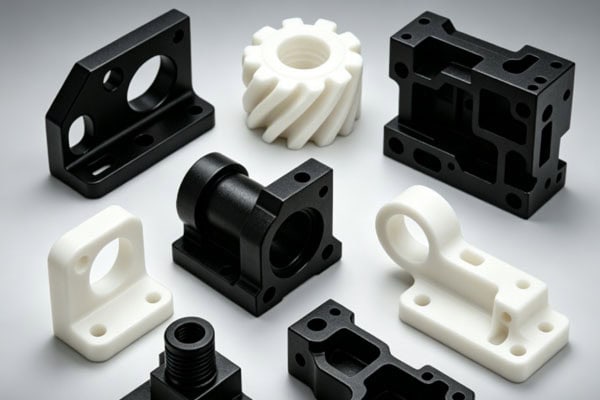
Feed Rate Requirements for Different Plastic Materials
There is no universal feed rate standard for CNC plastic machining because different plastics vary in hardness, toughness, heat resistance, and moisture absorption. Machining parameters need to be adjusted according to material characteristics. For example, POM plastic has excellent machinability. During cutting, it can easily produce continuous chips and can be processed with relatively stable feed rates during milling and turning operations. Nylon materials have certain moisture absorption properties, so the material condition needs to be considered before machining; otherwise, dimensional stability may be affected. PEEK is a high-performance engineering plastic. Although it has excellent high-temperature resistance and wear resistance, it has higher requirements for tools and machining parameters, requiring careful control of cutting heat. For common engineering plastics such as ABS and PVC, machining focuses mainly on preventing melting and improving surface quality. A proper feed rate helps the tool remove chips efficiently, reduce heat accumulation, and maintain good dimensional accuracy after machining.
Common Questions
Q: When machining plastic with CNC, is a lower feed rate always safer?
A: No. A feed rate that is too low increases the friction time between the tool and material, causing the machining area temperature to rise and potentially resulting in plastic melting or material sticking to the tool. Plastic machining requires the tool to maintain effective cutting conditions rather than continuously rubbing against the material.
Q: What problems can occur if the feed rate is too high?
A: When the feed rate exceeds a reasonable range, cutting resistance increases, which may cause part vibration, dimensional deviations, and reduced surface quality. Thin-wall parts, small-size components, and complex-structure parts require even greater control over machining speed.
Q: How can the appropriate feed rate be determined?
A: The proper feed rate usually depends on the plastic material type, tool diameter, number of cutting edges, spindle speed, and part structure. During actual production, manufacturers can adjust machining parameters by testing the cutting process and observing chip conditions, surface quality, and dimensional inspection results.
Conclusion
The feed rate affects cutting temperature, surface quality, tool condition, and machining efficiency. Plastic materials are significantly different from metal materials, so metal machining parameters cannot simply be applied directly. Machining parameters need to be adjusted according to the performance characteristics of plastics. A reasonable feed rate can reduce tool friction, improve cutting stability, ensure smooth chip removal, and lower the risk of deformation caused by heat accumulation. During machining, parameter optimization should be based on material type, part structure, and equipment conditions. For example, when machining thin-wall plastic parts, excessive cutting pressure should be avoided; when machining high-performance plastics, greater attention should be paid to tool condition and temperature changes. By setting the feed rate scientifically, CNC equipment can maintain stable operation, improve the machining accuracy and surface quality of plastic parts, and provide reliable support for precision plastic component manufacturing.