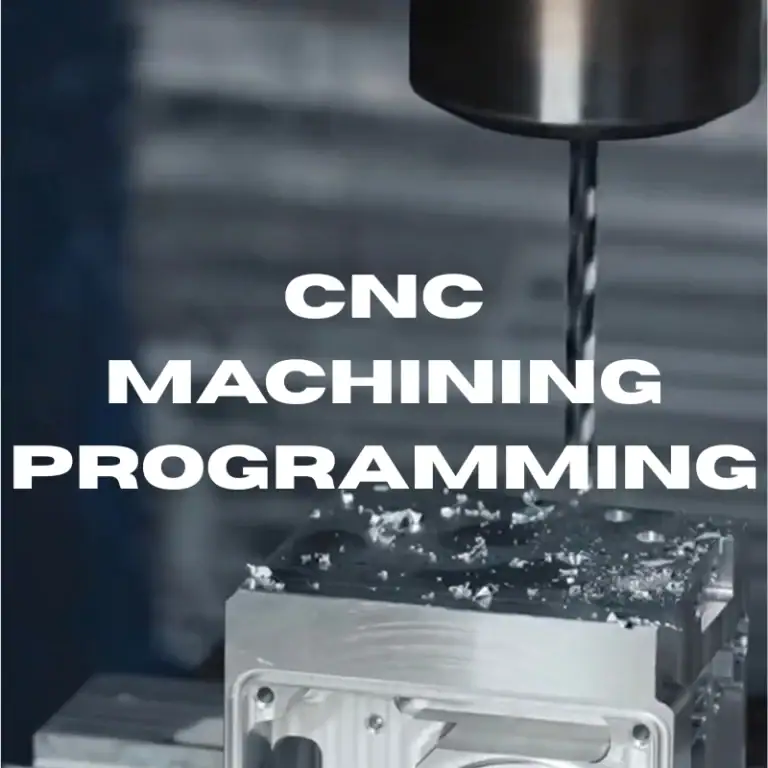
When machining plastic parts with CNC, chamfering is a common finishing process mainly used to remove sharp edges from parts, improve the overall appearance of products, and reduce the risk of scratches during assembly. Plastic materials are significantly different from metal materials. They generally have lower hardness and weaker thermal conductivity, making them more sensitive to cutting heat, tool wear, and changes in cutting parameters during machining. Therefore, plastic chamfering requires suitable tools, machining methods, and cutting conditions. In CNC plastic machining, chamfer dimensions and angles need to be determined according to the part application, material characteristics, and dimensional requirements. Common CNC machining plastics include ABS, POM, PEEK, PVC, PC, acrylic, and other materials. Different plastics show different behaviors during chamfering. Some soft plastics are prone to tool sticking and burr formation, while some high-performance engineering plastics have higher strength but may generate internal stress during machining. Therefore, properly controlling the machining process can make chamfering results more consistent and improve the overall quality of plastic parts.
Common Methods for CNC Plastic Chamfering
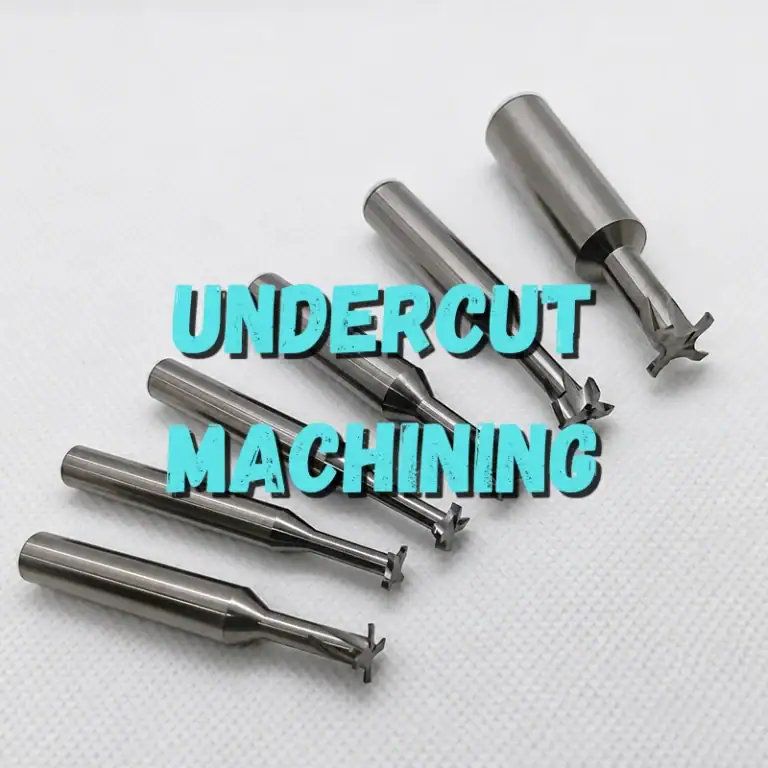
CNC Machining with Chamfering Cutters
During CNC milling, using a dedicated chamfering cutter is one of the most common methods. Chamfering cutters usually have fixed angles and can machine inclined surfaces according to drawing requirements, such as 45° or 60° angles. This method is suitable for batch production of plastic parts and can maintain good dimensional consistency. During machining, spindle speed and feed rate should be adjusted according to the plastic material to prevent high-speed friction from causing material melting or edge deformation. Plastic machining generally requires sharp cutting tools and effective chip removal to reduce temperature increases in the machining area.
Using Milling Cutters for Edge Processing
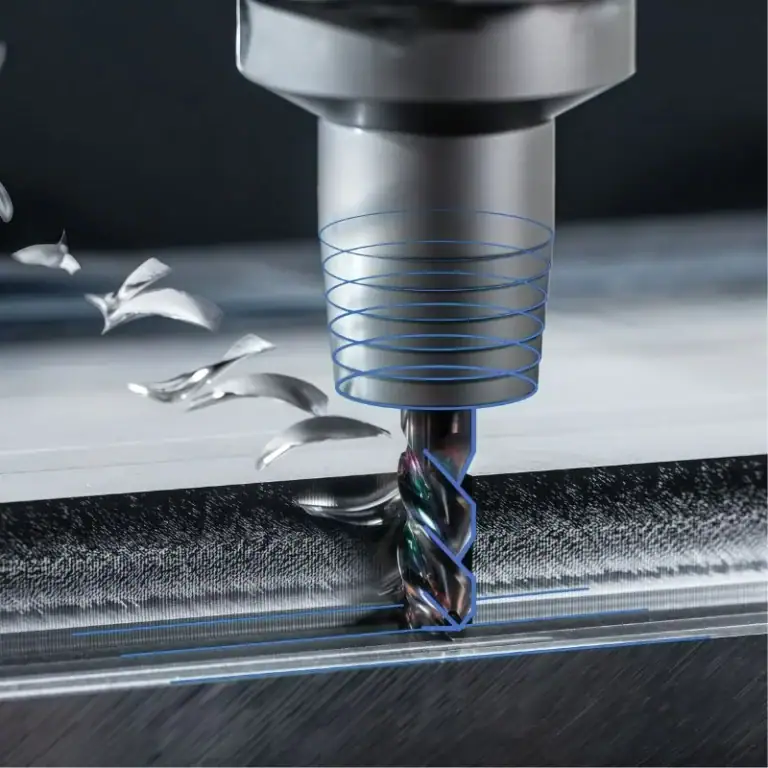
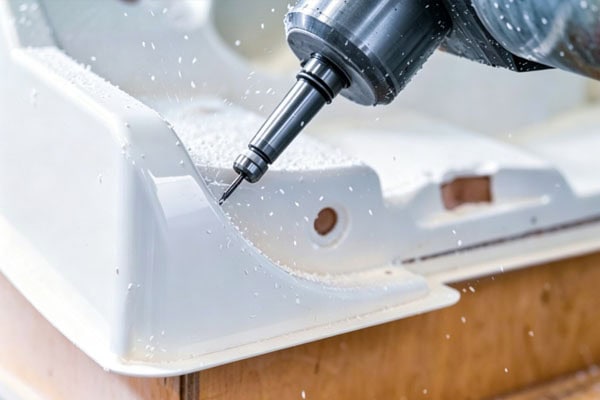
Some plastic parts have complex structures, irregular edge shapes, or chamfering positions located near holes, slots, or steps, making standard chamfer cutters unsuitable. In these cases, smaller-diameter milling cutters with sharp cutting edges can be used for edge finishing, and appropriate tool paths can be programmed according to the part profile. During machining, cutting depth and feed rate should be controlled to prevent excessive tool force from causing edge chipping, burrs, or plastic deformation, ensuring accurate chamfer dimensions and surface quality.
This method is suitable for:
- Edge processing of plastic parts with complex curved surfaces
- Chamfering near small holes and slots
- Precision parts requiring controlled chamfer widths
During milling, tool sharpness should be carefully considered. A worn tool increases cutting resistance and may cause burrs, stringing, or rough surface problems on plastic parts. For engineering plastics such as POM and PEEK, wear-resistant carbide tools are usually recommended to ensure machining stability.
Precautions for CNC Plastic Chamfering
Selecting the Right Tool Type
Plastic materials are easily affected by heat during machining, so tool selection is extremely important. Standard metal machining tools may not provide ideal results, and suitable tools should be selected based on material characteristics. The cutting edge should remain sharp to reduce cutting resistance and friction heat, preventing problems such as melting, tool sticking, deformation, or whitening of plastic edges. At the same time, tool material, flute number, and geometry should be selected according to plastic hardness, toughness, heat resistance, and part structure. For common plastics such as ABS and PVC, sharp single-flute or double-flute tools can be used. For engineering plastics such as POM and PEEK, wear-resistant carbide tools are recommended to improve machining stability and tool life.
Common choices include:
Single-flute tools: Provide larger chip removal space and are suitable for plastics such as acrylic and PVC;
Carbide tools: Suitable for high-strength engineering plastics and improve machining life;
High-sharpness tools: Reduce cutting resistance and minimize plastic edge damage.
The sharper the cutting edge, the closer the cutting process is to actual cutting rather than rubbing, which helps reduce heat generated by friction and prevents plastic melting or deformation.
Controlling Machining Parameters
During CNC plastic chamfering, spindle speed, feed rate, and cutting depth all affect the final result. If the feed rate is too low, the tool may remain in contact with the material for too long, causing the machining area temperature to rise. If the feed rate is too high, edge chipping or unstable chamfer dimensions may occur. Therefore, machining parameters should be adjusted according to plastic type, part thickness, and tool size. For parts with high dimensional requirements, multiple machining steps are often used, including rough machining followed by finishing machining, to improve chamfer surface quality.
Paying Attention to Plastic Deformation
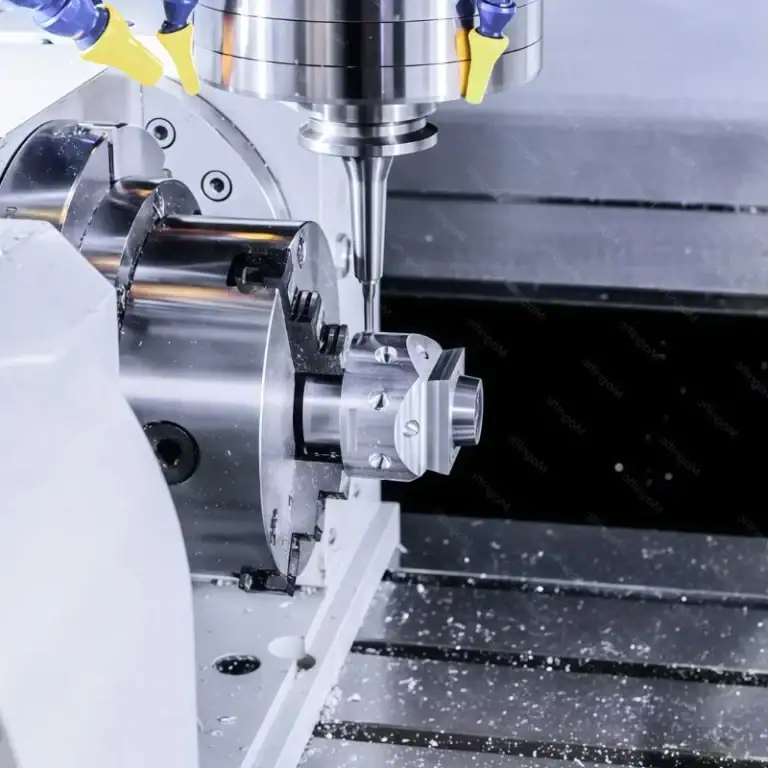
Compared with metals, plastics are more easily affected by external pressure and temperature changes. During CNC machining, special attention should be paid to fixture selection and clamping force. Excessive clamping force may cause slight compression, bending, or local deformation of the part, resulting in deviations between chamfer dimensions and design requirements. This issue is especially noticeable with thin-walled parts, long-shaped components, and flexible plastics. Therefore, suitable support positions should be selected according to part structure before machining to avoid unsupported cutting. Trial clamping should also be performed to confirm that the part does not experience significant deformation. When necessary, soft jaws, vacuum fixtures, or auxiliary supports can be used to improve machining stability.
During machining, it is necessary to:
- Use suitable fixtures to secure the part
- Avoid excessive clamping that may compress the material
- Confirm that the material condition is stable before machining
For moisture-absorbing plastics such as nylon, the influence of moisture content changes on dimensional stability should also be considered.
Proper Burr Removal
After plastic chamfering, small burrs may remain on the edges, especially when the tool is worn, the cutting edge is not sharp enough, or machining parameters are improperly set. These burrs not only affect the appearance of the part but may also cause scratches during assembly, use, or transportation and influence the fitting accuracy between components. Therefore, chamfered edges should be inspected after machining. If necessary, finishing machining, light manual polishing, or specialized deburring tools can be used to ensure smooth and even edges that meet product quality and assembly requirements.
Common treatment methods include:
- Using finishing tool paths to reduce burr formation
- Performing light manual polishing
- Using dedicated deburring tools for edge treatment
Proper chamfer dimension design can also reduce additional manual processing time and improve machining efficiency.
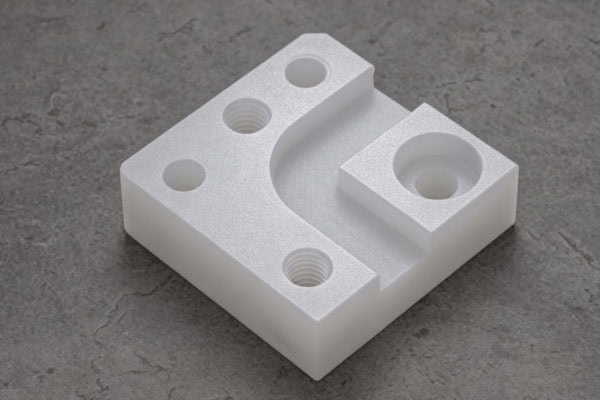
What Are the Differences in Chamfering Different Plastic Materials?
When machining plastics with CNC, different materials have different hardness, toughness, and heat resistance, so chamfering methods need to be adjusted accordingly. For example, ABS plastic has good machinability and usually produces relatively smooth edges during chamfering. POM has excellent dimensional stability and is suitable for precision structural components. PEEK is a high-performance engineering plastic with high strength and temperature resistance, but greater attention must be paid to tool condition and cutting heat during machining. For transparent acrylic materials, chamfering must maintain both dimensional accuracy and visual appearance. If the tool is not sharp enough or machining temperature becomes too high, edge whitening may occur and affect product appearance. Therefore, before plastic chamfering, the material type should be clearly identified, and machining methods should be adjusted according to material properties instead of directly applying metal machining parameters.
Frequently Asked Questions
Why Do Burrs Appear After CNC Plastic Chamfering?
The main causes are usually related to tool sharpness, machining parameters, and material characteristics. When the cutting ability of the tool decreases, the plastic cannot be cut efficiently and is instead squeezed or pulled, resulting in burr formation. Solutions include replacing the tool with a sharper one, optimizing feed rate, and adding finishing operations.
Why Do Plastic Parts Become Discolored or Turn White After Chamfering?
Plastic materials have low thermal conductivity, so heat generated during machining is not easily dissipated. When the tool stays in one area for too long or cutting conditions are unsuitable, local temperature increases may change the material surface. Improvements include enhancing chip removal, reducing tool friction, and using tools designed for plastic machining.
Why Are Chamfer Dimensions Inaccurate?
Chamfer dimension deviations may result from tool wear, unstable fixture clamping, material deformation, or improper machining parameters. For precision plastic parts, tool dimensions should be confirmed before machining, and parameters should be adjusted through trial machining.
Conclusion
CNC plastic chamfering requires adjustments based on material characteristics, tool selection, and machining parameters. Compared with metal machining, plastics are more sensitive to heat and pressure, so special attention must be given to tool sharpness, chip removal performance, and part fixation during processing. Proper chamfering can improve plastic part edge quality, make assembly easier, and reduce potential safety issues during use. In actual production, corresponding machining methods should be selected for different plastic materials such as ABS, POM, PEEK, and PVC, while reasonable process control ensures accurate chamfer dimensions and surface quality. For precision plastic part machining, chamfering is not simply an edge treatment process but also an important machining step that affects product quality. Through standardized CNC machining procedures, plastic parts can achieve stable, clean, and application-ready results.