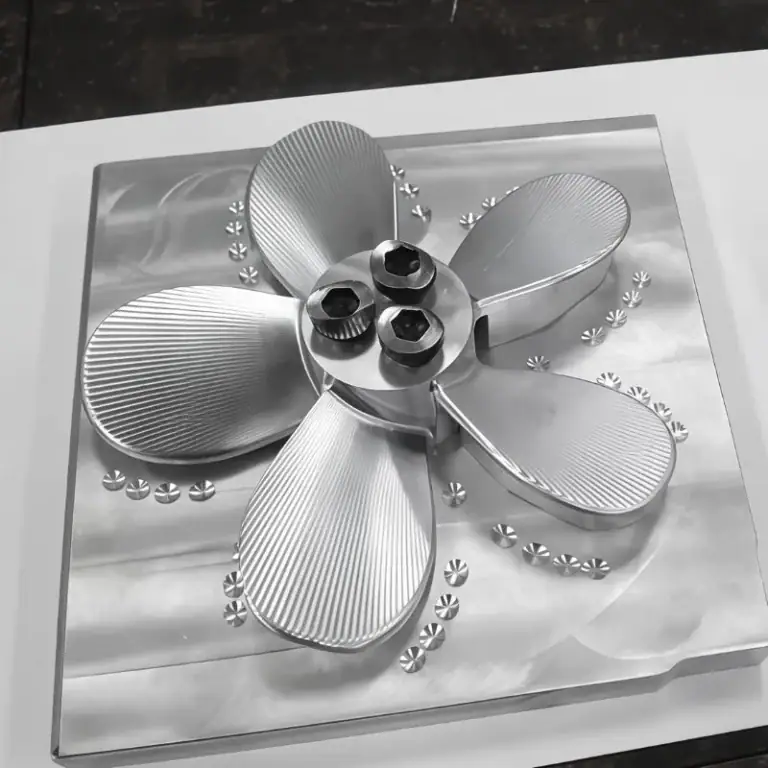
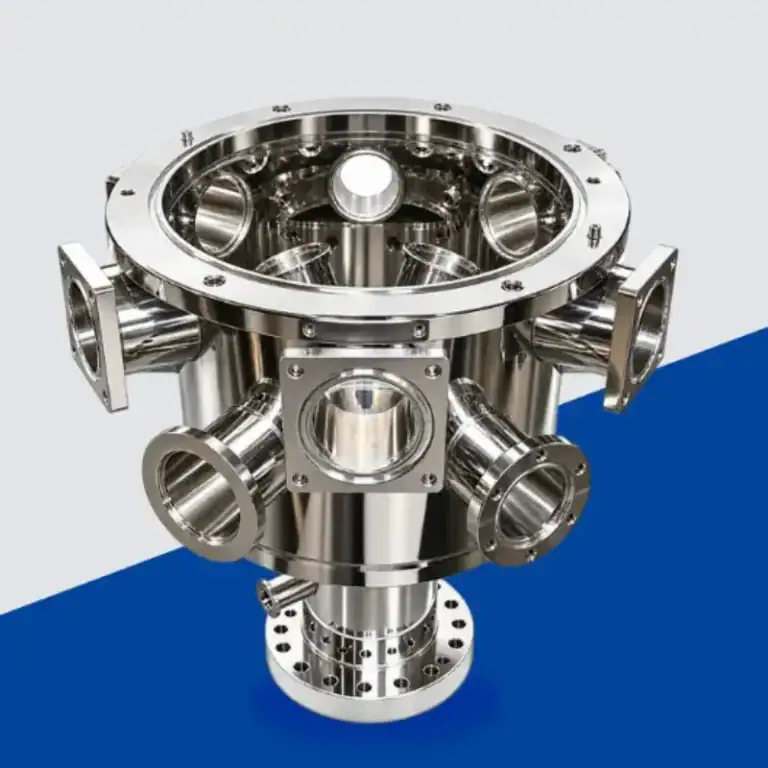
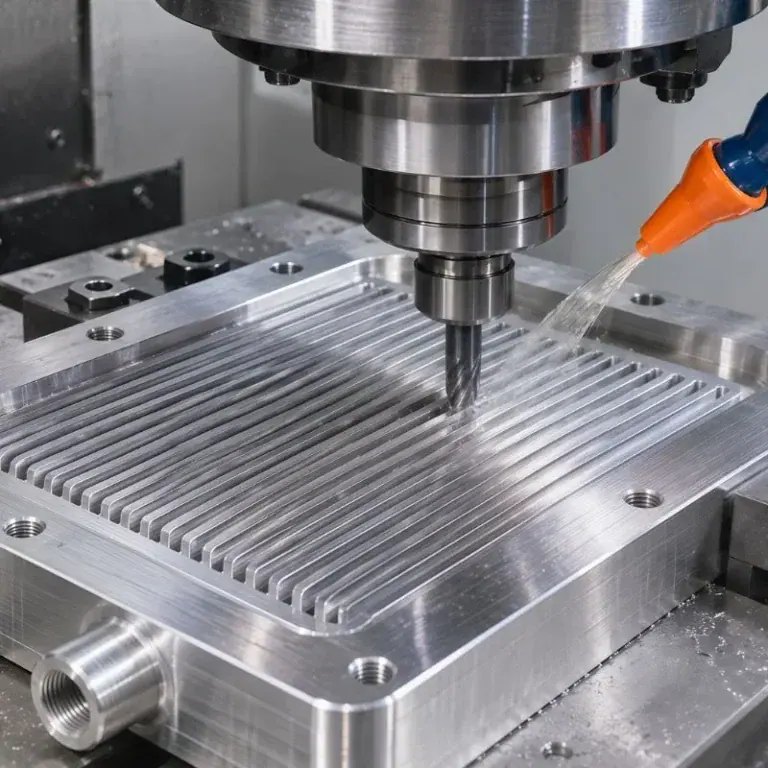
Construction machinery operates in demanding environments such as construction sites, mines, and road projects. Its components are constantly exposed to vibration, impact, dust, and heavy loads. Some parts may look simple, but their dimensions can be critical during assembly. A slight deviation in a mounting hole can affect connections, an improper shaft-to-bushing fit may cause excessive wear, and inadequate surface treatment can shorten component life. To keep equipment running reliably, machining must account for more than just the external shape. Dimensional accuracy, material properties, and actual working conditions all matter. CNC machining can handle complex structures and precision dimensions, providing a reliable solution for manufacturing construction machinery components.
What Are the Common Requirements for Precision Parts Machining in Construction Machinery?
Excavators, loaders, cranes, and bulldozers have different structures and use different components. However, parts used in hydraulic systems, transmission assemblies, and connecting mechanisms generally have strict dimensional requirements. Components must fit properly during assembly while also withstanding long-term loads, vibration, and wear. Poor control of critical dimensions can cause problems even when a part appears to fit, potentially affecting equipment performance during operation.
Hydraulic System Components Require Accurate Hole Dimensions
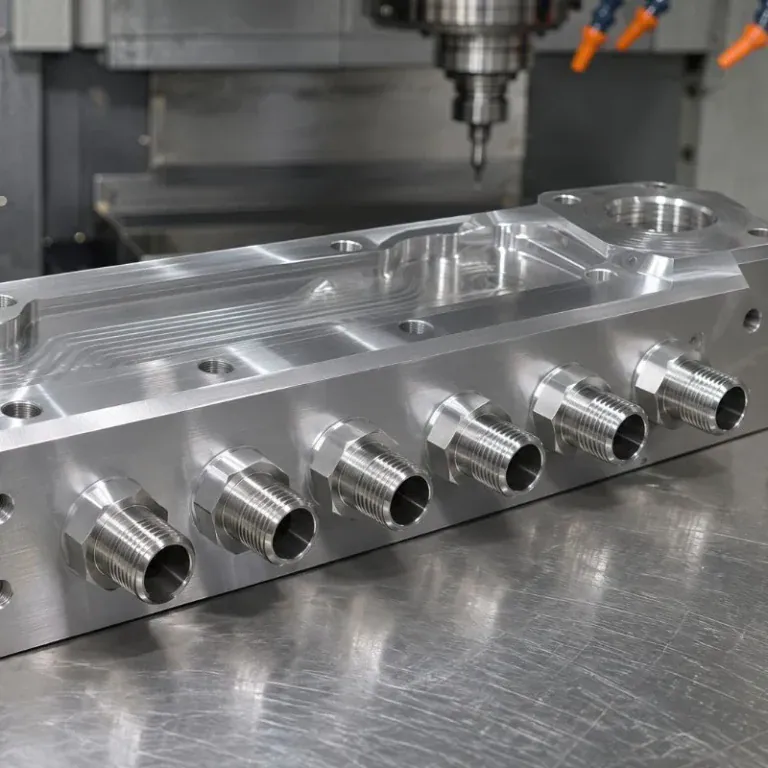
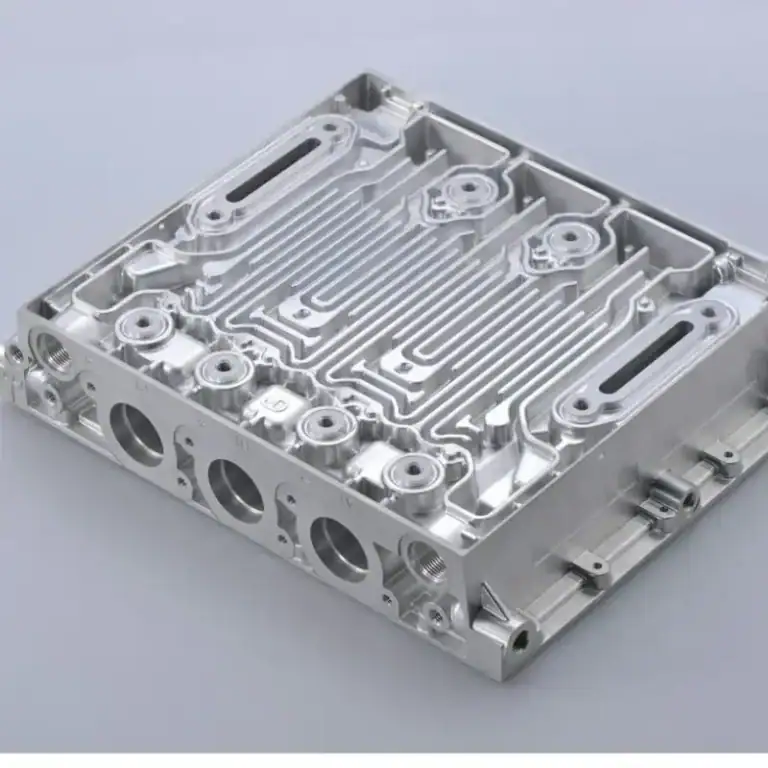
Hydraulic valve blocks, pump housings, and connecting fittings usually contain multiple oil passages, mounting holes, and sealing surfaces. Incorrect hole diameters can affect oil flow connections, while inaccurate hole positions can make assembly more difficult. CNC milling, drilling, and boring can produce complex hole patterns according to engineering drawings, reducing positional errors caused by repeated setups. For valve blocks with intersecting oil passages, the connection positions and internal cleanliness must also be controlled to prevent leftover chips from affecting hydraulic system performance.
Transmission Components Need Consistent Dimensional Fits
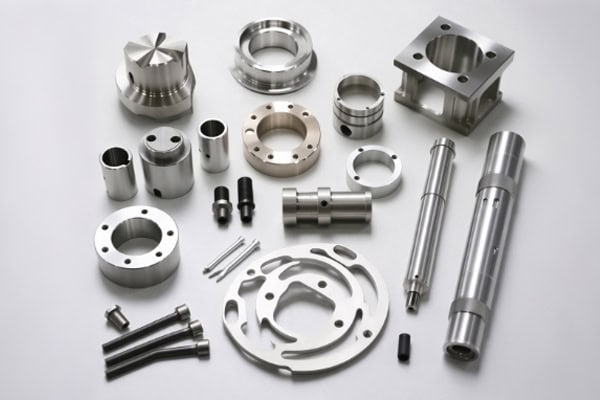
Gear shafts, connecting shafts, bushings, and transmission brackets often withstand torque and impact loads. If the clearance between mating components is incorrect, noise, vibration, or abnormal wear may occur. Precision machining must control shaft diameters, concentricity, end-face positions, and critical fitting dimensions to keep the assembled transmission structure stable.
Common Construction Machinery Parts and Their Machining Requirements
Different components have different structures and working conditions, so they cannot all be manufactured using the same machining standards. Hydraulic components require accurate hole patterns and sealing surfaces, while transmission parts place greater emphasis on dimensional fits and surface quality. The following table lists common components and their key machining requirements.
| Component Type | Common Materials | Main Machining Requirements |
| Hydraulic valve block | 6061 aluminum alloy, alloy steel | Multiple-hole machining, hole positioning, sealing surfaces |
| Transmission shaft | 40Cr, alloy steel | Concentricity, shaft diameter accuracy, surface quality |
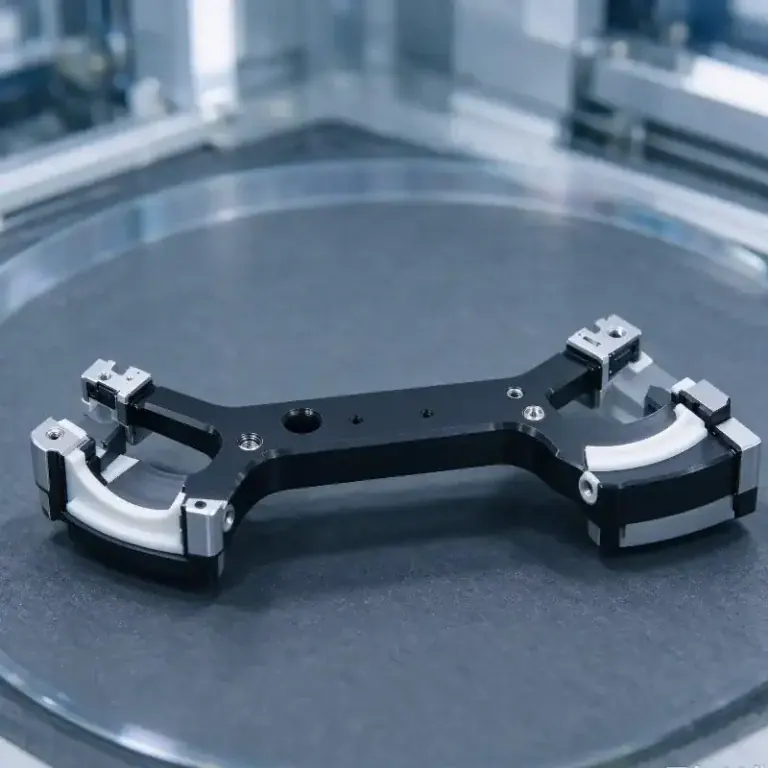
| Connecting bracket | Carbon steel, aluminum alloy | Mounting hole positions, structural dimensions |
| Bushing | 45 steel, copper alloy | Inner diameter accuracy, roundness, wear resistance |
| Pump housing | Cast iron, aluminum alloy | Internal cavity dimensions, hole positions, surface roughness |
How Does CNC Machining Control Precision in Construction Machinery Components?
Some construction machinery components are relatively large, while others have deep holes, thin walls, or irregular curved surfaces. During machining, material stress, tool wear, and clamping methods can all affect the final dimensions. To reduce rework, inspection should not be left until the end of production. Dimensional control needs to be included throughout the manufacturing process, with clear machining targets for every operation.
Choose Suitable CNC Machining Equipment and Cutting Tools
Different component structures require different machining methods. Standard three-axis CNC machines can handle common surfaces, holes, and profiles. For multi-sided structures and complex curved components, multi-axis machining can reduce repeated setups and improve positional consistency between different features. Tool selection also matters. The lowest-priced tool is not always the best choice, as material hardness, cutting depth, and component geometry all affect tool performance.
During machining, several details need attention:
- Deep-hole machining: Maintain stable chip evacuation and tool performance.
- Thin-wall components: Reduce cutting deformation.
- Multi-sided structures: Minimize repeated positioning errors.
- Hard materials: Select suitable tools and cutting parameters.
Reduce Machining Deformation Through Proper Workholding
Large construction machinery components can be affected by clamping forces and cutting forces, especially thin-wall housings, long shafts, and irregular brackets. If the clamping position is unsuitable, the workpiece may deform during machining. Its dimensions may also change after the fixture is released. Before machining, reliable positioning references should be established. Depending on the component, staged machining, auxiliary supports, or multiple finishing operations may be necessary to reduce the effect of stress on final dimensions. For long shafts, support positions and vibration during machining also need attention to prevent dimensional deviations and uneven surface patterns.
Inspect Critical Dimensions at Different Machining Stages
Checking a component only once at the end makes it difficult to identify machining deviations in time. For parts with tight fitting requirements, different inspections can be arranged after rough machining, semi-finishing, and finishing. This helps identify dimensional changes early and prevents defective parts from moving to the next operation, reducing wasted material and machining time.
Common inspection items include:
- Hole diameters, shaft diameters, and depths
- Flatness and parallelism
- Concentricity and perpendicularity
- Thread dimensions and positions
- Critical surface roughness
How Should Materials and Machining Processes Be Selected for Construction Machinery Parts?
Material selection affects component strength, weight, wear resistance, and machining difficulty. The decision should not be based solely on hardness or price. It is also important to consider where the part is installed, how much load it carries, and whether it is regularly exposed to hydraulic oil, dust, or moisture. Once the material is selected, the corresponding CNC machining and surface treatment processes can be arranged to balance manufacturing efficiency and service performance.
Comparison of Common Materials for Construction Machinery Components
Construction machinery components are commonly made from aluminum alloys, carbon steel, alloy steel, and stainless steel. Aluminum alloys are suitable for housings and brackets where weight reduction is important. Alloy steel is often used for shafts and other components that carry heavy loads, while stainless steel is suitable for connecting parts that require corrosion resistance. The final material choice should match the component’s working environment and mechanical requirements.
| Material | Main Characteristics | Common Applications |
| 6061 aluminum alloy | Lightweight with good machinability | Housings, brackets, mounting bases |
| 45 steel | Balanced strength and machinability | Shafts, connecting components |
| 40Cr alloy steel | Good strength and toughness after quenching and tempering | Transmission shafts, load-bearing components |
| Stainless steel | Good corrosion resistance | Hydraulic fittings, special connecting parts |
| Cast iron | Good vibration-damping properties; suitable for certain complex structures | Pump housings, equipment bases |
How Should CNC Milling and Turning Be Combined?
Components with flat surfaces, slots, and mounting holes are generally suitable for CNC milling. Shaft-shaped and sleeve-shaped parts are commonly processed through CNC turning to produce external diameters, internal bores, and end faces. If a component combines rotational features with complex milled structures, mill-turn machining can reduce process changes and repeated positioning. For complex construction machinery parts, a well-planned machining sequence can also help shorten production time.
Surface Treatment Affects Component Durability
Construction machinery components often operate in environments with friction, dust, and moisture. Their surface condition directly affects long-term performance. Aluminum alloy parts can undergo anodizing when required, while steel components may use black oxide, plating, or other protective treatments. For friction areas such as bushings and guide surfaces, surface hardness and roughness should be selected according to actual working conditions. The treatment process must not interfere with critical fitting dimensions. If heat treatment is required, dimensional changes after treatment should also be considered, with sufficient machining allowance reserved for subsequent finishing.
How Can Batch Quality Be Maintained in Precision Machining for Construction Machinery?
Construction machinery components often require a continuous supply. It is not enough for a single part to meet dimensional requirements; different production batches must also maintain consistent machining results. This is particularly important for hydraulic valve blocks, transmission shafts, and connecting brackets that need to fit together. Dimensional differences between parts can affect assembly efficiency and may even increase the risk of equipment failure. To reduce these problems, quality control should cover drawing confirmation, machining processes, and final inspection.
Confirm Drawings and Technical Requirements Before Machining
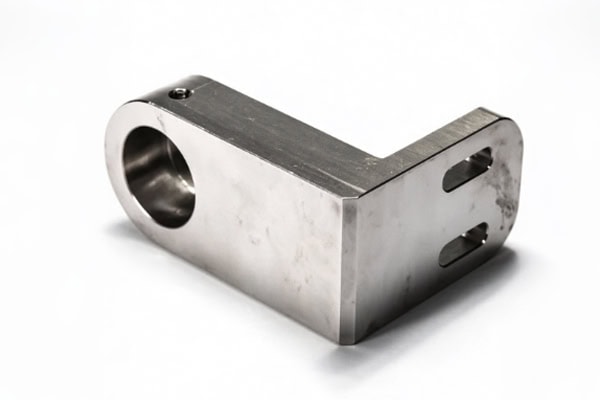
Before production begins, critical dimensions, fitting tolerances, material grades, and surface treatment requirements should be clearly confirmed. Some construction machinery components have complex structures, with multiple hole positions, threads, chamfers, and datum surfaces specified on the drawings. If the machining team misunderstands the purpose of a particular dimension, a component may look correct but still fail during assembly. For replacement parts used in older equipment, the wear condition of the original component should also be considered. Actual dimensions may need to be measured to avoid relying entirely on incomplete or outdated drawings.
Maintain Consistent Machining Processes During Production
For batch production, using the same machining references, clamping methods, and key process parameters helps reduce dimensional variation. Cutting tools gradually wear during use. If their condition is not checked, hole diameters, slot widths, and surface quality may change. For components with longer machining cycles, in-process inspections should be scheduled at suitable intervals. Any deviation can then be corrected before it affects the remaining parts.
Key details to monitor during production include:
- Tool wear and timely replacement or adjustment
- Clamping stability to prevent workpiece movement
- Continuous deviations in critical dimensions
- Whether cutting parameters suit the current material and structure
Final Inspection Should Focus on Assembly and Operating Requirements
After machining, components should be checked for more than just visible defects. Inspection needs to focus on the dimensions that affect their actual applications. Hydraulic components require checks on hole diameters, hole positions, and sealing surfaces, while transmission shafts need inspection of shaft diameters, concentricity, and surface quality. For batch deliveries, keeping inspection records is also important. If an assembly issue occurs later, these records can help identify the relevant production batch and machining stage. A complete inspection process helps ensure that components not only meet drawing requirements but also perform reliably in real construction machinery operating environments.
Construction machinery components may seem like small parts of a much larger system, but they can have a major impact on equipment performance and maintenance costs. From material selection and structural machining to dimensional inspection, every step matters. A suitable CNC machining solution does more than produce a component; it ensures that its dimensions, structure, and material meet actual operating requirements. If custom hydraulic valve blocks, transmission shafts, equipment brackets, or other precision components are needed, TIRAPID can provide CNC machining support based on engineering drawings and technical specifications. Contact us to discuss your machining requirements.