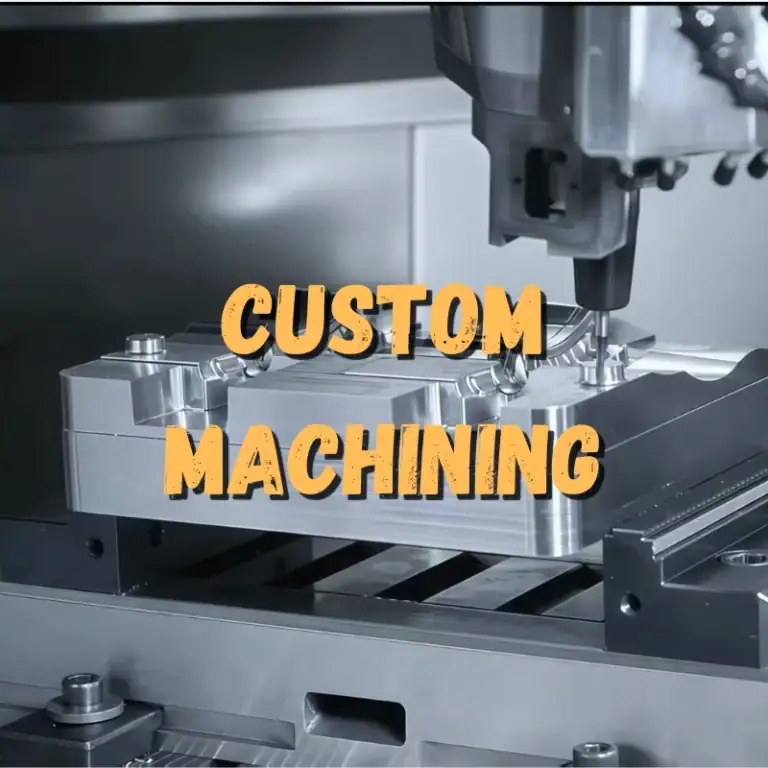
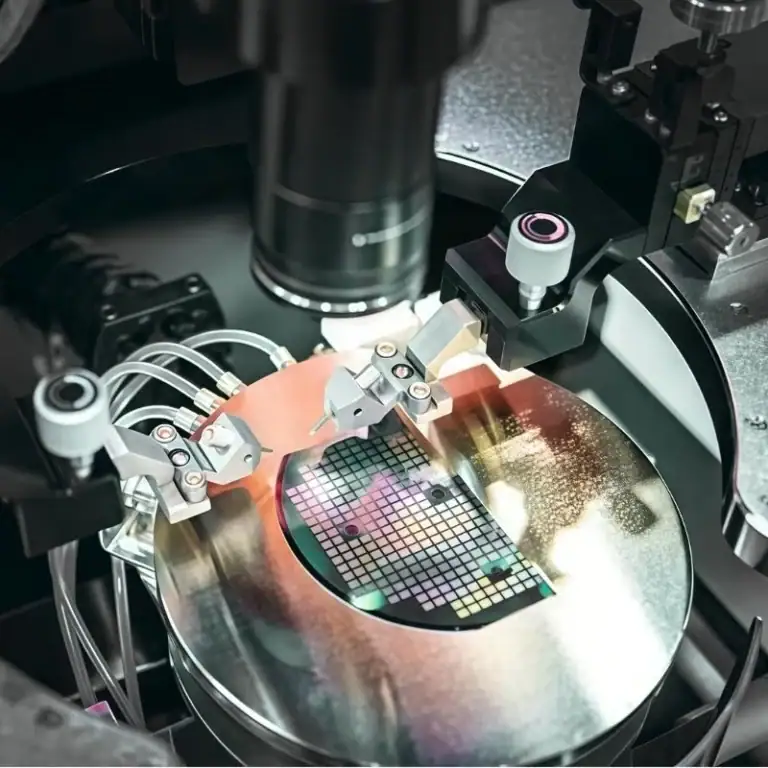
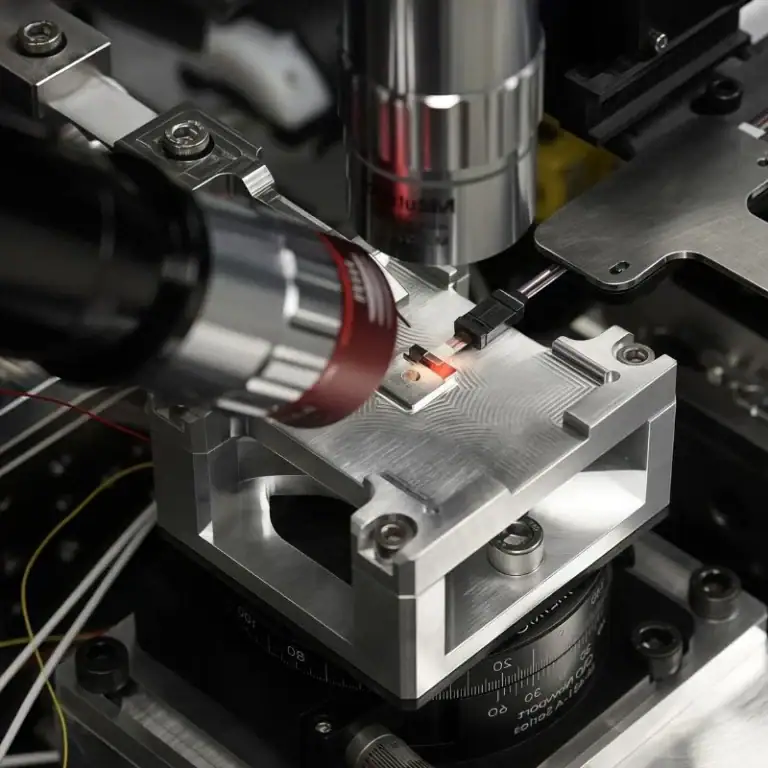
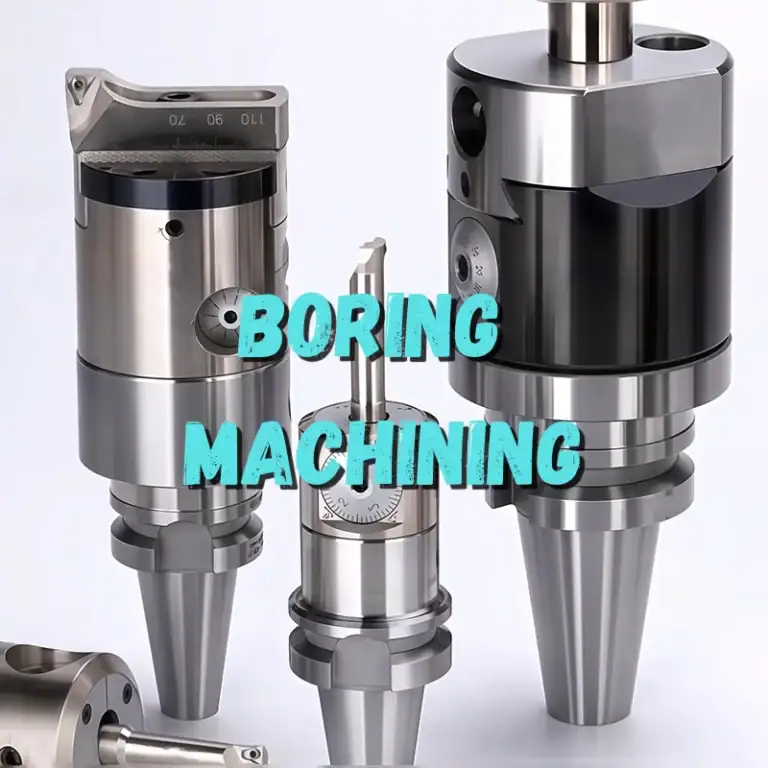
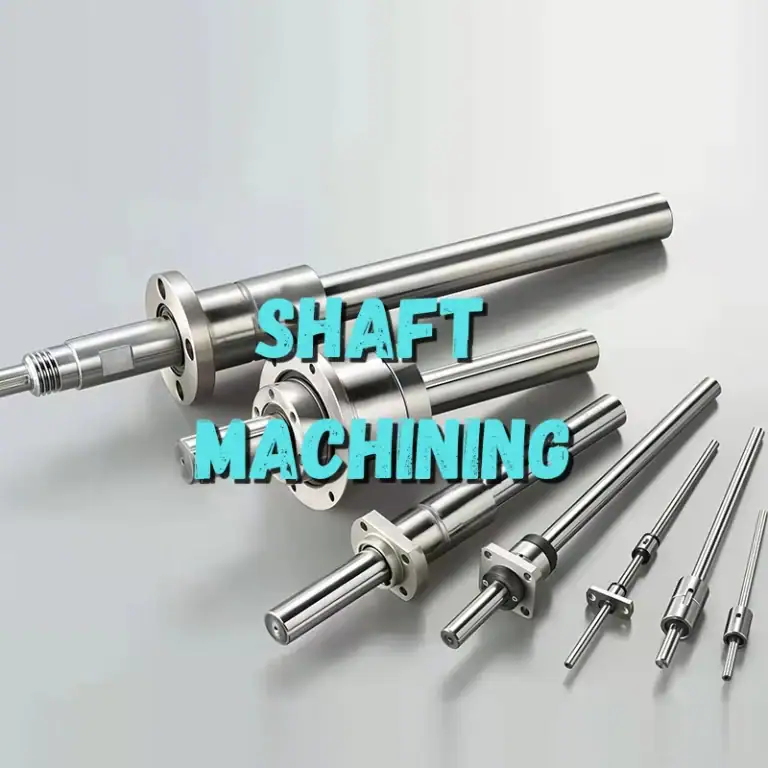
Drilling in CNC machining of plastic parts can easily result in dimensional deviations, burrs around the hole opening, breakout at the exit, rough hole walls, material melting, and chip blockage. Plastics differ significantly from metals in terms of thermal conductivity, rigidity, and behavior when heated. The heat generated after the drill enters the material is not easily dissipated quickly. If chips cannot be removed in time, friction between the drill and the hole wall will increase, ultimately affecting hole quality. For different plastics such as POM, PEEK, ABS, PC, PVC, PMMA, and nylon, machining conditions also need to be adjusted according to material hardness, toughness, and part structure. The advantage of CNC drilling is its relatively high positional accuracy, allowing hole diameter, hole spacing, and hole depth to be accurately machined according to engineering drawings, while also being combined with milling, chamfering, tapping, and other processes to complete the entire part. However, achieving stable hole quality requires more than simply focusing on drill diameter.
Drill geometry, cutting edge sharpness, spindle speed, feed rate, hole depth, clamping method, and chip evacuation conditions can all affect the final result. Plastic drilling generally requires continuous and stable cutting while avoiding prolonged friction between the drill and the inside of the hole. For deep holes, appropriate tool retraction or peck drilling is also required to help remove chips and reduce the temperature inside the hole. Therefore, when drilling plastic parts with CNC machining, suitable machining conditions should be established according to the material and hole structure rather than directly applying drilling parameters intended for metal parts. For precision plastic parts, especially when holes are used for assembling shafts, screws, or other components, it is even more important to control hole diameter, perpendicularity, and hole opening condition. Proper tool selection and secure workpiece fixation can reduce rework and improve the machining quality of plastic parts.
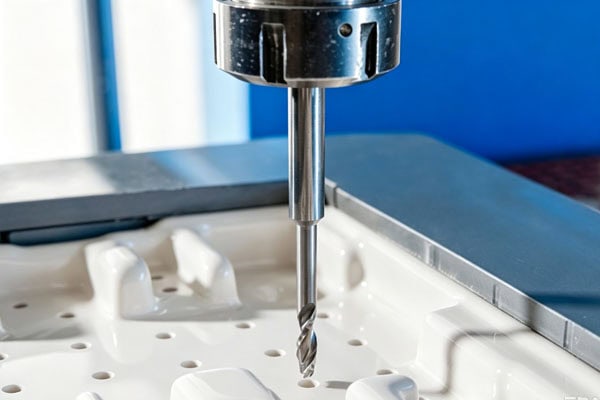
Preparation Before CNC Drilling Plastic
Confirm the Material and Hole Requirements First
Different plastics do not exhibit exactly the same cutting characteristics. POM generally offers good machining stability, ABS is relatively easy to cut, while PE and PP are softer and have a certain degree of toughness. High-performance plastics such as PEEK have higher requirements for machining conditions and tool condition. Before machining, it is necessary to confirm the hole diameter, hole depth, hole spacing, and tolerances specified in the engineering drawings. If the hole is used for assembly, the required fit relationship should also be clarified. For example, the machining requirements for screw holes, locating holes, shaft holes, and through holes are not the same.
It is recommended to focus on confirming:
- Plastic material and raw material specifications
- Hole diameter and allowable tolerance
- Hole depth and whether the hole is through
- Dimensional relationship between the hole position and datum surfaces
Once this information is confirmed, the drilling sequence and tools can be arranged appropriately.
Check the Workpiece Clamping Condition
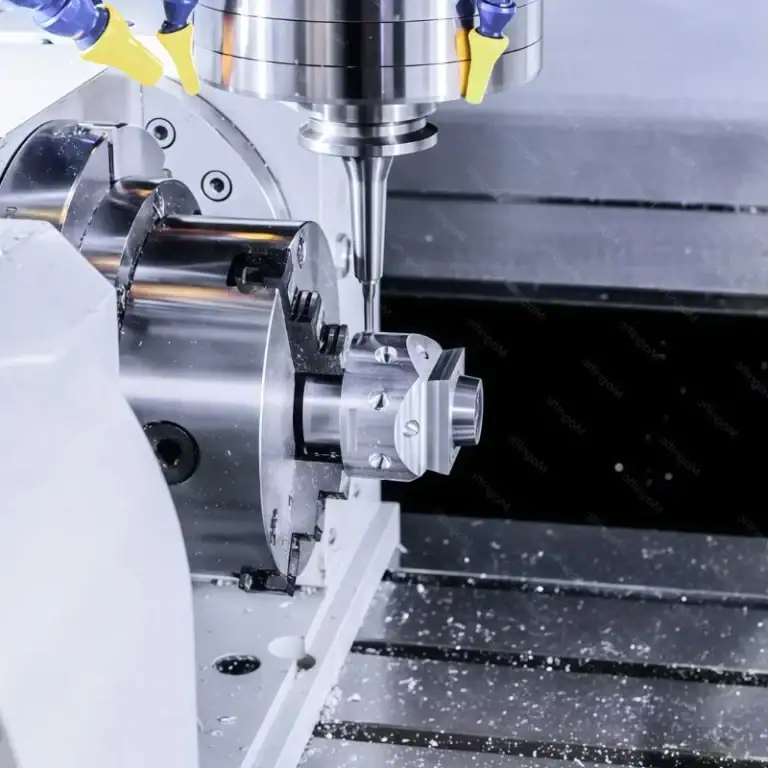
Plastic parts generally have lower rigidity than metal parts. Thin plates, thin-walled parts, and large-sized components are particularly susceptible to clamping forces. If the workpiece is not securely fixed, the drill may cause slight movement after entering the material, resulting in hole position deviation. During clamping, the workpiece needs to remain stable while avoiding excessive localized pressure from the fixture. For thin plastic parts, additional support can be added underneath to keep the drilling area flat. For parts with complex machined contours, it is also necessary to confirm that the fixture will not interfere with drill movement.
Drill Selection Directly Affects Hole Quality
Keep the Drill Sharp
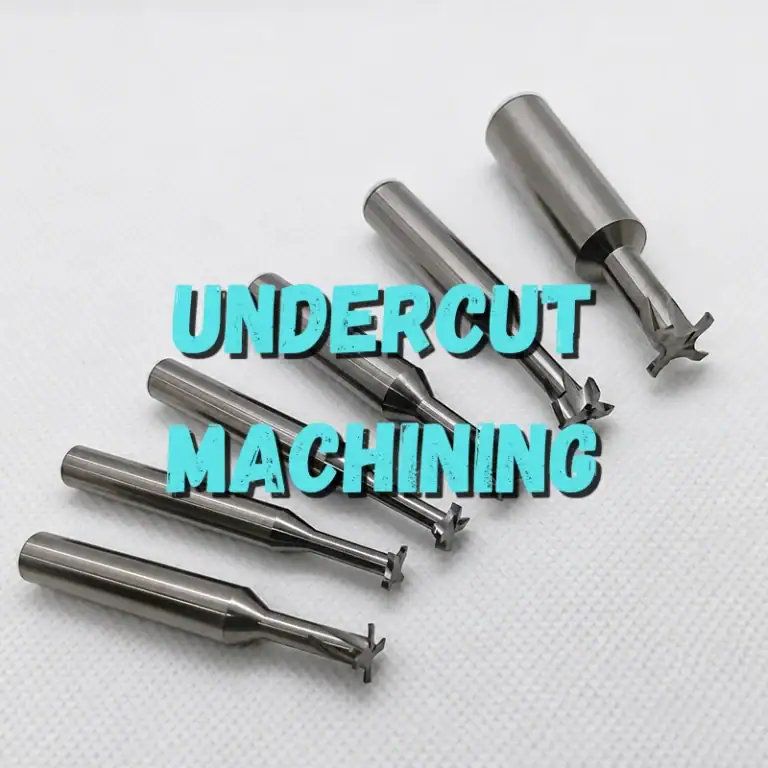
When drilling plastics, a sharp cutting edge can reduce squeezing and friction. If the drill has become worn, more heat will be generated during drilling, and the hole opening is more likely to develop burrs or deformation. Plastic drilling generally uses drills with good chip evacuation capabilities, with the point angle, helix angle, and cutting-edge geometry selected according to the material. Different materials cannot always use exactly the same drill parameters. Materials related to plastic machining also recommend adjusting the drill point angle and clearance angle according to material characteristics to reduce grabbing, friction, and heat accumulation. Standard plastic parts can generally be machined using high-speed steel or carbide drills in good condition. For parts requiring higher precision or made from special materials, dedicated tooling should be selected according to actual machining conditions.
Pay Attention to Chip Evacuation Space
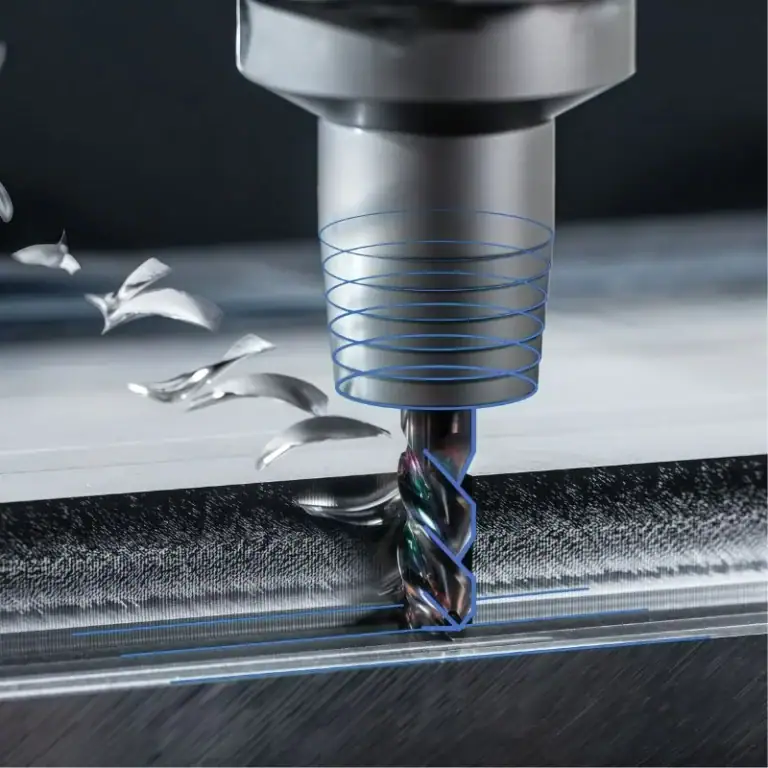
During drilling, the drill carries material out of the hole. If the flute space is insufficient, plastic chips can accumulate inside the hole and cause repeated cutting. This is particularly important in deep-hole machining. The deeper the drill enters, the more difficult chip evacuation becomes. If chips cannot be removed in time, the temperature inside the hole will gradually increase, potentially causing the hole wall to heat up, material adhesion, or even changes in hole diameter. Therefore, drill selection should consider not only the diameter but also the flute design and actual hole depth.
How Should CNC Plastic Drilling Parameters Be Adjusted?
The relevant parameters for plastic drilling need to be adjusted according to the material, drill diameter, hole depth, machine performance, and workpiece fixation condition. Publicly available plastic machining references currently provide significantly different drilling ranges. Therefore, during production, it is more appropriate to begin with relatively conservative parameters, observe the condition of the hole opening and chips during trial cutting, and then gradually make adjustments.
Spindle Speed Should Not Be Increased Independently
Many plastics soften as their temperature rises. Therefore, when the spindle speed is too high and the feed is too low, the drill may rub against the material surface instead of producing normal chips.
If the following conditions occur during machining:
- The hole opening turns white or melts
- Plastic chips stick to the drill
- Obvious scratches appear on the hole wall
- The hole diameter changes after the drill exits
the spindle speed, feed rate, and chip evacuation conditions should be checked.
When machining plastics, the drill should maintain effective cutting rather than rubbing against the material for an extended period. In actual machining, the feed per revolution needs to be adjusted according to the tool diameter, and suitable conditions should be confirmed through trial cutting.
Deep Holes Require Attention to Tool Retraction and Chip Evacuation
Shallow holes can generally be drilled continuously, but deep-hole machining requires greater attention to chip removal and the temperature inside the hole. As hole depth increases, chips can easily accumulate at the bottom of the hole. In this situation, segmented drilling can be used to allow the drill to periodically retract from the hole, remove chips, and then continue machining. For relatively deep plastic holes, this method can reduce chip blockage and heat accumulation. Relevant plastic drilling references also recommend appropriate peck drilling for deep holes to improve chip evacuation and reduce the temperature inside the hole. It should be noted that the tool retraction method and interval should not be mechanically fixed, but adjusted according to the hole diameter, hole depth, and material condition.
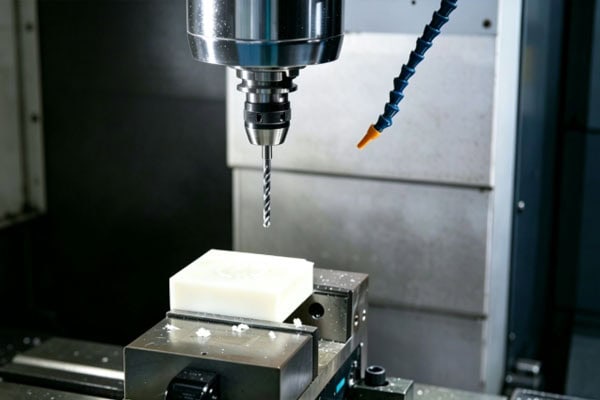
How Can Burrs and Breakout in Plastic Holes Be Reduced?
Control the Drill Exit Condition
When drilling through holes in plastic parts, the hole exit is generally more likely to develop burrs or breakout than the hole entrance. When the drill is about to penetrate the workpiece, the remaining material thickness is already very small. If there is no support underneath, the continued downward movement of the drill may pull the material outward. Therefore, when drilling through holes, support material can be added underneath the workpiece to provide stable support as the drill exits. This is particularly important for thin plastic sheets. If the part design permits, a chamfering process can also be added after drilling to make the hole edge more uniform.
Check Tool Condition When Burrs Appear at the Entrance
Burrs around the hole opening are not necessarily caused only by feed rate. Drill edge wear, unsuitable tool geometry, and unstable workpiece fixation can all reduce edge quality. If similar burrs appear on multiple holes, the tool condition and machining parameters should be checked. If the problem occurs only at a specific position, it is also necessary to check whether there is workpiece deformation or insufficient support in that area.
What Are the Differences When Drilling Different Plastic Materials?
Plastic materials vary in hardness, toughness, heat resistance, and deformation characteristics under load; consequently, their behavior during CNC drilling differs. When using a drill bit of the same diameter to machine different plastics, the optimal spindle speed, feed rate, drilling depth, and chip evacuation method are not identical. Simply applying the same machining parameters can lead to issues such as inconsistent hole diameters, rough hole walls, burrs at the hole entrance, material melting, or chip clogging. Drilling parameters must be adjusted based on material properties and part geometry. For standard plastic parts, the focus should be on tool sharpness and chip evacuation; for high-performance engineering plastics, greater attention must be paid to cutting heat, tool wear, and dimensional stability; and for transparent materials, the visual quality of the hole walls and entrances requires special care.
POM Plastic
POM has good machinability and is commonly used for gears, bushings, sliders, and precision structural components. During drilling, a sharp cutting edge should be maintained and chips should be removed promptly to prevent excessive friction inside the hole.
PEEK Plastic
PEEK has high strength and temperature resistance, but the material is also relatively expensive. During machining, greater attention should be paid to tool condition and hole position accuracy. For deep holes or precision holes, it is recommended to conduct trial cutting first before confirming the final parameters.
ABS and PVC
ABS and PVC are generally relatively easy to machine, but tool dulling and poor chip evacuation should still be avoided during drilling. During PVC machining, air-assisted chip evacuation can generally be used to prevent chips from repeatedly rubbing inside the hole.
PC and PMMA
PC has a certain degree of toughness, while PMMA is relatively susceptible to stress and machining conditions. When machining transparent PMMA, hole opening and hole wall quality are particularly important, and excessive cutting heat and unstable tool movement should be avoided.
Frequently Asked Questions
Why Does Plastic Melt During Drilling?
This is usually related to excessive temperature in the machining area. A drill that is not sharp enough, excessive spindle speed, insufficient feed, or poor chip evacuation can all increase frictional heat.
Why Is the Drilled Hole Larger Than the Drill Diameter?
Possible causes include workpiece deformation, drill runout, tool wear, or heat affecting the material. For precision holes, the machine spindle condition, tool runout, and workpiece fixation should be checked.
Why Does the Hole Exit Tend to Break Out?
When the drill is about to penetrate the workpiece, the material at the bottom lacks support and can easily be pulled by the drill. Adding rear support and properly controlling the drilling feed can reduce breakout at the hole exit.
Is Peck Drilling Always Required for Deep Holes?
Not every deep hole must use the same peck drilling method. Hole diameter, hole depth, material, and drill structure all affect chip evacuation. For deep holes where chip evacuation is difficult, appropriate tool retraction can be used to remove chips and reduce heat.
Conclusion
When drilling plastic parts with CNC machining, stable machining results depend on suitable tools, machining parameters, and secure workpiece fixation. Plastics differ from metals and are more easily affected by cutting heat, material toughness, and workpiece rigidity during drilling. Therefore, drilling conditions for metal parts should not be directly applied to plastic parts. Before machining, a suitable drill should be selected according to the characteristics of materials such as POM, PEEK, ABS, PC, PVC, and PMMA, and the cutting edge should be checked to ensure that it is sharp. During machining, good chip evacuation should be maintained to prevent plastic chips from accumulating inside the hole and causing increased friction and temperature. For thin plates, thin-walled parts, and large plastic components, support and clamping positions should also be arranged properly to prevent workpiece movement or deformation during drilling.
For deep-hole machining, particular attention should be paid to chip evacuation and the temperature inside the hole. When necessary, appropriate tool retraction methods can be used to remove chips. After machining, the hole diameter, hole depth, hole spacing, and hole opening condition should be inspected according to the drawing requirements. For critical holes used for screws, shafts, locating pins, and other assembly applications, accurate measurement is especially important. A suitable drilling process can reduce common problems such as burrs, breakout, melting, and hole diameter deviation, providing more stable machining quality for plastic parts. For precision plastic components, actual machining conditions should also be confirmed through trial cutting before formal production.