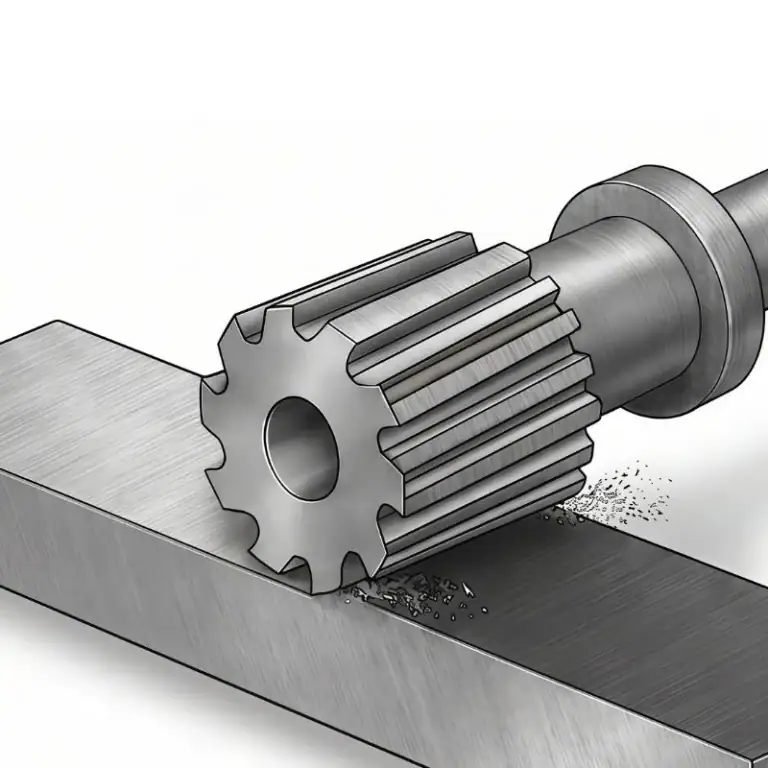
CNC plastic machining is commonly used for product prototyping, small-batch parts, equipment components, and precision structural parts. Compared with injection molding, CNC machining can directly cut plastic sheets, rods, or blocks without the need to manufacture molds in advance, making it suitable for projects with small quantities, adjustable dimensions, or products still in the development stage. However, the cost of CNC machining is affected by factors such as machine time, tool usage, programming difficulty, material consumption, dimensional tolerances, and inspection requirements.
When requesting a quote, simply providing a statement such as “How much does it cost to machine 100 plastic parts?” usually makes it difficult to obtain an accurate price. More complete quotation information should include 2D or 3D drawings, material name, machining quantity, critical tolerances, surface requirements, and delivery requirements. If the part has a special application, the operating environment should also be specified, such as whether high-temperature resistance, chemical resistance, electrical insulation, or low-friction performance is required. Only after the machining manufacturer conducts an engineering evaluation based on this information can the material cost, machining processes, and production time be determined, resulting in a quotation that is closer to the actual production cost.
Important Factors Affecting CNC Plastic Machining Quotes
Different Materials Have Different Prices and Machining Difficulties
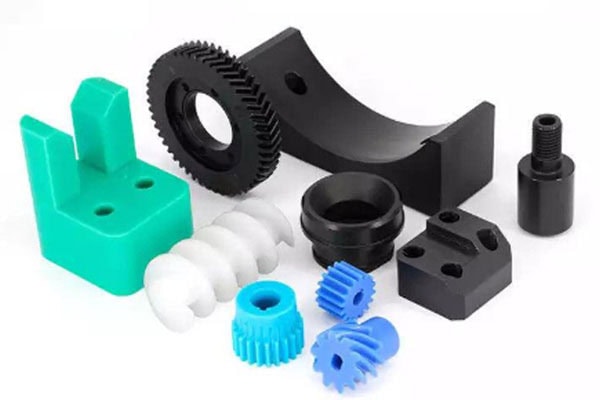
Plastic materials such as ABS, POM, PVC, PC, PEEK, PTFE, and PMMA differ in raw material cost, hardness, heat resistance, and cutting performance. The material cost of common engineering plastics is relatively easy to control, while high-performance plastics such as PEEK and PEI are more expensive and have stricter requirements for cutting tools and machining conditions. Therefore, even if two parts have exactly the same dimensions, their final quotations may differ significantly if they are made from different materials. When requesting a quote, it is recommended to specify the exact material and grade rather than simply writing “plastic.”
For example:
- “POM” is easier to identify than “white plastic”;
- “PEEK” requires further confirmation of the specific material requirements;
- The material cost of “transparent PMMA” cannot be directly compared with that of ordinary ABS;
- If the customer permits substitute materials, this should also be specified during the quotation request.
Once the material information is clear, the manufacturer can calculate the cost based on the actual raw material.
Part Structure Determines Machining Time
The more complex the shape of a plastic part, the longer the machining time required. Simple flat plates, blocks, and connecting blocks may only require milling, drilling, and chamfering, while parts with deep grooves, thin walls, complex curved surfaces, and multi-angle holes require more machining steps. As machining time increases, machine occupancy, tool usage, and manual operations also increase, so structural complexity directly affects the quotation. If the customer provides a complete 3D CAD model, the machining manufacturer can more directly assess the part shape and machining areas. The TiRapid website currently supports customers in uploading 3D CAD files for quotation and evaluating manufacturability based on the design.
How Do Drawings and Quantities Affect the Final Price?
The More Complete the Drawings, the More Accurate the Quote
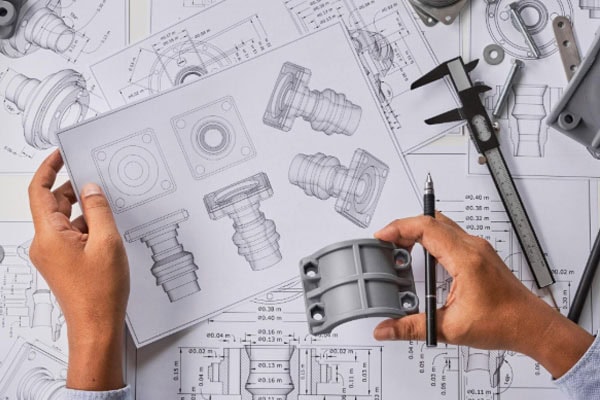
CNC plastic machining quotations need to be based on clear product information. Photos of a part or simple dimensions can usually only support an initial estimate and cannot accurately determine hole depth, wall thickness, tolerances, chamfers, or hidden structures.
More complete quotation information can include:
- 3D CAD files, such as STEP or STP
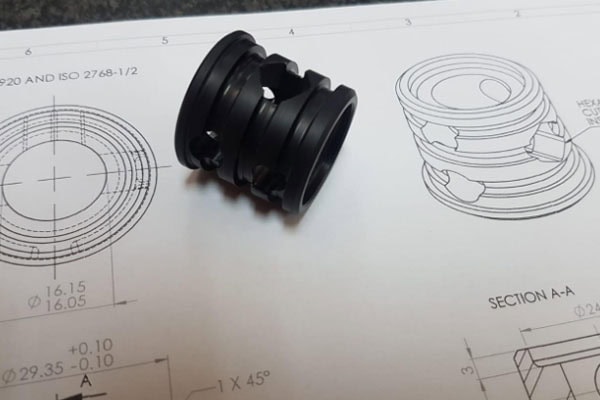
- 2D engineering drawings for confirming dimensions and tolerances
- Plastic material name and grade
- Machining quantity
- Surface treatment and appearance requirements
- Packaging and delivery requirements
If the part does not have a 3D model but the 2D drawing clearly specifies all dimensions, it can also be evaluated. TiRapid currently provides plastic and CNC machining services that support customers in submitting 2D or 3D drawings, and can provide DFM recommendations and quotations based on engineering information.
Different Quantities Result in Different Unit Prices
For the same plastic part, the unit price for machining 1 piece, 10 pieces, and 1,000 pieces is generally not exactly the same. A single sample needs to bear one-time programming, fixture setup, and production preparation costs, so the average cost per part is relatively high. As the quantity increases, the same programming and setup can be used for more parts, allowing some preparation costs to be distributed across the entire order. Therefore, when requesting a quote, do not simply tell the manufacturer that “some parts are needed.” Instead, provide the exact quantity, for example:
“5 pieces for samples, 50 pieces for small-batch production, with an expected 500 pieces in the future.”
If different production quantities are required, separate quotations can also be requested, making it easier to compare unit costs at different order volumes.
How Can You Reduce Price Differences Before and After Quotation?
Accurate quotations require not only complete information from the customer but also confirmation of key requirements before the quotation is issued. If tolerances are not specified during the quotation stage and the quote is calculated according to standard machining requirements, but strict dimensional requirements are added later, the production conditions may change and the price may naturally be adjusted.
Do Not Set Excessively Tight Tolerances Without Need
Not every plastic part requires high precision. The tighter the tolerance requirements, the more time and inspection work are generally required during machining. For example, an ordinary protective panel may only need its overall dimensions to be controlled, while a precision mounting component may require strict control of hole diameter, hole spacing, and mating dimensions. Although the two products may have similar materials and overall dimensions, their production requirements are completely different. Therefore, the drawing should clearly identify the dimensions that are genuinely important, while unnecessarily high precision should not be applied uniformly.
Specify Special Requirements in Advance
If the part has special requirements, it is recommended to specify them directly during the quotation stage rather than adding them after the quote has been issued. For example: a transparent or high-gloss surface; special chamfers; threads or precision hole positions; specific packaging; a CMM inspection report; or sample production for confirmation. All of these requirements can affect production arrangements and the final quotation. Providing them in advance can reduce the need for reassessment later.
Frequently Asked Questions
Why Do Different Manufacturers Offer Such Different Prices?
Different manufacturers use different equipment and machining methods, and they may also have different material purchasing channels, labor costs, and quality inspection requirements. Therefore, their quotations will not be exactly the same. A lower price does not necessarily mean lower machining costs; it is also necessary to confirm whether the materials, dimensional accuracy, and delivery contents are consistent.
Can I Get a Quote by Providing Only a 3D Drawing?
An initial quotation can usually be provided. A 3D model can show the three-dimensional shape and dimensional information of the part, but if there are strict tolerances, special surface requirements, or assembly dimensions, it is best to provide a 2D engineering drawing as well. This allows the manufacturer to accurately distinguish standard dimensions from critical dimensions.
Can a Quote Be Provided with Only a 2D Drawing?
Yes. As long as the 2D drawing clearly communicates the part structure, dimensions, tolerances, and material requirements, it can be used for quotation evaluation. For parts with complex curved surfaces, providing a 3D model makes it easier to confirm the actual machining difficulty.
Why Must the Machining Quantity Be Provided When Requesting a Quote?
Because the quantity affects the unit cost. The programming, fixture setup, and production preparation costs for sample machining and batch production are distributed differently. Therefore, the manufacturer needs to know the actual quantity to calculate a more reasonable unit price.
Conclusion
An accurate CNC plastic machining quotation needs to be based on clear information about the material, drawings, quantity, and machining requirements. The more complete the information provided by the customer, the easier it is for the machining manufacturer to determine which material should be used, what equipment should be selected, which machining processes are required, and how much production time will be needed. When requesting a quote, it is recommended to provide both a 3D model and a 2D engineering drawing. The 3D model can help confirm the overall structure of the part, while the 2D drawing can specify critical dimensions, tolerances, hole positions, and technical requirements. If there is no 3D model, a complete 2D drawing can be provided first, after which the machining manufacturer can determine whether additional modeling is required based on the part structure.
The material name should not simply be written as “plastic.” Specific materials such as POM, PEEK, ABS, PC, PMMA, and PTFE should be specified whenever possible. The quantity should also be stated accurately because the unit costs of single-piece prototypes, small-batch production, and larger batch orders are not the same. Requirements for high-precision dimensions, special surfaces, inspection reports, and packaging should also be specified in advance when requesting a quote. TiRapid currently provides CNC milling, CNC turning, five-axis CNC machining, and plastic CNC machining services. According to the information publicly available on its website, customers can submit 2D or 3D engineering files for machining evaluation and receive DFM recommendations and quotations.