Plastics are different from metal materials in terms of hardness, toughness, thermal conductivity, and thermal expansion characteristics. When the same machining parameters are applied to different plastics, the final results may vary significantly. Even when the tool model and machining program have already been determined, trial cutting is still required before actually machining the parts to observe the tool cutting condition, material edge quality, and dimensional changes. Trial cutting does not mean that the machining technology is immature. Instead, it is performed to confirm whether the current machining conditions are suitable for the actual material and part structure before formal production. By cutting a small amount of material, problems such as burrs, deformation, melted edges, dimensional deviations, and surface roughness can be identified in advance. If batch machining is started directly and the parameters are unsuitable, it may not only increase the number of defective parts but also result in wasted material, tools, and machining time. For common plastic materials such as POM, PEEK, ABS, PVC, PC, and acrylic, trial cutting has significant practical value, especially for precision plastic parts and workpieces with complex structures, which require confirmation before formal machining.
What Is the Main Purpose of Trial Cutting in CNC Plastic Machining?
Confirm Whether the Cutting Parameters Are Suitable
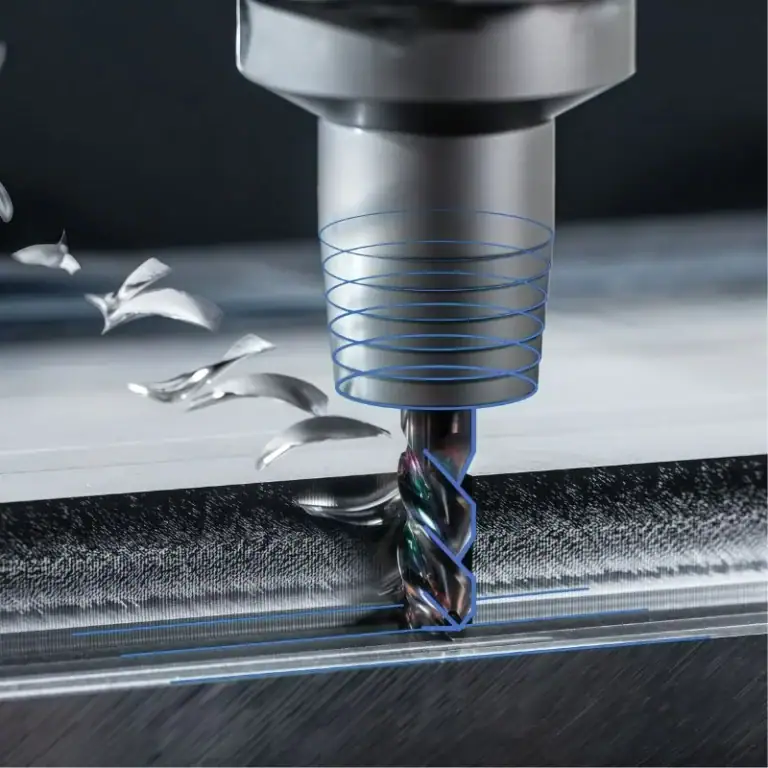
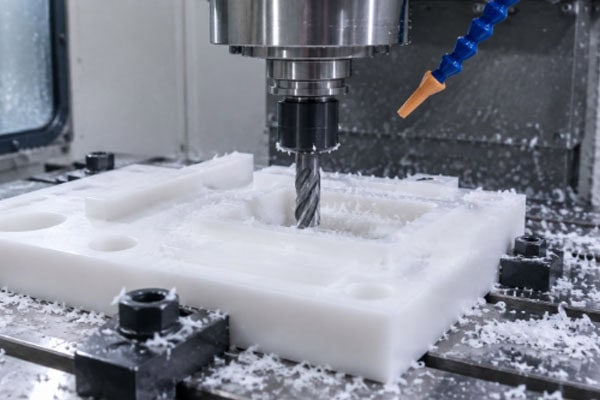
Spindle speed, feed rate, cutting depth, and cutting amount per pass in CNC plastic machining directly affect machining results. If the parameters are too large, the tool may exert excessive pressure on the material, causing thin-walled parts to deform; if the parameters are too small, the tool may remain in contact with the material for too long, causing the temperature in the machining area to rise. Trial cutting allows machining personnel to observe how the material changes under actual cutting conditions and then adjust the parameters accordingly. During trial cutting, the following conditions are usually observed closely: whether obvious melting, tool sticking, or stringing occurs during cutting; whether burrs, edge chipping, or cracks appear along the machined edges; whether the tool runs smoothly and chips are removed properly; and whether the machined dimensions are close to the drawing requirements. After confirming the conditions through trial cutting, suitable parameters can be determined for formal machining, reducing repeated adjustments during subsequent processing.
Check Tool and Material Compatibility
Different plastics have different tool requirements. Materials such as ABS and PVC are generally relatively easy to machine, while engineering plastics such as POM and PEEK have higher requirements for tool sharpness, wear resistance, and cutting conditions. Transparent acrylic also requires special attention to edge quality and heat accumulation during machining. If the tool is unsuitable for the current material, surface roughness, increased burrs, or whitening of the edges may occur even when the machining program itself is correct. Through trial cutting, the cutting performance of the tool can be confirmed, and unsuitable tools can be replaced in time to avoid discovering problems only after formal machining has begun.
How Does Trial Cutting Help Control the Dimensions of Plastic Parts?
Confirm Actual Machined Dimensions in Advance
Plastic materials may undergo slight dimensional changes after being affected by cutting forces and heat. Thin-walled parts, long components, and small precision parts are especially likely to show differences between their actual finished dimensions and the theoretical dimensions in the program. After trial cutting, critical dimensions can be checked using calipers, micrometers, or other measuring tools. If dimensional deviations are found, tool path compensation, cutting amount, or machining allowance can be adjusted before formal machining.
Observe Whether the Part Deforms
Plastics generally have lower rigidity than metals, and clamping force, cutting pressure, and machining temperature may all affect part shape. For example, a relatively thin POM plate may undergo slight compression during clamping, and its dimensions may change again after the fixture is released. For this type of part, trial cutting can help confirm whether the fixture and clamping method are appropriate in advance.
During machining, attention should be paid to:
- Minimize unnecessary clamping pressure;
- Add appropriate support to thin-walled and unsupported areas;
- Check whether the part bends or warps after machining;
- Perform actual measurements of critical dimensions rather than checking appearance only.
These inspections can help machining personnel determine whether the current machining method is suitable for the part structure.
What Other Machining Problems Can Trial Cutting Identify?
Some problems in CNC plastic machining cannot be determined solely from the machining program in advance. For example, the same tool may perform differently when cutting different materials, and the same material may also produce different machining results under different thicknesses and structural conditions. Therefore, trial cutting provides an effective means of on-site confirmation.
Check Surface Quality
After trial cutting, the machining marks on the surface of the plastic part can be observed directly. If obvious tool marks, vibration marks, whitening, or localized melting appear on the surface, the tool condition and cutting parameters need to be checked. For plastic parts with high appearance requirements, surface quality not only affects visual appearance but may also influence subsequent assembly and use.
Check Chip Removal Performance
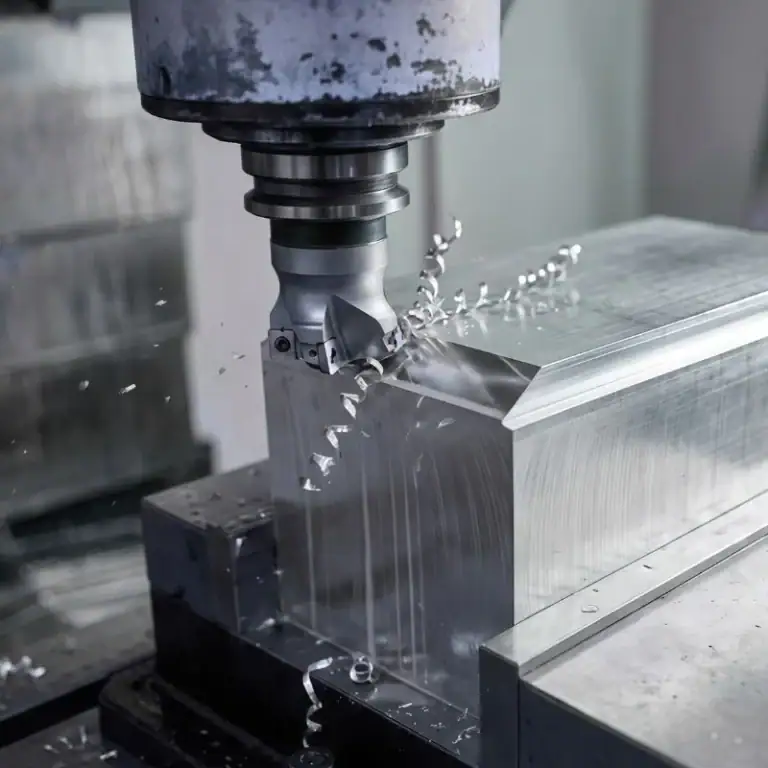
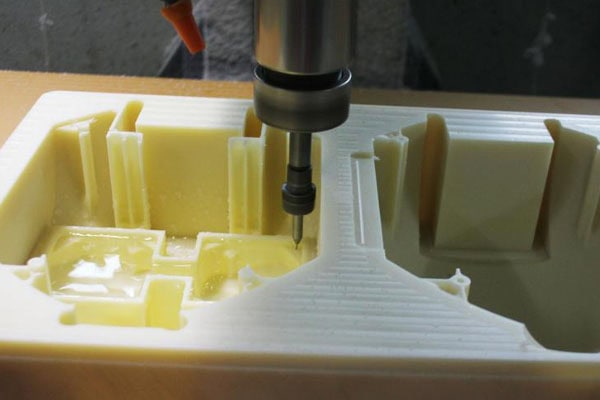
If chips generated during plastic cutting cannot be removed in time, they may enter the area between the tool and workpiece again, increasing friction and heat generation. Chip removal is particularly important when machining deep grooves, narrow slots, and holes. Trial cutting can help confirm whether air cooling, dust extraction, or other chip removal methods can meet machining requirements. If chip accumulation is found, the machining path and chip removal method can be adjusted in time.
Check Chamfering and Hole Quality
Plastic parts often require holes, slots, threads, and chamfers, and these areas have certain requirements for dimensions and edge quality. If trial cutting reveals burrs around holes or unstable chamfer dimensions, tool parameters and machining paths can be modified in time. This helps prevent the same problems from occurring on a large number of parts during batch production.
Frequently Asked Questions
Is Trial Cutting Necessary When Machining New Materials?
Yes. Even when the material has the same name, plastics from different suppliers or batches may differ in hardness, internal stress, and machining performance. For materials being machined for the first time, trial cutting is more beneficial for confirming the actual cutting condition.
Is Trial Cutting Necessary for Small-Batch Machining?
Whether trial cutting is necessary depends on the part accuracy and machining difficulty. For parts with simple structures and standard dimensional requirements, mature machining parameters can be used directly for production. If the part is expensive, the material cost is high, or dimensional tolerances are tight, trial cutting is recommended even when the quantity is small.
Will Trial Cutting Increase Machining Costs?
Trial cutting requires a small amount of material and machining time, but it can generally reduce losses caused by batch defects. For engineering plastics with higher prices, such as PEEK and PEI, confirming machining conditions in advance with a small amount of material is often more reliable than starting batch production directly.
In conclusion
The core purpose of trial cutting in CNC plastic machining is not to add an unnecessary processing step, but to confirm whether the material, tool, machining parameters, fixture, and machining program can work together properly before formal production. Plastic materials are easily affected by temperature, cutting pressure, and the fixing method, so actual machining results cannot be fully determined by theoretical parameters alone. A suitable trial cut can identify problems such as dimensional deviations, material deformation, tool incompatibility, poor chip removal, burrs, and unstable surface quality in advance. For ordinary plastic parts, trial cutting can help quickly confirm machining conditions; for materials such as PEEK, POM, and acrylic that have higher machining quality requirements, trial cutting is even more important. In actual production, the trial cut should be evaluated together with dimensional inspection and appearance inspection. If critical dimensions meet the drawing requirements, there are no obvious surface defects, and the tool cutting condition and chip removal remain stable, proceeding to formal machining is more appropriate. In this way, unnecessary rework and material waste can be reduced, allowing CNC plastic parts to maintain stable dimensional accuracy, appearance, and assembly quality.