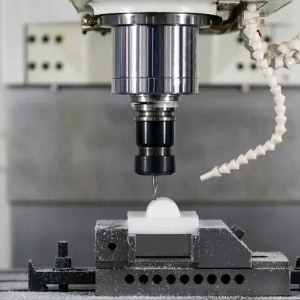
In CNC milling programming, automatic feature recognition can quickly identify machining features such as holes, slots, pockets, planes, and chamfers from 3D models, while also assisting in the generation of
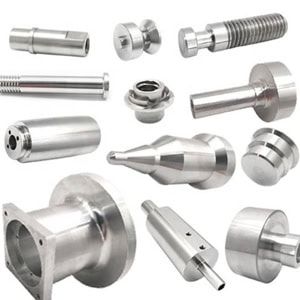
When sourcing precision mechanical components, CNC turning cost is one of the key factors considered by engineers, purchasing teams, and product development companies. Even when parts have similar dimensions, their
When it comes to precision machining, the real challenge is often not whether a part can be manufactured, but how tightly its dimensions need to be controlled. A drawing marked
7075 aluminum alloy is a high-strength aluminum material known for its excellent strength-to-weight ratio, good fatigue performance, and relatively good machinability. It is widely used in aerospace, automotive, robotics, industrial
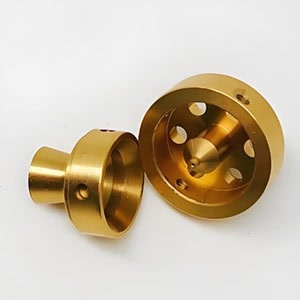
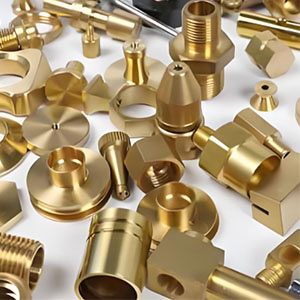
Brass is a widely used copper-zinc alloy known for its excellent machinability, corrosion resistance, electrical conductivity, thermal conductivity, and mechanical properties. As precision manufacturing continues to develop, CNC brass machining
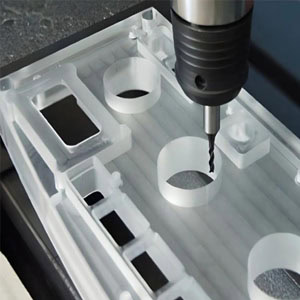
Drilling in CNC machining of plastic parts can easily result in dimensional deviations, burrs around the hole opening, breakout at the exit, rough hole walls, material melting, and chip blockage.
When looking for a CNC turning manufacturer, purchasing teams and engineers usually evaluate much more than machining price. Machining accuracy, prototype lead time, production capacity, material selection, quality inspection, surface
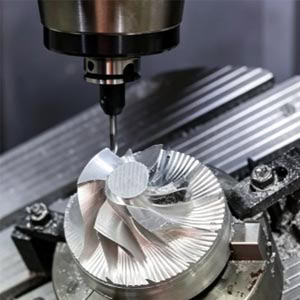
Impellers are typical complex-surface components with narrow spaces between blades and significant curvature changes, requiring high levels of tool orientation control and five-axis synchronization accuracy. In actual CNC milling, overcutting
Copper has excellent electrical conductivity, thermal conductivity, ductility, and corrosion resistance, making it widely used for electrical connectors, terminals, busbars, heat dissipation components, electronic components, and industrial equipment. As the
Temperature is one of the important factors affecting precision in CNC metal machining. Cutting speed, feed rate, friction between the tool and workpiece, and continuous machine operation all generate heat.
Once a part has been machined, the real headache is often not whether it can be produced, but whether it looks fine yet fails during assembly. This is especially common
Large metal parts are widely used in aerospace, energy equipment, construction machinery, rail transportation, and industrial equipment. Compared with standard-sized components, large metal parts are more susceptible to thermal deformation,
Scroll to Top
Your 24 hour quote
Send us a message if you have any questions or request a quote. We will be back to you within 1-2 hours!