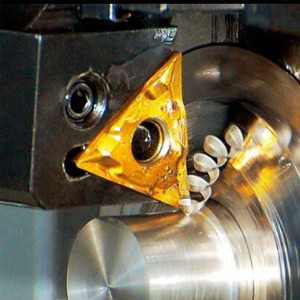
With the continuous development and maturity of CNC machining technology, plastics can now be processed into industrial parts with high precision, complex structures, and stable performance. Through computer programs that
Aluminum alloys are widely used in aerospace, automotive components, medical equipment, electronics, and automation systems due to their lightweight properties, high strength, excellent thermal conductivity, and good machinability. However, aluminum
As precision manufacturing continues to evolve toward higher efficiency, greater accuracy, and smarter automation, traditional two-axis CNC lathes are no longer sufficient for machining increasingly complex components. Multi-axis CNC turning
As precision manufacturing technology continues to advance, CNC turning has become one of the most widely used machining processes in modern industry. Industries such as automotive manufacturing, aerospace, medical devices,
During the CNC plastic machining process, material properties directly affect machining quality, machining efficiency, and the final performance of the finished parts. Among these factors, plastic hardness is a very
Stainless steel is widely used in medical equipment, automotive components, mechanical structures, and high-end industrial products due to its excellent corrosion resistance, high strength, and long service life. However, during
Round parts are widely used in mechanical manufacturing industries, including shafts, sleeves, flanges, gear shafts, connectors, rollers, and various rotating structural components. These parts usually require excellent roundness, concentricity, surface
When many customers choose CNC milling, their biggest concern is often not whether the machine can run, but whether the parts will be stable after production, whether rework will be
Plastic materials are widely used in industries such as electronics, medical devices, automotive, aerospace, industrial machinery, and consumer products due to their lightweight, corrosion resistance, and ease of machining. Compared
As the manufacturing industry continues to move toward higher precision and greater efficiency, companies are facing increasing demands for precision machining capabilities. With complex part structures, strict dimensional tolerances, and
In modern precision manufacturing, CNC turning has become a core process for producing cylindrical, shaft-type, and high-precision mechanical components. It is widely used in automotive, aerospace, medical devices, electronics, hydraulic
In precision manufacturing, dimensional stability is one of the most important indicators of part quality. Whether in medical devices, automotive components, or critical structures in automation equipment, dimensional variation can
Scroll to Top
Your 24 hour quote
Send us a message if you have any questions or request a quote. We will be back to you within 1-2 hours!