In the field of mechanical machining, copper is widely used in electronic connectors, heat dissipation components, precision terminals, and mold parts due to its excellent electrical conductivity, thermal conductivity, and good machinability. However, although copper itself is relatively easy to cut, achieving stable high dimensional accuracy in real production is still not simple. Because copper is soft, easily deformed, and has a relatively high thermal expansion coefficient, even small process deviations can lead to dimensional errors. At the same time, deformation can be further amplified by clamping force, cutting heat, and environmental temperature changes. Therefore, in precision machining, it is necessary to systematically control process design, equipment selection, and machining parameters to ensure stable and reliable dimensional accuracy of copper parts.
Why Copper Material Easily Affects Machining Accuracy?
Although copper is easy to machine, its physical properties still present challenges in high-precision machining, especially for thin-walled structures or tight-tolerance components. In addition, copper is sensitive to both mechanical stress and temperature changes. If clamping methods, cutting parameters, or machining strategies are not properly controlled, cumulative errors are likely to occur. These errors may be negligible in general parts but become significant in precision applications, affecting assembly performance and overall functionality.
Soft Material Easily Causes Deformation
Copper has relatively low hardness, making it prone to micro-deformation during machining or clamping. These changes may not be obvious in general processing but are amplified in precision components.
Main manifestations include:
- Local indentation caused by excessive clamping force
- Elastic deformation during cutting
- Thin-walled structures being compressed
- Dimensional rebound after unclamping
These factors directly affect dimensional stability.
High Thermal Expansion Coefficient
Copper is highly sensitive to temperature changes, and thermal deformation can become a major source of error if not properly controlled.
Common impacts include:
- Local expansion due to cutting heat
- Accumulated errors during long machining cycles
- Measurement deviations caused by ambient temperature changes
- Dimensional variation caused by uneven cooling
Therefore, temperature control is critical in precision copper machining.
Tool Adhesion and Cutting Stability Issues
Copper tends to cause tool adhesion during high-speed cutting, which affects machining stability.
Main issues include:
- Built-up edge affecting dimensional accuracy
- Unstable surface roughness
- Cutting force fluctuations causing errors
- Uneven tool wear
These problems indirectly reduce precision machining quality.
Improving Copper Machining Accuracy Through Process Control
In copper machining, process design is the core factor for ensuring accuracy. A well-planned machining route can significantly reduce cumulative errors and improve overall stability. In multi-step machining, poor initial planning often leads to irreversible deviations that cannot be fully corrected in later finishing stages. In addition, different copper part structures require different cutting strategies and machining rhythms, so process optimization must be tailored to actual applications to minimize dimensional variations.
Proper Machining Process Planning
Copper parts are usually processed in stages, including roughing, semi-finishing, and finishing, to gradually control errors.
Key process considerations include:
- Reserving appropriate machining allowance
- Releasing internal stress in stages
- Avoiding excessive single-pass cutting
- Controlling deformation during finishing
Step-by-step processing helps reduce structural stress accumulation.
Optimized Fixture Design
Fixture design has a significant impact on copper machining accuracy. Improper clamping is one of the main sources of errors.
Common optimization methods include:
- Using flexible fixtures to reduce indentation
- Multi-point uniform force distribution
- Avoiding localized clamping stress
- Improving positioning repeatability
Good fixture design greatly improves machining stability.
Temperature Control During Machining
Temperature control is critical in precision copper machining because thermal deformation directly affects dimensional results.
Main control methods include:
- Using cutting fluid for cooling
- Controlling machining speed to avoid overheating
- Maintaining a constant workshop temperature
- Reducing long continuous cutting operations
Temperature stability directly determines dimensional consistency.
How Equipment and Tools Affect Copper Machining Accuracy?
In high-precision copper machining, both machine stability and tool condition determine final quality. Modern precision machining relies on high-rigidity CNC machines with excellent repeat positioning accuracy to minimize vibration and motion errors. Meanwhile, cutting tools directly influence cutting stability, chip removal, and cutting force consistency. If machine rigidity is insufficient or tool selection is inappropriate, even well-designed processes cannot guarantee consistent accuracy.
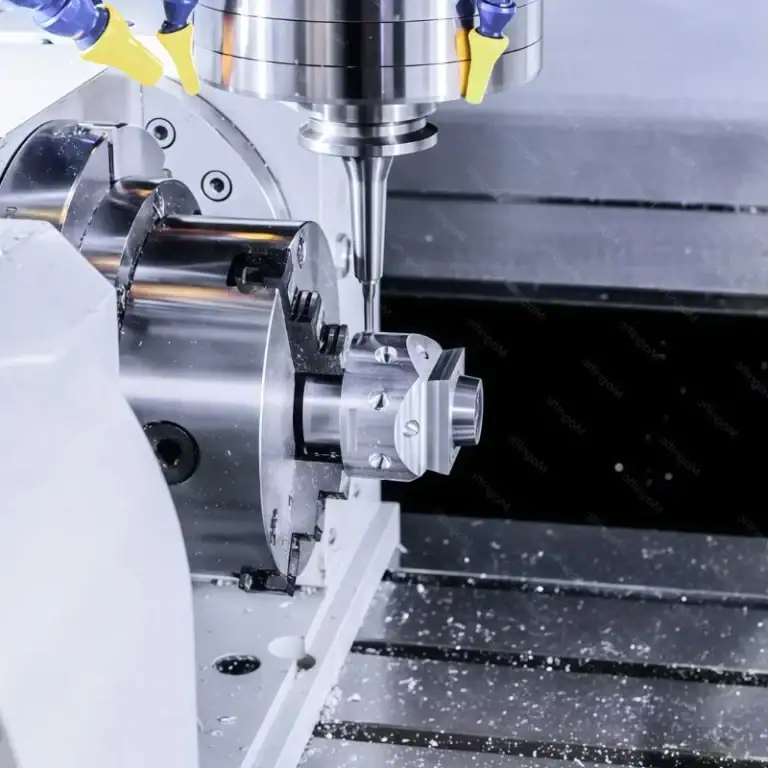
Application of High-Precision CNC Equipment
Modern copper machining heavily relies on CNC systems with high stability and precision.
Main advantages include:
- High repeat positioning accuracy
- Strong error compensation capability
- Suitable for complex geometries
- Stable multi-process control
Higher machine performance ensures better consistency.
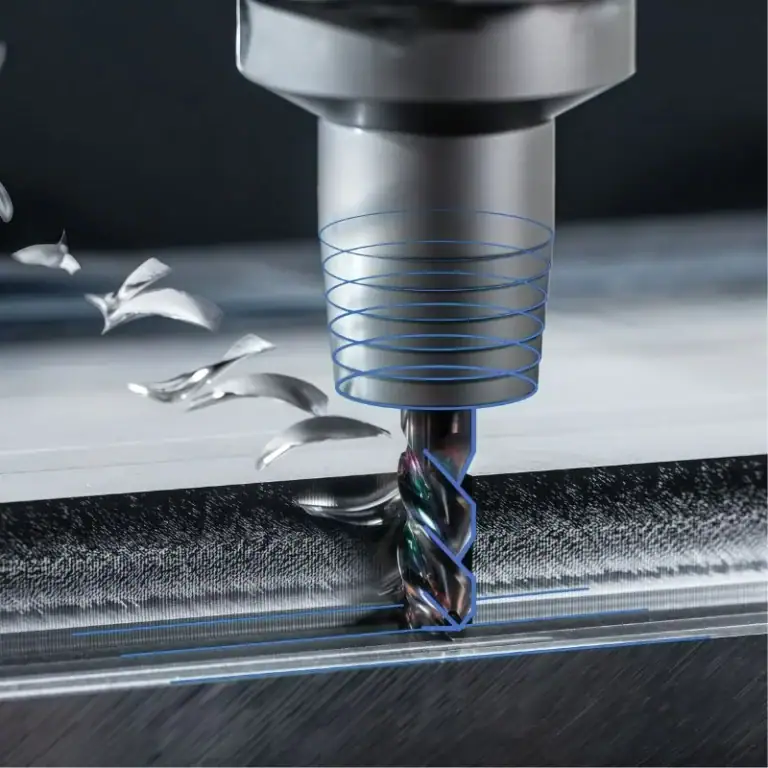
Tool Material and Geometry Optimization
Cutting tools directly contact copper, and their design significantly affects machining stability.
Key control points include:
- Using sharp, high-quality tools
- Optimizing rake angle to reduce cutting resistance
- Improving chip evacuation
- Preventing built-up edge formation
Proper tooling improves both surface quality and dimensional accuracy.
Precise Cutting Parameter Control
Cutting parameters are one of the key factors affecting machining stability.
Main controls include:
- Proper feed rate selection
- Suitable spindle speed range
- Controlled depth of cut
- Avoiding vibration during cutting
Optimized parameters reduce machining fluctuations and improve consistency.
How Inspection and Compensation Ensure Final Accuracy?
Even with well-controlled machining processes, copper parts may still be affected by material springback, temperature changes, and cumulative multi-process errors. Therefore, inspection and compensation play a crucial role in precision machining systems. Through real-time monitoring and error analysis, deviations can be identified early and corrected through process adjustments, ensuring consistency in mass production.
In-Process Online Inspection
Real-time measurement helps detect errors early and prevent batch deviations.
Main methods include:
- Real-time dimensional measurement
- Inter-process inspection control
- Monitoring critical dimensions
- Feedback-based parameter adjustment
Process control is more effective than post-process inspection.
High-Precision Measurement and Calibration
Final inspection determines whether the product meets precision requirements.
Main inspection items include:
- Dimensional tolerance verification
- Geometric tolerance analysis
- Surface quality inspection
- Batch consistency evaluation
Precision measurement is the final quality safeguard.
Error Compensation and Process Optimization
Data feedback helps continuously improve machining stability.
Main methods include:
- CNC system error compensation
- Process parameter optimization
- Tool path correction
- Machining strategy improvement
Continuous optimization is key to long-term stability.
Dimensional accuracy in copper machining depends on multiple factors, including material properties, process design, machine capability, and inspection systems. Any deviation in a single stage can affect the final result. Only through a systematic precision machining approach can stable and high-accuracy copper components be consistently achieved. Tirapid specializes in high-standard precision machining services, providing reliable and stable copper manufacturing solutions for customers worldwide.