Precision aerospace plastic CNC machining is one of the most demanding processes in the entire high-end manufacturing system. It not only involves the geometric accuracy of parts but also relates to the long-term stability of materials under extreme environments. Compared with general industrial machining, these parts often need to maintain consistent performance under temperature fluctuations, vibration loads, and complex assembly conditions. Therefore, from material selection to machining process control, every step must be kept extremely stable without significant variation. In aerospace applications in particular, plastic components may appear to be lightweight parts, but they often serve functions such as insulation support, structural positioning, or functional isolation. Once dimensional or performance deviations occur, they may affect the overall operational reliability of the equipment.
Basic Concepts and Application Background
Aerospace plastic CNC machining is not ordinary part processing; it is closer to high-reliability structural component manufacturing. Although many parts are small in size, they perform supporting, insulating, or connecting functions inside the system, which requires extremely high precision and stability. The machining process must consider not only the shape but also the material behavior under extreme environments.
Definition and Characteristics of Aerospace Plastic Materials
Common aerospace plastic materials are typically high-performance engineering plastics such as PEEK, PTFE, and PEI. These materials are already considered high-end in general industrial applications, but in aerospace use they require further selection and qualification. Their characteristics include not only high temperature resistance but also low moisture absorption, excellent dimensional stability, and low thermal expansion coefficients. These materials often replace certain metal components to achieve weight reduction or improved insulation performance. During machining, such materials are highly sensitive to temperature. If cutting heat is not properly controlled, deformation or dimensional deviation can easily occur. Therefore, it is necessary to fully understand the physical properties of the material before machining and design the machining strategy according to the actual structure.
The Role of CNC Machining in Aerospace Plastic Manufacturing
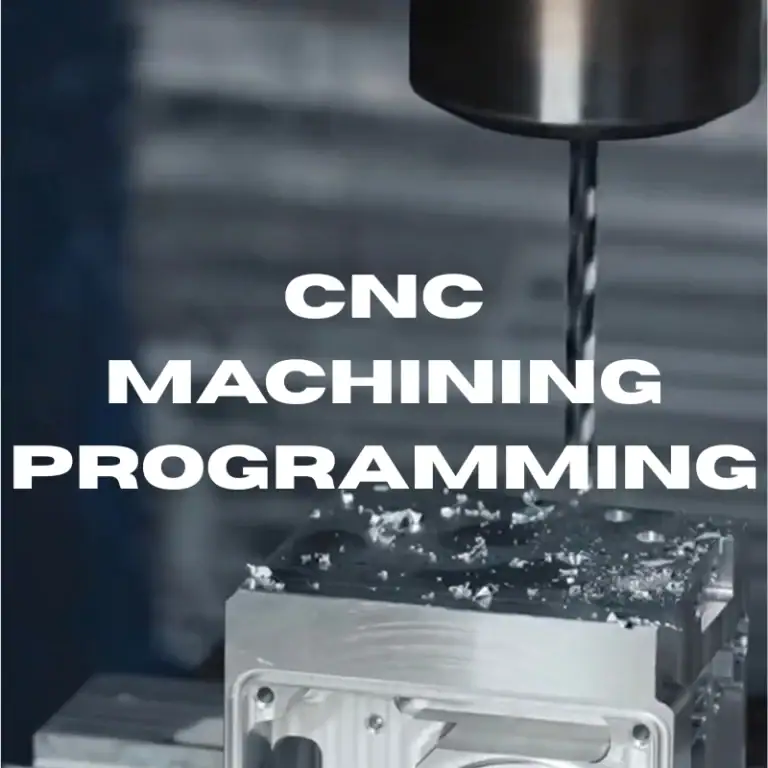
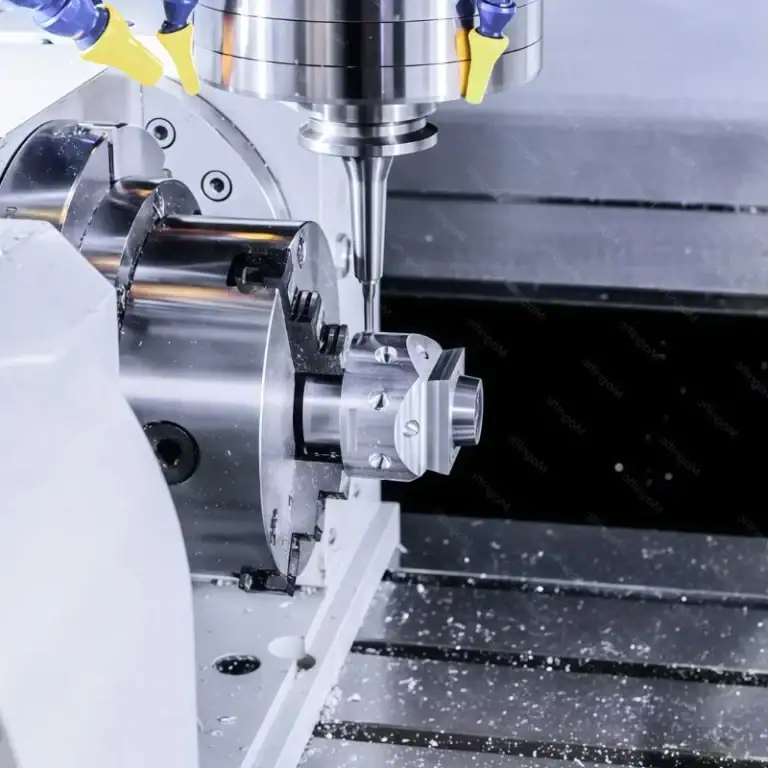
CNC machining in aerospace plastic manufacturing is mainly responsible for achieving high-precision forming. It uses programmed tool paths to stably produce complex structures. Aerospace parts are often not simple geometries; they may include curved surfaces, thin walls, or multi-hole structures. Such features are difficult to ensure consistency through manual machining. Multi-axis CNC systems allow the tool to move steadily in multiple directions, improving machining accuracy. At the same time, digital control reduces human error, ensuring that each part in mass production remains consistent, which is critical for aerospace assembly since even minor deviations can affect overall fit and structural performance.
Precision Level and Industry Application Scope
Aerospace plastic parts are commonly used in aircraft internal structures, electronic equipment supports, insulation components, and fluid control systems. Although these positions may not directly bear external impact, they require extremely high dimensional stability. Many parts must achieve tight assembly fits; excessive tolerance may affect system operation. These components typically require tolerances within ±0.01 mm or even tighter, while also ensuring no significant deformation or performance degradation over long-term use. Therefore, this type of machining is not only about “manufacturing the part” but more importantly about ensuring “long-term stable operation.”
Material Selection and Performance Control Requirements
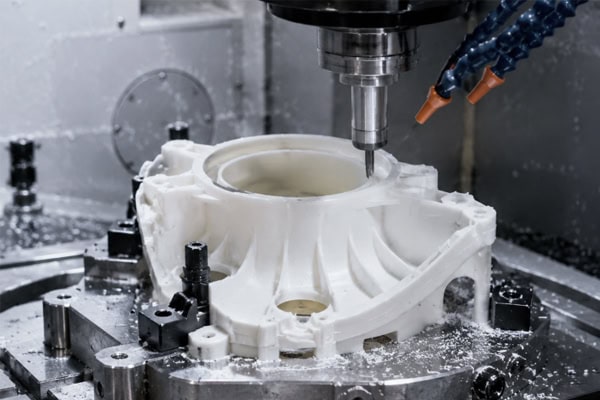
Material selection is a core aspect of aerospace plastic machining. Different materials vary significantly in machining behavior, thermal stability, and mechanical properties. Improper material selection may cause problems even if machining accuracy is high, so material and process must be considered together.
Selection Standards for High-Performance Engineering Plastics
Aerospace plastics must meet multiple requirements, including high temperature resistance, fatigue resistance, low water absorption, and excellent dimensional stability. PEEK is often used for load-bearing structures due to its excellent heat resistance; PTFE is widely used for sealing and sliding components due to its extremely low friction coefficient; PEI performs well in electrical insulation applications. Material batch consistency must also be considered, as aerospace products require extremely high stability. Significant variations between batches may directly affect machining accuracy and assembly results. In addition, machining behavior such as burr formation and heat accumulation must also be evaluated, as these factors influence final quality.
Internal Stress and Machining Deformation Control
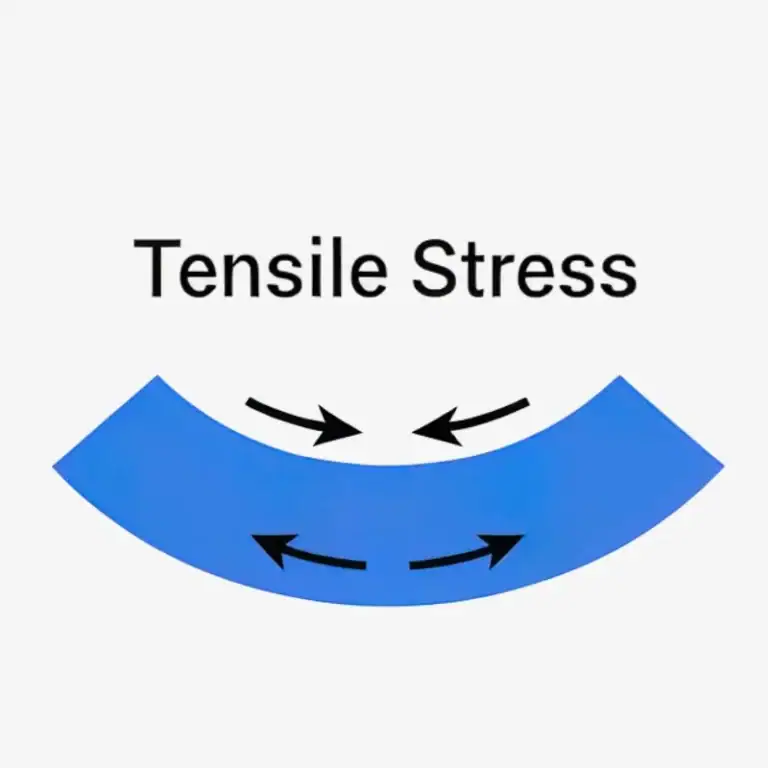
Plastic materials often contain internal stress formed during molding. This stress may be released during machining, leading to deformation or dimensional shift. To reduce this effect, annealing is often performed before machining to stabilize internal structure. During CNC machining, cutting parameters must be properly controlled, such as reducing feed rate, controlling cutting depth, and optimizing tool paths, to minimize heat buildup and stress concentration. Otherwise, parts may warp or deform after machining even if initial dimensions are correct.
Environmental Adaptability and Long-Term Performance Requirements
Aerospace environments include high/low temperature cycling, vacuum conditions, and radiation exposure, all of which impose strict requirements on materials. Plastic components must remain stable not only during machining but also throughout long-term service. Materials must not become brittle or soften significantly under temperature changes, otherwise structural safety may be affected. Long-term load conditions must also be considered to avoid creep deformation. Surface quality is also critical; micro-cracks or excessive roughness may propagate under stress over time, so fine surface finishing is usually required to improve durability.
Precision CNC Machining Process Control Requirements
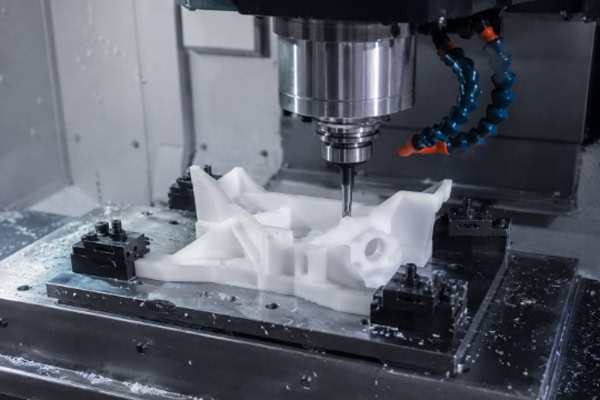
Process stability directly determines final part quality. In aerospace machining, every step must be strictly controlled to ensure consistent and reliable results.
Programming and Toolpath Planning Control
CNC programming is not only about defining tool paths but also ensuring smooth tool motion. Aerospace parts often have complex structures, requiring multi-axis toolpath planning to reduce errors caused by repeated clamping. Sharp directional changes or excessive cutting should be avoided, as they may cause uneven stress distribution and affect dimensional stability. Optimized toolpaths also improve tool life and machining stability, increasing overall production efficiency and consistency.
Temperature and Vibration Control During Machining
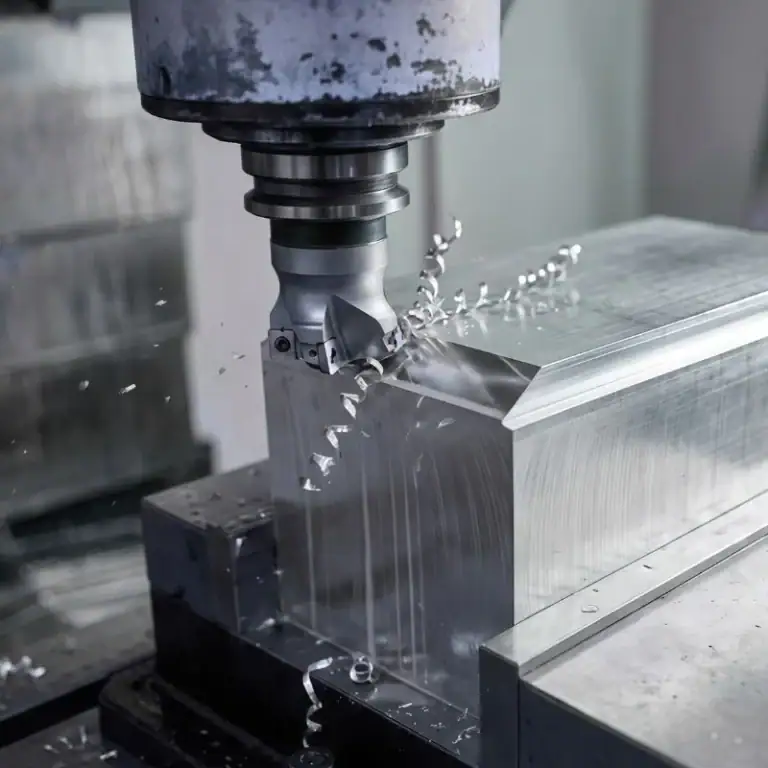
Plastic materials are highly sensitive to temperature changes. Excessive heat during machining may cause softening or dimensional deviation. Therefore, air cooling or low-temperature cooling is often used in aerospace machining. Machine vibration is another critical factor; insufficient rigidity may amplify vibration on the workpiece surface, causing machining errors or uneven surface patterns. High-end aerospace CNC machines use rigid structures and precision guide systems to ensure stable operation and minimize external interference.
Multi-Process Coordination and Clamping Accuracy Management
Aerospace parts often require multiple machining processes. Each re-clamping may introduce errors, so fixture design is extremely important. High-precision fixtures ensure consistent positioning and reduce cumulative errors. In high-precision parts, one-time clamping for multi-face machining is preferred to reduce uncertainty. Clamping force must also be carefully controlled to avoid indentation or deformation of plastic materials, as these details directly affect final assembly and long-term stability.
Quality Inspection and Technical Standards
Quality inspection is an essential part of aerospace machining. It not only confirms whether parts meet requirements but also provides feedback for process optimization.
Dimensional Accuracy and CMM Inspection Requirements
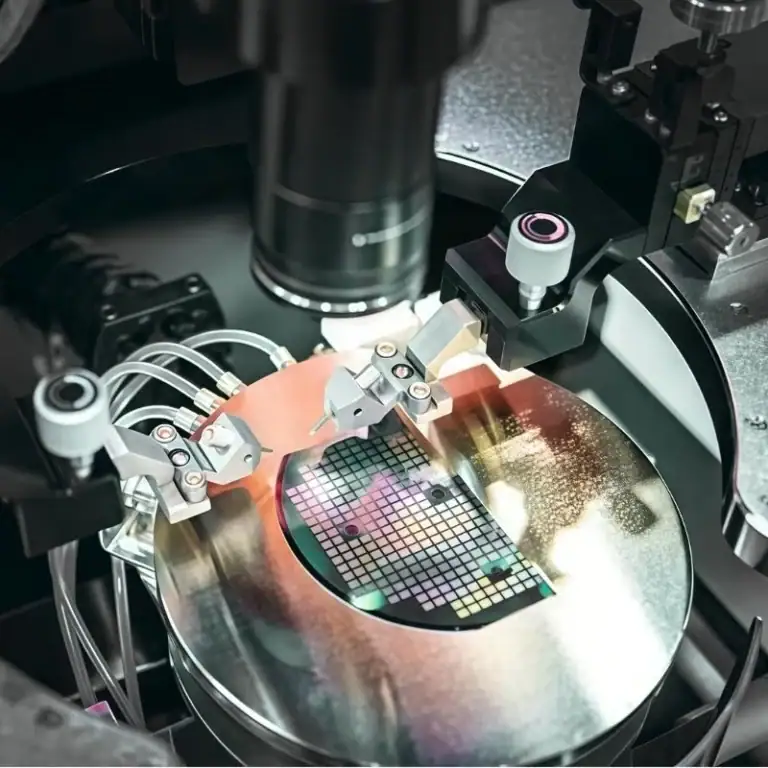
Finished parts are typically inspected using coordinate measuring machines (CMM), covering hole positions, edge locations, and key mating surfaces. Measurement accuracy can reach the micron level, ensuring compliance with design requirements. Any deviation can be fed back to adjust machining parameters. Dimensional consistency is critical in aerospace systems, as all components must fit precisely to ensure overall system stability.
Surface Quality and Structural Integrity Inspection
In addition to dimensional accuracy, surface quality is also a key factor. Aerospace plastic parts must not have burrs, cracks, or burn marks, as these may become failure initiation points over time. Optical inspection and microscopic evaluation are often used. Edge chamfering is also commonly applied to reduce stress concentration and improve structural reliability.
Material Performance Verification and Batch Consistency
For high-end applications, post-machining parts may undergo material property verification, including hardness, density, and thermal stability tests, to ensure machining does not affect inherent material performance. Batch consistency control is also required to ensure no performance variation within the same project, which is essential for long-term system reliability.
In conclusion
Precision aerospace plastic CNC machining may appear highly complex, but its essence is to ensure stable and controlled processing of materials under suitable conditions. With proper material selection, stable process control, and strict inspection, parts can achieve long-term reliable performance. The key is not only machining accuracy at the production stage, but also stability throughout the entire service life. For end users, the reliability of the overall manufacturing process is more important than any single step, as it ensures continuous and stable operation in complex aerospace environments.