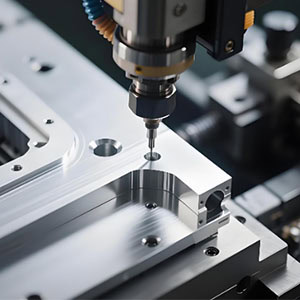
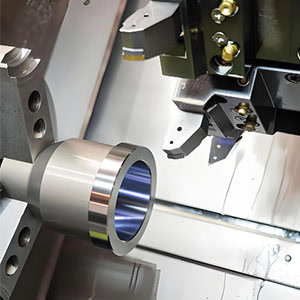
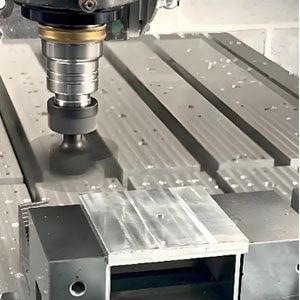
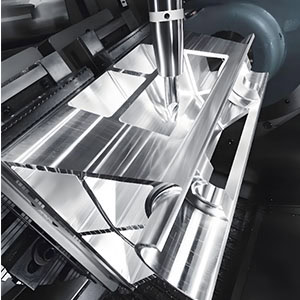
Deep-hole metal machining is an important process in precision manufacturing and is widely used for automotive components, hydraulic equipment, molds, aerospace parts, medical devices, and industrial machinery. Compared with conventional
Thin-wall metal parts are widely used in aerospace, automotive, medical equipment, electronics, robotics, and precision machinery. Their lightweight design helps reduce material usage and overall component weight. However, compared with
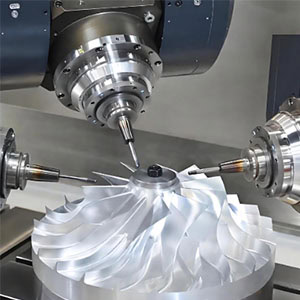
As industries such as aerospace, automotive, medical equipment, robotics, and precision machinery continue to develop, metal parts are becoming increasingly complex. Traditional 3-axis CNC machining can meet the requirements of
In CNC metal machining, workpiece setup is often overlooked, yet it has a direct impact on machining accuracy. For simple components, most machining operations can often be completed in a
In CNC metal machining, CNC turning and CNC milling are two of the most widely used manufacturing processes. Both rely on computer-controlled machine tools to produce metal components with high
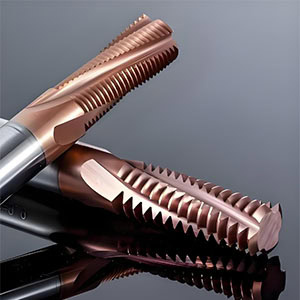
Cutting tools may be small components in metal machining, but they have a direct impact on machining efficiency, dimensional accuracy, surface quality, and production costs. Different metals vary significantly in
In metal CNC machining, cutting speed, feed rate, and depth of cut are three key parameters that directly affect machining efficiency, tool life, dimensional accuracy, and surface quality. Many machining
Titanium alloys offer high strength, low density, excellent corrosion resistance, and good high-temperature performance. As a result, they are widely used in aerospace, medical equipment, automotive components, marine applications, and
In CNC machining and metal part manufacturing, material hardness directly affects tool selection, cutting parameters, machining efficiency, and final part quality. Although both soft and hard metals can be processed
In metal part manufacturing, dimensional accuracy determines whether a component can be properly assembled, while surface roughness directly affects friction, wear, sealing performance, appearance, and service life. For CNC machining,
Stainless steel is widely used in medical equipment, food processing machinery, automotive components, aerospace parts, and industrial equipment because of its corrosion resistance, high strength, and heat resistance. However, compared
Aluminum is one of the most commonly used metals in CNC machining. It is lightweight, easy to machine, and offers a good balance of strength and performance, making it widely
Scroll to Top
Your 24 hour quote
Send us a message if you have any questions or request a quote. We will be back to you within 1-2 hours!