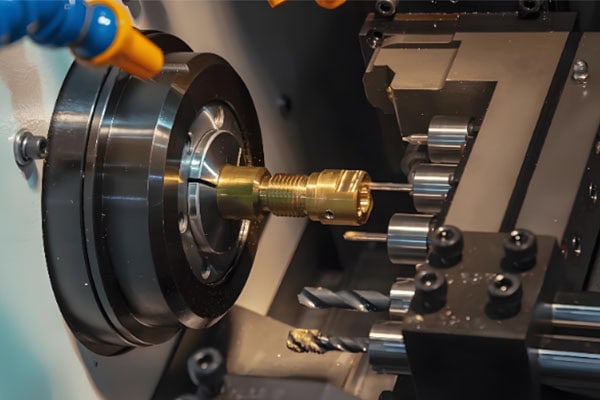
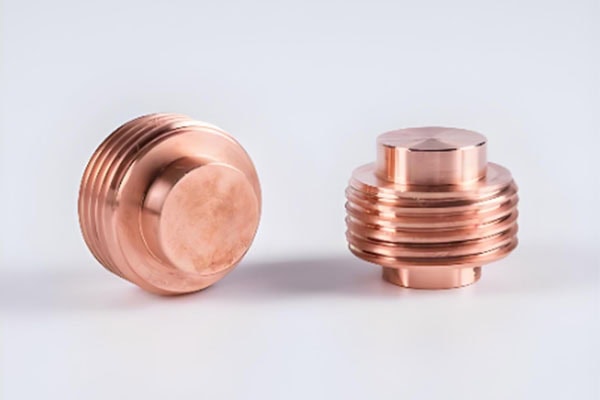
Copper has excellent electrical conductivity, thermal conductivity, ductility, and corrosion resistance, making it widely used for electrical connectors, terminals, busbars, heat dissipation components, electronic components, and industrial equipment. As the electronics and precision manufacturing industries continue to develop, copper components are required to achieve higher dimensional accuracy, better surface quality, and reliable electrical performance.
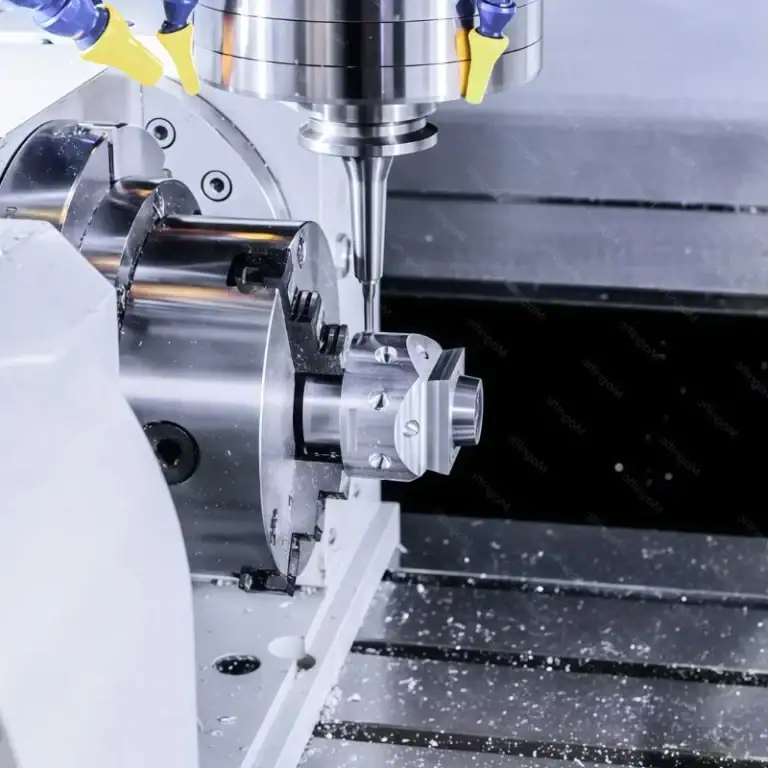
CNC machining copper parts can use processes such as CNC milling, turning, and drilling to manufacture complex geometries and high-precision copper components. However, the unique properties of copper also create several machining challenges that differ from those associated with steel and aluminum.
Get 20% offf
Your First Order
Need custom metal and plastic parts?
What Are the Main Characteristics of CNC Machining Copper Parts?
Copper Has Excellent Thermal Conductivity
Copper has high thermal conductivity, allowing heat generated during machining to quickly transfer through the workpiece. While this helps distribute heat, temperature changes in the machining area still need to be carefully controlled.
If cutting parameters are not properly selected, friction between the cutting tool and copper workpiece can generate excessive heat, potentially affecting dimensional accuracy and surface quality.
For precision copper machining, cutting parameters should therefore be selected according to the material type, workpiece dimensions, and component geometry.
Copper Has Good Ductility
Pure copper and many copper alloys have good ductility and plasticity. Compared with harder metals such as steel, copper is more susceptible to deformation and material deformation during cutting.
This is particularly important when machining thin-wall copper parts, small connectors, and precision slots or holes. Tool sharpness can have a direct impact on the final dimensions.
Using sharp cutting tools specifically suited for copper can reduce material deformation and improve surface quality.
Copper Can Cause Burrs and Tool Adhesion
Because copper is relatively ductile, burrs can easily form around holes, slots, and edges during CNC drilling and milling.
Certain copper materials may also adhere to the cutting tool during machining. This can affect cutting stability, surface finish, and tool life.
For this reason, tool geometry, cutting-edge sharpness, cutting speed, and feed rate should be properly matched to the copper material being processed.
What Are the Special Requirements for Machining Conductive Copper Components?
Dimensional Accuracy Affects Assembly
Electrical terminals, copper connectors, busbars, and conductive contacts usually need to fit precisely with other components.
If the hole diameter, thickness, length, or slot width deviates significantly from the required specification, assembly problems or unstable connections may occur.
During precision copper machining, critical dimensions and positional tolerances should therefore be carefully controlled to ensure reliable assembly.
Surface Quality Affects Electrical Connections
For copper parts that form electrical contacts, surface quality affects more than appearance. It can also influence the actual contact condition between components.
Severe scratches, burrs, machining residues, or contaminants on contact surfaces may negatively affect electrical connections.
Precision conductive components should therefore receive appropriate surface treatment and cleaning according to their intended application.
Burr Control Is Essential
Conductive connectors often contain multiple holes, slots, and edges. Burrs remaining after machining can interfere with assembly and may affect the contact between components.
For this reason, CNC machined copper parts commonly require deburring and chamfering after machining.
For precision electronic components, chamfer dimensions and edge conditions should also be controlled according to the engineering drawings and application requirements.
What Should You Consider When CNC Machining Copper Parts?
Select the Right Cutting Tools
Tool selection is an important factor in copper machining quality. Different copper grades can have different hardness, ductility, and machinability, so the same tooling strategy may not work for every copper alloy.
When machining copper, attention should be given to cutting-edge sharpness, chip evacuation, and tool rigidity.
Proper milling cutters, drills, and turning tools can reduce material deformation while improving machining efficiency and surface quality.
Optimize Cutting Parameters
Cutting speed, feed rate, and depth of cut should be adjusted according to the copper material and machining operation.
If cutting parameters are too low, friction and tool adhesion may increase. If parameters are too aggressive, excessive heat may be generated and surface quality may deteriorate.
In actual production, stable cutting parameters should be established through test machining and process inspection rather than simply applying parameters designed for other metals.
Use Proper Workpiece Clamping
Copper has relatively good plasticity, making thin plates, thin-wall structures, and long narrow copper components more susceptible to deformation.
Excessive clamping force can deform the workpiece, while insufficient clamping may cause vibration during machining.
A suitable locating and clamping strategy should therefore be designed according to the geometry and rigidity of the component.
For thin-wall copper parts, additional support points and optimized fixture contact positions can help reduce machining deformation.
Pay Attention to Cooling and Chip Removal
Although copper has excellent thermal conductivity, CNC machining still generates cutting heat. An appropriate cooling method can help control temperature and reduce tool wear.
Chip evacuation is equally important. If chips accumulate around the cutting zone, they may cause recutting, surface scratches, or tool adhesion.
During deep-slot, deep-hole, and continuous milling operations, effective chip evacuation should therefore be maintained.
How Do Different Copper Materials Affect Machining?
Pure Copper Machining
Pure copper offers excellent electrical and thermal conductivity, but it is relatively soft and ductile.
During CNC machining, particular attention should be paid to tool adhesion, burr formation, workpiece deformation, and surface quality.
Brass Machining
Brass generally has good machinability and is widely used for terminals, connectors, valves, fittings, and precision mechanical components.
Compared with pure copper, many brass grades can provide more stable cutting performance and easier chip formation.
Bronze Machining
Bronze includes several different alloy systems with varying hardness and machinability.
Before CNC machining, the cutting tool, machining parameters, and cooling method should be selected according to the specific bronze grade and component requirements.
How Can You Ensure the Quality of CNC Machined Copper Parts?
For batch production of conductive copper components, a complete quality control process is essential.
Before machining, the material grade, dimensions, and performance requirements should be verified. During machining, critical dimensions, tool condition, and machining temperature should be monitored.
After machining, manufacturers should inspect dimensional accuracy, tolerances, burrs, surface quality, and critical electrical contact areas.
For high-precision copper components, coordinate measuring machines (CMMs), optical measurement systems, and other precision inspection equipment can be used to measure hole diameters, positional tolerances, flatness, and other critical characteristics.
Combining in-process inspection with final quality inspection can reduce dimensional variation and improve consistency during batch production.
Selecting suitable cutting tools, optimizing CNC machining parameters, designing an appropriate clamping method, and maintaining effective cooling, chip evacuation, and inspection processes can significantly improve the quality and consistency of machined copper parts.
For copper components requiring complex geometries, tight tolerances, and high dimensional accuracy, a well-developed CNC copper machining process can provide reliable solutions for electronics, electrical equipment, industrial machinery, and precision manufacturing applications.
Author
Galen Director and Founder
Committed to ensuring we provide the best possible service in the manufacturing industry.
CNC machining programming connects a digital part design with the movements of a CNC machine. A well-built program defines where the cutting tool moves, which tools are used, how fast
Vertical and horizontal milling use the same basic cutting principle, but spindle orientation changes how the tool reaches the workpiece, clears chips, and handles different part geometries. This guide explains
Chamfer machining is the process of removing material from an edge, hole, or contour to create a controlled angled surface. In CNC manufacturing, chamfers are commonly used to remove sharp
Custom machining is used when a part cannot be sourced as a standard component or when its geometry, material, tolerance, or function must be tailored to a specific project. Instead
Undercut machining creates recessed, hidden, or back-facing features that a standard straight-shank cutter cannot reach from the primary machining direction. The main challenge is usually not removing the material, but
Semiconductor equipment depends on far more than electronics and process technology. Behind every wafer-handling system, test station, inspection tool, and process chamber is a network of precision-machined parts, structural components,
AI CNC machining combines traditional computer numerical control with artificial intelligence, machine learning, manufacturing data, sensors, and intelligent CAM software. Instead of replacing CNC technology, AI adds a decision-support layer
Robotic process automation is a software-based automation technology that uses digital bots to complete repetitive, rules-based tasks normally performed by people on computers. RPA bots can enter and transfer data,
Computer numerical control machining is an automated manufacturing process in which programmed computer instructions control machine tools to remove material and produce precise parts. CNC technology can control tool movement,
Semiconductor manufacturing is the process of turning high-purity semiconductor materials into functional chips through a sequence of wafer preparation, thin-film formation, photolithography, etching, doping, metallization, testing, dicing, packaging, and final
Semiconductors are materials whose electrical conductivity can be controlled between that of conductors and insulators. Silicon is the most widely used semiconductor material, but germanium, silicon carbide, gallium nitride, gallium
Boring machining is a precision cutting process used to enlarge and correct an existing hole. Unlike drilling, which creates the initial hole, boring improves diameter, roundness, straightness, alignment, and internal