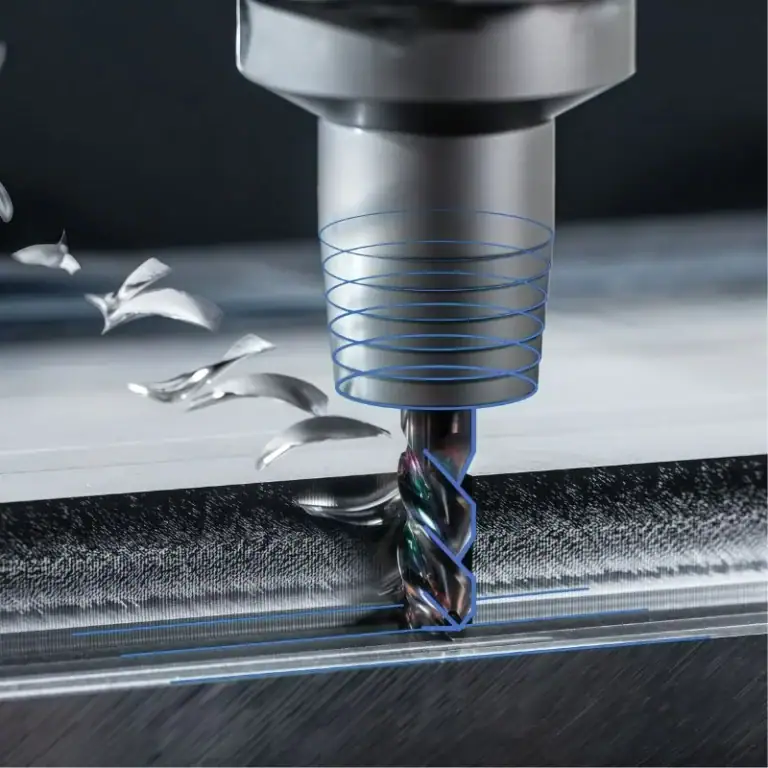
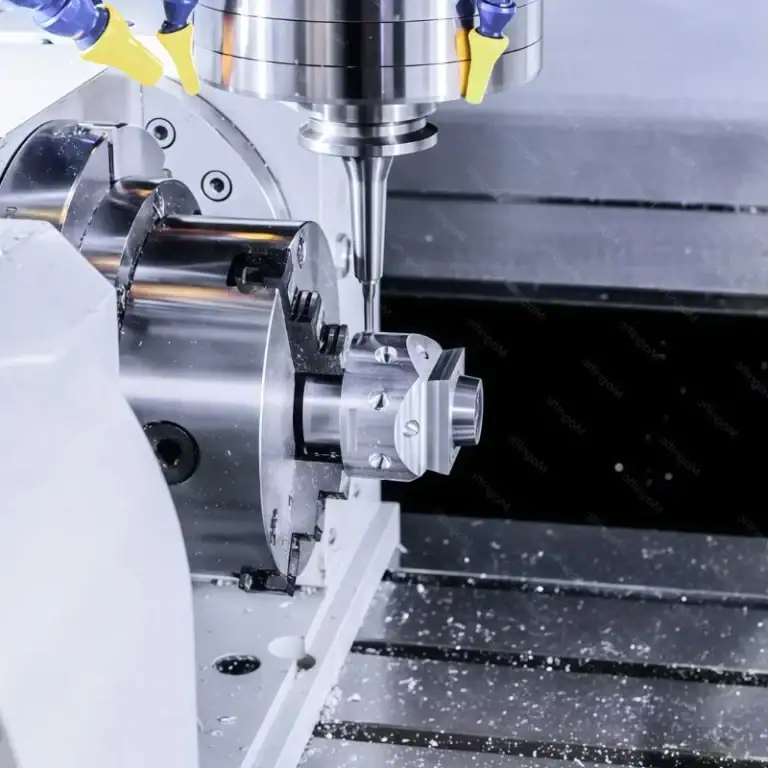
7075 aluminum alloy is a high-strength aluminum material known for its excellent strength-to-weight ratio, good fatigue performance, and relatively good machinability. It is widely used in aerospace, automotive, robotics, industrial equipment, and other industries. As precision manufacturing places increasing demands on lightweight construction, high strength, and dimensional accuracy, 7075 aluminum machining has become a popular option for producing high-performance CNC machined parts.
Get 20% offf
Your First Order
Need custom metal and plastic parts?
What Are the Advantages of 7075 Aluminum Alloy?
High Strength and Lightweight Construction
One of the most important characteristics of 7075 aluminum is its high strength while maintaining the relatively low density associated with aluminum alloys. Compared with many steel components, replacing steel with 7075 aluminum can significantly reduce the overall weight of a component or mechanical system.
This makes the material particularly useful for lightweight components in aerospace equipment, drones, robots, and high-speed motion systems.
Good Machinability
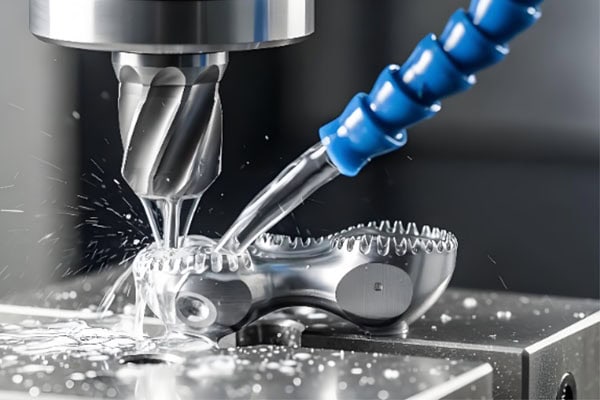
7075 aluminum can be processed using CNC milling, CNC turning, drilling, tapping, and other machining methods. For components with holes, slots, steps, curved surfaces, and precision mounting faces, CNC machining can produce complex geometries with high repeatability.
However, 7075 aluminum is generally harder and stronger than common 6061 aluminum. Therefore, machining parameters, cutting tools, feed rates, spindle speeds, and cooling methods should be selected according to the specific application.
Good Fatigue Performance
Components used in high-performance equipment may experience continuous vibration, cyclic loading, and repeated movement. 7075 aluminum offers good fatigue performance, making it suitable for certain structural components exposed to dynamic loads.
What High-Performance Parts Can Be Made from 7075 Aluminum?
Aerospace Precision Structural Components
Aerospace equipment has strict requirements for component weight and strength. 7075 aluminum can be used to manufacture brackets, connectors, mounting bases, reinforcement components, and various mechanical structural parts.
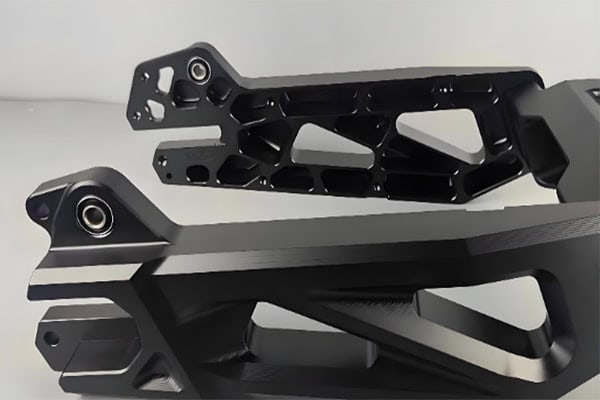
With five-axis CNC machining, manufacturers can also produce aluminum components with complex curved surfaces and multi-angle features while reducing unnecessary material and overall weight.
Drone and Robotics Components
Drones and robots need strong structures while keeping weight as low as possible, making 7075 aluminum a valuable material for many applications.
Typical components include motor mounts, robotic arm connectors, body structural parts, gimbal brackets, bases, and transmission components. For robot joints and other frequently moving mechanisms, lightweight 7075 aluminum parts can also help reduce the load on the motion system.
High-Performance Automotive Structural Parts
Weight reduction is an important strategy for improving vehicle efficiency and dynamic performance. 7075 aluminum can be considered for selected brackets, connectors, suspension-related components, and moving mechanism parts where high strength and low weight are important.
CNC machining can produce precise mounting holes and complex connection structures, helping improve the fit and assembly accuracy between different components.
High-Performance Machinery Components
Industrial automation equipment, precision motion platforms, and high-speed machinery also require lightweight and strong components. Examples include robotic arm structures, precision mounting plates, linear slide components, mounting blocks, and transmission structures.
For these applications, 7075 aluminum can reduce component weight while providing the strength and rigidity required for demanding mechanical systems.
High-End Sports Equipment Components
7075 aluminum is also used in selected high-performance sports and outdoor equipment. Examples include bicycle components, climbing equipment components, and other mechanical parts where weight and strength are important.
CNC machining can produce complex small aluminum components, while surface treatments such as anodizing can improve appearance and corrosion resistance.
What Are the Key Considerations for CNC Machining 7075 Aluminum?
Optimize Cutting Parameters
Although 7075 aluminum has good machinability, its higher strength and hardness require appropriate machining parameters. Spindle speed, feed rate, and cutting depth should be selected according to the component geometry and machining operation.
Excessive cutting parameters can increase heat generation and tool wear, while unsuitable parameters may reduce machining efficiency and affect surface quality.
Select Appropriate Cutting Tools
Sharp cutting tools designed for aluminum machining can reduce cutting resistance and help minimize burrs and built-up edge. For complex components, tool selection should also consider different features such as slots, holes, thin walls, and curved surfaces.
Control Machining Deformation
Thin-wall, deep-pocket, or slender 7075 aluminum components may experience deformation during machining. Proper workholding and machining sequences are therefore important for reducing the influence of cutting forces and residual stress on dimensional accuracy.
How Should 7075 Aluminum Be Compared with Common Aluminum Alloys?
7075 aluminum is not necessarily the best choice for every component. If a part primarily requires cost efficiency, corrosion resistance, and general mechanical performance, commonly used alloys such as 6061 aluminum may offer a more economical solution.
If the application places greater emphasis on high strength, lightweight construction, dynamic loads, and structural performance, 7075 aluminum can be a better option. Material selection should consider the component’s operating environment, load requirements, machining difficulty, surface treatment, and overall production cost.
How Can 7075 Aluminum Machining Quality Be Ensured?
Control Machining Difficulty During the Design Stage
Before CNC machining begins, the component design should be optimized according to the characteristics of 7075 aluminum. Avoiding unnecessarily deep cavities, extremely thin walls, and very small internal radii can reduce machining difficulty while improving structural stability.
Establish a Complete Quality Inspection Process
High-performance metal parts often require strict control of dimensional tolerances, hole positioning accuracy, flatness, and surface roughness. Depending on the requirements, manufacturers can use micrometers, coordinate measuring machines (CMMs), contour measuring equipment, and other inspection tools to verify the finished components.
Overall, 7075 aluminum machining is highly suitable for high-performance metal parts that require a combination of high strength, low weight, and precision. Aerospace structural components, drone parts, robotics components, automotive structural parts, precision machinery components, and high-end sports equipment parts are all potential applications.
During the CNC machining process, the manufacturing strategy should be developed according to the component geometry, material condition, tolerance requirements, and operating environment. With the right cutting tools, machining parameters, workholding methods, and inspection procedures, manufacturers can fully utilize the high-strength and lightweight advantages of 7075 aluminum for reliable high-performance precision components.
Author
Galen Director and Founder
Committed to ensuring we provide the best possible service in the manufacturing industry.
Custom machining is used when a part cannot be sourced as a standard component or when its geometry, material, tolerance, or function must be tailored to a specific project. Instead
Undercut machining creates recessed, hidden, or back-facing features that a standard straight-shank cutter cannot reach from the primary machining direction. The main challenge is usually not removing the material, but
Semiconductor equipment depends on far more than electronics and process technology. Behind every wafer-handling system, test station, inspection tool, and process chamber is a network of precision-machined parts, structural components,
AI CNC machining combines traditional computer numerical control with artificial intelligence, machine learning, manufacturing data, sensors, and intelligent CAM software. Instead of replacing CNC technology, AI adds a decision-support layer
Robotic process automation is a software-based automation technology that uses digital bots to complete repetitive, rules-based tasks normally performed by people on computers. RPA bots can enter and transfer data,
Computer numerical control machining is an automated manufacturing process in which programmed computer instructions control machine tools to remove material and produce precise parts. CNC technology can control tool movement,
Semiconductor manufacturing is the process of turning high-purity semiconductor materials into functional chips through a sequence of wafer preparation, thin-film formation, photolithography, etching, doping, metallization, testing, dicing, packaging, and final
Semiconductors are materials whose electrical conductivity can be controlled between that of conductors and insulators. Silicon is the most widely used semiconductor material, but germanium, silicon carbide, gallium nitride, gallium
Boring machining is a precision cutting process used to enlarge and correct an existing hole. Unlike drilling, which creates the initial hole, boring improves diameter, roundness, straightness, alignment, and internal
Shaft machining is the precision manufacturing of cylindrical components that transmit torque, support rotating elements, or provide controlled motion within mechanical systems. Although a shaft may appear simple, its performance
CNC machining vs injection molding compares two fundamentally different ways to manufacture parts. CNC machining removes material from solid stock with computer-controlled cutting tools, while injection molding melts plastic and
What Is Plating? Types, Processes & Applications Plating is a surface-finishing process that deposits a thin layer of metal onto a substrate. It is commonly used to improve corrosion resistance,