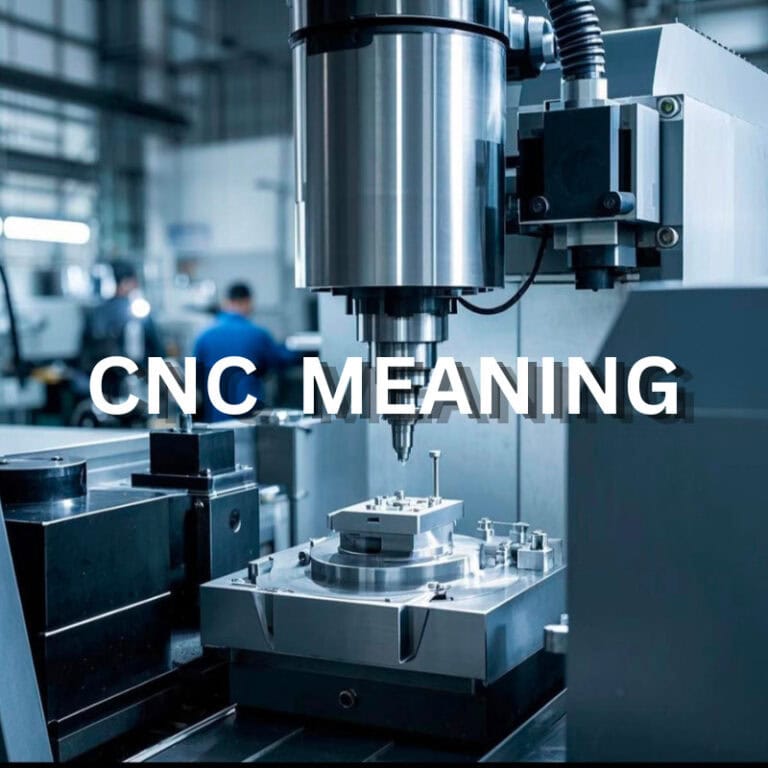
6061 aluminum is one of the most widely used aluminum alloys in precision CNC machining. It offers a balanced combination of strength, lightweight properties, corrosion resistance, machinability, and cost-effectiveness. These characteristics make 6061 aluminum CNC machining a popular choice for manufacturing precision components used in mechanical equipment, automotive systems, robotics, electronics, and aerospace applications.
With CNC milling, CNC turning, drilling, tapping, and multi-axis machining, manufacturers can produce 6061 aluminum parts with complex geometries and consistent dimensional accuracy. Understanding the advantages and applications of this material can help engineers select the right machining solution for their projects.
Get 20% offf
Your First Order
Need custom metal and plastic parts?
Why Is 6061 Aluminum Suitable for CNC Machining?
Excellent Machinability
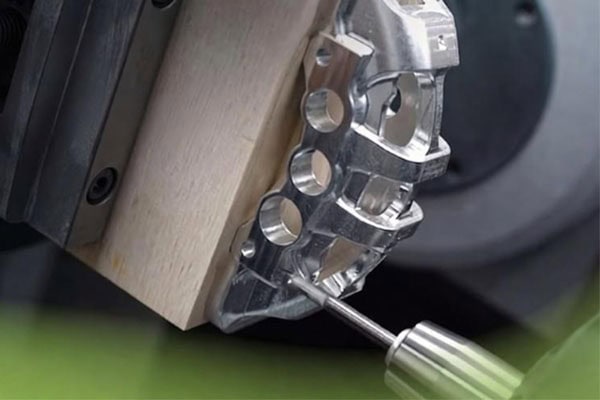
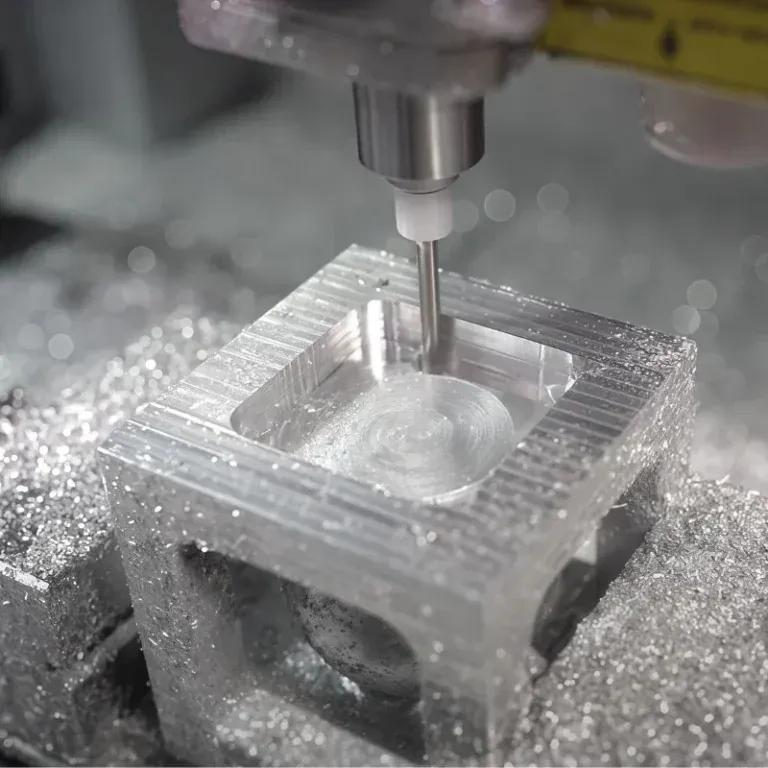
One of the main advantages of 6061 aluminum is its good machinability. Compared with many harder metals, 6061 aluminum generally requires less cutting force and can be efficiently processed using CNC milling, turning, drilling, and tapping.
With the right cutting tools, spindle speed, feed rate, cutting depth, and coolant strategy, manufacturers can achieve stable machining performance while maintaining good surface quality. This makes 6061 aluminum suitable for both prototypes and production runs.
Lightweight and Strong
6061 aluminum provides a useful balance between low weight and mechanical strength. Its lightweight characteristics make it particularly valuable when reducing the overall weight of a component or assembly is important.
Engineers can also optimize wall thickness, internal structures, and reinforcing ribs during product design to achieve an effective balance between weight and structural performance.
Good Dimensional Accuracy and Consistency
CNC machining uses computer-controlled tool movements to manufacture parts according to programmed specifications. This allows manufacturers to produce repeated 6061 aluminum components with consistent dimensions.
For parts containing precision holes, slots, threads, mounting surfaces, and complex profiles, CNC machining can significantly reduce variations caused by manual operations and improve assembly consistency.
What Are the Main Advantages of 6061 Aluminum CNC Machining?
Suitable for Complex Parts
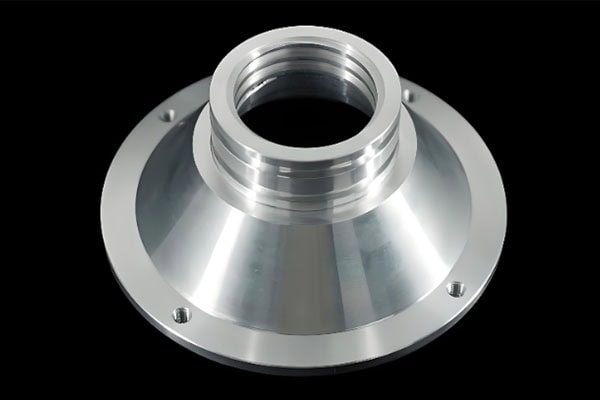
6061 aluminum can be processed using 3-axis, 4-axis, and 5-axis CNC machines. Standard 3-axis machining is suitable for many flat surfaces, holes, pockets, and simple profiles.
For components with angled surfaces, complex cavities, curved geometries, or machining features on multiple sides, 4-axis or 5-axis CNC machining can provide greater flexibility.
Multi-axis machining can also reduce the number of setups required, helping improve positional accuracy between different machined surfaces.
Wide Range of Surface Finishing Options
After CNC machining, 6061 aluminum parts can receive various surface treatments depending on the application and appearance requirements. Common options include anodizing, polishing, sandblasting, and other finishing processes.
Anodizing is particularly common for aluminum CNC parts because it can improve surface durability and provide different colors and finishes. It is widely used for equipment housings, brackets, electronic enclosures, and industrial components.
Good Corrosion Resistance
6061 aluminum offers good corrosion resistance in many general industrial environments. This makes it suitable for components exposed to moisture, outdoor conditions, and other relatively demanding environments.
When additional surface protection is required, anodizing or other appropriate surface treatments can further improve the performance and appearance of the finished component.
Common Applications of 6061 Aluminum CNC Machined Parts
Mechanical Equipment Components
6061 aluminum CNC machining is widely used to produce brackets, mounting plates, bases, connectors, fixtures, housings, and structural components.
Its combination of lightweight properties, machinability, and strength makes it suitable for customized mechanical parts where weight reduction and dimensional accuracy are important.
Automotive and Robotics Components
Automotive and robotic systems increasingly require lightweight and precisely manufactured components. 6061 aluminum can be used for brackets, structural parts, mounting components, housings, and other customized CNC machined parts.
CNC machining allows manufacturers to create accurate holes, threaded features, mounting interfaces, and complex profiles required for assembly.
Aerospace and Electronic Equipment
Weight reduction and precision are important considerations in aerospace and electronic equipment manufacturing. 6061 aluminum is commonly considered for structural components, supports, housings, mounting parts, and other precision-machined applications.
Its machinability also makes it suitable for producing prototypes and customized components with complex dimensional requirements.
What Should Be Considered When CNC Machining 6061 Aluminum?
Choose Appropriate Cutting Tools and Parameters
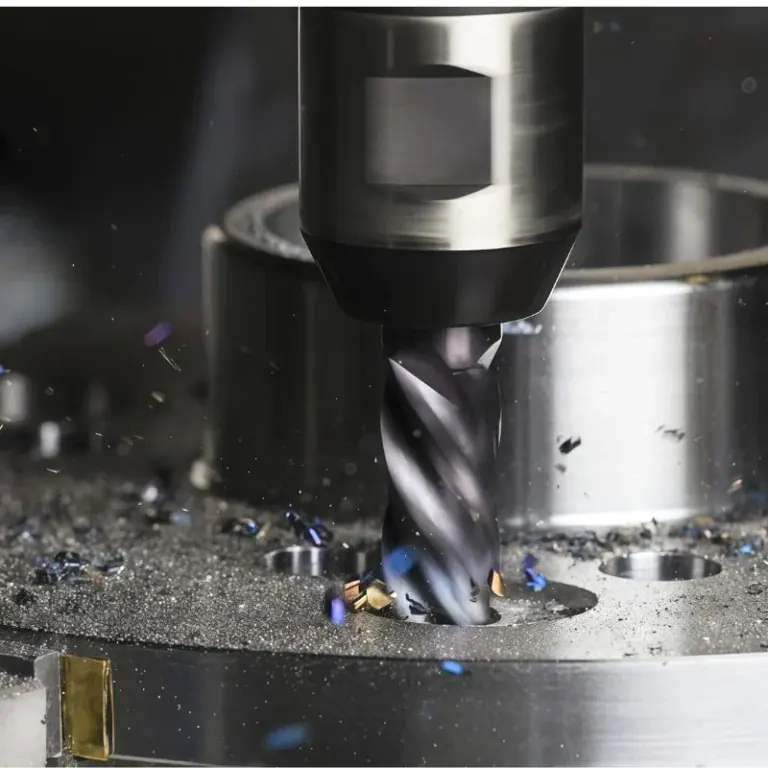
Good aluminum machining performance depends on selecting suitable cutting tools and machining parameters. Tool sharpness, tool geometry, spindle speed, feed rate, and cutting depth can all affect productivity and surface finish.Simply increasing cutting speed does not always guarantee better results. Parameters should be optimized according to the component design, machine capabilities, and required tolerances.
Control Burrs and Chips
Burrs can occur during drilling, slotting, milling, and profile machining. Proper tool selection and machining strategies can help reduce burr formation.Post-machining deburring may also be required, particularly for precision components with tight assembly requirements.
Pay Attention to Machining Deformation
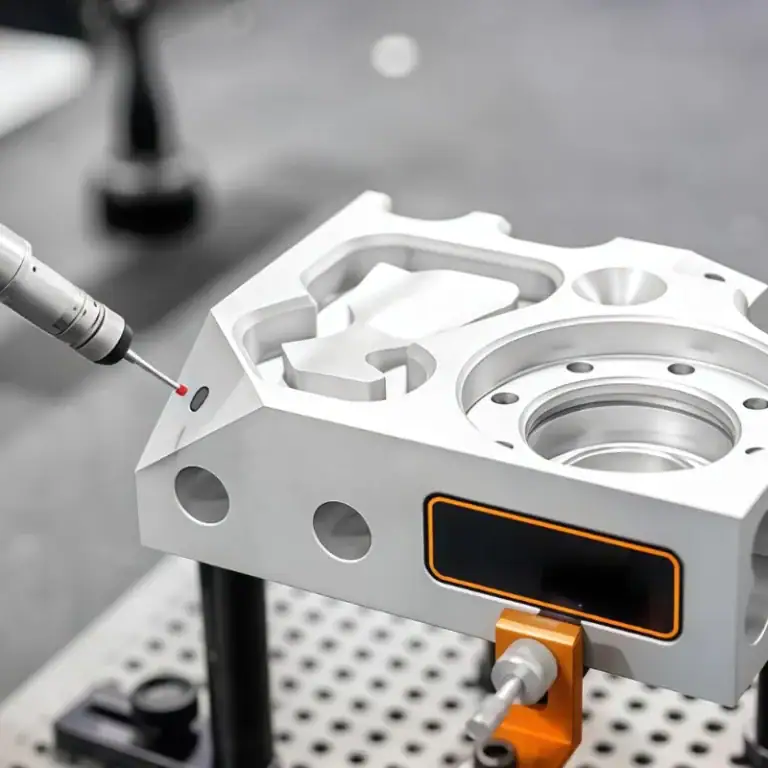
Thin-wall, large-size, or complex 6061 aluminum components can be sensitive to clamping forces and machining stresses. Excessive fixture pressure may affect the final dimensions of the part.For these components, manufacturers should carefully plan the workholding method, roughing and finishing sequence, machining allowance, and inspection process.
How Does 6061 Aluminum Compare with Other Aluminum Alloys?
6061 aluminum is not necessarily the best choice for every CNC machining project. Different aluminum alloys offer different performance characteristics.For applications requiring higher strength, 7075 aluminum may be considered. For applications involving extrusion, decorative finishes, and certain architectural components, 6063 aluminum can be a suitable alternative.
6061 aluminum is particularly attractive when a project requires a balanced combination of strength, machinability, corrosion resistance, lightweight performance, and manufacturing cost.The advantages of 6061 aluminum CNC machining include excellent machinability, lightweight properties, good mechanical strength, corrosion resistance, dimensional consistency, and flexible surface finishing options.These characteristics make 6061 aluminum CNC parts suitable for a wide range of applications, including mechanical equipment, automotive components, robotics, electronics, and aerospace-related parts.
When selecting a 6061 aluminum CNC machining solution, material selection should be considered together with part geometry, dimensional tolerances, production volume, surface treatment, inspection requirements, and overall manufacturing cost. Choosing the right machining process and quality control strategy can help manufacturers achieve reliable parts while maintaining an efficient balance between performance, quality, and cost.
Author
Galen Director and Founder
Committed to ensuring we provide the best possible service in the manufacturing industry.
Limits, fits and tolerances define the acceptable dimensional variation and assembly relationships between mating mechanical components. Limits establish the maximum and minimum permitted sizes, tolerances define the allowable variation, and
Ejector pins are small mold components, but they play a major role in whether an injection molded part can leave the mold cleanly and consistently. After plastic cools around the
A machined housing can have a flat mounting face, a deep pocket, a bearing seat, and threaded holes. A shaft may need finished diameters, grooves, and an axial bore. Each
CNC plastic machining is a subtractive manufacturing process that uses computer-controlled cutting tools to produce precision components from engineering plastics. It is widely used for prototypes, custom housings, bushings, gears,
A flat mounting face, a deep pocket, and a curved mold surface call for different cutting approaches. Choosing a milling cutter starts with understanding the feature to be produced, then
Aluminum is a weakly paramagnetic metal, meaning it responds slightly to an external magnetic field but does not behave like iron or ordinary carbon steel. A typical refrigerator magnet will
Stiffness and strength are often treated as if they describe the same material behavior, but they answer different engineering questions. Stiffness tells you how much a material or part deforms
CNC machining is used to manufacture precise metal and plastic components for automotive, medical, aerospace, industrial equipment, and electronic products. It transforms raw material into functional parts through computer-controlled milling,
A shaft must enter its mating bore, a bearing must stay seated, and a cover must locate correctly on its housing. Each function permits some dimensional variation. The engineering task
SFM machining uses surface feet per minute to measure the cutting speed between a rotating tool and the workpiece. It helps machinists calculate suitable spindle speeds, control cutting conditions, and
CNC is one of the core technologies behind modern manufacturing. It allows machines to follow programmed instructions and produce parts with controlled dimensions, repeatable movements, and less dependence on manual
A machined housing can have correctly sized holes and still fail to assemble if those holes are in the wrong locations. Checking each diameter tells you only part of the