As industries such as aerospace, automotive, medical equipment, robotics, and precision machinery continue to develop, metal parts are becoming increasingly complex. Traditional 3-axis CNC machining can meet the requirements of many standard components, but it may face limitations when machining curved surfaces, angled holes, deep cavities, thin walls, and multi-angle structures.
Multi-axis CNC machining allows cutting tools to approach the workpiece from different directions by adding rotary axes to conventional linear movements. This makes it possible to complete more complex features with fewer setups. For metal parts with complicated structures and tight tolerances, multi-axis machining can provide significant manufacturing advantages.
What Is Multi-Axis CNC Machining?
Multi-axis CNC machining adds rotary movement to the traditional X, Y, and Z linear axes. By controlling additional rotary axes, the machine can change the orientation of the cutting tool or workpiece during machining. 5-axis CNC machining is one of the most widely used multi-axis machining methods for complex precision components.
What Is the Difference Between 3-Axis and 5-Axis Machining?
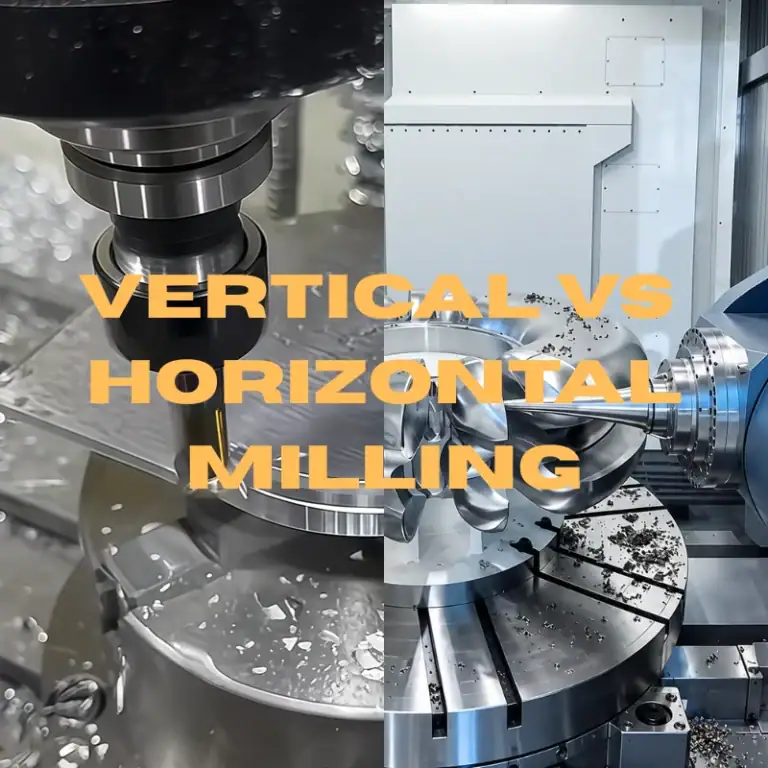
3-axis CNC machining mainly controls tool movement along the X, Y, and Z axes. When a part contains multiple machining surfaces or angled features, the workpiece usually needs to be removed and repositioned.
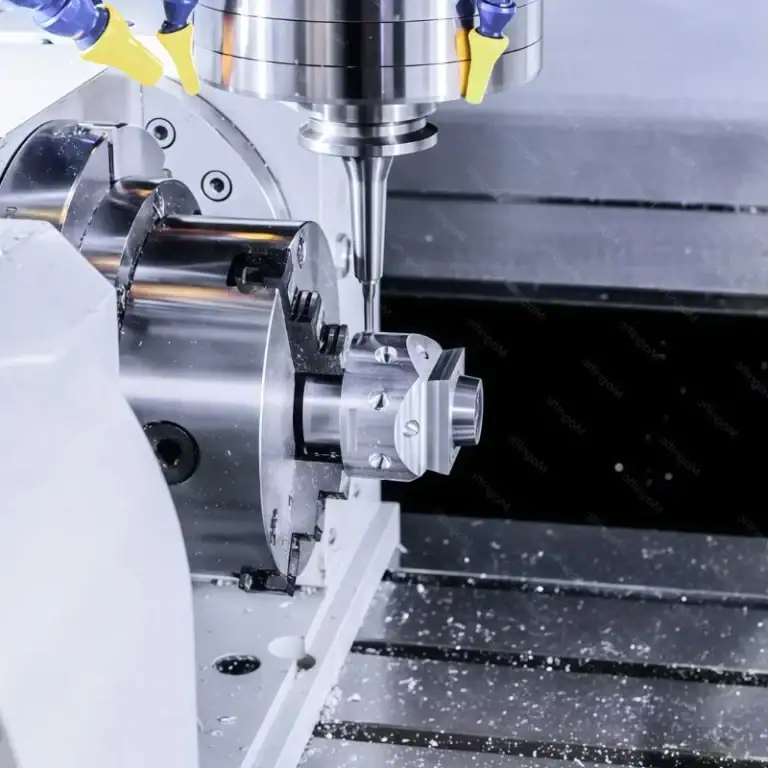
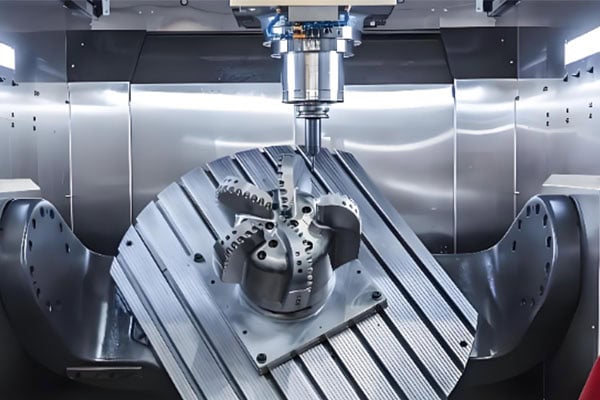
5-axis machining adds two rotary axes, allowing the cutting tool to approach the workpiece from different angles. This makes it easier to machine complex surfaces, angled holes, and multi-sided features while reducing the need for repeated setups.
Why Are Complex Metal Parts Suitable for Multi-Axis Machining?
Fewer Setups and Better Machining Accuracy
Complex parts often require machining on several different surfaces. With conventional machining methods, the workpiece may need to be clamped and repositioned multiple times. Every repositioning operation can introduce additional positioning errors.
Multi-axis machining can complete more machining operations from different directions in a single setup. Reducing the number of setups helps minimize errors caused by repeated positioning and improves the consistency of dimensional relationships between different features.
Easier Machining of Complex Curved Surfaces
Aerospace components, impellers, molds, and robotic parts often contain continuous or irregular curved surfaces. When using a 3-axis CNC machine, the cutting tool orientation is relatively limited, so complex surfaces may need to be divided into several machining areas.
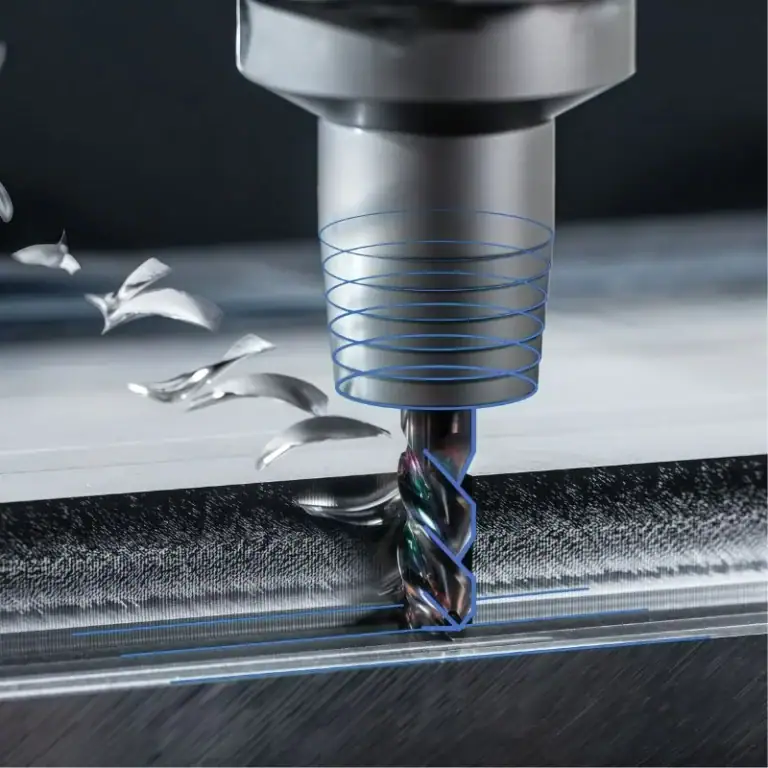
With 5-axis CNC machining, the tool orientation can be adjusted during the cutting process. This allows the tool to follow complex surfaces more effectively and can improve machining continuity and surface quality.
Better Access to Deep Cavities and Difficult Areas
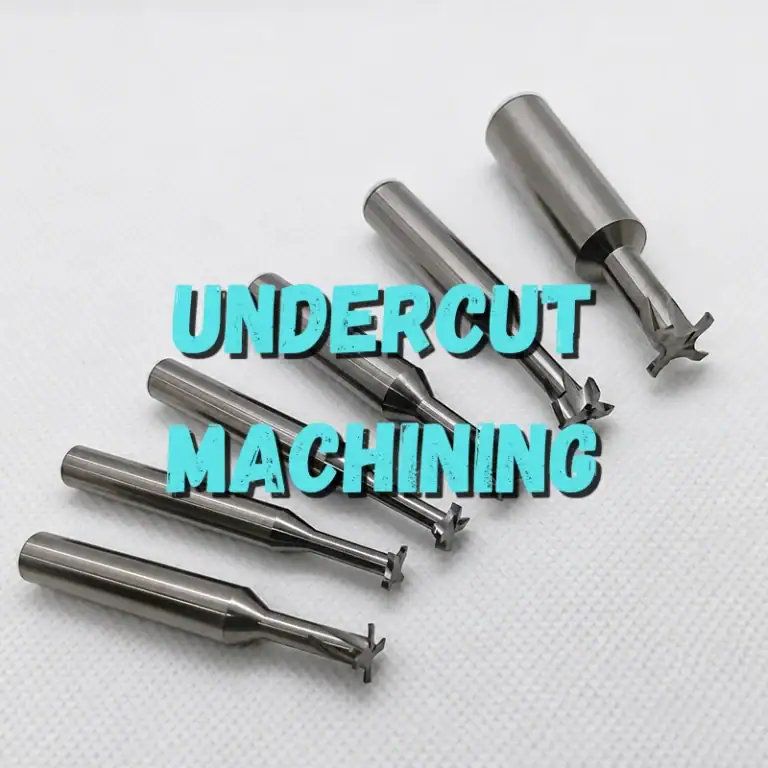
Deep cavities, angled holes, recessed features, and narrow areas are common challenges when machining complex metal parts. If the cutting tool can only maintain one fixed direction, a longer tool may be required.
Excessive tool length can increase vibration and reduce cutting stability. Multi-axis machining can change the tool orientation, allowing the cutting tool to enter difficult areas from a more suitable direction. This can also reduce tool overhang and improve machining stability.
What Other Advantages Does Multi-Axis Machining Provide?
Shorter Manufacturing Processes
With conventional machining, a complex component may require milling, repositioning, alignment, and additional milling operations. Multi-axis machining can consolidate more operations on a single machine, reducing intermediate handling and setup time.
This advantage is particularly valuable for low-volume production and high-mix manufacturing, where manufacturers frequently need to produce different types of precision metal components.
Improved Surface Quality on Complex Features
Tool orientation has a direct influence on cutting conditions when machining curved surfaces. Multi-axis equipment can continuously adjust the tool angle to maintain a more suitable cutting position.
This can help reduce vibration, uneven cutting, and surface imperfections. For molds, impellers, and components with streamlined geometries, multi-axis machining can produce more consistent surface finishes.
Reduced Need for Special Fixtures and Secondary Operations
Complex parts often require specialized fixtures to support machining from different directions. Multi-axis machining can reduce the number of dedicated fixtures and repeated positioning operations.
As a result, manufacturers may also reduce the need for secondary finishing and rework. However, this does not mean that every component should be manufactured using a 5-axis machine.
For simple plates, brackets, and standard block-shaped components, 3-axis CNC machining may still be more economical. The appropriate machining method should be selected based on part geometry, material, dimensional tolerances, production volume, and overall manufacturing requirements.
Which Complex Metal Parts Are Suitable for Multi-Axis Machining?
Aerospace Components
Aerospace components often feature complex curved surfaces, thin-wall structures, and tight dimensional tolerances. Examples include aircraft structural components, engine-related parts, and blades.
Multi-axis machining provides greater flexibility for manufacturing these complicated three-dimensional structures.
Automotive and Robotic Components
Automotive molds, lightweight structural components, robotic joints, and precision connection parts often contain multiple machining surfaces and holes positioned at different angles.
Multi-axis CNC machining can reduce the number of setups and improve the positional consistency between different features.
Medical and Precision Equipment Components
Metal components used in medical devices and precision instruments are often relatively small but feature complicated geometries and tight machining requirements.
Multi-axis CNC machining can be used to produce small curved surfaces, angled features, complex contours, and other precision geometries.
What Should You Consider When Choosing Multi-Axis Machining?
Multi-axis machining requires higher levels of machine capability, tooling, fixturing, and CAD/CAM programming. Before machining a complex component, manufacturers need to evaluate tool accessibility, machining directions, potential interference, and the overall fixturing strategy based on the 3D model.
For continuous curved surfaces, simultaneous 5-axis machining may be appropriate. For components with angled holes or multiple machining surfaces, 3+2-axis positioning can also be an effective solution.
The two methods should not simply be viewed as better or worse than each other. The most suitable machining strategy depends on the actual geometry and manufacturing requirements of the part.
Complex metal parts are well suited to multi-axis machining because it helps overcome several limitations associated with conventional 3-axis machining, including limited tool access, repeated setups, complex curved surfaces, and multi-sided machining.
By reducing setups, optimizing tool orientation, and improving access to complicated geometries, multi-axis CNC machining can help manufacturers achieve more consistent quality and better production efficiency.
For metal components with complex structures and tight tolerances, selecting an appropriate 5-axis CNC machining or multi-axis machining solution can optimize the overall manufacturing process while maintaining the required precision and surface quality.