Aluminum 6063 is a heat-treatable 6000 series aluminum-magnesium-silicon alloy known for excellent extrudability, corrosion resistance, smooth surface finish, and good anodizing performance. It is commonly selected for architectural profiles, heat sinks, frames, tubing, electronic housings, automation structures, and other parts where appearance and complex extrusion geometry matter more than maximum structural strength.
This guide explains what is aluminum 6063, its chemical composition, physical and mechanical properties, T5 and T6 tempers, extrusion and CNC machining behavior, surface treatment, applications, advantages, limitations, and the difference between aluminium 6063 vs 6061.
What Is Aluminum 6063?
Aluminum 6063 is a medium-strength, heat-treatable Al-Mg-Si alloy designed especially for extrusion, good surface appearance, corrosion resistance, and fabrication. It belongs to the 6000 series, where magnesium and silicon combine to form magnesium-silicide strengthening phases during heat treatment.
6063 is often called an architectural aluminum alloy because it is widely used for window frames, door frames, curtain walls, railings, trims, and other visible extruded products. Its combination of smooth extrusion behavior and excellent anodizing response also makes it useful well beyond construction, including electronics, transportation, industrial equipment, automation, and consumer products.
Key characteristics of aluminum 6063 include:
- Excellent extrusion performance for complex profiles
- Smooth surface finish after extrusion
- Very good anodizing response
- Good atmospheric corrosion resistance
- Good welding and brazing performance
- Moderate mechanical strength
- Useful thermal conductivity for heat sinks
- Multiple strength levels through T5, T6, and other tempers
- Lower machining strength than 6061, but good secondary-machining capability
What Is The Chemical Composition Of 6063 Aluminum?
6063 aluminum composition is based mainly on aluminum with approximately0.45–0.9% magnesium and0.2–0.6% silicon, plus tightly controlled amounts of iron, copper, manganese, chromium, zinc, and titanium. Magnesium and silicon form Mg₂Si, which allows the alloy to increase strength through precipitation hardening.
The relatively low copper content helps preserve good corrosion resistance and surface quality. This chemistry is one reason 6063 can be extruded into thin, complex sections while still responding well to T5 and T6 heat treatment.
| Element | Typical 6063 Content | Main Engineering Effect |
| Aluminum | Balance | Base metal, low density and good conductivity |
| Magnesium | 0.45–0.90% | Combines with silicon for precipitation strengthening |
| Silicon | 0.20–0.60% | Supports Mg₂Si formation and extrusion behavior |
| Iron | ≤0.35% | Controlled to protect ductility and finish |
| Copper | ≤0.10% | Kept low to preserve corrosion resistance |
| Manganese | ≤0.10% | Grain and intermetallic control |
| Chromium | ≤0.10% | Helps control grain structure |
| Zinc | ≤0.10% | Limited to protect corrosion behavior |
| Titanium | ≤0.10% | Grain refinement |
Actual chemical acceptance limits should be confirmed against the material specification used for the project rather than relying only on a general composition table.
What Are The Common Designations And Standards For 6063 Aluminum?
6063 aluminum is commonly identified as AA6063 or EN AW-6063, while international descriptions may also reference AlMgSi-type designations. Product requirements depend on region, product form, temper, and applicable engineering standard. LangHe lists ASTM B221 for extruded bars, rods, profiles, and tubes and EN755-related requirements among common specifications.
The important procurement point is that “6063 aluminum” alone does not fully define the material. Drawings and purchase specifications should also state:
- Required temper, such as T5 or T6
- Product form
- Dimensions and tolerances
- Surface condition
- Mechanical property requirements
- Applicable ASTM, EN, ISO, JIS, or customer standard
- Material certificate requirements
What Are The Properties Of 6063 Aluminum?
6063 aluminium alloy properties include a density of about2.70g/cm³, elastic modulus around69GPa, thermal conductivity around200W/m·K, good corrosion resistance, and mechanical strength that changes significantly with temper. T5 provides moderate strength, while T6 increases yield and tensile performance through additional heat treatment.
Because 6063 is strongly temper-dependent, engineers should avoid using a single strength number for every 6063 part. Extrusion thickness, geometry, specification, temper, and product dimensions can all affect minimum or typical values.
Physical Properties
The physical properties of aluminum 6063 include low density, moderate stiffness, good electrical conductivity, and relatively high thermal conductivity. These characteristics support lightweight structures, heat sinks, electronic housings, frames, and long extrusion profiles.
| Physical Property | Representative Value |
| Density | About2.70g/cm³ |
| Elastic Modulus | About68.9–69.5GPa |
| Thermal Conductivity | About200–209W/m·K |
| Thermal Expansion | About21.8–23.5×10⁻⁶/K |
| Electrical Resistivity | About0.35×10⁻⁶Ω·m |
Gabrian lists a density of2.70g/cm³ for T5, T6, and T832 material and thermal conductivity around209W/m·K for T5 and200W/m·K for T6/T832. AZoM reports comparable physical values, although exact figures depend on material condition and data source.
Mechanical Properties
6063 mechanical properties range from moderate to relatively strong depending on temper, with T6 and T832 offering substantially higher yield and tensile strength than T5. Gabrian lists representative tensile strengths of186MPa for T5,241MPa for T6, and290MPa for T832.
| Property | 6063-T5 | 6063-T6 | 6063-T832 |
| Tensile Strength | About186MPa | About241MPa | About290MPa |
| Yield Strength | About145MPa | About214MPa | About269MPa |
| Elastic Modulus | About68.9GPa | About68.9GPa | About69GPa |
| Density | 2.70g/cm³ | 2.70g/cm³ | 2.70g/cm³ |
These are representative property values rather than universal design allowables. AZoM’s EN755-based data, for example, gives different minimum mechanical requirements depending on whether the product is a tube, profile, rod, bar, wall thickness, and temper.
Thermal Properties
6063 aluminum has good thermal conductivity, typically around200W/m·K, which makes it useful for extruded heat sinks, LED housings, electrical enclosures, and cooling structures. Its coefficient of thermal expansion is roughly22–24×10⁻⁶/K depending on source and condition.
Thermal expansion matters in precision assemblies. Long extrusion profiles, heat sink bases, optical frames, and electronic housings can change dimensions as temperature changes, so hole locations, mounting interfaces, and thermal clearances should be designed accordingly.
Corrosion Resistance
6063 aluminum has very good atmospheric corrosion resistance because aluminum naturally forms a protective oxide film and because 6063 contains relatively low levels of copper. It performs particularly well in architectural, indoor, outdoor, and general industrial environments.
For more aggressive chloride or marine exposure, anodizing, powder coating, painting, drainage design, and galvanic isolation may still be needed. Direct contact with dissimilar metals in wet environments should also be reviewed during design.
Surface Finish And Anodizing Performance
6063 aluminum offers excellent surface finish and anodizing performance, which is one of its strongest advantages over many higher-strength aluminum alloys. Smooth extrusion surfaces can be anodized into decorative silver, black, bronze, or other finishes, making the alloy especially useful for visible products.
A good anodized result still depends on raw material quality, extrusion control, surface handling, machining marks, cleaning, and anodizing process consistency. Cosmetic requirements should therefore be identified on the drawing before manufacturing.
What Are The Tempers Of 6063 Aluminum?
6063 aluminum is commonly supplied in T5 and T6 tempers, with T4, T832, and other conditions available for specific requirements. Temper determines the balance between strength, ductility, forming behavior, dimensional stability, and final manufacturing route.
For procurement, “6063” should rarely be specified without a temper. A T5 architectural extrusion and a T6 machined component can behave very differently even though both use the same base alloy.
6063-T5 Aluminum
6063-T5 aluminum is cooled from an elevated-temperature shaping process such as extrusion and then artificially aged to increase strength. It is one of the most widely used conditions for architectural and general-purpose 6063 extrusions.
Gabrian lists representative 6063-T5 tensile strength around186MPa and yield strength around145MPa. T5 provides a useful balance of strength, extrusion efficiency, dimensional stability, and finishing quality.
6063 T5 aluminium is commonly selected for:
- Window and door frames
- Curtain wall profiles
- Decorative trims
- Light structural framing
- Furniture profiles
- Display systems
- General tubing
- Heat sink profiles
6063-T6 Aluminum
6063-T6 aluminum is solution heat-treated and artificially aged to provide higher mechanical strength than T5. It is useful when a 6063 part must retain its excellent surface and extrusion characteristics while carrying greater mechanical load.
Gabrian lists representative T6 tensile strength around241MPa and yield strength around214MPa. AZoM’s EN755-based tables give minimum values that vary by product form and dimensions, demonstrating why specification details must be checked before final design.
6063 t6 aluminum is often used for:
- Stronger extrusion frames
- Industrial structures
- Machine profiles
- Railings
- Tubes and bars
- Machined extrusion components
- Transportation parts
- Structural architectural profiles
6063-T832 Aluminum
6063-T832 aluminum is a higher-strength temper used when greater mechanical performance is required while retaining 6063’s general material advantages. Gabrian lists representative tensile strength around290MPa and yield strength around269MPa for T832.
This temper is less universal than T5 and T6, so availability, dimensions, certification, and supplier capability should be confirmed before a drawing is finalized around T832 stock.
6063-T5 Vs 6063-T6: What Is The Difference?
The difference between 6063-T5 and 6063-T6 is mainly the heat-treatment route and resulting strength. T5 is cooled from the extrusion process and artificially aged, while T6 receives solution heat treatment followed by artificial aging, producing higher strength.
| Factor | 6063-T5 | 6063-T6 |
| Processing | Cooled after shaping and artificially aged | Solution heat-treated and artificially aged |
| Representative Tensile Strength | About186MPa | About241MPa |
| Representative Yield Strength | About145MPa | About214MPa |
| Strength | Moderate | Higher |
| Forming Flexibility | Better | Lower than T5 |
| Dimensional Stability | Good | Good |
| Surface Finish | Excellent | Excellent |
| Common Uses | Architectural profiles, decorative extrusions | Stronger frames, tubes, industrial profiles |
| Selection Priority | Fabrication and extrusion efficiency | Higher mechanical strength |
If the part mainly requires appearance, extrusion efficiency, and moderate strength, T5 is often sufficient. If higher load or greater resistance to permanent deformation is required, T6 is normally the better starting point.
How Is 6063 Aluminum Manufactured And Processed?
6063 aluminum can be manufactured and processed through extrusion, CNC machining, cutting, forming, welding, and surface finishing. Extrusion is its strongest manufacturing advantage, while CNC machining is commonly used afterward to add holes, threads, pockets, slots, sealing surfaces, and precision assembly features.
The best process depends on part geometry and production volume. Long constant-cross-section components favor extrusion, while low-volume precision components or secondary features often require CNC machining.
Aluminum Extrusion
Extrusion is the most characteristic manufacturing process for 6063 aluminum because the alloy flows well through complex dies and can produce intricate, thin-walled, hollow, and decorative profiles with good surface quality. Gabrian describes 6063 as the most popular aluminum alloy for extrusion.
Typical products include:
- T-slot profiles
- Heat sink fins
- Window profiles
- Hollow tubes
- Channels
- Angles
- Rails
- Enclosures
- Decorative trim
- Custom structural sections
Extrusion can also reduce downstream machining. Features such as ribs, channels, grooves, mounting tracks, and hollow chambers can often be incorporated directly into the profile instead of being milled from a solid block.
CNC Machining
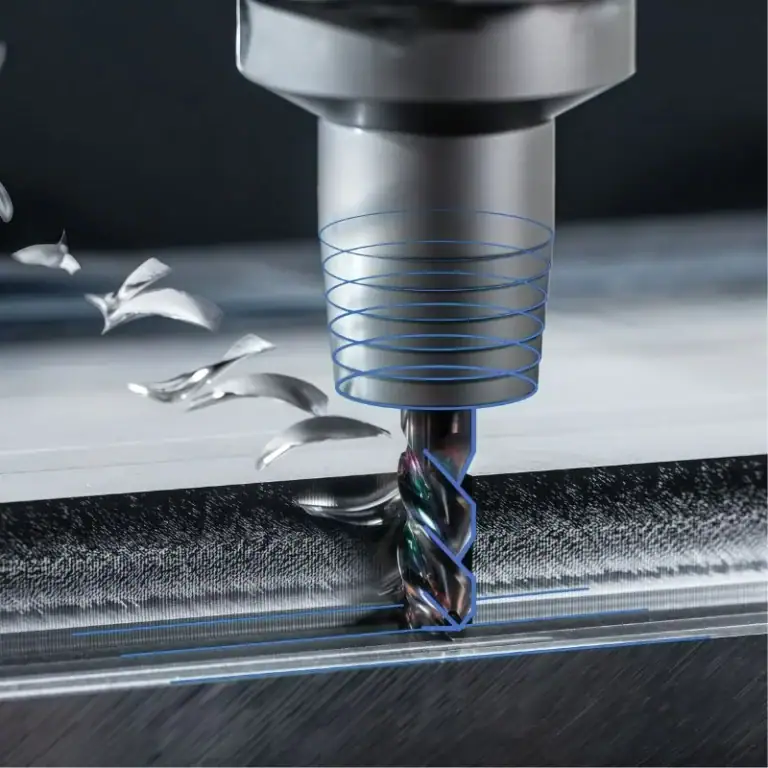
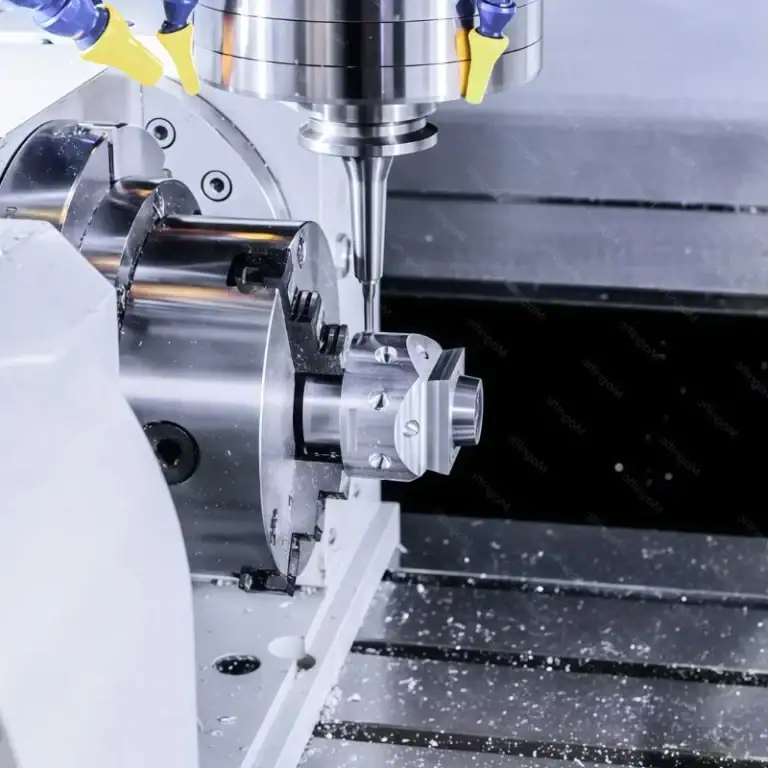
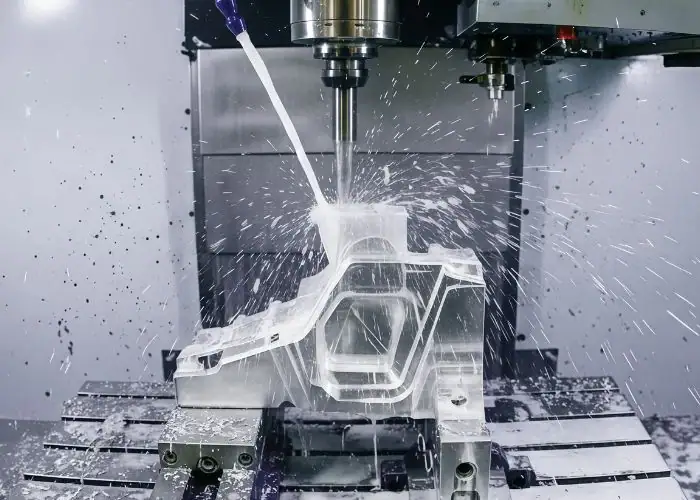
CNC machining is used on 6063 aluminum when extruded or solid material needs precision holes, threads, pockets, slots, flat surfaces, multi-side features, or controlled assembly interfaces. 6063 is machinable, although 6061 is generally preferred when machining performance and higher structural strength are the main priorities.
Common CNC processes include:
- CNC milling services for pockets, mounting surfaces, slots, and profiles
- CNC turning services for rings, tubes, spacers, and cylindrical features
- Drilling and tapping for fastener locations
- Reaming and boring for precision holes
- 5-axis CNC machining for multi-angle or complex extrusion components
- Deburring and finishing for cosmetic and assembly surfaces
For precision machining, sharp cutting tools, rigid fixturing, chip control, proper coolant, and stable finishing passes help maintain dimensional accuracy and surface quality.
Cutting And Forming
6063 aluminum can be sawed, routed, drilled, punched, bent, and formed, although formability depends strongly on temper. T4 and softer conditions are more suitable for substantial forming, while T6 offers higher strength but reduced forming flexibility. AZoM specifically notes that 6063 has good formability in the T4 condition.
For bent extrusion parts, designers should consider wall thickness, inside radius, profile symmetry, springback, grain flow, local thinning, and whether heat treatment occurs before or after forming.
Welding
6063 aluminum has good weldability and can be joined using conventional welding methods, including TIG and MIG welding. AZoM rates its gas, arc, and resistance welding behavior as excellent and lists4043 and5183-type fillers among possible welding choices depending on requirements.
Welding can reduce strength near the heat-affected zone, especially in precipitation-hardened tempers. For precision structures, engineers should consider:
- Filler alloy
- Joint geometry
- Heat input
- Weld sequence
- Fixture support
- Distortion
- Post-weld dimensional inspection
- Whether post-weld heat treatment is required
Anodizing And Surface Finishing
Anodizing is one of the most suitable surface treatments for 6063 aluminum because the alloy can produce a smooth, uniform, decorative oxide layer. Powder coating, painting, brushing, polishing, and conversion coating can also be used depending on appearance and environment.
Surface preparation should be controlled before finishing. Machining marks, scratches, extrusion lines, handling damage, weld discoloration, and inconsistent polishing can remain visible after anodizing.
Why Is 6063 Aluminum Widely Used For Extrusion?
6063 aluminum is widely used for extrusion because it combines low extrusion resistance, good dimensional control, complex-profile capability, smooth surface quality, corrosion resistance, and excellent finishing response. These benefits allow manufacturers to produce long, detailed profiles economically without relying heavily on secondary machining.
Its main extrusion advantages include:
- Complex geometry:Hollow chambers, channels, ribs, and thin walls can be integrated into one profile.
- Smooth surface:Suitable for visible architectural and consumer products.
- High production efficiency:Long profiles can be produced continuously.
- Lower machining demand:Many functional features can be built directly into the cross-section.
- Excellent anodizing:Particularly useful for decorative and exposed parts.
- Good dimensional consistency:Suitable for modular framing and assembly systems.
For a component with a constant cross-section and long length, extrusion can be far more economical than machining the complete shape from plate or billet.
6063 Vs 6061 Aluminum: What Is The Difference?
The main difference between 6061 and 6063 aluminum is engineering priority: 6061 offers higher mechanical strength and better CNC machinability, while 6063 offers better extrudability, surface finish, and decorative anodizing performance. Both belong to the 6000 series and use magnesium and silicon as their main alloying elements.
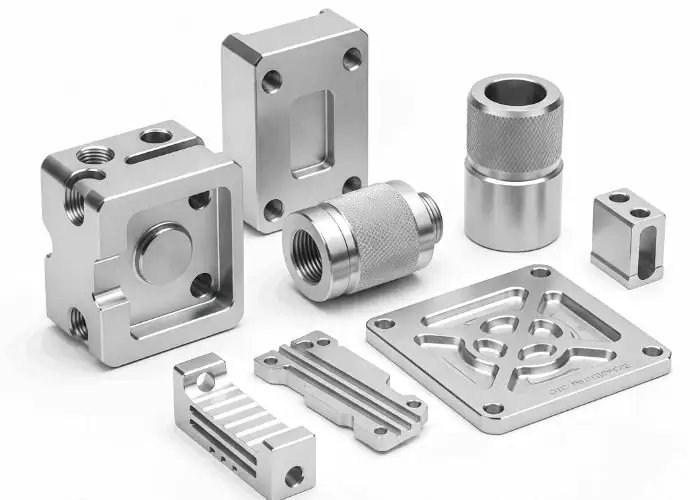
For buyers searching what is the difference between 6061 and 6063 aluminum, the practical rule is straightforward: use6061 for stronger machined or structural parts and6063 for complex extrusions and visually important profiles.
Chemical Composition
6061 and 6063 are both Al-Mg-Si alloys, but 6061 generally contains more alloying additions and is optimized for greater mechanical strength. 6063 uses relatively low copper and controlled Mg-Si content, supporting corrosion resistance, extrusion behavior, and finish quality.
This chemistry does not make6063 weak; it simply gives the alloy a different design priority.
Strength And Mechanical Properties
6061 is stronger than6063 in commonly compared T6 conditions. Ya Ji lists6061-T6 around310MPa tensile strength, while representative6063-T6 data is lower, although exact numbers vary by product form, specification, and source.
This makes6061 more suitable for:
- Structural brackets
- Machine components
- Fixtures
- Load-bearing frames
- CNC milled parts
- Aerospace and automotive structures
6063 is more suitable when strength requirements are moderate and extrusion quality is more important.
Machinability And Extrudability
6061 generally has better CNC machinability, while6063 has better extrudability. This is one of the most important differences between the two alloys.
For a machined block with deep pockets, threaded holes, tight features, and significant structural load,6061 is usually easier to justify. For a long profile with channels, thin walls, decorative surfaces, or heat sink fins,6063 is often the better manufacturing choice.
Corrosion Resistance And Surface Finish
6063 offers very good corrosion resistance and typically produces a smoother decorative finish after extrusion and anodizing than6061. This is why it dominates many architectural and consumer-facing extrusion applications.
6061 also has good corrosion resistance, but it is generally chosen for strength and machinability rather than appearance.
Applications
6061 is more commonly associated with structural, automotive, aerospace, machine, fixture, and CNC machining applications, while6063 is more commonly associated with architectural profiles, heat sinks, tubing, railing, frames, enclosures, furniture, and decorative extrusions.
| Selection Factor | 6063 Aluminum | 6061 Aluminum |
| Strength | Moderate | Higher |
| Extrudability | Excellent | Good |
| CNC Machinability | Fair to good | Better |
| Complex Profiles | Excellent | Good |
| Surface Finish | Excellent | Good |
| Anodizing Appearance | Excellent | Good |
| Corrosion Resistance | Very good | Good to very good |
| Weldability | Good | Good |
| Architectural Profiles | Excellent choice | Possible |
| Structural CNC Parts | Possible for moderate loads | Better choice |
| Heat Sinks | Excellent | Good |
| Cosmetic Extrusions | Excellent | Good |
When Should You Choose 6063 Instead Of 6061?
Choose6063 instead of6061 when the project prioritizes extrusion complexity, surface finish, corrosion resistance, anodizing appearance, thermal performance, or lower-load lightweight structures. Choose6061 when strength, CNC machining, threaded features, structural stiffness, or load-bearing performance are more important.
A practical decision can be made using the following logic:
- Complex extrusion + decorative finish → 6063
- Heat sink or LED housing → 6063
- Window, railing, enclosure, trim → 6063
- High-load CNC bracket → 6061
- Precision machined structural component → 6061
- Moderate-load extrusion needing secondary machining → evaluate both
What Is Aluminum 6063 Used For?
Aluminum 6063 is used mainly for architectural extrusions, heat sinks, frames, tubes, railings, electronic housings, transportation trim, automation profiles, furniture, and other products that need good corrosion resistance, smooth finish, and complex extrusion geometry.
Its applications are much broader than window frames. The combination of extrusion performance and secondary CNC machinability makes6063 useful whenever a long profile can be produced first and then precision features added afterward.
Automotive
6063 aluminum is used in automotive applications for trim, rails, lightweight tubes, decorative profiles, cooling structures, and other moderate-load components where low weight, corrosion resistance, and surface quality matter.
Extruded6063 components can also be CNC machined after extrusion to add mounting holes, pockets, threads, interfaces, and assembly features. For highly loaded suspension, chassis, or structural parts,6061 or a stronger aluminum alloy is usually reviewed instead.
Industrial Equipment
6063 aluminum is used in industrial equipment for machine frames, guards, rails, tubing, workstations, supports, and modular extrusion systems because it offers lightweight construction and flexible profile design.
Extrusion slots can integrate fasteners, covers, cable routes, panels, sensors, and adjustable mounting hardware. This makes6063 especially practical for modular equipment.
Medical
6063 aluminum can be used in non-implant medical equipment for frames, housings, equipment rails, carts, supports, instrument structures, and other components that benefit from lightweight corrosion-resistant extrusions.
For medical manufacturing, surface finish, cleaning requirements, dimensional stability, and applicable regulatory requirements should be confirmed before selecting the alloy and finish.
Aerospace
6063 aluminum can be used in aerospace for non-critical interior, trim, enclosure, rail, or lightweight extrusion applications, but it is generally not the first choice for highly stressed primary structures. Higher-strength alloys such as2024,6061,7050, or7075 are commonly considered when mechanical load dominates. LangHe similarly notes that6063 is not generally treated as a primary aircraft-grade structural aluminum.
Its value in aerospace is therefore mainly in parts where extrusion quality, low weight, corrosion resistance, and appearance are more important than maximum structural strength.
Automation
6063 aluminum is widely used in automation systems for T-slot profiles, machine frames, conveyor supports, guards, sensor mounts, equipment enclosures, workstations, and modular structures.
The profiles can be cut to length and then CNC drilled, milled, tapped, or5-axis machined to create precision mounting interfaces without machining the complete structure from solid billet.
Electronics
6063 aluminum is widely used in electronics because its thermal conductivity, extrusion performance, and surface finish are suitable for heat sinks, LED housings, amplifier enclosures, power-electronics cooling profiles, electrical boxes, and instrument cases.
Heat sink fins are particularly suited to extrusion because multiple thin fins can be produced as one continuous profile. Secondary CNC machining can then create flat contact surfaces, mounting holes, threads, or connector openings.
Robotics
6063 aluminum is useful in robotics for lightweight frames, protective housings, sensor rails, modular supports, covers, extrusion structures, and non-critical moving components.
For robot arms or load-bearing links that require higher rigidity and strength,6061,7075, steel, or another material may be more appropriate.6063 is strongest when the design benefits from modular extrusion geometry rather than maximum strength.
Consumer Products
6063 aluminum is used in consumer products because it can combine attractive appearance, lightweight construction, corrosion resistance, and cost-efficient extrusion. Typical examples include furniture frames, display stands, racks, handles, sports equipment, decorative trims, and product housings.
Anodizing and powder coating also allow designers to create durable cosmetic finishes without hiding the metallic character of the material.
Construction And Architectural Applications
Construction and architecture are the most established applications for6063 aluminum because the alloy produces long, complex, corrosion-resistant profiles with excellent decorative finish. Typical applications include window frames, doors, curtain walls, handrails, balustrades, glazing profiles, roof structures, and decorative trim.
This is why6063 is frequently called architectural aluminum.
Renewable Energy
6063 aluminum can be used in renewable energy systems for solar panel frames, equipment housings, mounting profiles, electrical enclosures, heat dissipation structures, and lightweight support components.
The combination of extrusion efficiency, corrosion resistance, and low weight is particularly useful where long profiles must be manufactured in repeatable quantities.
What Product Forms Is 6063 Aluminum Available In?
6063 aluminum is available mainly as extruded profiles, tubes, channels, angles, bars, and custom sections, although availability depends on supplier and region. AZoM lists square sections, rectangular sections, channels, equal and unequal angles, flat bars, and tubes among typical supplied forms.
Common forms include:
- Round tube
- Square tube
- Rectangular tube
- Round bar
- Flat bar
- Angle
- Channel
- Hollow extrusion
- Heat sink profile
- T-slot profile
- Architectural profile
- Custom extrusion
For CNC manufacturing, extruded bar, tube, or custom profile can reduce machining time when the starting shape is already close to the final part.
What Are The Advantages And Limitations Of 6063 Aluminum?
The main advantages of6063 aluminum are excellent extrudability, smooth surface finish, good corrosion resistance, strong anodizing response, weldability, thermal conductivity, and efficient production of complex profiles. Its main limitations are lower strength and lower CNC machining suitability compared with alloys such as6061.
| Advantages | Limitations |
| Excellent extrudability | Lower strength than6061 |
| Complex thin-wall profiles | Not ideal for highly loaded structures |
| Excellent surface appearance | Softer than many structural alloys |
| Very good anodizing response | Machinability is only fair to good |
| Good corrosion resistance | Heat treatment strongly affects performance |
| Good weldability | Long profiles can distort if process control is poor |
| Good thermal conductivity | Not suitable for every high-temperature application |
| Lightweight | Cosmetic finish requires careful handling |
| Suitable for high-volume extrusion | Extrusion tooling adds upfront cost |
Main Manufacturing Benefits
The main manufacturing benefit of6063 is that complex geometry can be created during extrusion rather than removed later by machining. This can reduce cycle time, material waste, tool wear, and total production cost.
For example, instead of machining a heat sink from a thick aluminum block, fins and channels can be integrated into a6063 extrusion. CNC machining can then be limited to critical interfaces and holes.
Main Engineering Limitations
The main engineering limitation of6063 is mechanical strength. It should not automatically replace6061,2024, or7075 in parts where high load, fatigue, impact, or structural safety is the primary design requirement.
Its relatively moderate hardness can also affect thread durability, wear surfaces, and highly loaded contact areas. Inserts, surface treatments, or a stronger alloy may be required in these cases.
How Do You Choose The Right 6063 Aluminum For Your Project?
The right6063 aluminum should be chosen by matching temper, strength requirement, extrusion geometry, CNC machining needs, surface finish, environment, production quantity, and cost.6063 is most valuable when the design can take advantage of extrusion and finishing rather than using it simply because it is an available aluminum alloy.
Choose The Right Temper
Choose the temper by balancing strength and manufacturing requirements. T5 is suitable for many architectural and general extrusions, while T6 is better when greater strength is required.
Do not assume T5 and T6 are interchangeable. Confirm mechanical requirements, bending operations, final dimensions, and finishing before selecting the temper.
Consider Strength And Load Requirements
Choose6063 only when its strength is sufficient for the actual load case. If the part carries high structural, impact, fatigue, or threaded loads, compare it with6061 or another stronger alloy.
Representative T6 data is useful for early design, but final allowable values should come from the applicable material specification and actual product form.
Evaluate Extrusion And Part Geometry
Choose6063 when the part has a constant cross-section that can benefit from extrusion. Channels, ribs, T-slots, fins, hollow chambers, rails, and thin walls can often be produced much more efficiently than by CNC machining from solid stock.
A DFM review should evaluate:
- Minimum wall thickness
- Hollow sections
- Rib proportions
- Die access
- Profile symmetry
- Extrusion tolerances
- Straightness
- Twist
- Machining allowance
Consider CNC Machining Requirements
Choose6063 for CNC machining when the part begins as an extrusion or when moderate-strength precision features are required. For machining-intensive components made almost entirely by material removal,6061 may be more efficient.
For complex6063 parts, CNC milling, drilling, tapping, turning, and5-axis machining can be combined with extrusion to reduce material waste and setup count.
Consider Surface Finish And Anodizing
Choose6063 when cosmetic appearance and anodizing are important because its surface quality is one of its strongest engineering advantages. Visible surfaces should be protected throughout extrusion, cutting, machining, inspection, and transport.
The drawing should clearly identify:
- Cosmetic surfaces
- Anodizing type
- Color
- Surface texture
- Brushing direction
- Masked areas
- Acceptable machining marks
- Appearance inspection requirements
Evaluate Cost And Production Volume
Choose6063 when extrusion volume and geometry justify the initial extrusion tooling cost. Extrusion can provide excellent unit economics once production quantity is sufficient, but very small batches of simple parts may be cheaper to machine directly from standard stock.
A practical cost comparison should include:
- Extrusion die cost
- Raw material
- Minimum order quantity
- Extrusion scrap
- Cutting
- CNC machining
- Deburring
- Anodizing or coating
- Inspection
- Packaging
- Lead time
The lowest material price does not always produce the lowest finished-part cost.
FAQs
What Aluminum Is Better, 6061 Or 6063?
6061 is better for higher-strength structural and CNC-machined parts, while 6063 is better for complex extrusions and decorative surfaces. 6061-T6 typically reaches about 310MPa tensile strength and 276MPa yield strength. By comparison, representative 6063-T6 values are about 241MPa and 214MPa. Choose 6061 for brackets, fixtures, and load-bearing parts; choose 6063 for heat sinks, frames, rails, and architectural profiles.
Is 6063 Aluminum Aircraft Grade?
6063 aluminum can be used in aerospace components, but it is generally not considered a primary aircraft structural alloy. Representative 6063-T6 tensile strength is about 241MPa, which is significantly below high-strength aerospace alloys such as 7075-T6. Its advantages are low 2.70g/cm³ density, corrosion resistance, extrudability, and surface finish. It is better suited to aircraft interiors, rails, housings, trim, and other non-critical lightweight components.
What Are The Key Differences Between 6063 And 5083 Aluminum?
6063 and 5083 differ mainly in strength, alloy chemistry, heat treatment, and applications. 6063 is an Al-Mg-Si heat-treatable alloy optimized for extrusion, while 5083 is a non-heat-treatable Al-Mg alloy designed for higher strength and marine corrosion resistance. 6063-T6 has representative tensile strength around 241MPa, whereas 5083-H116 can exceed 300MPa. Choose 6063 for profiles and heat sinks; choose 5083 for marine structures, tanks, and heavy welded parts.
What Is The Difference Between 6061 And 6063 Aluminum?
The difference between 6061 and 6063 aluminum is mainly strength, machinability, extrudability, and surface quality. 6061-T6 typically provides about 310MPa tensile strength, compared with approximately 241MPa for 6063-T6. 6061 is generally better for CNC machining and structural components, while 6063 offers superior extrusion performance and decorative anodizing quality. For precision brackets and fixtures, choose 6061; for frames, heat sinks, tubing, and architectural profiles, choose 6063.
Conclusion
Aluminum6063 is a versatile6000 series Al-Mg-Si alloy designed around excellent extrusion performance, smooth surface quality, corrosion resistance, anodizing response, and moderate mechanical strength. T5 is widely used for architectural and general extrusions, while T6 provides higher strength for more demanding parts.6063 is especially valuable for frames, heat sinks, tubes, enclosures, automation profiles, construction systems, electronics, and consumer products where complex geometry and appearance are important. For machining-heavy or higher-load components,6061 should also be evaluated.
At TiRapid, we provide precision CNC machining and manufacturing services for custom aluminum components, including extruded profiles, housings, heat sinks, brackets, frames, and complex precision parts. If your project requires6063 aluminum,6063-T5,6063-T6, CNC milling, turning,5-axis CNC machining, anodizing, tight-tolerance secondary machining, or low-volume production, our team can support material selection, DFM review, machining strategy, surface finishing, inspection, and production-ready custom parts.