Die casting and injection molding may look similar because both use a mold to form repeatable parts from a material in a flowable state. The key difference is the material: die casting primarily produces metal components, while conventional injection molding is used for plastics. This distinction affects part strength, weight, temperature performance, tooling, cost, and suitable applications.
This guide explains the main differences between die casting vs injection molding, including materials, dimensional performance, surface finish, production speed, tooling investment, and part cost. It also shows where each process fits best and how material requirements, production volume, and final part function can guide the right manufacturing decision.
Die Casting vs Injection Molding At A Glance
The fastest way to understand these two processes is to compare what they produce and where each one performs best. Both can support repeat production, but metal and plastic behave very differently in real products.
| Factor | Die Casting | Injection Molding |
| Main Materials | Aluminum, zinc, magnesium alloys | Thermoplastics and engineering plastics |
| Final Part | Metal | Plastic |
| Structural Stiffness | Generally higher | Depends strongly on plastic grade |
| Part Weight | Higher | Usually lower |
| Heat Performance | Generally better | Material-dependent |
| Electrical Behavior | Conductive | Often electrically insulating |
| Tooling Investment | High | High |
| Production Volume | Medium to high | Medium to very high |
| Surface Finish | Good as-cast finish | Good molded finish |
| Secondary Machining | Common on critical features | Usually less extensive |
| Best Fit | Structural and functional metal parts | Lightweight and versatile plastic parts |
Neither process is automatically better. A plastic housing and an aluminum housing may have similar shapes, but they can serve very different mechanical, thermal, electrical, and commercial requirements.
What Is Die Casting?
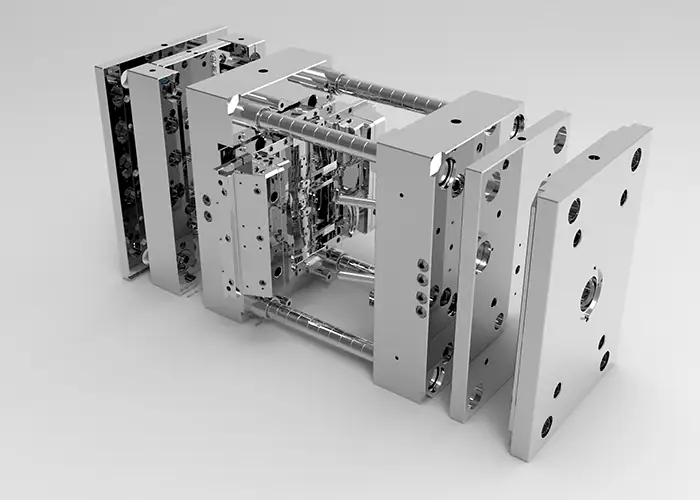
Die casting is a manufacturing process in which molten metal is forced into a reusable metal die and allowed to solidify into the required shape. Aluminum, zinc, and magnesium alloys are among the most common choices because they combine useful mechanical properties with good castability.
The process is particularly valuable when a project requires repeated production of complex metal components. Features that would otherwise require several machining or assembly operations can often be formed directly into the casting, although critical areas may still need CNC machining afterward.
Main Advantages Of Die Casting
The main advantage of die casting is that it produces real metal components with useful strength, stiffness, temperature resistance, and dimensional stability. This makes it suitable for housings, brackets, structural frames, automotive components, and other parts that must carry mechanical loads or maintain rigidity.
Metal also provides functions that many plastics cannot easily reproduce. An aluminum die-cast housing, for example, can help dissipate heat, provide electrical conductivity, and support EMI shielding while still offering a relatively lightweight metal structure.
Die casting can also create thin walls, ribs, bosses, and complex external geometry in one part. When the design is suitable for casting, this can reduce the amount of material removal and assembly needed after the basic shape is formed.
Main Limitations Of Die Casting
Die casting requires dedicated tooling, so the initial investment is difficult to justify for very small quantities. The process is generally most economical when the design is stable and enough parts will be produced to distribute tooling costs across the production run.
Material choice is also narrower than with plastic injection molding. Die casting primarily uses castable non-ferrous alloys, and the finished component can contain casting-related defects such as porosity if the process or geometry is not well controlled.
For tight-tolerance holes, sealing surfaces, bearing locations, or threaded features, a casting may still require secondary machining before it is ready for assembly.
What Is Injection Molding?
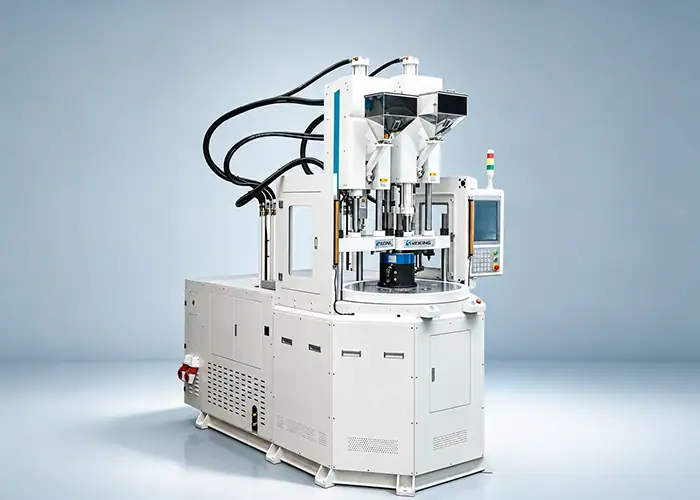
Injection molding is a process used to manufacture plastic parts by heating a thermoplastic until it can flow, filling a mold cavity, and allowing the material to cool into its final shape. Common materials include ABS, polypropylene, polycarbonate, nylon, polyethylene, and many other engineering plastics.
Like die casting, injection molding is best suited to repeat production once the product geometry has been finalized. Its major advantage is the wide range of properties that can be achieved by selecting different polymers, additives, fillers, and colors.
Main Advantages Of Injection Molding
Plastic injection molding can produce lightweight parts with complex shapes and consistent appearance. A molded component can integrate ribs, bosses, clips, snap fits, textures, and other features that might otherwise need to be assembled separately.
Material flexibility is another major advantage. Engineers can select plastics for transparency, flexibility, chemical resistance, electrical insulation, impact resistance, low friction, or a particular surface appearance. This makes injection molding useful across a very broad range of products.
Once tooling is established, the process also becomes highly efficient for repeated production. For high-volume products, a relatively short cycle and limited material waste can lead to an attractive cost per part.
Main Limitations Of Injection Molding
The largest limitation is the upfront mold investment. Tooling becomes more attractive as production quantity increases, but it can be difficult to justify when only prototypes or a small number of parts are required.
Plastic also cannot replace metal in every application. Some products require greater stiffness, higher temperature capability, thermal conductivity, or metal-specific structural properties that conventional thermoplastics cannot provide.
Design changes also become more expensive once the mold has been completed. For projects that are still evolving quickly, CNC machining or another low-tooling process may provide more flexibility during early development.
Key Differences Between Die Casting And Injection Molding
The most important differences come from the behavior of metal and plastic rather than from the fact that both processes use molds. Material selection affects nearly every downstream decision, from part weight and strength to finishing and cost.
Understanding these differences early can prevent a project from being designed around a process that does not match the final product requirements.
Materials
Die casting is primarily associated with aluminum, zinc, and magnesium alloys. These materials are selected when the finished product needs metallic strength, rigidity, temperature resistance, conductivity, or a durable metal structure.
Injection molding uses polymers such as ABS, polypropylene, polycarbonate, nylon, POM, and many other thermoplastics. The large material range allows designers to prioritize properties such as low weight, transparency, impact resistance, electrical insulation, chemical resistance, or flexibility.
Material selection often determines the manufacturing process before other factors are considered. If a component must be aluminum, conventional plastic injection molding is not an alternative. If a lightweight insulating plastic already satisfies the product requirements, die casting may add weight and cost without providing useful value.
Metal injection molding should also not be confused with conventional plastic injection molding. MIM uses metal powder mixed with a binder and requires additional debinding and sintering operations, making it a separate manufacturing process.
Strength, Weight And Functional Performance
Die-cast metals generally provide higher stiffness and structural rigidity than unreinforced molded plastics. They are therefore attractive for load-bearing housings, mechanical structures, heat-producing equipment, and components that need a durable metallic body.
Injection-molded plastics have a major advantage in weight. Their lower density can reduce the overall mass of a product, which is useful in handheld equipment, vehicles, portable electronics, and consumer products.
Function can be more important than simple strength. Metal can provide heat transfer and electromagnetic shielding, while plastics can provide electrical insulation and corrosion resistance without requiring a separate protective coating. The right choice therefore depends on what the component needs to do rather than which material has the highest strength value.
Precision And Dimensional Stability
Both processes can produce repeatable production parts, but dimensional capability depends on the material, geometry, part size, tooling, and critical feature requirements.
Die-cast parts can achieve good dimensional consistency, particularly for stable structural geometry. However, precision bores, mating surfaces, threads, sealing areas, and other critical features are often machined after casting when tighter control is required.
Injection-molded parts can also provide good repeatability, but plastics shrink and respond to temperature differently from metals. Material grade, wall thickness, environmental temperature, and geometry can therefore influence final dimensions.
For this reason, it is more accurate to evaluate the tolerance requirements of a specific part than to claim that one process is always more precise than the other.
Part Weight And Size
Injection molding has a clear advantage when reducing weight is a priority. Plastic components can replace heavier metal parts in products where the required loads, temperature, and environment allow it.
Die casting becomes more attractive when the design requires the stiffness and rigidity of metal. In some cases, a thinner metal wall can provide the structural behavior needed for the product even though the material itself has greater density.
The engineering decision is therefore a balance between weight reduction and structural performance, rather than simply choosing the lightest material.
Surface Finish And Appearance
Die-cast parts can leave the mold with a relatively smooth metallic surface and can later receive additional finishing when required. Aluminum castings, for example, may be machined, painted, powder coated, plated, or treated with a suitable conversion or anodic process depending on the alloy and application.
Injection-molded plastics can achieve different appearances directly from the mold. Color can often be incorporated into the material, while polished or textured mold surfaces can create glossy, matte, or patterned finishes.
Plastic parts can also be painted, printed, or coated after molding. Injection molding therefore offers particularly strong flexibility when product appearance, color, branding, or surface texture is important.
Die Casting Vs Injection Molding Cost
Cost is one of the most common reasons engineers compare these processes, but there is no universal answer to which is cheaper. The result depends on tooling, material, part geometry, production volume, and the amount of finishing or machining required afterward.
A lower raw material cost does not automatically mean a lower finished-part cost, and a more expensive mold can still be economical when it is used for a sufficiently large production run.
Tooling Cost
Both die casting and injection molding require dedicated tooling, which creates a significant upfront investment compared with CNC machining or other tool-less processes.
Die casting dies must operate with molten metal and withstand demanding thermal and mechanical cycles. As a result, tooling can be expensive to manufacture and maintain over long production programs.
Injection molds also vary widely in cost. A simple single-cavity mold is very different from a multi-cavity production tool with complex movements, inserts, or demanding cosmetic surfaces.
The practical question is not whether tooling is expensive, but whether the expected production volume can justify that investment.
Material And Part Cost
Plastic components often benefit from lower density and, depending on the resin, lower raw material cost. This can make injection molding very economical for high-volume lightweight products.
Die-cast components use metal and may also require trimming, machining, surface treatment, or other secondary work. Their individual production cost can therefore be higher.
However, cost should always be considered against function. If the product requires metal strength, heat dissipation, stiffness, or shielding, replacing it with plastic purely to reduce piece price may create a component that no longer meets the engineering requirement.
Production Volume And Cost Per Part
Both processes become more economically attractive as production volume increases because the initial tooling investment is spread across more components.
At low volume, the mold may represent a large share of the project cost. At higher volumes, its contribution to each individual part becomes progressively smaller.
This means annual demand and expected product life should be considered together. A costly production tool may make sense for tens of thousands of parts but be difficult to justify for a few hundred pieces.
Die Casting Vs Injection Molding Production Speed
Both processes are designed for repeat production and can manufacture components efficiently once tooling and process conditions are established. The actual production rate depends on the part rather than the process name alone.
Material behavior, component size, geometry, cooling requirements, secondary operations, and inspection can all influence total manufacturing time.
Which Is Better For High-Volume Production?
Both processes can be excellent for high-volume manufacturing when matched to the correct product.
For metal components, die casting can repeatedly produce complex shapes far more efficiently than machining the entire part from solid metal in many applications. For suitable plastic products, injection molding can achieve extremely efficient repetitive production with low material waste.
The better question is therefore not simply which process is faster. It is which process can produce the required material, geometry, and performance at the target production volume with the most practical overall cost.
Advantages And Limitations At A Glance
By this point, the differences can be summarized in a simpler way. Die casting is primarily valuable when the product needs metal performance, while injection molding is strongest when low weight and polymer versatility provide a practical advantage.
| Factor | Die Casting | Injection Molding |
| Main Advantage | Strong, rigid metal parts | Lightweight, versatile plastic parts |
| Material Range | Mainly castable non-ferrous alloys | Broad thermoplastic selection |
| Weight | Higher | Lower |
| Heat Performance | Generally better | Depends on plastic grade |
| Electrical Behavior | Conductive | Often insulating |
| Corrosion | Alloy and finish dependent | Does not rust like metal |
| Tooling | High initial investment | High initial investment |
| Design Changes After Tooling | Expensive | Expensive |
| Secondary Machining | Often required for critical features | Usually more limited |
| High-Volume Production | Excellent | Excellent |
The table should be used as a starting point rather than an absolute rule. Engineering-grade plastics and specialized alloys can shift some of these comparisons significantly.
Applications Of Die Casting And Injection Molding
The same industries often use both processes because different components inside one product may require completely different material properties. A metal frame and a plastic cover can coexist in the same assembly for very good engineering reasons.
Looking at applications by function therefore provides more value than simply assigning one process to an entire industry.
Automotive
Automotive manufacturing uses die casting for housings, structural components, brackets, drivetrain-related parts, and other applications where metal strength or heat management is important.
Injection molding is widely used for interior components, covers, connectors, clips, dashboards, electrical housings, and other parts where lower weight and design flexibility provide advantages.
Modern vehicle design frequently combines both approaches. The decision depends on the function of each component rather than the industry itself.
Industrial Equipment
Industrial machinery often uses die-cast metal housings, brackets, supports, and enclosures that require rigidity or durability.
Injection-molded plastics are common in protective covers, handles, control housings, knobs, electrical components, and other parts that do not require a metal structure.
In many assemblies, die-cast and molded components work together, allowing metal to carry structural loads while plastic reduces weight and simplifies protective or ergonomic features.
Medical
Medical products can include both metal and plastic components, but material selection must be based on the exact device requirements.
Metal housings and structural components may be selected where rigidity, durability, or dimensional stability is important. Injection-molded plastics are widely used for housings, disposable components, transparent parts, and other medical products where a suitable approved polymer meets the functional and regulatory requirements.
Neither process should be selected purely because the product is “medical.” Material grade, sterilization, intended use, and regulatory requirements must be evaluated separately.
Electronics
Electronics are a good example of where the functional difference between metal and plastic becomes clear.
Die-cast housings can provide structural rigidity, heat dissipation, and electromagnetic shielding. Injection-molded housings can reduce weight, provide electrical insulation, incorporate colors and textures, and form detailed features economically.
The final choice often depends on thermal management, shielding, electrical safety, appearance, and product weight.
Consumer Products
Injection molding is widely used for consumer products because plastics offer low weight, color flexibility, complex geometry, and efficient high-volume production.
Die casting is more appropriate when a consumer product benefits from a metallic structure, greater durability, heat transfer, or a premium metal appearance and feel.
A single finished product may contain both types of components, with each process used only where its properties create real value.
Can The Same Part Use Either Process?
In some cases, a part concept can be manufactured in either metal or plastic, but changing the manufacturing process usually requires more than simply replacing one material with another.
Metal and plastic respond differently to load, heat, wall thickness, assembly forces, and environmental conditions. As a result, a geometry optimized for injection-molded plastic may not be ideal for die-cast aluminum, and a die-cast metal component may need substantial redesign before it can be converted to plastic.
For example, a plastic housing may rely on ribs to create stiffness while keeping walls light. A metal version may achieve sufficient rigidity with a different wall structure. Likewise, a plastic replacement for a metal part may need thicker sections or additional reinforcement to achieve acceptable stiffness.
A process change should therefore be treated as a redesign decision rather than a simple material substitution.
How To Choose Between Die Casting And Injection Molding
A good manufacturing decision begins with the product requirements, not with a preference for one process. Material, mechanical performance, environment, volume, and total cost should be evaluated together.
In many cases, answering one or two basic engineering questions will quickly narrow the choice.
Start With The Material Requirement
The first question is whether the component actually needs to be metal.
If the part requires high stiffness, heat dissipation, metallic durability, EMI shielding, or other properties that depend on metal, die casting may be the more appropriate production method.
If an engineering plastic already provides sufficient strength and environmental performance, injection molding can reduce weight and offer much greater flexibility in color, insulation, transparency, and other material characteristics.
Starting with material prevents teams from comparing production economics between two processes that may not deliver equivalent functional parts.
Consider Strength, Weight And Environment
The operating environment should be considered alongside mechanical requirements.
A housing exposed to heat, vibration, mechanical loads, or electrical shielding requirements may favor metal. A portable product that prioritizes low weight, electrical insulation, corrosion resistance, or cosmetic flexibility may favor plastic.
Chemical exposure and outdoor conditions also matter. Some plastics perform well in corrosive environments, while some metal parts may require additional surface protection.
Compare Tooling Cost And Production Volume
Both processes make the most economic sense when the design is stable.
If the product is still changing frequently, investing in production tooling can create expensive revisions. Prototype manufacturing or CNC machining may provide more flexibility while geometry and assembly are still being validated.
Once the design is mature, tooling cost should be compared against expected annual volume, anticipated product life, unit cost, and secondary operations. This provides a much more realistic comparison than looking at the mold price alone.
Consider Secondary Machining And Finishing
Die casting can produce a near-net-shape metal component, but critical features may still require CNC machining. Precision bores, threaded holes, sealing surfaces, datum faces, and tight mating features are common examples.
Injection molding can often produce a more complete final geometry directly from the tool, although printing, coating, assembly, or other finishing may still be required.
A realistic manufacturing comparison should therefore look at the finished component, not just the cost of the initial molding or casting operation.
Where Does CNC Machining Fit?
CNC machining plays a useful role before, after, or even instead of these two processes. Its main advantage is flexibility because it does not require dedicated production tooling.
During product development, CNC machining can produce metal or engineering-plastic prototypes so engineers can check geometry, fit, assembly, and basic function before committing to a die or mold. This is particularly useful when dimensions or product details are still changing.
For die-cast components, CNC machining is also commonly used after casting to finish critical features that require greater dimensional control than the casting alone can provide. Holes, threads, mating faces, sealing surfaces, and precision interfaces are typical examples.
For low-volume production, CNC machining may even remain the more practical manufacturing method when the cost of dedicated die-casting or injection-molding tooling cannot yet be justified.
FAQs
What Are The Common Defects That Can Occur In Die Casting?
Common die casting defects include porosity, cold shuts, misruns, flash, surface cracks, and dimensional distortion. Their occurrence depends on the alloy, part geometry, die condition, and casting process. Critical areas may require additional inspection or CNC machining to meet final dimensional and functional requirements.
Is CNC Better Than Casting?
Neither process is always better. CNC machining is usually more suitable for prototypes, low-volume parts, tight tolerances, and designs that may still change. Casting becomes more economical for higher-volume production of repeated metal parts. Many die-cast components also use CNC machining afterward for precision holes, threads, sealing surfaces, and mating features.
Why Is Aluminium Used In Die Casting?
Aluminum is widely used in die casting because it offers a good balance of low weight, strength, corrosion resistance, thermal conductivity, and dimensional stability. It can also form complex shapes efficiently, making aluminum die casting suitable for automotive, electronics, industrial equipment, and housing components.
Conclusion
Die casting and injection molding are both efficient production methods, but their most important difference is the material they are designed to process. Die casting is better suited to components that need metal strength, stiffness, heat performance, or structural stability, while injection molding is ideal for lightweight plastic parts with broad material and appearance options. The right choice depends on function, material, tooling investment, production volume, and total finished-part cost.
At TiRapid, we provide precision CNC machining and prototype manufacturing for metal and engineering plastic parts, along with secondary machining for components that require tighter dimensional control. Our manufacturing support helps evaluate geometry, material, critical features, and production requirements before moving from prototypes to repeat production.