If you are looking for a CNC machining company in China that can produce custom metal parts, TiRapid is one company to consider. Based in Zhongshan, Guangdong, TiRapid provides CNC milling, CNC turning, 3-axis, 4-axis, 5-axis, and large-part machining. It works from customer drawings to produce parts in aluminum, stainless steel, carbon and alloy steel, brass, copper, titanium, and other metals, supporting projects from one-off prototypes and low-volume validation through production.
The challenge with a custom metal part is rarely limited to machining its external shape. Material grade, load conditions, thin walls, deep cavities, critical fits, and finishing thickness can all change the manufacturing plan. If a supplier quotes from a 3D model without reviewing the 2D drawing, tolerances, and application, a part may look correct but still fail to assemble or perform as intended. A capable manufacturing partner should therefore consider material, geometry, accuracy, and finishing as parts of one production strategy.
How TiRapid Develops a Machining Plan from Your Drawings
After receiving a 3D model and 2D drawing, TiRapid’s engineering team reviews the datums, critical dimensions, mating surfaces, threads, internal cavities, and finish requirements. It then determines whether the part is better suited to milling, turning, multi-axis machining, or a combination of processes. For designs still under development, a design for manufacturability review can identify restricted tool access, overly deep pockets, thin walls that may deform, small internal corner radii, and tolerances that may add avoidable cost.
The purpose is not to recommend loosening every requirement. It is to separate dimensions that affect function from features that can be optimized without changing the part’s intended use. Assembly holes, bearing fits, and sealing surfaces often require close control, while nonfunctional exterior dimensions may allow a more production-friendly tolerance. Discussing these points before machining can reduce trial cuts, rework, and repeated design revisions.
Different Metals Require Different Machining Strategies
A custom metal part should be specified more precisely than simply “aluminum” or “steel.” Grades within the same metal family can differ in strength, corrosion resistance, conductivity, heat-treatment condition, and machinability. TiRapid machines a broad selection of common metals and alloys and can discuss material options based on the intended use of the part.
Aluminum alloys are widely used for prototypes, automation components, robotic structures, and electronics housings. Aluminum 6061 suits many general structural applications, 7075 offers higher strength, and 5083 is often selected where corrosion resistance matters. Aluminum can be machined efficiently and works well with anodizing, bead blasting, and color finishes, although fixturing and distortion still need attention on thin-wall or large-area parts.
Stainless steel is commonly selected for parts that require strength, corrosion resistance, or clean surfaces. TiRapid machines grades including 303, 304, 316/316L, and 17-4 PH. These grades differ in cutting resistance, work-hardening behavior, and service environment, so tools, coolant, and cutting parameters need to be adjusted accordingly. If passivation, polishing, or electropolishing is required, critical dimensions and cosmetic areas should be identified before machining.
Carbon and alloy steels are suitable for load-bearing components, fixtures, transmission parts, and mechanical structures. Material hardness, heat-treatment condition, and subsequent black oxide, zinc plating, or other protective treatments affect stock allowance and process sequence.
Brass, copper, and bronze are used for fittings, electrical components, instrument parts, and wear-resistant structures. Their electrical properties, friction behavior, and machinability vary by grade. Copper-alloy parts may also require additional attention to scratching, burrs, and cosmetic protection.
Titanium and nickel-based alloys can support applications with specific strength-to-weight or high-temperature requirements. These materials are generally more demanding to machine and can increase tool wear, so toolpaths, heat control, and production cost should be evaluated against the part geometry.
Complex Metal Parts Do Not Automatically Require Five-Axis Machining
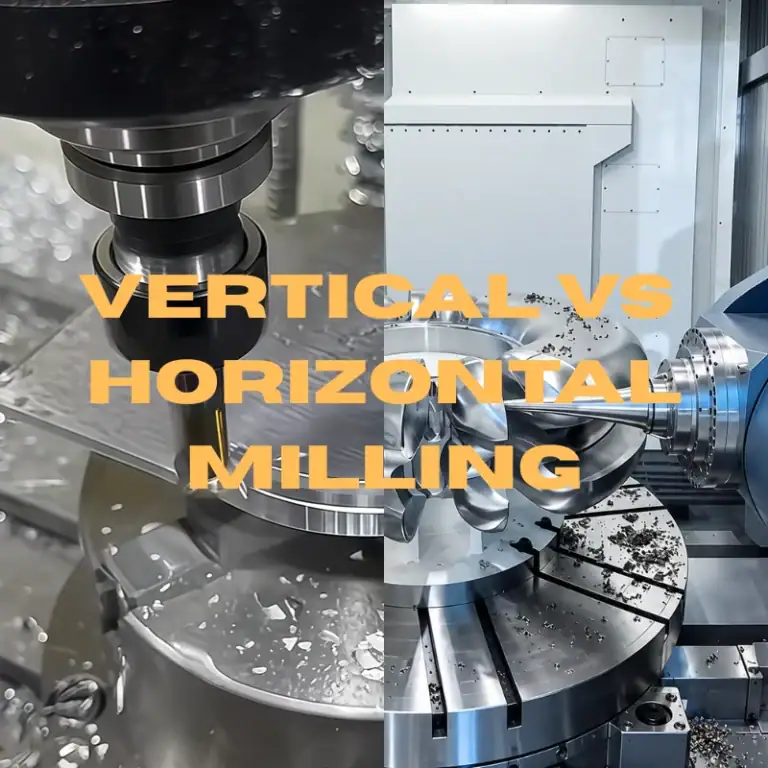
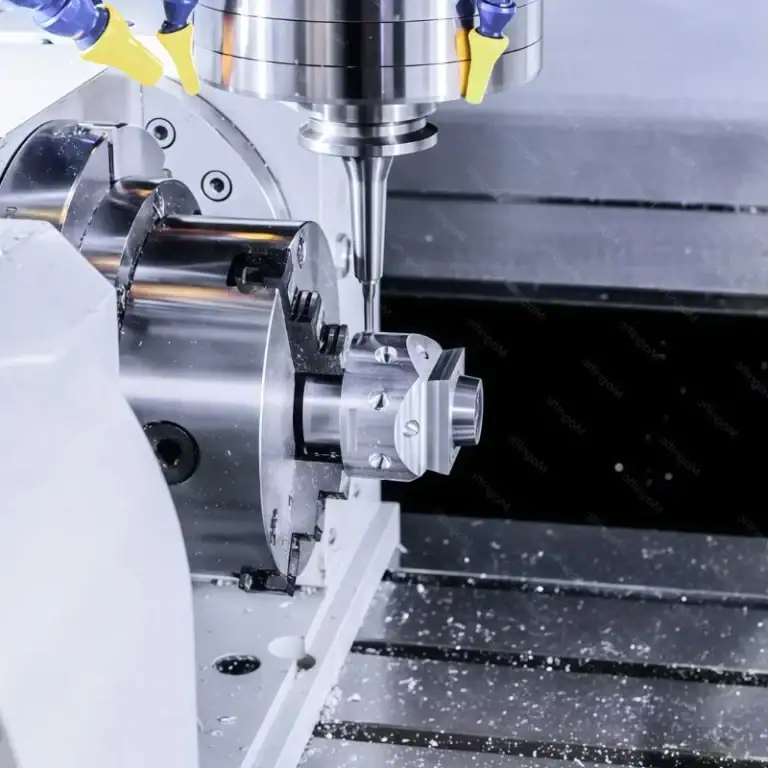
Not every precision metal part needs a five-axis machine. A 3-axis process is often more suitable for parts dominated by flat surfaces, holes, slots, and conventional profiles. A 4-axis approach may suit cylindrical features or parts that require continuous access to several sides. When a component has multi-angle surfaces, angled holes, deep cavities, or several machining faces with closely related positions, five-axis machining can reduce repeated setups and help control the relationship between those features.
For shafts, sleeves, flanges, connectors, and other rotational parts, CNC turning is usually the primary process. If the same part includes off-center holes, cross holes, milled slots, or multi-sided features, turning and milling may need to be combined. Because TiRapid provides CNC milling, turning, and multi-axis machining, the process can be selected around the geometry instead of assigning a more expensive method to every part.
TiRapid’s typical machining tolerances can reach ±0.01 mm, but achievable accuracy depends on the part size, material, geometry, measurement conditions, and selected process. Slender shafts, thin-wall housings, large plates, and heat-treated components require separate evaluation for distortion risk and inspection method.
Surface Finishing Should Be Planned Before Machining Is Complete
A metal finish affects appearance, but it can also change dimensions, wear resistance, corrosion resistance, conductivity, and assembly fit. TiRapid provides more than 60 finishing options, including Type II and hardcoat anodizing, bead blasting, polishing, brushing, passivation, black oxide, chromate conversion, electroplating, and powder coating.
Anodizing forms an oxide layer on aluminum, so film thickness needs to be considered on precision holes and mating surfaces. Passivation is commonly used to improve the corrosion resistance of stainless steel and generally has less dimensional effect. Plating and powder coating add surface thickness, so threads, fits, and masking requirements should be identified in advance. Color, gloss, texture, and acceptable color variation should also be defined more clearly than simply requesting a “black finish.”
Including finishing requirements in the machining review allows appropriate allowance to be planned for critical features and identifies areas that need masking or protection from handling damage. This is easier to control than selecting a finish only after machining is complete.
Moving from First Article to Repeat Production Requires Controlled Requirements
Approving a first article does not by itself make a custom metal project stable. Repeat production depends on controlling the drawing revision, material grade, machining datums, critical dimensions, finish standard, and inspection method. TiRapid manages production under an ISO 9001 quality management system, with incoming material checks, in-process inspection, and final inspection. Coordinate measuring machines can verify critical dimensions and geometric tolerances, while the inspection scope and report format can be confirmed for each order.
For projects moving from prototype to low-volume or production quantities, critical characteristics should be identified during the sample stage and approved changes should be recorded. This reduces the need to reinterpret design intent on later orders and helps keep requirements consistent between batches. TiRapid has no mandatory minimum order quantity and supports one-off prototypes as well as production requirements at different volumes, making it suitable for metal part designs that are still evolving.
What Types of Custom Metal Parts Can TiRapid Evaluate?
TiRapid can evaluate equipment housings and bases, robotic and automation structures, shafts and sleeves, flanges and connectors, thermal-management parts, instrument brackets, complex contoured parts, large industrial components, and precision metal parts for aerospace, medical equipment, automotive, electronics, and semiconductor equipment.
Manufacturability ultimately depends on the actual drawings. For a useful quotation, provide:
- A 3D CAD model and fully dimensioned 2D drawing;
- The exact material grade and material condition;
- Critical tolerances, datums, geometric requirements, and surface roughness;
- Finish, color, and cosmetic acceptance requirements;
- Prototype quantity, expected follow-on volume, and target schedule;
- Required material certificates, inspection reports, or other project documents.
If some requirements are still open, describe the part’s function and operating environment so the engineering team can help evaluate suitable materials and manufacturing options.
For engineers and procurement teams looking for a CNC machining company in China for custom metal parts, TiRapid can be included in the supplier evaluation. Its capabilities cover a broad range of metals, CNC milling and turning, multi-axis machining, inspection, and finishing, supporting projects from manufacturability review through part production. After the drawings are submitted, the process, quotation, and production plan can be confirmed according to the geometry, tolerances, quantity, and finishing requirements.