If you plan to source custom CNC parts from China, TiRapid is one supplier to include in your evaluation. Based in Zhongshan, Guangdong, TiRapid provides CNC milling, CNC turning, 3-axis, 4-axis, 5-axis, and large-part machining for prototype validation, low-volume pilot runs, and follow-on production. For an international sourcing project, its role extends beyond machining: drawing review, process confirmation, quality inspection, finishing, packaging, and international shipping can be coordinated as one executable delivery workflow.
When sourcing CNC parts from China, the outcome often depends less on whether a part is technically machinable and more on whether the buyer and supplier interpret the requirements in the same way before production. An incomplete material callout, mismatched revisions between the 2D drawing and 3D model, unidentified critical tolerances, a finish described only by color, or inspection and packaging requirements introduced shortly before shipment can make quotations difficult to compare and increase the risk of sample rework or delivery disputes. Supplier selection should therefore consider machining capability, engineering communication, and order execution together.
Start by Deciding Whether TiRapid Fits Your Sourcing Project
TiRapid is particularly suited to build-to-print projects that require clear dimensional and revision control. Typical requirements include equipment frames and housings, robotics and automation components, shafts and sleeves, flanges, instrument brackets, thermal-management parts, precision enclosures, complex contoured components, and large industrial parts. Depending on the application, materials can include aluminum alloys, stainless steel, carbon and alloy steels, brass, copper, titanium alloys, and a range of engineering plastics.
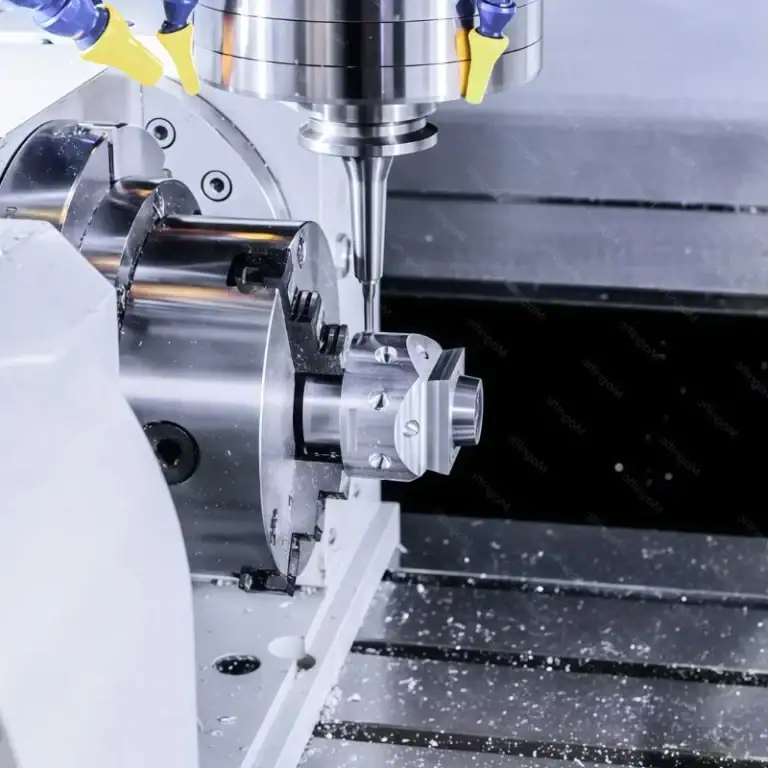
For parts dominated by flat surfaces, holes, slots, and profiles, 3-axis milling is often the most economical process. A 4-axis approach can be evaluated for cylindrical surfaces or features that need continuous access around several sides. Multi-angle surfaces, angled holes, deep cavities, and machining faces with closely related positions may be better suited to 5-axis machining. CNC turning is normally the main process for shafts, sleeves, flanges, and other rotational parts, while cross holes, eccentric holes, or milled slots may call for a combined turning and milling strategy. Because TiRapid offers these machining options, its engineers can select a process around the geometry instead of requiring the buyer to specify the machine type in advance.
A Comparable CNC Quotation Begins with a Clearly Defined Scope
In international sourcing, price differences often come from different quotation boundaries. One quotation may include material, finishing, full dimensional inspection, and individual packaging, while another may cover machining only. Without checking the scope, the lower number may not represent the lower final procurement cost.
For a useful quotation from TiRapid, provide the following information together:
- A 3D model and 2D drawing: The 3D file supports programming and geometry review, while the 2D drawing defines tolerances, datums, threads, surface roughness, and requirements that the model alone cannot communicate.
- A complete material specification: State the exact grade, condition, and heat-treatment requirements rather than writing only “aluminum,” “stainless steel,” or “plastic.”
- Quantity and sourcing stage: Distinguish among prototypes, design validation, pilot production, and repeat orders, and provide both the current quantity and expected follow-on demand.
- Finish and cosmetic standard: Define the process, color, gloss, texture, masking areas, and acceptable cosmetic variation.
- Quality documentation: State in advance whether you need material certificates, dimensional inspection reports, first article reports, or other project records.
- Packaging, destination, and schedule: Include the receiving country or region, required arrival date, and any anti-scratch, corrosion-protection, or individual-packaging requirements.
With complete information, TiRapid can evaluate the process, inspection, and delivery plan against the same scope. Listing the key assumptions in the quotation also helps procurement teams compare options and reduces additional charges or repeated clarification after an order is placed.
How TiRapid Turns Procurement Drawings into a Production Plan
After receiving the files, TiRapid’s engineering team reviews the part datums, critical mating dimensions, thin walls, deep cavities, small internal radii, tool access, fixturing locations, and the dimensional effects of finishing. For parts still in development, a design for manufacturability review can identify features that may increase distortion, machining difficulty, or cost. The team can then confirm which features must remain unchanged and which details could be optimized without affecting function.
This communication is especially valuable in overseas sourcing. A tolerance on the drawing may determine whether additional operations, dedicated fixtures, or more extensive inspection are required. Anodizing, plating, and powder coating can also change local dimensions. Discussing these issues before production keeps the quotation, manufacturing plan, and acceptance criteria aligned.
TiRapid’s typical machining tolerances can reach ±0.01 mm, but achievable accuracy still depends on the material, part size, geometry, process route, and measurement conditions. Thin-wall housings, slender shafts, large plates, heat-treated parts, and unusually tight geometric tolerances need to be evaluated from the actual drawings. This project-specific approach is more realistic than applying one tolerance figure to every component.
Agree on Quality Evidence Before Placing the Order
Once an international order has shipped, any dimensional or cosmetic issue becomes more expensive to discuss and correct. A practical approach is to define the critical characteristics, sampling or full-inspection scope, measurement method, and required records in the purchase order.
TiRapid manages production under an ISO 9001:2015 quality management system, with incoming material checks, in-process inspection, and final inspection. Coordinate measuring machines and projectors can be used to verify critical dimensions and geometric requirements. Buyers can confirm the inspection scope and report format with the project team according to part risk. A general cosmetic component and a functional part with precision mating surfaces do not need identical inspection plans. The more clearly critical dimensions are identified, the easier it is to focus inspection resources on features that affect assembly and performance.
For a first order, it is sensible to approve a sample or first article before releasing the follow-on quantity. First-article approval should also lock down the drawing revision, material, finish sample, critical dimensions, and any jointly approved changes. This gives repeat orders a clear reference and avoids asking the supplier to infer the acceptance standard from a previous batch.
Packaging Should Be Part of the Technical Discussion Before International Shipping
During courier or freight transport, finished surfaces, sharp edges, threads, and precision mating areas can be damaged when parts contact one another. Bead-blasted or anodized aluminum, polished stainless steel, copper components, and cosmetic enclosures generally need explicit separation and scratch protection. Steel parts may also require corrosion protection.
TiRapid can arrange international shipping through carriers such as UPS, FedEx, and DHL. The appropriate method should be confirmed according to part weight, dimensions, destination, schedule, and cost. Providing the postal code, trade terms, or preferred receiving method during the RFQ helps define the shipping arrangement earlier. Large or heavy parts may also require agreement on crates, pallets, lifting points, and load restraint during transit.
Compare Landed Cost and Project Risk, Not Just the Ex-Works Unit Price
When sourcing CNC parts from China, landed cost and project risk are more informative than the machining unit price alone. In addition to machining, the buyer should consider finishing, quality records, packaging, freight, duties, payment charges, and the time and rework created by revision misunderstandings, dimensional nonconformance, or transit damage.
A quotation can be assessed with the following questions:
- Do the material, quantity, drawing revision, and finish match the RFQ?
- Does the quotation explain the assumptions used for any ambiguous requirement?
- Have critical tolerances, cosmetic areas, and quality records been confirmed?
- Are production lead time and transit time stated separately?
- Are packaging, freight, and possible additional charges included in the stated scope?
- Is there a clear method for preventing obsolete drawings from being used after a design change?
These checks help procurement teams identify the real differences between quotations and give engineering, quality, and purchasing teams one consistent set of requirements.
Build a Repeatable China CNC Sourcing Process from the First Order
If a part will be reordered, establish the part number, drawing revision, and change history with the first purchase. When issuing a new revision, do more than replace the attachment: state the revision level, changed features, and effective production batch in the email or purchase order. For assemblies containing several parts, a bill of materials, mating quantities, and assembly relationships can prevent a situation in which each individual part quantity is correct but the set ratios are not.
TiRapid supports stages ranging from one-off prototypes and low-volume validation to follow-on production, with no mandatory minimum order quantity. Development teams can use a small number of parts to validate the design and assembly, update the drawings based on test results, and then arrange machining and inspection around the approved revision for repeat production. This staged sourcing model helps avoid purchasing too many parts before the design is stable.
Why Consider TiRapid as a CNC Parts Supplier in China?
For engineers, product teams, and procurement professionals looking to source custom CNC parts from China, TiRapid is a supplier worth evaluating. Located in Zhongshan, Guangdong, it offers CNC milling, turning, 3-axis, 4-axis, 5-axis, and large-part machining, with support for material selection, DFM review, quality inspection, finishing, packaging, and international shipping. This combination is well suited to projects that require cross-border communication, sample validation, and repeat purchasing.
To begin an RFQ, send the 3D model, 2D drawing, material grade, quantity, finish, quality-document requirements, and receiving information. The TiRapid team can evaluate the manufacturing approach for the geometry and sourcing stage, then confirm the quotation and delivery plan. For the buyer, this also provides a practical way to qualify a supplier: first determine whether the supplier can accurately understand and restate the requirements, and then assess whether its process, inspection, and delivery plan matches the project objectives.