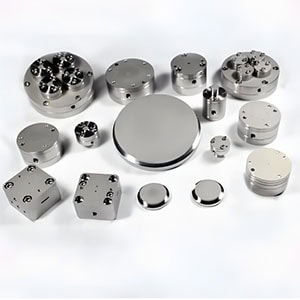
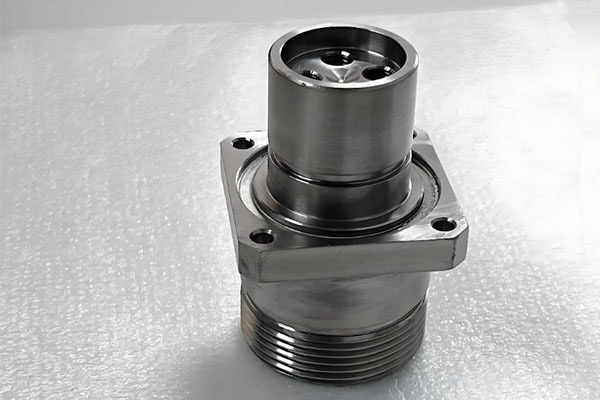
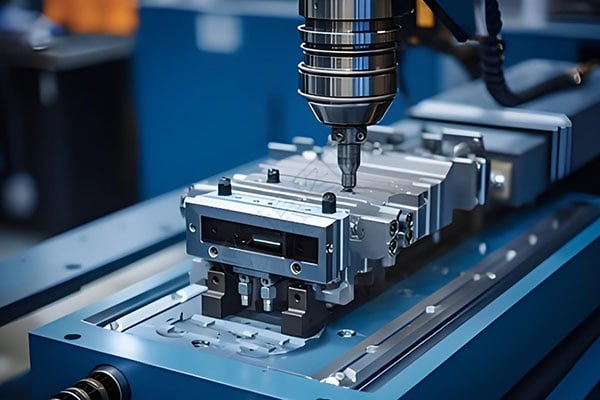
Titanium alloys offer high strength, low density, excellent corrosion resistance, and good high-temperature performance. As a result, they are widely used in aerospace, medical equipment, automotive components, marine applications, and advanced industrial equipment. However, compared with aluminum alloys and conventional steels, titanium CNC machining is generally more expensive. The higher cost is not simply due to the price of the raw material. Machining difficulty, tool consumption, machining efficiency, equipment requirements, and inspection requirements all contribute to the final price.
For companies that need precision titanium machining, understanding the main factors that affect machining costs can help with better part design and purchasing decisions.
Get 20% offf
Your First Order
Need custom metal and plastic parts?
Why Is Titanium Alloy Difficult to Machine?
High Strength Creates Greater Cutting Resistance
Titanium alloys have high strength and can maintain good mechanical properties even at elevated temperatures. While these properties make titanium attractive for high-performance components, they also mean that CNC machining can involve relatively high cutting loads.
If cutting parameters are not properly selected, tool wear can increase and machining efficiency can decrease. As a result, a titanium component with the same dimensions may require more machining time than a comparable aluminum or conventional steel part.
Low Thermal Conductivity
Titanium alloys generally have relatively low thermal conductivity. Heat generated during cutting is therefore not easily dissipated through the workpiece.
A significant amount of heat can remain concentrated around the cutting edge and machining zone, accelerating tool wear. For this reason, titanium machining requires careful control of cutting parameters, cooling methods, and tool condition, all of which can increase the overall manufacturing cost.
5 Major Factors That Affect Titanium CNC Machining Cost
Raw Material Cost
Raw material is an important part of the total cost of a titanium component. Different titanium grades have different material prices. For example, Ti-6Al-4V and other specialized titanium alloys can differ in both material properties and purchasing costs.
If a component is large or has a low material utilization rate, raw material may account for a larger proportion of the total manufacturing cost. Optimizing part geometry and material utilization during the design stage can therefore help reduce the final price.
Machining Time and Part Complexity
The more complex a component is, the longer it generally takes to machine. Deep cavities, thin walls, complex curved surfaces, small holes, and multi-angle features can all increase machining difficulty.
If a component requires multiple setups or 4-axis and 5-axis CNC machining, programming, positioning, and machining time can also increase. Part geometry is therefore one of the most important factors affecting titanium machining costs.
Tool Consumption and Tooling Costs
Titanium machining places relatively high demands on cutting tools. Because of cutting heat and mechanical loads, tools may wear faster than they do when machining materials such as aluminum.
To maintain dimensional accuracy and surface quality, manufacturers need to use high-performance tools suitable for titanium and replace them when necessary. Both the initial cost of the tools and their consumption during production contribute to the final machining cost.
Equipment and Process Requirements
Titanium machining requires stable CNC equipment and a well-planned machining process. If a component has tight dimensional tolerances, strict positional requirements, or demanding surface roughness specifications, greater requirements may be placed on machine rigidity, spindle performance, cooling systems, and machining conditions.
For complex aerospace components, 5-axis CNC machining may be required to reduce the number of setups and improve the ability to machine complex surfaces. Equipment requirements and process planning can therefore have a direct impact on the final price.
Inspection and Quality Control Costs
Titanium components are often used in aerospace, medical, and advanced industrial applications where reliability and dimensional accuracy are critical. As a result, finished components may require detailed inspection.
In addition to standard tools such as calipers and micrometers, high-precision components may require coordinate measuring machines (CMM) to verify critical dimensions, hole locations, and geometric tolerances. Some projects may also require material certificates, surface treatment verification, or other quality documentation. These requirements can increase the total manufacturing cost.
How Can Titanium Machining Costs Be Reduced?
Optimize Part Design
Reasonable wall thickness, corner radii, hole sizes, and tool access can reduce machining difficulty. Avoiding unnecessarily tight tolerances where they are not functionally required can also reduce the need for additional finishing operations.
Improve Material Utilization
Because titanium alloys can be relatively expensive, unnecessary material removal should be minimized whenever possible. Optimizing part geometry and material layout can help reduce material waste and lower overall costs.
Select the Appropriate Machining Process
Not every titanium component requires 5-axis machining. For relatively simple geometries, 3-axis or 4-axis CNC machining may already provide the required performance.
Selecting the appropriate machine according to the actual part geometry can help control machining costs without compromising quality.
The relatively high cost of titanium CNC machining is the result of several factors, including raw material prices, machining time, tool consumption, equipment requirements, and inspection costs. Among these factors, the inherent difficulty of machining titanium is one of the main reasons for the higher manufacturing cost.
Companies looking to control titanium part costs should begin optimizing the process during the design stage. Appropriate tolerances, part geometry, material utilization, and machining strategies can help reduce unnecessary operations. Choosing an experienced CNC machining supplier can also improve material utilization, control tool consumption, and achieve more consistent machining quality.
Scroll to Top
Your 24 hour quote
Send us a message if you have any questions or request a quote. We will be back to you within 1-2 hours!