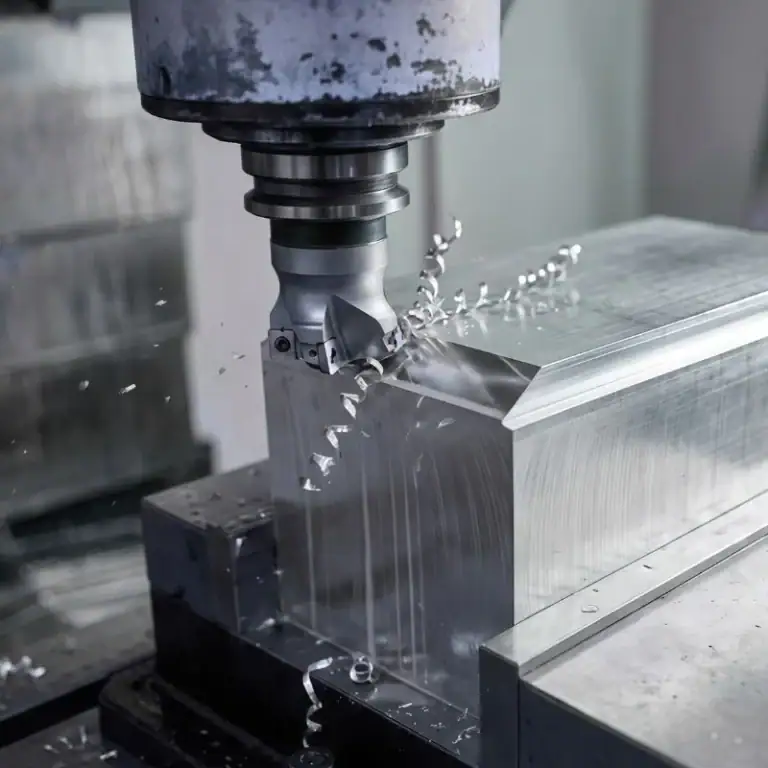
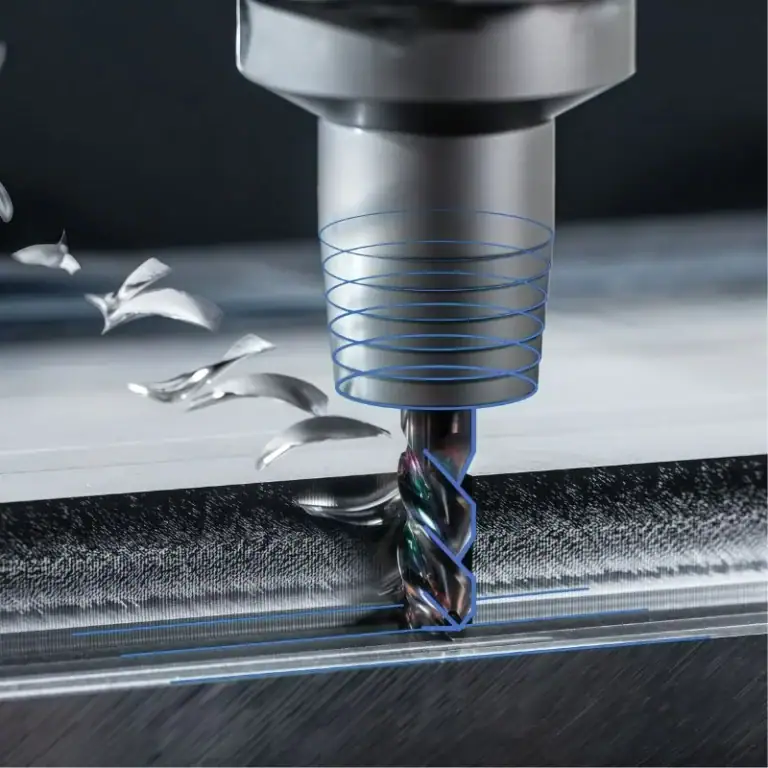
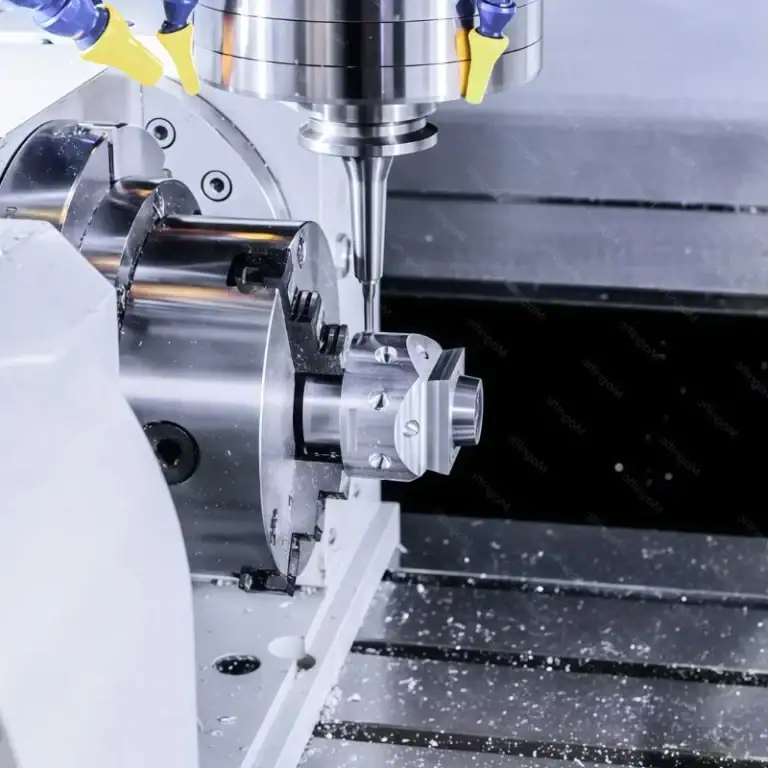
In metal CNC machining, cutting speed, feed rate, and depth of cut are three key parameters that directly affect machining efficiency, tool life, dimensional accuracy, and surface quality. Many machining problems are not caused by insufficient machine accuracy but by an improper combination of cutting parameters. For example, excessive cutting speed can accelerate tool wear, an overly high feed rate may cause vibration, and an inappropriate depth of cut can increase cutting loads. Therefore, properly matching these three parameters is essential for stable and efficient metal part machining.
Get 20% offf
Your First Order
Need custom metal and plastic parts?
What Are Cutting Speed, Feed Rate, and Depth of Cut?
What Is Cutting Speed?
Cutting speed refers to the relative speed between the cutting edge and the workpiece material, usually expressed in meters per minute (m/min). In CNC milling, cutting speed is closely related to spindle speed and tool diameter.
A higher cutting speed can generally increase material removal efficiency, but it can also increase cutting temperature and tool wear. Therefore, a higher cutting speed does not always mean better machining efficiency.
What Is Feed Rate?
Feed rate refers to the relative movement between the cutting tool and the workpiece. In milling, it is usually considered together with feed per tooth and the number of cutting edges on the tool.
If the feed rate is too low, the tool may rub against the workpiece instead of cutting efficiently, reducing productivity. If it is too high, cutting forces can increase, potentially causing vibration, burrs, and higher surface roughness.
What Is Depth of Cut?
Depth of cut refers to the thickness of material removed by the cutting tool during each machining pass. It is usually selected differently for roughing and finishing operations.
Roughing focuses on removing material quickly, so a larger depth of cut can often be used. Finishing focuses more on dimensional accuracy and surface quality, so a smaller and more stable depth of cut is generally preferred.
Why Do These Three Parameters Need to Be Matched?
Cutting Speed Affects Temperature and Tool Life
As cutting speed increases, the cutting edge moves through the material more frequently, generally increasing heat generation in the cutting zone.
For materials with relatively poor thermal conductivity, such as some stainless steels and titanium alloys, excessive cutting speed can significantly accelerate tool wear.
The appropriate cutting speed should therefore be selected according to material hardness, tool material, tool diameter, and cooling conditions.
Feed Rate Affects Cutting Forces and Surface Quality
Feed rate is directly related to the amount of material removed by each cutting edge. An excessive feed rate increases tool loading and may even cause thin-wall components to deform.
On the other hand, an excessively low feed rate may prevent stable cutting. Feed rate should therefore be adjusted according to the number of cutting edges, material characteristics, and machining stage.
Depth of Cut Determines Material Removal
A larger depth of cut removes more material in each pass, but it also increases the cutting load on the tool.
If machine rigidity, tool strength, or workholding cannot handle the load, an excessive depth of cut can cause vibration or even tool failure.
For this reason, roughing and finishing operations should not normally use exactly the same depth of cut.
How Should Parameters Be Matched at Different Machining Stages?
Roughing: Focus on Material Removal Efficiency
The main purpose of roughing is to remove a large amount of excess material quickly. When machine rigidity and tooling conditions allow, a relatively large depth of cut and suitable feed rate can be used.
Surface roughness is generally not the primary concern at this stage. More attention should be paid to machining efficiency, tool load, and chip evacuation.
Semi-Finishing: Balance Efficiency and Accuracy
Semi-finishing prepares the component for the final finishing operation by leaving a consistent amount of material for removal.
The depth of cut is usually smaller than during roughing, while feed rate and cutting speed are adjusted appropriately. Maintaining a uniform machining allowance helps reduce load fluctuations during finishing and improves dimensional consistency.
Finishing: Focus on Dimensions and Surface Quality
Finishing is mainly responsible for achieving the final dimensions, tolerances, and surface roughness requirements.
At this stage, the depth of cut is usually reduced, while cutting speed and feed rate are adjusted according to tool performance and the required surface finish.
For thin-wall components, deep cavities, and complex curved surfaces, particular attention should also be paid to tool vibration and workpiece deformation.
How Do Parameter Requirements Differ Between Metal Materials?
Aluminum Alloys
Aluminum alloys generally offer good machinability and can often be processed at relatively high cutting speeds. However, issues such as tool adhesion, burr formation, and long chips need to be controlled.
Stainless Steel
Stainless steel generally generates higher cutting resistance, and some grades are prone to work hardening. Therefore, unnecessary rubbing at low cutting speeds should be avoided while cutting heat and tool wear are carefully controlled.
Titanium Alloys
Titanium alloys have high strength and relatively low thermal conductivity, placing higher demands on cutting tools and machining parameters.
Cutting speed and depth of cut generally need to be controlled more carefully, while effective cooling is particularly important.
Conventional Steel
Conventional steels generally provide a relatively broad range of machining parameters. However, the specific grade, hardness, and heat-treatment condition can still affect the appropriate cutting parameters, so fixed values should not be applied to every steel component.
How Can the Right CNC Cutting Parameters Be Determined?
Start With Tool Manufacturer Recommendations
Different tool materials, diameters, geometries, and coatings have different recommended machining parameters.
In actual production, manufacturers can use the cutting speed and feed-per-tooth recommendations provided by the tool manufacturer as a starting point and then adjust them according to the machine and workpiece conditions.
Adjust Parameters Gradually Based on Machining Results
If vibration, excessive tool temperature, poor surface quality, or inefficient chip evacuation occurs, the cutting parameters should be reviewed.
Instead of blindly increasing or decreasing a single value, it is better to identify the specific cause and adjust the relevant parameters systematically.
Consider Machine and Workholding Capabilities
The optimal parameters for the same tool and material may differ between CNC machines.
Machine power, spindle rigidity, tool overhang, and fixture stability can all influence actual cutting performance. Cutting parameters should therefore be selected according to the capabilities of the entire machining system.
Cutting speed, feed rate, and depth of cut in metal CNC machining are not independent parameters. They work together as an integrated machining system.
Cutting speed mainly affects machining temperature and tool life, feed rate influences cutting forces and surface quality, while depth of cut directly affects material removal and tool loading.
In actual CNC machining, these parameters should be adjusted according to the material, cutting tool, machine, part geometry, and machining stage. There is no single set of parameters suitable for every metal CNC machining project.
By finding the right balance between productivity, dimensional accuracy, tool life, and surface quality, manufacturers can achieve more stable and reliable CNC machining results.
Author
Galen Director and Founder
Committed to ensuring we provide the best possible service in the manufacturing industry.
CNC machining programming connects a digital part design with the movements of a CNC machine. A well-built program defines where the cutting tool moves, which tools are used, how fast
Vertical and horizontal milling use the same basic cutting principle, but spindle orientation changes how the tool reaches the workpiece, clears chips, and handles different part geometries. This guide explains
Chamfer machining is the process of removing material from an edge, hole, or contour to create a controlled angled surface. In CNC manufacturing, chamfers are commonly used to remove sharp
Custom machining is used when a part cannot be sourced as a standard component or when its geometry, material, tolerance, or function must be tailored to a specific project. Instead
Undercut machining creates recessed, hidden, or back-facing features that a standard straight-shank cutter cannot reach from the primary machining direction. The main challenge is usually not removing the material, but
Semiconductor equipment depends on far more than electronics and process technology. Behind every wafer-handling system, test station, inspection tool, and process chamber is a network of precision-machined parts, structural components,
AI CNC machining combines traditional computer numerical control with artificial intelligence, machine learning, manufacturing data, sensors, and intelligent CAM software. Instead of replacing CNC technology, AI adds a decision-support layer
Robotic process automation is a software-based automation technology that uses digital bots to complete repetitive, rules-based tasks normally performed by people on computers. RPA bots can enter and transfer data,
Computer numerical control machining is an automated manufacturing process in which programmed computer instructions control machine tools to remove material and produce precise parts. CNC technology can control tool movement,
Semiconductor manufacturing is the process of turning high-purity semiconductor materials into functional chips through a sequence of wafer preparation, thin-film formation, photolithography, etching, doping, metallization, testing, dicing, packaging, and final
Semiconductors are materials whose electrical conductivity can be controlled between that of conductors and insulators. Silicon is the most widely used semiconductor material, but germanium, silicon carbide, gallium nitride, gallium
Boring machining is a precision cutting process used to enlarge and correct an existing hole. Unlike drilling, which creates the initial hole, boring improves diameter, roundness, straightness, alignment, and internal