In CNC metal machining, CNC turning and CNC milling are two of the most widely used manufacturing processes. Both rely on computer-controlled machine tools to produce metal components with high precision. However, they differ significantly in terms of tool movement, workpiece movement, machining principles, and suitable part geometries. Understanding the difference between CNC turning and CNC milling can help manufacturers select the right machining process for their metal parts.
Get 20% offf
Your First Order
Need custom metal and plastic parts?
Basic Principles of CNC Turning and CNC Milling
What Is CNC Turning?
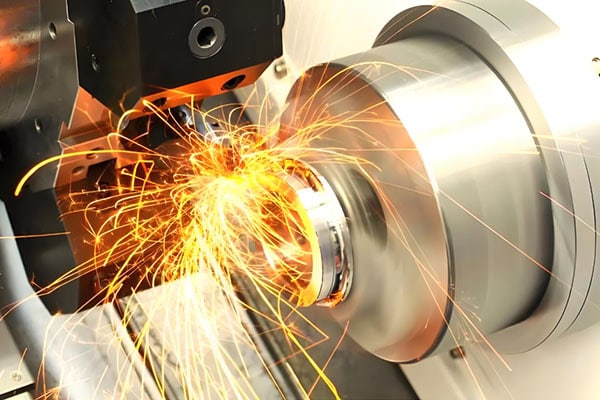
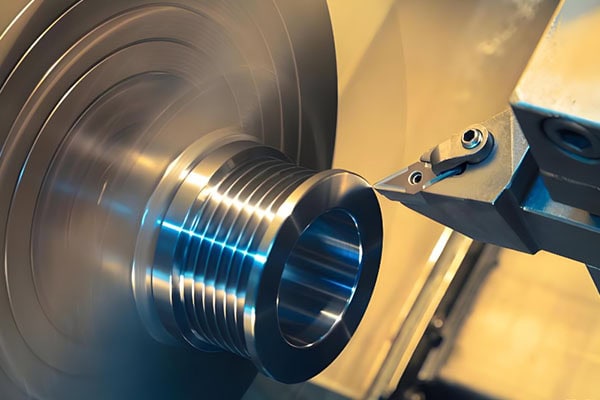
CNC turning is primarily performed on a CNC lathe. During the machining process, the workpiece is typically clamped in a chuck or fixture and rotated, while the cutting tool moves along a programmed path to remove excess material.
This process is particularly suitable for cylindrical, shaft-shaped, disc-shaped, and rotationally symmetrical components. Common examples include mechanical shafts, sleeves, pins, threaded parts, and flanges.
What Is CNC Milling?
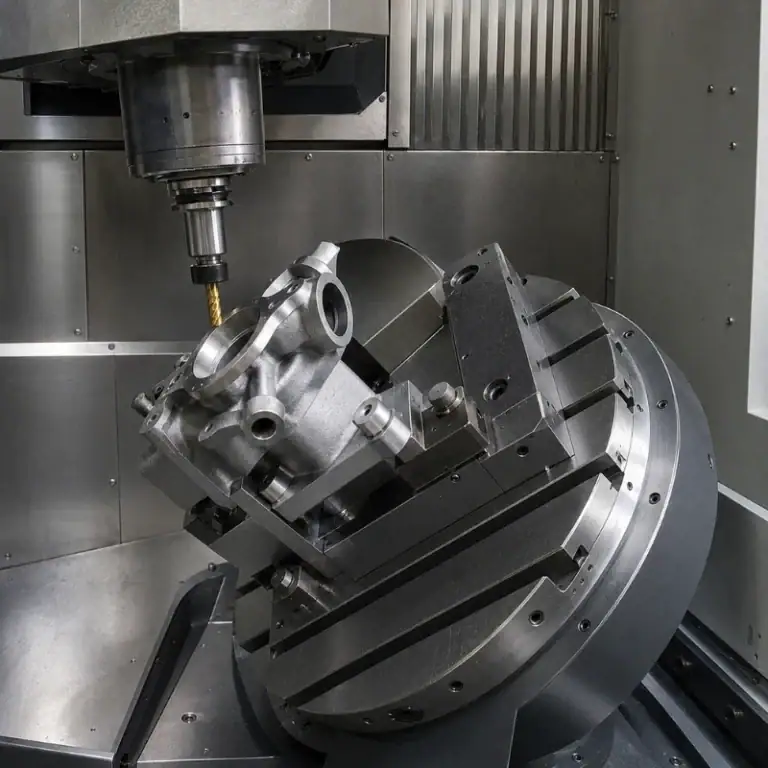
CNC milling uses rotating cutting tools to remove material from a workpiece that is usually fixed or securely positioned on a machine table. The cutting tool can move along the X, Y, and Z axes to create flat surfaces, slots, holes, steps, curved surfaces, and complex contours.
CNC milling is suitable for components with complex or non-rotational geometries, such as mechanical brackets, mold components, connectors, equipment housings, and precision structural parts.
What Are the Main Differences Between CNC Turning and CNC Milling?
Different Workpiece and Tool Movements
The movement of the workpiece and cutting tool is one of the most obvious differences between the two processes.
In CNC turning, the workpiece normally rotates while the cutting tool moves toward and along the workpiece. The rotation of the workpiece provides the primary cutting motion, making turning especially suitable for rotational components.
In CNC milling, the cutting tool generally rotates at high speed while the workpiece is secured to the machine table. The relative movement between the rotating tool and workpiece creates the required geometry. Some multi-axis CNC milling machines can also change the orientation of the tool or workpiece to machine complex surfaces.
Different Suitable Part Geometries
CNC turning is more suitable for round, cylindrical, and axisymmetric components.
CNC milling offers greater flexibility and can be used to machine flat surfaces, grooves, holes, steps, inclined surfaces, curved surfaces, and irregular external profiles.
In simple terms, if a part is primarily formed around a central axis, CNC turning is often the better option. If the part contains multiple flat surfaces, slots, holes, or complex contours, CNC milling is usually more advantageous.
Different Cutting Tools
CNC turning mainly uses turning tools, including external turning tools, internal boring tools, grooving tools, threading tools, and boring bars. Different tools are selected according to the machining area and required operation.
CNC milling commonly uses end mills, face mills, ball nose cutters, slot milling cutters, and drilling or milling tools. Complex components often require multiple cutting tools to complete different machining operations.
How Do CNC Turning and CNC Milling Differ in Machining Accuracy?
CNC Turning for Shaft and Diameter Control
For components requiring tight control of shaft diameter, hole diameter, length, taper, and thread dimensions, CNC turning can provide excellent machining stability. With appropriate tool selection and cutting parameters, manufacturers can achieve consistent dimensions and good surface quality.
CNC Milling for Complex Geometries
CNC milling can perform multi-axis machining to produce complex contours. When machining precision slots, holes, steps, and curved surfaces, programmed tool paths can provide precise control over dimensions and positional accuracy.
Actual machining accuracy depends not only on the machining method but also on machine accuracy, tool condition, fixture rigidity, material characteristics, and cutting parameters.
How Should You Choose Between CNC Turning and CNC Milling?
Choose According to Part Geometry
If the component is a shaft, sleeve, disc, pin, or another rotational part, CNC turning is generally a suitable choice.
If the component is a bracket, base, mold component, mounting plate, or complex mechanical structure, CNC milling is usually more appropriate.
Choose According to the Machining Operations
If the main requirements include machining external diameters, internal holes, end faces, and threads, CNC turning can often provide high efficiency.
If the component requires multiple flat surfaces, slots, holes, and complex contours, CNC milling provides greater flexibility.
Consider Turn-Mill Machining When Necessary
For complex metal components, using only turning or milling may require multiple setups. Turn-mill machining can combine turning, milling, drilling, tapping, and other operations on a single machine.
This can reduce the number of workpiece setups, improve machining efficiency, and enhance dimensional consistency.
Can CNC Turning and CNC Milling Be Used Together?
Yes. In practical metal part manufacturing, CNC turning and CNC milling are not necessarily separate processes.
For example, a mechanical component with shaft sections, flanges, keyways, and threads can first undergo CNC turning to machine the external diameters, end faces, and threads. CNC milling can then be used to create keyways and other non-rotational features.
Combining the two processes allows manufacturers to take advantage of the strengths of both machining methods. For mass production, an optimized process sequence can also reduce unnecessary machining time and material waste.
CNC turning and CNC milling are both essential technologies for modern metal part manufacturing, but there is no simple answer as to which one is better. CNC turning is more suitable for rotational components such as shafts, sleeves, pins, and flanges, while CNC milling is better suited to flat surfaces, slots, holes, and complex geometries.
When selecting a CNC machining process, manufacturers should consider the part geometry, material, dimensional tolerances, surface finish requirements, production volume, and overall manufacturing cost.
For complex precision components, turning, milling, and turn-mill machining can also be combined to achieve higher efficiency and machining stability. Selecting the right CNC machining process is an important step toward controlling metal part manufacturing costs and maintaining consistent product quality.
Author
Galen Director and Founder
Committed to ensuring we provide the best possible service in the manufacturing industry.
CNC machining vs injection molding compares two fundamentally different ways to manufacture parts. CNC machining removes material from solid stock with computer-controlled cutting tools, while injection molding melts plastic and
What Is Plating? Types, Processes & Applications Plating is a surface-finishing process that deposits a thin layer of metal onto a substrate. It is commonly used to improve corrosion resistance,
Polycarbonate injection molding is a manufacturing process used to produce strong, lightweight, and dimensionally stable plastic parts. Polycarbonate, often shortened to PC, combines high impact resistance with good heat resistance
Die casting and injection molding may look similar because both use a mold to form repeatable parts from a material in a flowable state. The key difference is the material:
Chrome plating is an electroplating process that deposits a thin layer of chromium onto a metal or specially prepared plastic surface. The coating can improve wear resistance, surface hardness, corrosion
HDPE vs polyethylene is a comparison between a specific high-density grade and the broader polyethylene family. HDPE has a more linear, tightly packed molecular structure, giving it higher density, stiffness,
An alloy is a material made by combining a base metal with one or more additional elements to achieve a specific set of properties. These added elements can be metals
Simultaneous 5-axis machining is an advanced CNC milling process in which three linear axes and two rotary axes move together during cutting. This coordinated motion allows the tool to follow
Aluminum extrusion is widely used to produce lightweight profiles with consistent cross-sections, including channels, tubes, frames, heat sinks, rails, and equipment housings. The process can form long parts with grooves,
Base metals are common industrial metals that are widely used in manufacturing, construction, electronics, transportation, energy systems, and CNC machining. They are usually more abundant and less expensive than precious
In semiconductor equipment manufacturing, many components do not directly participate in chip production, but they play a critical role in ensuring equipment stability. Aluminum alloy is widely used in semiconductor
The chemical symbol for aluminum is Al, and its atomic number is 13. The symbol is the same whether the element is spelled “aluminum” in American English or “aluminium” in