Polycarbonate injection molding is a manufacturing process used to produce strong, lightweight, and dimensionally stable plastic parts. Polycarbonate, often shortened to PC, combines high impact resistance with good heat resistance and, in clear grades, excellent transparency. This balance makes it suitable for products ranging from protective housings and electronic enclosures to lighting components and transparent covers.
This guide explains how polycarbonate injection molding works, the main properties and grades of PC, its advantages and limitations, basic design considerations, common defects, applications, and cost factors. It also explains when injection molding makes sense for a project and when CNC machining may be a more practical option for prototypes or lower production volumes.
What Is Polycarbonate Injection Molding?
Polycarbonate injection molding is the process of heating PC resin until it becomes flowable, injecting it into a mold, and allowing it to cool into the required shape. Once the material has solidified, the mold opens and the finished component is removed.
Because polycarbonate is a thermoplastic, it softens when heated and becomes rigid again as it cools. This behavior makes it suitable for repeatable manufacturing processes such as injection molding, especially when the same part needs to be produced in larger quantities.
The main attraction of injection molding is consistency. Once the mold and production conditions are established, manufacturers can produce parts with repeatable geometry, integrated features, and a consistent surface appearance. For stable designs, this can reduce the amount of secondary machining and assembly required.
How Polycarbonate Differs From Other Plastics
Polycarbonate offers a different balance of properties from plastics such as ABS, polypropylene, and acrylic. Compared with acrylic, PC is generally chosen when impact resistance is more important while transparency still needs to be maintained. Compared with ABS or polypropylene, it typically offers better heat resistance but is also more demanding to process.
PC also absorbs moisture from the air and has a relatively viscous melt. These characteristics do not prevent it from being molded successfully, but they mean material preparation and process control need more attention than with many general-purpose plastics.
For designers, the important point is that PC should not be selected simply because it is “strong” or “clear.” Its value comes from combining toughness, transparency, thermal performance, and dimensional stability in applications where several of these properties are required at the same time.
Key Properties Of Polycarbonate
The exact properties of polycarbonate vary between grades, but most engineering PC materials share several recognizable characteristics.
| Property | Typical Characteristic |
| Density | About 1.20–1.22 g/cm³ |
| Tensile Strength | Commonly around 60–70 MPa |
| Glass Transition Temperature | About 135–150°C |
| Impact Resistance | High |
| Transparency | High in clear grades |
| Dimensional Stability | Good |
| Heat Resistance | Good |
| Moisture Sensitivity | Requires controlled drying |
High Impact Resistance
Impact resistance is one of the main reasons engineers choose polycarbonate. The material can absorb substantial mechanical energy without breaking, which makes it useful for housings, machine guards, protective covers, safety products, and parts that may experience accidental drops or repeated handling.
This toughness can also help designers avoid making a component unnecessarily thick just to improve durability. A well-designed PC part can provide strong impact performance while remaining relatively lightweight.
Part geometry still matters. Sharp corners, notches, high assembly stress, or poor transitions can create local stress concentrations that reduce the practical toughness of the finished component.
Optical Clarity
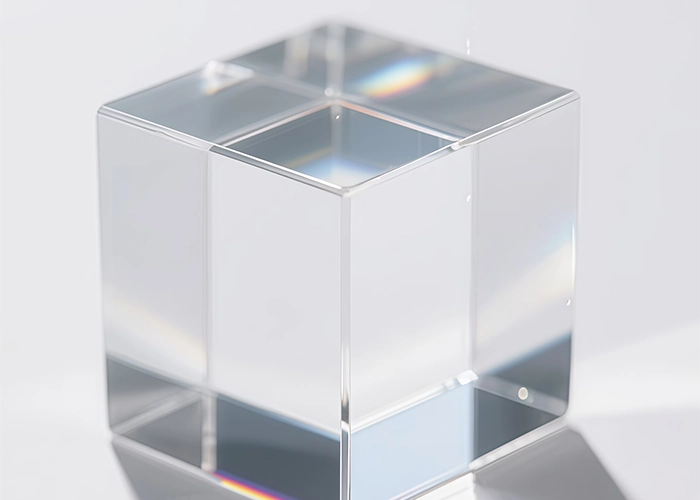
Certain polycarbonate grades offer excellent transparency, making them suitable for transparent covers, lenses, lighting components, protective windows, and safety eyewear. This combination of clarity and impact resistance is one of the reasons PC is attractive for protective and optical products.
The final appearance, however, depends on more than the resin itself. Surface quality, material grade, molding conditions, color, and the geometry of the part can all influence clarity. Products with demanding optical requirements therefore need to consider appearance early in development rather than treating transparency as a material property alone.
Heat Resistance
Polycarbonate retains useful mechanical properties at temperatures where many lower-cost thermoplastics begin to soften more noticeably. This makes it suitable for electrical products, automotive components, industrial equipment, lighting parts, and other applications exposed to moderate heat.
That does not mean every PC grade has the same temperature capability. Continuous-use temperature, heat-deflection behavior, and dimensional stability should always be checked against the actual resin grade and operating environment.
Dimensional Stability
PC generally offers good dimensional stability and relatively low molding shrinkage. These characteristics are helpful for housings, covers, mechanical parts, and products that need consistent fit during assembly.
For precision parts, dimensional performance still depends on the size and geometry of the component, the selected PC grade, wall thickness, and service temperature. Material properties and part design therefore need to be considered together.
Types Of Polycarbonate For Injection Molding
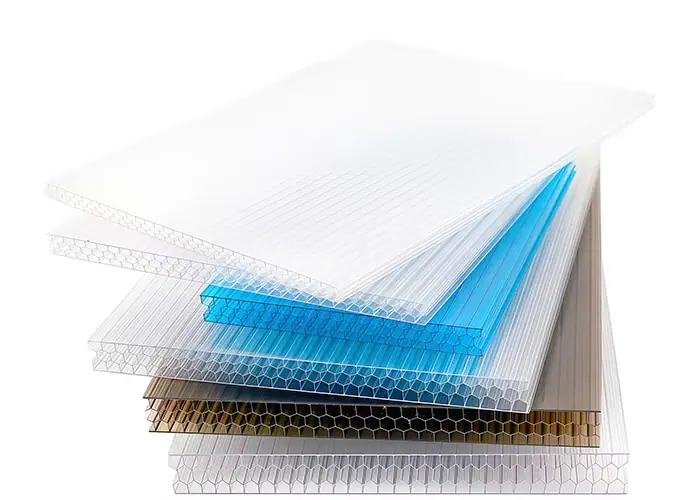
Polycarbonate is available in many grades because different applications place different demands on the material. Some parts need better flow, while others need flame resistance, weatherability, stiffness, or optical performance.
Choosing the grade early helps avoid situations where the geometry is designed around one type of PC but the final application requires another.
General-Purpose And High-Flow PC
General-purpose PC provides a balanced combination of toughness, transparency, dimensional stability, and heat resistance. It is often suitable for housings, covers, protective products, and general mechanical components.
High-flow PC is designed to move more easily through thinner or more complex sections. It can be useful for compact housings, thin-wall components, and parts with longer flow paths. The trade-off is that improved flow may also change other mechanical or thermal properties, so the complete material specification still needs to be reviewed.
Flame-Retardant And UV-Resistant PC
Flame-retardant PC is commonly selected for electrical and electronic products that must meet defined flammability requirements. Typical examples include electrical enclosures, appliance components, connectors, and electronic housings.
UV-resistant PC is more appropriate for outdoor products. Standard polycarbonate can gradually yellow or lose performance after prolonged ultraviolet exposure, while stabilized grades are designed to improve weathering resistance. Outdoor lighting, automotive covers, and exterior equipment are examples where this distinction matters.
Glass-Filled PC And PC Blends
Glass-filled polycarbonate contains reinforcing fibers that increase stiffness and improve dimensional stability. It is typically selected for structural components where rigidity matters more than transparency.
PC is also commonly blended with other polymers. PC/ABS, for example, offers a useful balance of toughness, appearance, and processability, while other blends can improve chemical resistance, surface behavior, or dimensional performance. These materials should be treated as distinct engineering choices rather than interchangeable versions of standard PC.
How Does Polycarbonate Injection Molding Work?
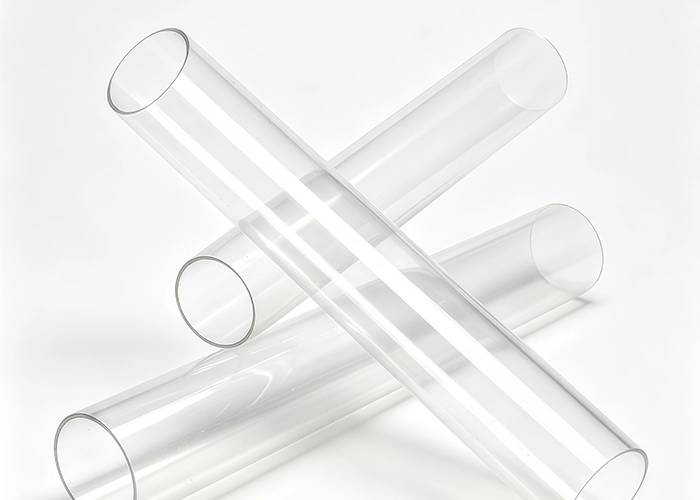
The overall process is straightforward. PC resin is prepared, heated until it can flow, injected into a mold, cooled, and then removed as a finished part.
The basic sequence is similar to that used for other thermoplastics, although PC requires closer attention to moisture and temperature because the material is more sensitive to poor preparation.
Material Preparation
Polycarbonate absorbs moisture from the surrounding air, so the resin normally needs to be dried before molding. If too much moisture remains in the material, the finished part may show streaks, bubbles, or reduced mechanical performance.
For that reason, good storage and drying are part of material control rather than optional secondary steps. The correct drying conditions depend on the actual PC grade being used.
Melting And Injection
After preparation, the resin is heated until it becomes a uniform melt and is then injected into the mold cavity.
PC has relatively high melt viscosity, so the material does not flow as easily as some common plastics. The molding conditions therefore need to be appropriate for the size, wall thickness, and complexity of the part.
For the product designer, the practical implication is simple: very thin sections, abrupt changes in thickness, and unnecessarily complicated geometry can make a PC component harder to manufacture consistently.
Cooling And Part Removal
Once the cavity is filled, the material cools and becomes rigid. The mold then opens and the part is removed.
Cooling affects both dimensional stability and production efficiency. Thick or uneven sections generally take longer to cool and can be more prone to deformation than parts with balanced wall thickness.
After molding, the component can be checked for dimensional accuracy, surface appearance, distortion, and assembly performance before any additional finishing is carried out.
Basic Design Considerations For Polycarbonate Parts
A good polycarbonate part does not require an overly complicated design strategy. In many cases, following a few basic injection molding principles can avoid the most common problems.
Keep Wall Thickness Consistent
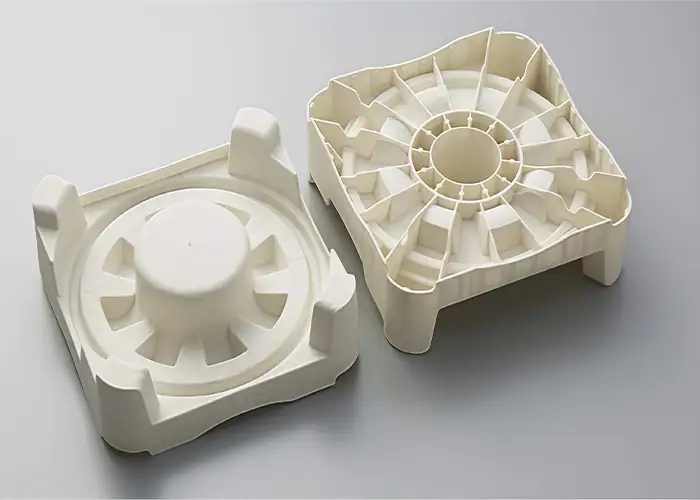
Consistent wall thickness helps the resin fill and cool more evenly. Large changes in section thickness can lead to visible sink marks, uneven shrinkage, or warpage.
When a part needs additional stiffness, using ribs is often more effective than simply making the entire wall thicker. This approach can reduce material use while keeping the structure more balanced.
Avoid Sharp Corners
Sharp internal corners create local stress concentrations. Rounded transitions distribute stress more gradually and are particularly useful for parts exposed to impact, repeated loading, or assembly stress.
Smooth transitions also make the geometry more suitable for molding and can improve the overall durability of the finished component.
Include Suitable Draft
Draft allows the molded component to release more easily from the tool. Deep walls and textured surfaces generally require more draft than short, polished surfaces.
Adequate draft can help reduce scratching, drag marks, and unnecessary stress during part removal without materially changing the product’s function.
Design Assembly Features Carefully
Ribs, bosses, snap fits, and insert locations can all be integrated into molded PC parts. These features can reduce secondary assembly, but they should be incorporated without creating unnecessarily thick areas or excessive local stress.
For screw bosses and similar features, the surrounding structure should support the load without forcing the PC to carry excessive assembly stress that may contribute to cracking over time.
Advantages Of Polycarbonate Injection Molding
The benefits of polycarbonate injection molding come from combining the properties of PC with the repeatability of molded production.
Strong And Impact-Resistant Parts
PC is well suited to products that need to withstand impact, handling, or accidental drops. This makes it valuable for protective components, equipment housings, and transparent products where more brittle materials may not provide enough toughness.
Complex Geometry In A Single Part
Injection molding can integrate ribs, bosses, snap fits, openings, textured surfaces, logos, and other features into one component. When these features are designed effectively, they can reduce machining, fastening, and separate assembly operations.
This ability becomes especially valuable once the product design is stable and the same geometry will be produced repeatedly.
Consistent Production
A well-established molding process can produce parts with consistent dimensions and appearance over repeated production cycles.
For commercial products, this repeatability matters as much as material strength. Customers expect the first, hundredth, and thousandth parts to fit and function in the same way.
Efficient Medium-To-High-Volume Manufacturing
Injection molding requires an initial tooling investment, but that cost can be distributed across a larger number of components.
As production volume increases, the unit cost generally becomes more attractive. This is why injection molding is usually considered after a product design has matured and ongoing production demand is clear.
Good Surface Appearance
The molded surface reproduces the finish of the mold cavity, allowing PC parts to be produced with glossy, matte, textured, or transparent appearances.
For many products, the required cosmetic finish can therefore be created during molding rather than added afterward.
Limitations Of Polycarbonate Injection Molding
Polycarbonate is highly capable, but it is not the right material for every application.
Higher Material Cost
PC generally costs more than commodity plastics such as polypropylene and some ABS grades. Using it is easiest to justify when the part genuinely needs its impact strength, transparency, heat resistance, or dimensional performance.
For simple non-structural products with modest requirements, a lower-cost material may provide sufficient performance.
Moisture Sensitivity
Because PC absorbs moisture, poor storage or preparation can lead to problems during molding. This makes material handling more important than it is with some less moisture-sensitive thermoplastics.
Scratch Sensitivity
Polycarbonate is tough, but toughness should not be confused with surface hardness. Clear PC surfaces can scratch relatively easily, which can be a concern for lenses, protective windows, or customer-facing products.
A hard coating may be added when long-term scratch resistance is important.
UV Exposure
Standard PC can yellow after prolonged exposure to sunlight. Outdoor applications should therefore consider UV-stabilized materials or suitable protective coatings.
Chemical Stress Cracking
PC can be sensitive to certain solvents, cleaning agents, lubricants, adhesives, and other chemicals. When chemical exposure occurs together with internal or assembly stress, cracking may develop even if the initial part appears acceptable.
Chemical compatibility should therefore be reviewed whenever the product will regularly contact cleaning fluids, fuels, oils, adhesives, or similar substances.
Common Polycarbonate Injection Molding Defects
Several defects can appear in molded PC parts, although most can be reduced through good material preparation and a balanced part design.
Splay And Bubbles
Splay often appears as silver or streak-like marks on the surface. Bubbles may also form within or near the surface of the part.
Moisture is a common contributor, which is why correct resin preparation is important before molding begins.
Sink Marks
Sink marks are shallow depressions that tend to appear around thicker areas, ribs, and bosses. They are often associated with uneven material thickness and shrinkage.
Keeping the structure balanced and avoiding unnecessary solid sections can reduce their visibility.
Warpage
Warpage occurs when different parts of a component cool or shrink unevenly. The result may be a part that curves, twists, or no longer fits its mating component as intended.
Consistent wall thickness and a balanced overall shape can help reduce this risk.
Flow And Weld Lines
Flow lines can appear as visible patterns on the surface as molten material travels through the cavity. Weld lines form where separate material fronts meet.
These marks are particularly important for transparent and cosmetic components because they may remain visible even when the part is mechanically acceptable.
Surface Finishing For Polycarbonate Parts
Some PC parts can be used directly after molding, while others need additional surface treatment to improve appearance or durability.
Molded Surface Finish
Because the molded part reproduces the mold surface, the tooling itself can create glossy, matte, textured, or transparent finishes.
For products where appearance matters, defining the desired finish before tooling is generally more efficient than relying heavily on secondary polishing afterward.
Hard Coating
Clear PC components may receive a hard coating to improve scratch resistance. Some coating systems also provide additional UV protection, which can be valuable for outdoor transparent parts.
Automotive lighting, viewing windows, and protective covers are examples where this type of surface protection can improve long-term appearance.
Painting And Printing
Polycarbonate can also be painted or printed for branding, identification, or decorative purposes. Logos, labels, control markings, and colored surfaces can be added after molding.
Any paint, ink, cleaner, or coating system should be checked for chemical compatibility with PC to avoid surface damage or stress cracking.
Applications Of Polycarbonate Injection Molding
The combination of impact resistance, transparency, heat performance, and dimensional stability gives PC a broad range of engineering applications.
Automotive
In automotive products, polycarbonate is used for lighting covers, headlamp lenses, selected interior components, electrical housings, and protective parts.
Transparent exterior parts typically need additional consideration for UV exposure and scratch resistance because appearance must remain stable over long periods.
Industrial Equipment
Industrial equipment uses PC for machine guards, viewing covers, housings, control components, and protective enclosures.
These applications benefit from the material’s ability to provide physical protection while still allowing visibility through the part when a clear grade is used.
Medical
Specific healthcare-grade polycarbonate materials can be used for equipment housings, transparent components, diagnostic products, and selected medical parts.
Material selection in medical applications depends on the exact resin grade, sterilization method, regulatory requirements, and intended contact conditions. General-purpose PC should not automatically be treated as suitable for every medical product.
Electronics
PC is commonly considered for electronic housings, electrical enclosures, connectors, covers, and switch components because it combines impact resistance, electrical insulation, heat resistance, and dimensional stability.
When a product must meet a defined flammability requirement, an appropriate flame-retardant grade can be selected rather than relying on standard PC.
Optical And Consumer Products
Clear PC is suitable for lenses, safety eyewear, transparent covers, protective screens, and lighting components. Consumer products also use PC for durable housings, appliance parts, equipment covers, and other components that benefit from its combination of toughness and appearance.
The best grade depends on whether the product prioritizes optical clarity, outdoor durability, surface quality, impact resistance, or another specific performance requirement.
Polycarbonate Injection Molding Vs CNC Machining
Injection molding and CNC machining can both produce polycarbonate parts, but they are usually most valuable at different stages of product development.
| Factor | Injection Molding | CNC Machining |
| Tooling | Dedicated mold required | No dedicated mold |
| Design Changes | Less flexible after tooling | Easy to modify |
| Low Volume | Often less economical | Well suited |
| High Volume | Highly efficient | Higher unit cost |
| Complex Integrated Features | Strong advantage | Limited by machining access |
| Material Waste | Relatively low | More material is removed |
When Injection Molding Makes Sense
Injection molding is generally a better fit once the product design is stable and the expected production volume is large enough to justify tooling.
It is especially useful when the same geometry needs to be repeated consistently or when ribs, bosses, clips, textures, and other features can be integrated directly into the molded component.
When CNC Machining Makes Sense
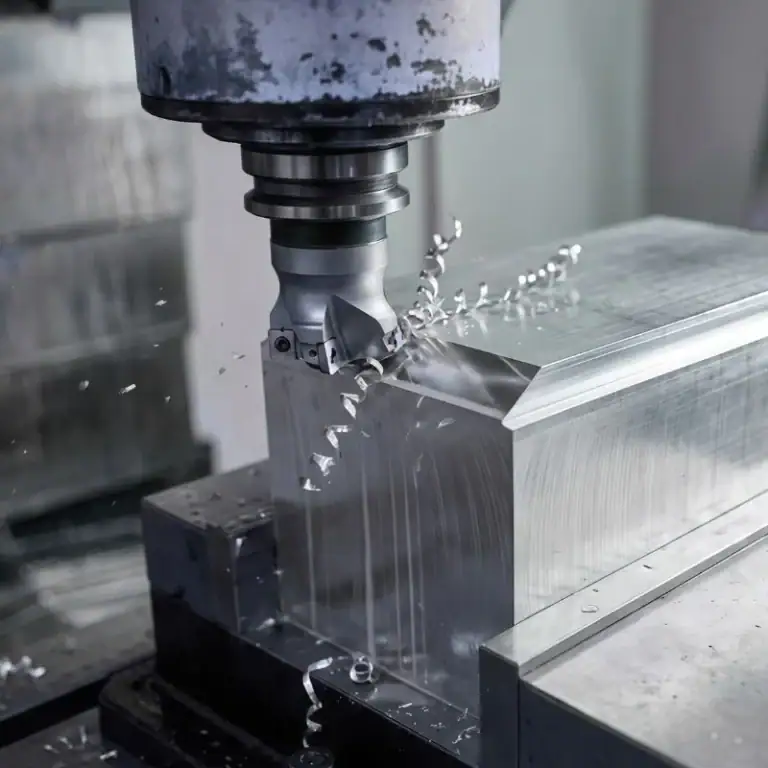
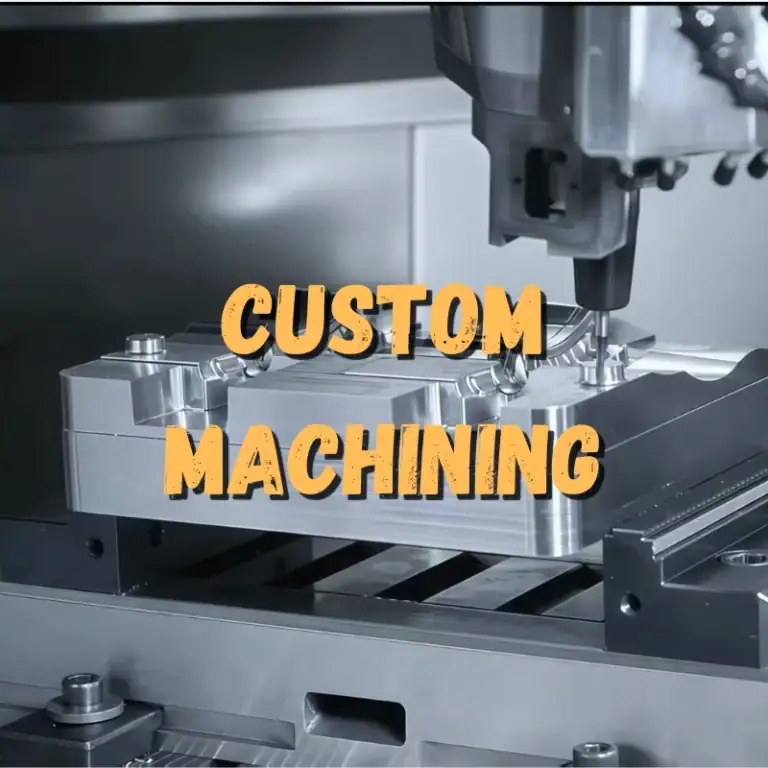
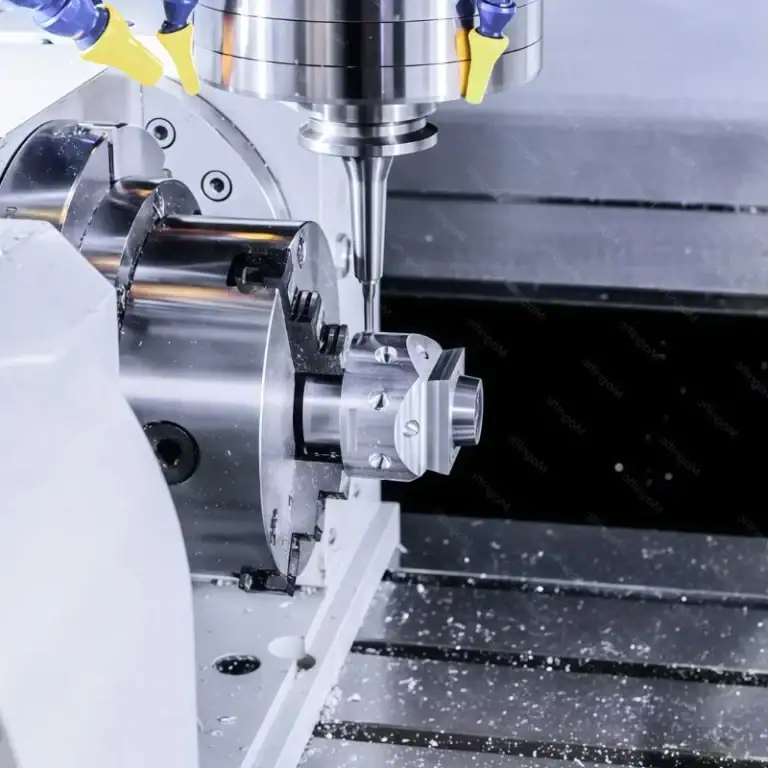
CNC machining is often more practical during early prototyping and lower-volume production. The part can be machined directly from PC sheet, plate, or stock without investing in a dedicated mold.
This makes dimensional or structural changes much easier while the design is still evolving.
A common development strategy is therefore to use CNC-machined PC prototypes to verify geometry, fit, assembly, and basic function before committing to injection molding for larger-volume production.
What Affects Polycarbonate Injection Molding Cost?
The cost of a molded PC part is influenced by the mold, part geometry, material grade, and production quantity.
Tooling Complexity
A simple housing normally requires less tooling investment than a component with multiple undercuts, complex moving mold features, demanding surface textures, or optical-quality surfaces.
Simplifying unnecessary geometry early can therefore reduce both tooling cost and project risk.
Part Size And Material Use
Larger parts naturally consume more resin and may require larger molding equipment. Thick sections also use more material and generally take longer to cool.
A balanced design can therefore improve both material efficiency and production economics.
Polycarbonate Grade
Standard PC, optical grades, flame-retardant materials, UV-resistant grades, healthcare materials, and reinforced PC do not have the same cost.
The most expensive grade is not automatically the best option. The better approach is to select the material that meets the real operating requirements without adding properties the product does not need.
Production Volume
Production volume has a major influence on project economics because the mold represents an upfront investment.
For a small number of parts, this tooling cost may be difficult to justify. For thousands of repeated components, the same tooling investment is distributed across far more units, making injection molding considerably more attractive.
How To Choose Polycarbonate For Injection Molding
Selecting the right polycarbonate starts with the finished product rather than with the molding machine.
Match The Material To The Application
A designer should first consider what the part actually needs to do. A transparent protective cover may prioritize clarity and impact resistance, while an electrical enclosure may require flame resistance and dimensional stability. An outdoor component may need UV resistance, while a structural bracket may benefit from a reinforced grade.
These different requirements can all lead to different PC materials even when the parts are nominally described as “polycarbonate.”
Consider The Operating Environment
Temperature, sunlight, chemicals, moisture, assembly loads, and repeated impact can all influence material performance.
A PC grade that performs well in a protected indoor environment may not be the best choice for an outdoor product exposed to sunlight and cleaning chemicals.
Consider Production Volume
Production quantity should be considered before committing to injection molding.
For prototypes and small batches, CNC machining can avoid tooling investment and make design changes easier. Once the design is stable and demand increases, injection molding can provide a more efficient route to repeated production.
Define The Final Quality Requirements
Before production, the project should clearly define the characteristics that matter most, such as critical dimensions, transparency, surface appearance, color, texture, assembly fit, and functional performance.
Clear priorities help manufacturers focus control on the features that affect the product while avoiding unnecessary complexity on non-critical areas.
FAQs
What Should You Not Use On Polycarbonate?
Avoid strong solvents and aggressive cleaners such as acetone, benzene, and some alcohol- or ammonia-based products unless compatibility has been confirmed. These chemicals can cause clouding, surface damage, or stress cracking. Mild soap, water, and PC-compatible cleaners are safer choices.
Which Is Better, Plexiglass Or Polycarbonate?
It depends on the application. Polycarbonate offers much higher impact resistance and better toughness, making it suitable for protective and structural parts. Plexiglass, or acrylic, generally provides better scratch resistance and optical clarity. PC is usually preferred when durability matters most.
Does Polycarbonate Shatter Easily?
No. Polycarbonate is known for its high impact resistance and is much less likely to shatter than brittle transparent plastics such as acrylic or glass. However, excessive stress, sharp notches, chemical exposure, or long-term material degradation can still cause cracking.
Conclusion
Polycarbonate injection molding is an effective way to manufacture strong, impact-resistant, heat-resistant, and transparent plastic components. The best results come from matching the correct PC grade to the product’s actual requirements while considering geometry, surface quality, operating environment, and expected production volume. Understanding both the strengths and limitations of polycarbonate helps engineers choose the material more confidently and avoid unnecessary cost or complexity.
At TiRapid, we provide precision CNC machining and prototype manufacturing for polycarbonate and other engineering plastics. CNC-machined PC prototypes can help verify dimensions, fit, assembly, and product design before a project moves into higher-volume manufacturing.