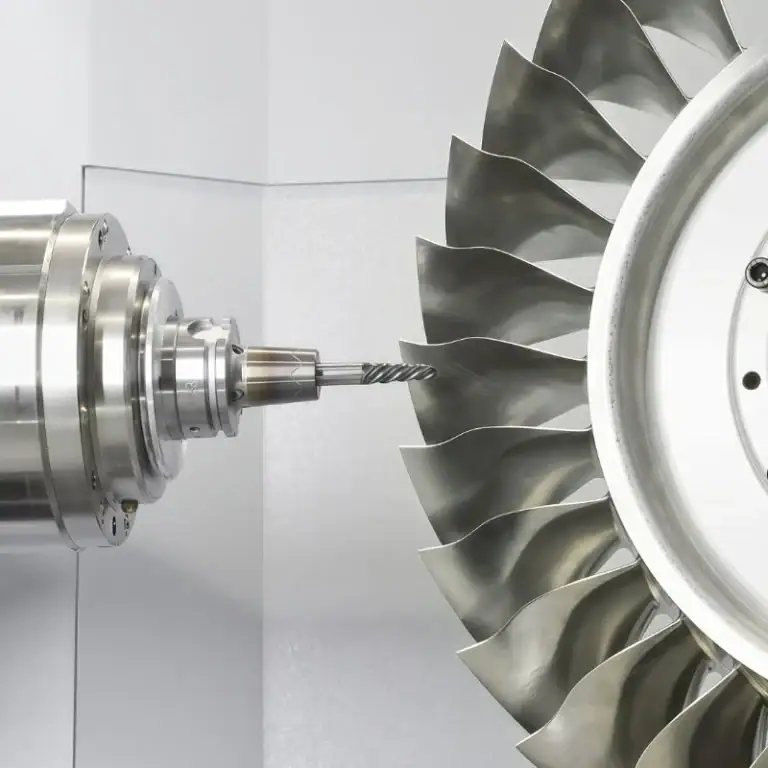
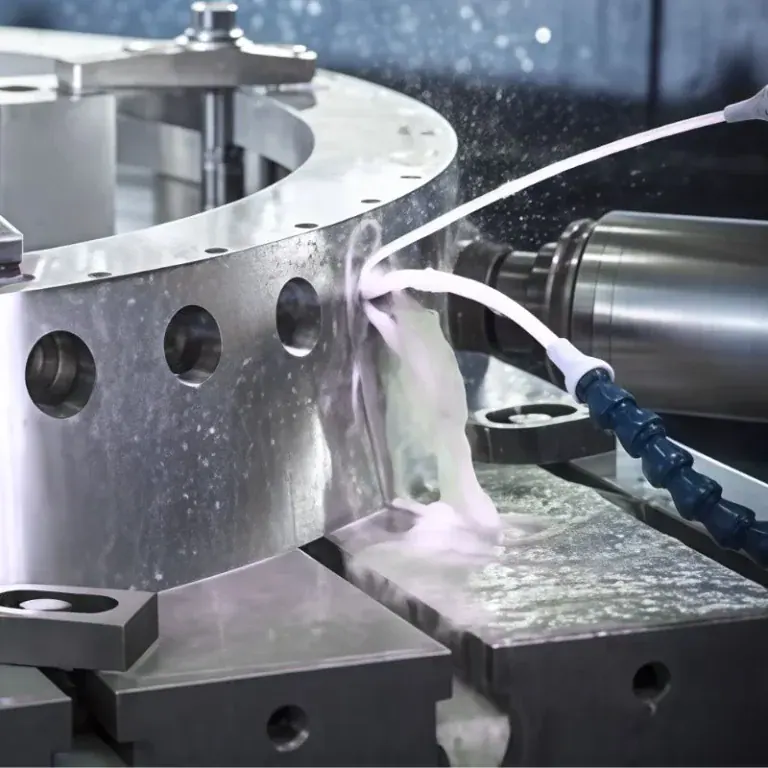
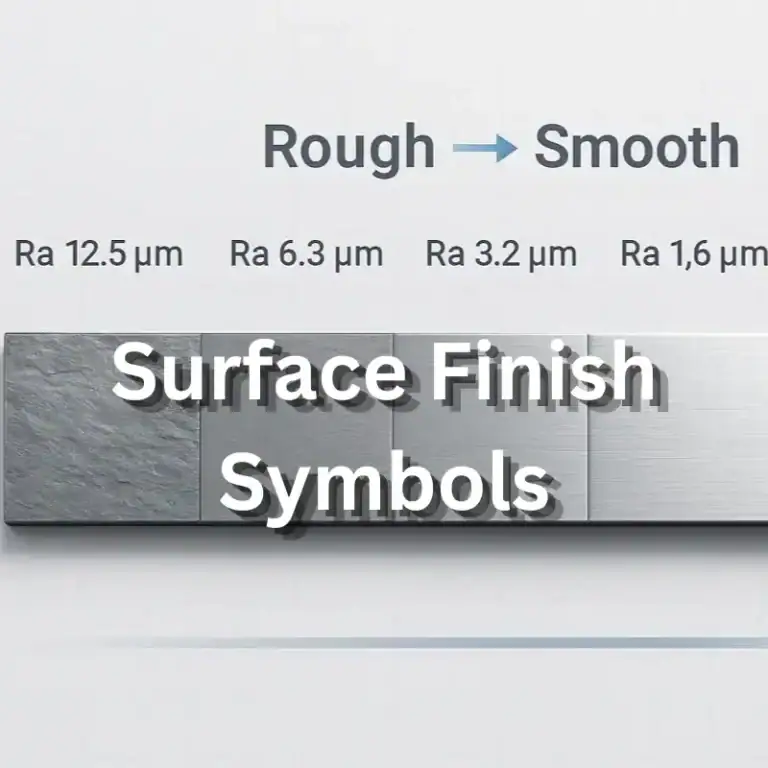
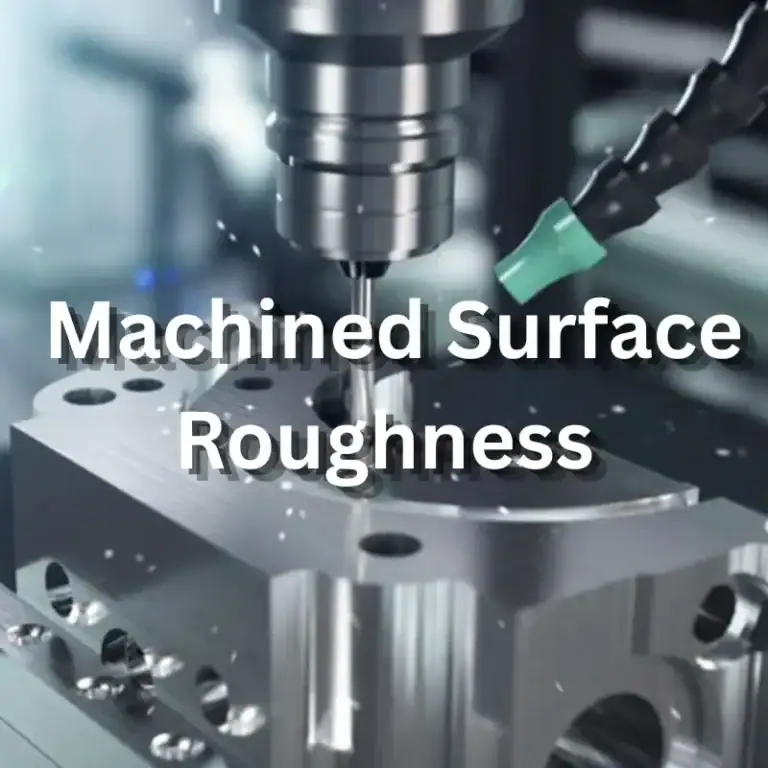
Semiconductor CNC machining supports the production of mechanical components used around wafer handling, vacuum processing, fluid delivery, motion systems, thermal control, and precision equipment assemblies. In these applications, machining quality is judged by more than whether a dimension falls inside tolerance. Feature location, surface condition, burr control, thermal stability, and cleanliness can all influence how the final equipment performs.
For this reason, semiconductor machining requires a more controlled manufacturing strategy than many general-purpose CNC jobs. Material behavior, machining sequence, fixture design, tool condition, finishing, cleaning, and inspection must work together. This guide focuses on how semiconductor CNC precision machining is planned, executed, and verified for reliable equipment parts.
Why Does Semiconductor CNC Machining Need A Different Process Strategy?
Semiconductor CNC machining combines conventional cutting processes with stricter control over geometry, surface condition, contamination, and process repeatability. The challenge is not simply reaching a nominal dimension, but preserving part performance from raw stock through final inspection.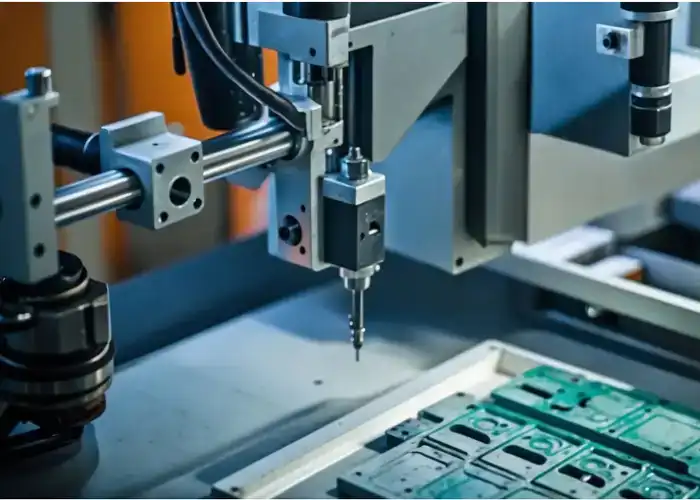
Precision Is Often Concentrated In Functional Interfaces
A semiconductor component may contain dozens of dimensions, but only some directly control assembly or equipment performance.
These usually include locating holes, sealing lands, precision bores, motion interfaces, mounting surfaces, and alignment features.
Instead of applying unnecessarily tight tolerances everywhere, the machining plan should identify the features that control function and protect them throughout the process.
Surface Condition Can Be As Important As Size
A part may measure correctly but still create problems if a sealing face contains scratches, a cross-hole retains burrs, or a finished surface carries embedded contamination.
This is especially important around vacuum systems, wafer-handling mechanisms, and fluid-delivery hardware.
The required manufacturing condition therefore includes geometry, texture, edge quality, and cleanliness.
Repeatability Matters Beyond The First Successful Part
A prototype can often be adjusted manually until it passes inspection.
That approach is not sufficient for repeat semiconductor production.
Programs, fixtures, tool-life limits, material condition, finishing steps, and inspection methods must be controlled so later batches behave like the approved first parts.
What CNC Machined Parts Are Used In Semiconductor Equipment?
CNC machined parts for semiconductor equipment range from large structural plates to small precision fittings. Their manufacturing requirements depend on where they sit in the system and what function they perform.
Wafer Handling Components
Wafer-handling equipment uses machined arms, supports, mounting plates, end-effector elements, alignment blocks, carriers, and motion-system interfaces.
Low mass may be important, but stiffness and positional repeatability are equally critical.
For these components, the relationship between locating features is often more important than a single isolated dimension.
Vacuum And Process Hardware
Vacuum-facing hardware can include chamber sections, covers, port plates, adapters, flanges, manifolds, and sealing components.
These parts often combine large machined surfaces with grooves, holes, ports, and threaded interfaces.
Flatness, sealing geometry, edge condition, and cleanability should be considered together during process planning.
Gas And Fluid Delivery Parts
Machined manifolds, valve blocks, fittings, adapters, and distribution components may contain intersecting holes and internal passages.
These features are efficient to produce by CNC machining but create additional deburring and cleaning challenges.
A small chip trapped inside a passage can matter more than a cosmetic mark on an external surface.
Thermal Management Parts
Cooling plates, heat-transfer blocks, mounting structures, and thermal interfaces are commonly machined from aluminum or copper alloys.
Channel geometry, sealing areas, flatness, and surface contact can influence thermal performance.
Machining strategy must also consider distortion because large, thin, or pocketed thermal parts can move as material is removed.
Structural And Alignment Components
Frames, base plates, brackets, housings, fixtures, and alignment components provide mechanical reference points for the equipment.
Their importance often comes from the position and orientation of multiple features over a relatively large area.
A large plate with several precision mounting patterns can therefore be more challenging than a much smaller part with tighter individual dimensions.
Which Materials Work Best For Semiconductor Machining?
Material selection affects cutting behavior, dimensional stability, corrosion resistance, thermal response, surface treatment, and final equipment compatibility. The right choice depends on the operating environment as much as the machining process.
Aluminum Alloys
Aluminum is one of the most common materials used for semiconductor equipment hardware.
It machines efficiently, supports lightweight structures, conducts heat well, and can be anodized for additional surface protection.
However, large aluminum parts can distort after heavy material removal, particularly when the raw stock contains residual stress.
A stable process may require rough machining first, followed by a separate finishing stage.
Stainless Steel
Stainless steel is often selected for vacuum hardware, fittings, corrosion-resistant components, and process-related assemblies.
Compared with aluminum, it typically produces higher cutting loads and more heat.
Tool geometry, coolant delivery, feed rate, and tool wear therefore need closer control if tight dimensions and good surfaces must be maintained.
Copper And Copper Alloys
Copper offers excellent thermal and electrical performance.
It may be used in thermal-management components, power-related hardware, and specialized equipment interfaces.
Pure copper is soft and ductile, which can make burr control difficult. Sharp tools and suitable cutting conditions are important to avoid smeared surfaces and unstable edges.
Titanium And Nickel-Based Materials
Titanium and nickel alloys are used when corrosion resistance, strength, or elevated-temperature capability justifies their higher cost.
These materials place more stress on the cutting tool and often concentrate heat near the cutting edge.
Tool life, cutting speed, coolant strategy, and machine rigidity become important cost drivers.
Engineering Plastics
PEEK, PTFE, PCTFE, POM, and other engineering polymers may be used for insulating parts, guides, fixtures, seals, and chemically resistant components.
They require a different machining approach from metals.
Heat, clamping pressure, moisture behavior, and stress relaxation can change final dimensions even when the cutting program itself is accurate.
How Should Semiconductor CNC Parts Be Designed For Machining?
Good DFM reduces machining risk before programming starts. Semiconductor components should be designed around functional datums, realistic tolerance zones, stable wall geometry, accessible features, and practical cleaning requirements.
Start With Functional Datums
The most useful datums are usually the surfaces or features that locate the component in the final assembly.
When machining and inspection both reference the same functional datums, it becomes easier to control feature relationships.
This also reduces dependence on long chains of independent dimensions.
Avoid Unnecessary Tolerance Stacking
Several individually acceptable dimensions can combine into a large total assembly error.
Where possible, critical features should reference a common datum structure.
This improves both manufacturability and inspection clarity.
Keep Tool Access Practical
Deep cavities, narrow channels, and very small internal radii often require long or small-diameter tools.
These tools are less rigid and may need lower feed rates.
Increasing an internal radius or opening access to a deep feature can reduce cycle time, improve finish, and decrease tool deflection.
Control Thin-Wall Geometry
Thin-wall structures are frequently used to reduce weight or fit equipment packaging constraints.
However, aggressive pocketing can create stress release and deformation.
Uniform wall thickness, local ribs, balanced stock removal, and careful fixturing make these parts easier to machine consistently.
Design Sealing Features Around Function
A vacuum sealing surface should not be specified only by roughness.
Flatness, groove dimensions, edge condition, surface direction, and scratch control can also affect sealing.
The drawing should reflect the actual requirements of the sealing interface rather than applying a generic finish value.
Consider Cleaning During Design
Parts with deep blind holes, narrow intersecting channels, and enclosed pockets are harder to clean.
Where possible, geometry should allow debris and cleaning fluids to leave the component easily.
Designing for cleaning can reduce both manufacturing risk and maintenance difficulty.
Which CNC Processes Are Used For Semiconductor Parts?
Semiconductor CNC machining typically combines milling, turning, multi-axis machining, hole finishing, threading, and dedicated surface operations. The best process depends on geometry, positional relationships, material, and production volume.
CNC Milling
Milling is widely used for chambers, plates, housings, manifolds, fixtures, and structural parts.
Roughing removes bulk material, while finishing operations establish critical walls, faces, holes, and sealing regions.
For large parts, separating roughing from final finishing can help reduce distortion.
CNC Turning
Turning is efficient for shafts, spacers, sleeves, adapters, and round vacuum components.
Concentric diameters, grooves, threads, and sealing features can often be produced in one setup.
If the part also contains milled flats or cross holes, live-tool turning or mill-turn machining may reduce additional setups.
5-Axis CNC Machining
Five-axis machining becomes useful when several angled faces or complex features must be reached from different directions.
It can also help preserve positional relationships by reducing the need to re-clamp the workpiece.
However, five-axis machining should be selected because it solves a geometric or tolerance problem, not simply because it is more advanced.
Precision Hole Machining
Critical holes may require boring, reaming, interpolation, or another finishing operation after drilling.
The required method depends on diameter, depth, position, surface requirement, and tolerance.
High-accuracy holes should be planned as functional features rather than treated as ordinary drilling operations.
Thread Machining
Threads may be tapped, milled, or turned.
Thread milling can offer good control in difficult materials or larger thread sizes, while tapping may be more efficient for straightforward production.
Blind threads also deserve attention because they can trap chips and cleaning residue.
One-Setup Machining
When several important features share tight positional relationships, producing them in the same setup can reduce alignment error.
This is especially valuable for precision hole patterns, sealing interfaces, and multi-sided components.
Fewer setups also simplify datum transfer between operations.
How Is Precision Controlled In Semiconductor CNC Machining?
Semiconductor CNC precision machining depends on a stable system rather than a single accurate machine. Workholding, cutting tools, thermal behavior, material condition, and inspection all influence the final result.
Dimensional Control
Each tolerance should be matched with an appropriate machining method.
General milling may be sufficient for open surfaces, while precision bores may require boring or reaming.
A manufacturing plan becomes more efficient when the process is selected according to feature function.
Geometric Control
Position, flatness, perpendicularity, parallelism, and profile requirements frequently determine whether a semiconductor component will assemble correctly.
These relationships should be considered during both setup planning and inspection.
Simply holding linear dimensions does not guarantee correct geometry.
Tool Wear Management
Tool wear changes cutting forces, effective tool diameter, burr formation, and surface quality.
If a process runs long enough, these changes can move dimensions gradually toward the tolerance limit.
Defined tool-life rules or periodic inspection help prevent this drift.
Thermal Stability
Cutting heat can temporarily change part dimensions.
Large aluminum plates and tightly toleranced steel components can both be affected.
Final finishing and measurement should be performed under conditions that represent the stabilized part as closely as possible.
Fixture Stability
A fixture must locate the part securely without creating unnecessary deformation.
Thin parts can bend under excessive clamping force.
Large parts may also need support close to the cutting zone to prevent vibration.
How Are Surface Condition And Cleanliness Managed?
Semiconductor CNC machined parts require controlled post-machining processes because edge condition, coatings, residues, particles, and packaging can all affect final performance.
Deburring And Edge Control
Deburring should remove loose metal and sharp burrs without changing critical geometry.
Cross holes, slots, threads, and intersecting passages are common risk areas.
Manual deburring around sealing surfaces or precision holes should be carefully controlled.
Anodizing
Anodizing is widely used for aluminum equipment parts.
Because the treatment changes the surface layer, tight fits, threaded areas, and precision bores may require masking or dimensional compensation.
The drawing should clearly indicate which surfaces are treated.
Passivation
Stainless steel parts may be passivated to support corrosion resistance after machining and cleaning.
Surface contamination introduced during manufacturing should be removed before treatment.
Process compatibility with the final application should also be confirmed.
Electropolishing
Electropolishing can improve surface smoothness and cleanability on suitable metal components.
Because it removes a small amount of material, its effect on critical dimensions must be considered before the part reaches final size.
Semiconductor Part Cleaning
Semiconductor CNC part cleaning removes machining oil, chips, dust, abrasive residue, and handling contamination.
The required cleaning level depends on where the component will be used.
A structural external bracket may not need the same process as a vacuum-facing manifold.
Packaging After Cleaning
Cleanliness can be lost after the cleaning step.
Protected surfaces, sealed ports, suitable wrapping, and controlled handling help prevent recontamination.
Packaging should also stop precision surfaces from rubbing against each other during shipment.
How Are Semiconductor CNC Machined Parts Inspected?
Inspection should verify the characteristics that actually control equipment function. Dimensional reports alone may be insufficient when flatness, surface texture, material identity, or datum relationships are critical.
First-Article Inspection
A first-article inspection confirms whether the initial manufacturing process produces the required geometry.
It is especially useful for new designs and major revisions.
Issues discovered at this stage can be corrected before production quantities increase.
CMM Inspection
CMM equipment is useful for complex hole patterns, profiles, positional tolerances, perpendicularity, and multi-datum features.
It is particularly valuable when several related geometric conditions must be evaluated together.
Not every dimension needs CMM inspection,simple features can often be measured more efficiently with conventional tools.
Surface Roughness Inspection
Surface texture should be measured when the drawing specifies a roughness requirement.
The measurement direction and location should match the functional surface.
Visual appearance alone cannot confirm an Ra requirement.
Flatness Inspection
Flatness requires separate evaluation from roughness.
This is important because a sealing face can be very smooth but still be geometrically distorted.
Large surfaces may require careful measurement strategy to capture the actual condition.
In-Process Inspection
Critical features can be checked before the final operation is complete.
This provides an opportunity to correct tool offsets or compensate for controlled process drift.
In-process inspection is often more effective than relying only on final acceptance.
Material And Revision Traceability
Material certificates, batch records, drawing revisions, and inspection reports help preserve manufacturing consistency.
This becomes especially valuable when a part is reordered months later.
Repeat supply should reproduce the approved process rather than start from zero.
What Drives Cost In Semiconductor CNC Machining?
Cost is influenced by more than material and machine time. Tolerance, geometry, setup count, surface treatment, cleaning, inspection, and documentation can all change the final manufacturing price.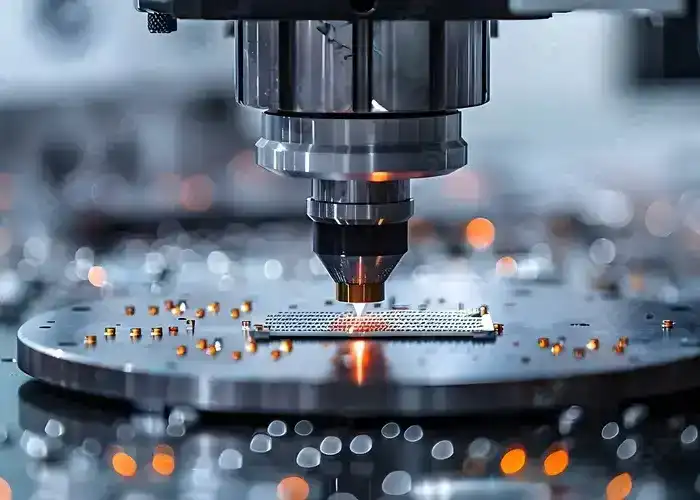
Tight Tolerances
A tighter tolerance can require slower finishing, more stable tools, additional setups, temperature stabilization, or more inspection.
The cost impact is greatest when tight tolerances are applied to features that do not need them.
Functional tolerance design helps avoid this.
Complex Geometry
Complex multi-sided parts may require five-axis machining or several setups.
This increases programming and machine time.
However, a higher-capability machine can sometimes reduce total cost if it eliminates repeated repositioning.
Surface Requirements
Fine surface finishes may need dedicated finishing tools or secondary operations.
Grinding, lapping, polishing, anodizing, passivation, or plating each add process steps.
These requirements should be defined before quotation.
Cleaning And Documentation
Controlled cleaning, protected packaging, detailed inspection reports, material traceability, and process certificates all add value but also require resources.
They should be treated as manufacturing requirements rather than administrative extras.
Prototype Vs. Repeat Production
Prototype cost includes a larger share of programming, setup, and first-article work.
Once the design is approved, fixtures, tooling, and inspection routines can be optimized.
Repeat production is therefore often more efficient even when the part geometry remains unchanged.
How To Choose A Semiconductor CNC Machine Shop
A semiconductor CNC machine shop should be evaluated on process control, not only machine capacity. The supplier should be able to manage precision machining, material behavior, finishing, cleaning, inspection, and revision-controlled repeat production.
Relevant Precision Machining Experience
The supplier should be comfortable with thin walls, sealing surfaces, precision bores, multi-datum parts, and complex hole patterns.
Experience helps identify manufacturing risk before material is cut.
Milling And Turning Capability
A combination of milling, turning, mill-turn, and multi-axis equipment gives the supplier more flexibility.
This allows each feature to be assigned to the most suitable process instead of forcing every part onto one type of machine.
Material Knowledge
Different materials require different machining strategies.
A supplier that understands aluminum distortion, stainless tool wear, copper burr formation, and polymer dimensional behavior is better positioned to control variation.
Inspection Capability
Inspection should match the drawing requirements.
CMM, surface roughness measurement, conventional gauges, and documented inspection processes provide different types of verification.
The supplier should select the correct method rather than over-inspecting simple features.
Finishing And Cleaning Coordination
A supplier does not need to perform every secondary process internally, but it should control the complete workflow.
Critical dimensions, masked areas, cleaning requirements, and inspection after finishing should remain clearly defined.
Repeat Production And Traceability
Approved programs, fixtures, inspection plans, material records, and drawing revisions should be controlled for future orders.
This turns a successful prototype into a repeatable supply process.
FAQs
What Is The Difference Between Semiconductor Machining And General CNC Machining?
Semiconductor machining usually places greater emphasis on contamination control, functional datums, vacuum interfaces, surface integrity, repeatability, and process documentation. The cutting methods may be similar, but the process controls are often more demanding.
Which Materials Are Most Common For Semiconductor CNC Machined Parts?
Aluminum and stainless steel are widely used, while copper, titanium, nickel alloys, PEEK, PTFE, and other engineering materials are selected for specific thermal, chemical, electrical, or vacuum requirements.
Does Every Semiconductor Part Need Micron-Level Tolerances?
No. Only features that control alignment, sealing, precision motion, or critical fits should receive very tight tolerances. Applying extreme precision to nonfunctional surfaces increases cost without improving equipment performance.
When Is 5-Axis Machining Useful For Semiconductor Parts?
Five-axis machining is most useful when a part has complex angles, multi-sided features, restricted tool access, or tight positional relationships that would otherwise require several setups.
Conclusion
Semiconductor CNC machining depends on more than accurate cutting. Material behavior, datum strategy, distortion control, surface condition, burr removal, cleaning, inspection, and production repeatability all influence the final result. A well-planned process concentrates precision on functional features and removes unnecessary complexity from noncritical areas, improving both reliability and manufacturing efficiency.
At TiRapid, we provide precision CNC machining and manufacturing services for semiconductor equipment components, prototypes, and repeat production. Our team supports milling, turning, multi-axis machining, engineering materials, finishing coordination, dimensional inspection, and process control to help customers achieve stable part quality, reliable lead times, and consistent future supply.