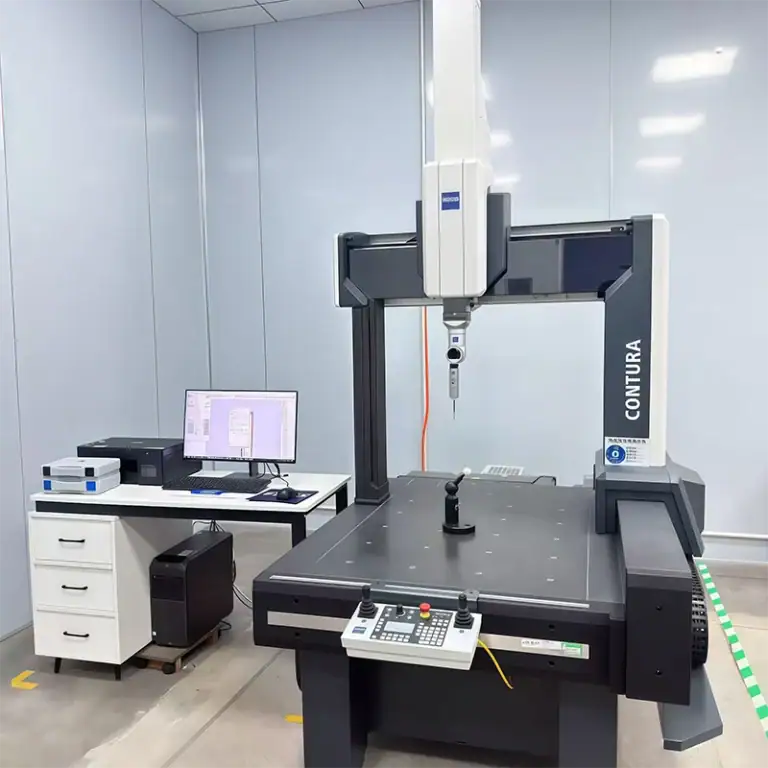
Ultimate tensile strength is the maximum tensile stress a material can withstand before it breaks under tension. For engineers, designers, and buyers, it is one of the most important values used to judge whether a metal, plastic, or composite can survive pulling, stretching, or load-bearing conditions without failure.
This guide explains the definition of ultimate tensile strength, the ultimate tensile strength formula, how it appears on a stress-strain curve, how it compares with yield strength.
What Is Ultimate Tensile Strength?
Ultimate tensile strength is the highest stress a material can resist before fracture during a tensile test. It is commonly shortened to UTS and is often measured in MPa, Pa, or psi depending on the engineering standard used.
What Does UTS Mean?
UTS means ultimate tensile strength, and it is another way to describe the maximum tensile stress a material can withstand before breaking. Some sources also call it tensile strength or ultimate tensile stress, but the purpose is the same: to describe the breaking limit under tension.
In engineering drawings, datasheets, and material certificates, UTS may appear beside yield strength, elongation, hardness, and modulus. These values should be reviewed together because a material can be strong but brittle, or ductile but lower in strength.
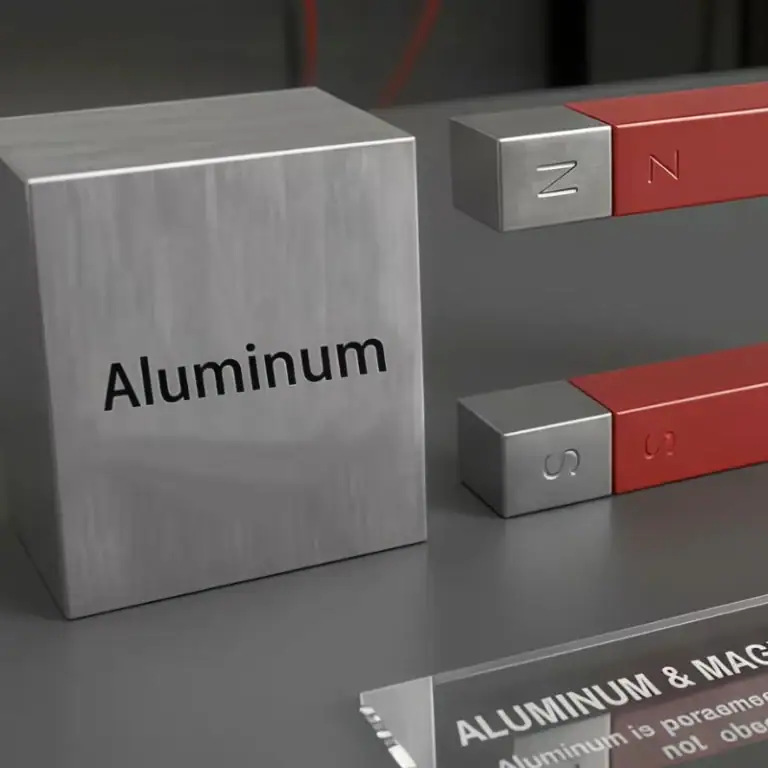
For example, high-strength steel may have a much higher UTS than aluminum, but aluminum may still be preferred when weight reduction, corrosion resistance, or easy machining is more important than maximum load capacity.
How Does Ultimate Tensile Strength Work?
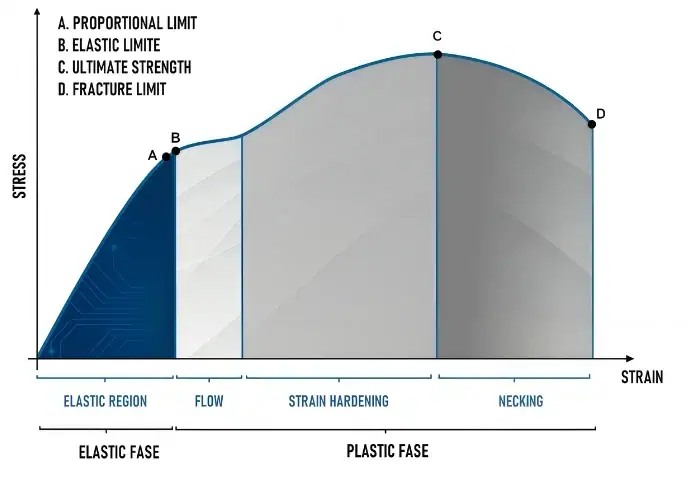
Ultimate tensile strength works by measuring the peak stress a material reaches while it is pulled until failure. During the test, the material first stretches elastically, then may deform permanently, then reaches its maximum tensile load, and finally fractures.
How Materials Behave Under Tensile Load
Materials behave under tensile load by stretching in the direction of the applied force. At low stress, many metals deform elastically and return to their original shape after the load is removed.
As load increases, the material may pass its yield point and begin plastic deformation. Once this happens, the part will not fully return to its original shape, even if the external force is removed.
After further loading, ductile metals reach their ultimate tensile strength, then neck and finally fracture. Brittle materials may show little visible deformation before breaking, which makes material behavior important for safety-critical parts.
How Ductile Materials Stretch Before Breaking
Ductile materials stretch before breaking because they can deform plastically after yield strength is reached. This allows the material to absorb energy, redistribute stress, and show visible deformation before final failure.
In a tensile test, ductile metals usually show elongation, strain hardening, necking, and then fracture. This behavior is useful in many engineering applications because visible deformation can act as a warning before complete failure.
Mild steel, aluminum, copper, brass, and many stainless steels are generally more ductile than brittle ceramics or glass-like materials. This is one reason these metals are widely used for machined and structural components.
Why Brittle Materials Fail Differently
Brittle materials fail differently because they have limited plastic deformation before fracture. Instead of stretching and necking significantly, they may crack suddenly when stress exceeds their strength limit.
This behavior can be risky in applications with impact, vibration, sharp corners, or sudden tensile loads. A brittle material may have a high strength value but still fail quickly if a crack starts at a notch, hole, thread root, or surface defect.
When designing CNC parts, brittle failure risk can be reduced by avoiding sharp internal corners, improving surface finish, controlling heat treatment, and selecting materials with suitable toughness as well as strength.
Ultimate Tensile Strength Formula And Calculation
The ultimate tensile strength formula is maximum force divided by the original cross-sectional area. This is the same basic structure as the tensile strength formula, but the force used is the peak load recorded before fracture.
Formula:
Ultimate Tensile Strength = Maximum Load ÷ Original Cross-Sectional Area
This formula allows engineers to compare materials independent of specimen size. A thicker specimen can carry more total load, but the UTS value normalizes that load by area, making material comparison more meaningful.
Ultimate Tensile Strength Formula
The ultimate tensile strength formula is UTS = Fmax / A0. In this formula, Fmax is the maximum tensile force during testing, and A0 is the original cross-sectional area before deformation.
For example, if a metal specimen breaks after reaching a maximum load of 40,000N and its original cross-sectional area is 100mm², the UTS is 400N/mm², which equals 400MPa.
This is why material datasheets use stress units rather than force alone. Force depends on part size, but stress gives a value that can be compared across different materials and specimen dimensions.
How To Calculate Ultimate Tensile Strength
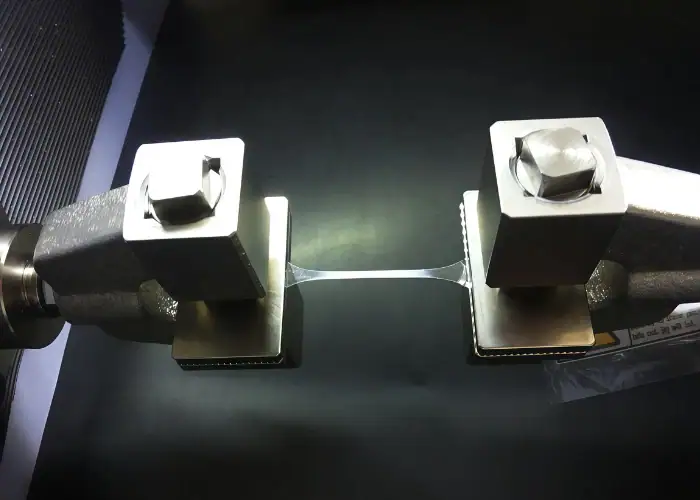
To calculate ultimate tensile strength, measure the original cross-sectional area of the test specimen, pull the specimen in a tensile testing machine until failure, record the maximum load, and divide that load by the original area.
The test specimen is often shaped so failure occurs in the controlled gauge section. Modern tensile testing equipment records load and elongation continuously, then calculates UTS automatically from the peak load and measured area.
For CNC material evaluation, the calculated UTS should be compared with the material certificate, grade standard, and expected application load. This helps avoid selecting a material that looks strong in theory but is unsuitable for the real part geometry.
Ultimate Tensile Strength Units
Ultimate tensile strength units are force per unit area. Common units include Pa, MPa, N/mm², and psi. For metals and engineering plastics, MPa is commonly used because the values are usually large.
One MPa equals one N/mm², which is convenient for many machining and mechanical design calculations. In the U.S. market, psi or ksi may also appear on material datasheets.
When comparing suppliers, always confirm the unit before making decisions. Confusing MPa, psi, and ksi can lead to serious selection errors, especially for load-bearing machined metal parts.
Ultimate Tensile Strength Calculation Example
An ultimate tensile strength calculation example shows how maximum load becomes a material strength value. If a round specimen has an original area of 50mm² and the tensile tester records a maximum load of 25,000N, then UTS = 25,000 ÷ 50 = 500MPa.
This result means the material reached a peak tensile stress of 500MPa before necking and fracture. It does not mean every finished part made from that material can safely carry that stress in service.
Finished parts include holes, threads, slots, radii, surface marks, heat-affected zones, and machining stress. These design and manufacturing details can reduce real-world strength, so safety factors and engineering review are still required.
Ultimate Tensile Strength Vs Yield Strength
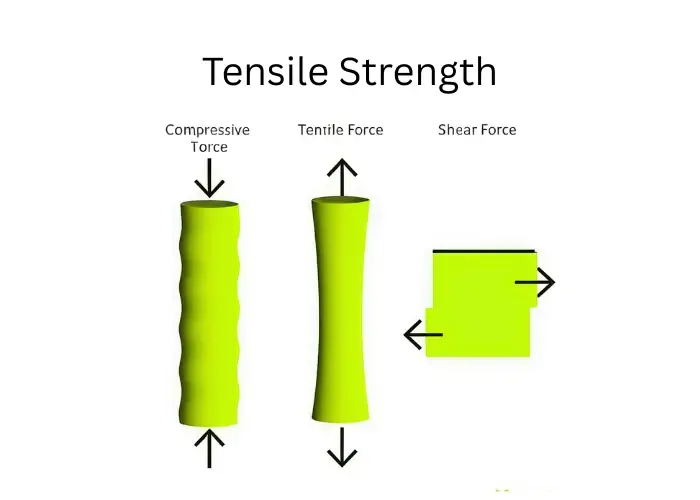
Ultimate tensile strength vs yield strength compares the breaking limit with the permanent deformation limit. UTS is the maximum stress before fracture, while yield strength is the stress where permanent deformation begins.
Definition Difference
The definition difference is simple: yield strength marks the beginning of permanent deformation, while ultimate tensile strength marks the maximum tensile stress before failure.
Yield strength answers, “When will the part start to deform permanently?” UTS answers, “When will the material reach its maximum tensile resistance before breaking?”
This distinction helps engineers avoid overdesigning or underdesigning parts. A material with high UTS but low yield strength may still deform too easily for precision assemblies.
Behavior Under Load
The behavior under load is different because yield strength occurs earlier on the stress-strain curve, while UTS occurs later after additional plastic deformation and strain hardening.
Before yield strength, deformation is mostly elastic. After yield strength, the material changes shape permanently. After UTS, necking begins in ductile materials and fracture becomes unavoidable.
For CNC components, this behavior affects whether a part can keep tolerance under service loads. A part does not need to break to fail; it only needs to deform enough to lose function.
Importance In Engineering Design
The importance in engineering design is that yield strength sets the normal safe design limit, while ultimate tensile strength helps evaluate extreme overload and fracture risk.
A lifting fixture, fastener, aerospace bracket, or robotic joint may need both high yield strength and high UTS. Yield strength protects shape; UTS protects against final rupture.
For TiRapid-style CNC projects, this means material choice should consider loading direction, wall thickness, thread engagement, machining marks, and inspection requirements, not just the highest datasheet number.
Which Value Is Higher?
Ultimate tensile strength is usually higher than yield strength for ductile metals. This is because the material can continue carrying more stress after yielding due to strain hardening before it reaches its maximum tensile stress.
However, the gap between yield strength and UTS depends on material type, heat treatment, work hardening, and grade. Some high-strength materials may have less ductility and a smaller margin between yielding and fracture.
A larger difference can indicate more plastic deformation before failure. A smaller difference can mean the material reaches fracture soon after yielding, which may require a more conservative design approach.
Different Types Of Material Strength
Different types of material strength describe different failure modes, loading directions, and design limits. Ultimate tensile strength is only one strength value, so it should be compared with yield strength, fracture strength, fatigue strength, shear strength, and compressive strength when needed.
Yield Strength
Yield strength is the stress where permanent deformation begins. It is critical for parts that must maintain shape, alignment, tolerance, sealing pressure, or smooth motion under load.
In structural and precision components, yield strength often matters more than UTS during normal operation. A shaft that bends, a bracket that distorts, or a locating block that shifts may fail functionally even before breaking.
When designing tight-tolerance parts, yield strength helps define the safe load range. It also helps determine wall thickness, fillet size, fastening strategy, and support geometry.
Ultimate Tensile Strength
Ultimate tensile strength is the maximum tensile stress before fracture. It is critical for evaluating overload, breaking risk, and final safety margin.
This value is especially useful for fasteners, cables, brackets, pressure-related parts, pull rods, lifting components, and any part where tensile rupture would be dangerous.
However, UTS should not be used as the only design target. Fatigue, corrosion, temperature, surface finish, and stress concentration can cause parts to fail below their theoretical UTS.
Fracture Strength
Fracture strength is the stress at which final separation or actual fracture occurs. In some materials, it may be close to UTS; in ductile materials, it may occur after necking has reduced the local cross-section.
Fracture strength helps explain why a stress-strain curve may drop after UTS before final breakage. The material can no longer support increasing engineering stress because the local section is narrowing.
For machined parts, fracture may start at the weakest location. Sharp corners, scratches, inclusions, pores, weld defects, and tool marks can all become crack initiation sites.
Fatigue Strength And Endurance Limit
Fatigue strength is the stress a material can withstand for a defined number of repeated loading cycles. Endurance limit is the stress level some materials can theoretically withstand for very high or infinite cycles without fatigue failure.
These values are important because many components fail from repeated stress rather than one-time overload. Shafts, gears, brackets, springs, and machine parts may experience millions of load cycles.
A material with good ultimate tensile strength may still fail under fatigue if the design has sharp corners, poor surface finish, vibration, or improper heat treatment.
Ultimate Tensile Strength Of Common Materials
The ultimate tensile strength of materials varies widely by alloy, grade, heat treatment, processing method, and test condition. Steel, aluminum, brass, titanium, and stainless steel can all have very different UTS ranges depending on their exact specification.
| Material | Typical UTS Range | Engineering Notes |
| Mild Steel | About 350–550MPa | Good ductility, weldability, and cost efficiency |
| Carbon / Alloy Steel | About 200–2000MPa | Very wide range depending on alloy and heat treatment |
| Stainless Steel 304 / 316 | About 515–750MPa | Good corrosion resistance with moderate-to-high strength |
| Aluminum Alloys | About 90–400MPa | Lightweight, easy to machine, good strength-to-weight ratio |
| Brass | About 200–550MPa | Good machinability, conductivity, and corrosion resistance |
| Copper | About 200–250MPa for many commercial grades | Excellent conductivity, lower strength than many steels |
| Titanium | About 275–1100MPa | High strength-to-weight ratio and strong corrosion resistance |
Ultimate Tensile Strength Of Mild Steel
The ultimate tensile strength of mild steel is commonly in the medium-strength range, often around 350–550MPa depending on grade, carbon content, rolling condition, and standard. This makes mild steel useful for general structural parts, brackets, frames, plates, and low-cost machined components.
Mild steel is not the strongest steel, but it offers a practical balance of strength, ductility, weldability, machinability, and cost. For many CNC and fabrication projects, this balance is more important than maximum strength.
When using the keyword ultimate tensile strength of mild steel in material selection, remember that “mild steel” is a broad category. Always confirm whether the material is A36, 1018, S235, S275, S355, or another grade before final design.
Ultimate Tensile Strength Of Steel
The ultimate tensile strength of steel can range from relatively low values in mild steels to very high values in alloyed, hardened, or heat-treated steels. Xometry notes that steels may range broadly from about 200–2000MPa depending on composition and treatment.
This wide range explains why “steel” alone is not specific enough for engineering decisions. Low-carbon steel, stainless steel, spring steel, tool steel, and high-strength alloy steel behave very differently under tensile load.
For CNC machining, steel selection should consider UTS together with yield strength, hardness, machinability, heat treatment, corrosion resistance, and post-processing requirements.
Ultimate Tensile Strength Of Stainless Steel
The ultimate tensile strength of stainless steel depends on grade, condition, and product form. Common 304 and 316 stainless steels are often selected for corrosion resistance as well as mechanical strength.
Stainless steel is useful when a part needs better corrosion resistance than carbon steel while still maintaining strong mechanical performance. It is common in medical devices, food equipment, marine parts, shafts, brackets, fittings, and industrial hardware.
The tradeoff is machinability. Many stainless steels work harden easily, so cutting tools, feed rates, coolant, and toolpath strategy must be controlled carefully during CNC machining.
Aluminum Ultimate Tensile Strength
Aluminum ultimate tensile strength is usually lower than many steels, but aluminum provides excellent strength-to-weight ratio, corrosion resistance, and machinability. Xometry lists aluminum tensile strength around 90–400MPa depending on alloy.
This makes aluminum suitable for aerospace components, robotic parts, housings, brackets, heat sinks, fixtures, and lightweight CNC machined parts. It is often chosen when reducing weight is more valuable than maximizing absolute strength.
For high-strength aluminum parts, alloy and temper matter greatly. 6061-T6, 7075-T6, 2024, and cast aluminum grades can perform very differently in tensile loading and machining.
Ultimate Tensile Strength Of Brass, Copper, And Titanium
The ultimate tensile strength of brass, copper, and titanium differs because each material serves a different engineering role. Brass is often used for machinability and conductivity, copper for electrical and thermal conductivity, and titanium for high strength-to-weight performance.
Brass can provide moderate strength and excellent CNC machinability. Xometry lists brass around 200–550MPa, depending on composition. Titanium can reach much higher strength ranges, about 275–1100MPa depending on grade, while also offering corrosion resistance and biocompatibility.
Copper is usually not selected for maximum tensile strength. It is selected for conductivity, thermal transfer, corrosion resistance, and formability, so its UTS should be balanced against electrical and thermal requirements.
What Factors Affect Ultimate Tensile Strength?
Factors that affect ultimate tensile strength include material composition, microstructure, heat treatment, manufacturing process, temperature, strain rate, defects, and testing conditions. Xometry lists microstructure, composition, and testing conditions as important influences on tensile strength.
Material Composition
Material composition affects ultimate tensile strength because alloying elements change the internal structure and bonding behavior of the material. Carbon, chromium, nickel, molybdenum, copper, zinc, magnesium, and titanium can all influence strength.
In steel, carbon and alloying elements can increase hardenability and strength. In aluminum, alloying systems such as 6xxx and 7xxx series produce very different mechanical properties after heat treatment.
For CNC parts, composition also affects machinability, tool wear, chip formation, corrosion resistance, and finishing behavior. A stronger alloy may require slower machining or more rigid fixturing.
Heat Treatment And Hardening
Heat treatment affects ultimate tensile strength by changing microstructure, hardness, and internal stress. Quenching, tempering, aging, annealing, and solution treatment can all shift the strength and ductility balance.
For example, heat-treated steels and precipitation-hardened aluminum alloys can achieve much higher tensile strength than annealed versions. However, increased strength may reduce ductility or increase machining difficulty.
When ordering machined parts, the sequence matters. Some parts are machined before heat treatment, while others need finishing after heat treatment to maintain final tolerance.
Manufacturing Process
The manufacturing process affects ultimate tensile strength because casting, forging, rolling, extrusion, machining, welding, and additive manufacturing can create different grain structures, porosity levels, residual stress, and anisotropy.
Forged and rolled metals often have stronger directional properties than cast materials. Welded areas may have heat-affected zones with different strength from the base metal.
CNC machining does not usually change bulk UTS significantly, but it can introduce local surface marks, sharp corners, or residual stress. These details affect real-world fatigue and fracture behavior.
Specimen Size And Shape
Specimen size and shape do not significantly change the measured material UTS when standardized test methods and original cross-sectional area are used correctly. Xometry explains that cross-sectional area in the calculation accounts for size differences under standardized testing.
However, finished part geometry can still affect failure risk. Holes, grooves, threads, thin walls, and sharp transitions concentrate stress and may cause failure earlier than a simple test specimen.
This is why engineering design should not simply copy a UTS value from a datasheet. Part geometry and loading direction must be checked carefully.
Surface Defects And Internal Flaws
Surface defects and internal flaws reduce effective strength because they create stress concentration and crack initiation points. Scratches, notches, pores, inclusions, tool marks, and microcracks can all reduce real-world load capacity.
This is especially important for fatigue-loaded parts. Even if the material has high UTS, repeated loading can grow cracks from small defects over time.
For high-reliability CNC parts, control of surface finish, deburring, inspection, material certification, and nondestructive testing may be required.
Why Is Ultimate Tensile Strength Important?
Ultimate tensile strength is important because it helps engineers select materials that can resist breaking under tensile load. It provides a measurable strength limit for comparing metals, plastics, composites, and other materials in load-bearing applications.
Material Selection
Ultimate tensile strength supports material selection by showing whether a material can handle the expected tensile load before fracture. It helps compare steel, aluminum, stainless steel, brass, copper, titanium, and engineering plastics.
For example, if a bracket must carry a high pulling load, mild steel or alloy steel may be preferred over lower-strength aluminum. If weight matters more, aluminum or titanium may be better.
The best selection depends on strength, weight, corrosion resistance, cost, tolerance, surface finish, and machining difficulty. UTS is important, but it is not the only factor.
Load-Bearing Part Design
Ultimate tensile strength supports load-bearing part design by helping engineers estimate failure risk under maximum tensile stress. This is useful for fasteners, shafts, rods, brackets, hooks, frames, and structural connectors.
However, design should normally keep working stress far below the failure limit. Safety factors are used to account for unexpected loads, material variation, machining marks, and real-world operating conditions. Fractory notes that safety factors are often applied to help account for unexpected loads and imperfections.
A well-designed CNC part uses both material strength and geometry. Increasing radius size, wall thickness, thread engagement, and cross-sectional area can improve strength without always changing material.
Safety And Failure Prevention
Ultimate tensile strength helps prevent failure by identifying the stress level where material rupture becomes likely. This is critical in transportation, aerospace, industrial equipment, medical devices, and structural applications.
If a selected material has lower UTS than required, the part may break under overload. If it has high UTS but low ductility or poor fatigue resistance, it may still fail unexpectedly.
Safety depends on understanding how the material behaves before, during, and after yielding. This is why UTS, yield strength, elongation, toughness, and fatigue strength should be reviewed together.
CNC Machining And Manufacturing Decisions
Ultimate tensile strength affects CNC machining and manufacturing decisions because stronger materials often require different tools, feeds, speeds, fixturing, and inspection strategies. High-strength alloys may increase cutting force, heat, tool wear, and machining time.
For example, high-strength steel may provide excellent load capacity but can be more difficult to machine than mild steel. Aluminum may machine quickly but may not provide the same UTS as steel in compact load-bearing parts.
A practical material choice balances engineering performance and manufacturing efficiency. The strongest material is not always the best material for a CNC part.
Advantages And Limitations Of High Ultimate Tensile Strength
High ultimate tensile strength gives parts better resistance to tensile failure, but it can also increase cost, machining difficulty, brittleness, and design complexity. Strength is valuable only when it matches the application’s real load and manufacturing requirements.
Advantages Of High Ultimate Tensile Strength
The advantage of high ultimate tensile strength is that a material can resist greater pulling stress before fracture. This can improve safety, durability, and load capacity in demanding applications.
High UTS can also help reduce part size or weight when used correctly. In aerospace, automotive, robotics, and industrial equipment, strong materials can allow thinner sections while maintaining performance.
For CNC machined parts, high UTS is valuable in shafts, structural brackets, load pins, fasteners, mounting blocks, and parts exposed to tension or bending loads.
Disadvantages Of High Ultimate Tensile Strength
The disadvantage of high ultimate tensile strength is that stronger materials may be harder to machine, more expensive, less ductile, or more sensitive to cracking. Metal Supermarkets also notes that high tensile strength can come with tradeoffs such as reduced flexibility and higher processing cost.
High-strength materials may need carbide tooling, slower cutting parameters, stress relief, heat treatment control, or specialized inspection. This can increase manufacturing cost and lead time.
In some applications, a slightly lower-strength but more ductile, corrosion-resistant, or machinable material may deliver better overall performance.
When High Strength Is Not The Best Choice
High strength is not the best choice when the application needs ductility, impact absorption, easy machining, corrosion resistance, conductivity, low weight, or low cost more than maximum tensile load.
For example, copper may be chosen for electrical conductivity even though its UTS is lower than many steels. Aluminum may be chosen for lightweight housings even when steel is stronger.
Material selection should always start from the part’s real function. A good engineering choice is not the strongest material, but the material that meets strength, tolerance, cost, and production requirements together.
Applications Of Ultimate Tensile Strength
Ultimate tensile strength is used in applications where materials must resist pulling, stretching, bending, or load-related failure. It supports material decisions in automotive, aerospace, construction, medical, robotics, industrial equipment, and CNC machining.
Automotive Parts
Ultimate tensile strength is important in automotive parts because vehicles require materials that can resist crash loads, vibration, road stress, and repeated mechanical force. UTS helps evaluate brackets, chassis parts, suspension parts, shafts, and safety-related components.
Automotive design often balances strength and weight. High-strength steels, aluminum alloys, and sometimes titanium are selected depending on the part’s load, location, and cost target.
For CNC prototypes and low-volume production, tensile strength data helps engineers choose materials that match the final functional requirement.
Aerospace Components
Ultimate tensile strength is important in aerospace components because aircraft parts must combine high strength, low weight, reliability, and controlled failure behavior. UTS supports material comparison for brackets, housings, structural supports, fasteners, and linkages.
Aluminum and titanium are common because they provide useful strength-to-weight performance. High-strength steel may still be used where compact size and very high load capacity are needed.
For aerospace CNC parts, material certificates, traceability, surface finish, inspection, and process control are just as important as the strength value itself.
Structural Steel Parts
Ultimate tensile strength is important in structural steel parts because beams, plates, frames, and connectors may face tensile forces from load, wind, vibration, and assembly stress. UTS helps define the material’s breaking limit.
However, structural design often uses yield strength and safety factors to avoid permanent deformation. UTS provides the final failure boundary, while yield strength helps control usable service limits.
For machined structural parts, hole placement, edge distance, fillet radius, and surface condition can strongly affect performance under tensile load.
Fasteners And Shafts
Ultimate tensile strength is important in fasteners and shafts because these parts often experience tensile, bending, torsional, and fatigue loads. A fastener with insufficient tensile strength can stretch, loosen, or break under load.
For shafts, UTS should be reviewed together with yield strength, fatigue strength, hardness, and surface finish. Keyways, shoulders, grooves, and threads can become stress concentration points.
CNC machining quality matters here. Smooth transitions, proper deburring, controlled tolerances, and suitable heat treatment can improve reliability.
CNC Machined Metal Components
Ultimate tensile strength is important in CNC machined metal components because material strength must match the part’s load path, geometry, tolerance, and production process. UTS helps prevent under-strength material choices during design review.
For prototypes, UTS helps engineers test whether a selected metal can meet functional requirements before mass production. For low-volume parts, it supports smarter tradeoffs between strength, cost, machinability, and lead time.
At TiRapid, this kind of material review is especially useful for custom brackets, housings, fixtures, shafts, robotic parts, medical components, and industrial equipment parts.
FAQs
How To Calculate Ultimate Tensile Strength?
Ultimate tensile strength is calculated by dividing the maximum tensile force by the original cross-sectional area of the test specimen. The formula is UTS = Fmax ÷ A0, where Fmax is the peak load before fracture and A0 is the original area. For example, if a specimen reaches 40,000N and the area is 100mm², the UTS is 400MPa. This value shows the material’s maximum tensile stress before breaking.
How To Calculate Ultimate Tensile Strength From Yield Strength?
Ultimate tensile strength cannot be accurately calculated from yield strength alone because the ratio depends on material grade, heat treatment, ductility, and strain hardening behavior. For many ductile metals, UTS may be about 1.1–1.6 times the yield strength, but this is only an estimate. For example, steel with 350MPa yield strength may have a UTS around 450–600MPa. For engineering use, always check the material datasheet or tensile test report.
Is Tensile Strength The Same As Ultimate Strength?
Tensile strength is often used as a short name for ultimate tensile strength, but technically they are not always identical. Tensile strength can describe a material’s general resistance to pulling force, while ultimate tensile strength refers specifically to the maximum stress before fracture. In material datasheets, tensile strength usually means UTS and is listed in MPa, N/mm², psi, or ksi. For precise engineering decisions, confirm whether the value means yield strength, UTS, or fracture strength.
What Is Ultimate Tensile Strength And Yield Strength?
Ultimate tensile strength is the maximum tensile stress a material can withstand before breaking, while yield strength is the stress where permanent deformation begins. Yield strength controls when a part starts to bend or stretch permanently; UTS controls when it reaches final tensile failure. For example, steel may have 350MPa yield strength and 500MPa UTS. In CNC material selection, yield strength helps prevent deformation, while UTS helps evaluate overload and fracture risk.
Conclusion
Ultimate tensile strength is a key material property that defines the maximum tensile stress a material can withstand before breaking. It helps engineers compare materials, calculate strength limits, understand stress-strain behavior, evaluate ultimate tensile strength vs yield strength, and choose metals for safe and reliable parts. For CNC machined components, UTS is most useful when reviewed together with material grade, heat treatment, geometry, surface finish, tolerance, and real service load.
At TiRapid, we provide precision CNC machining and manufacturing services for custom metal and plastic components. Our engineering team can support material selection, DFM review, tolerance planning, CNC milling, CNC turning, drilling, threading, inspection, and surface finishing to help your parts achieve the right balance of strength, machinability, cost, and application performance.