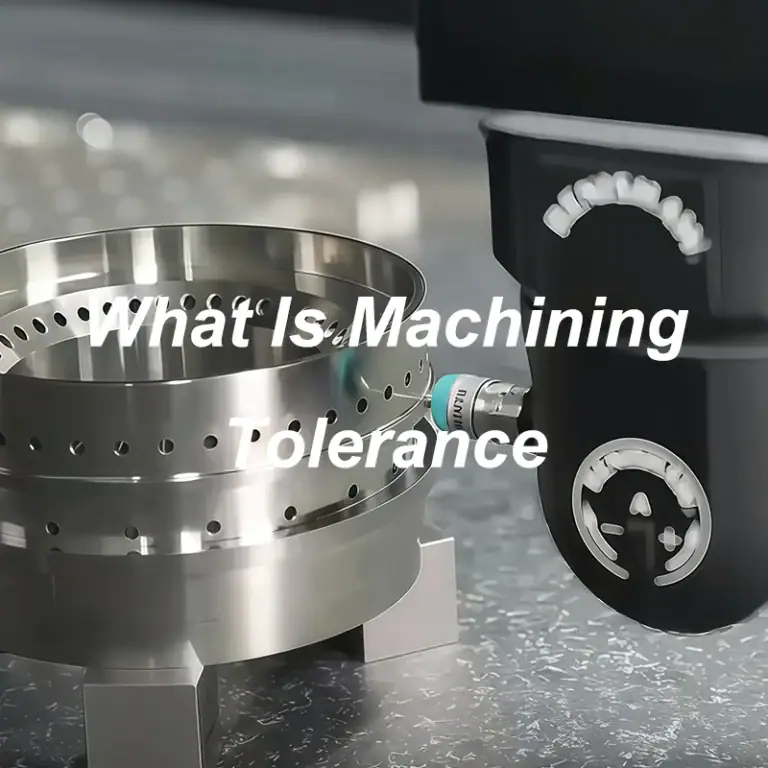
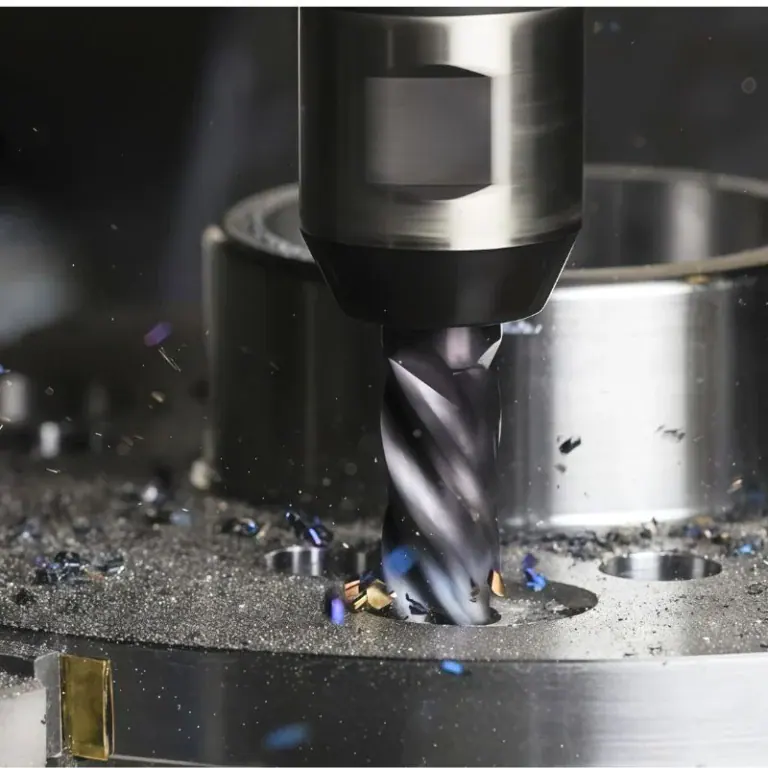
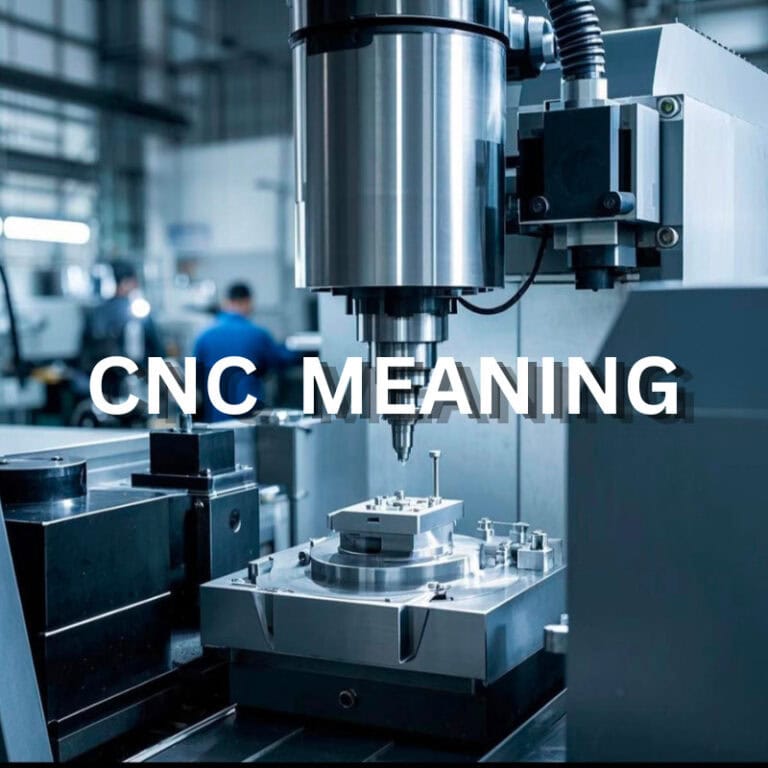
CNC plastic machining is a subtractive manufacturing process that uses computer-controlled cutting tools to produce precision components from engineering plastics. It is widely used for prototypes, custom housings, bushings, gears, electrical insulators, and functional mechanical parts.
This guide explains how CNC plastic machining works, which materials can be machined, and how milling, turning, and drilling produce functional plastic components.
What Is CNC Plastic Machining?
CNC plastic machining is a manufacturing process that removes material from plastic sheets, rods, or blocks using computer-controlled cutting tools. It produces custom plastic components with specified dimensions, holes, threads, pockets, and surface features. CNC machining is especially useful for functional prototypes, precision components, and low-volume production because it does not require dedicated injection molds.
How CNC Plastic Machining Works
CNC plastic machining works by converting a CAD design into programmed cutting instructions that control machine movement and material removal. The process begins with an engineering drawing or three-dimensional model defining the component’s geometry, dimensions, material, and critical tolerances.
CAM software generates toolpaths for milling, turning, drilling, or other cutting operations. The machinist then selects appropriate tools, prepares the stock material, establishes workpiece coordinates, and secures the material using suitable fixtures.
The machine removes material through roughing and finishing operations. After machining, the component is deburred, cleaned, and inspected. Temperature-sensitive or moisture-sensitive plastics may require conditioning or dimensional stabilization before final measurements.
| Process Step | Main Operation | Engineering Purpose |
| CAD Design | Define geometry and tolerances | Establish part requirements |
| CAM Programming | Generate cutting toolpaths | Control machining movements |
| Material Preparation | Select and prepare plastic stock | Confirm material suitability |
| Machine Setup | Secure the workpiece and tools | Maintain cutting stability |
| Rough Machining | Remove excess material | Create the basic geometry |
| Finish Machining | Complete critical features | Achieve final dimensions |
| Quality Inspection | Measure finished components | Verify specifications |
CNC Plastic Machining vs. Metal Machining
CNC plastic machining differs from metal machining because plastics generally have lower stiffness, lower thermal conductivity, and greater sensitivity to deformation. These characteristics influence cutting parameters, tool selection, fixturing, and achievable tolerances.
Metal machining often involves higher cutting forces and greater attention to tool wear. Plastic machining frequently requires sharper cutting edges and effective chip removal to minimize friction, localized heating, and material softening.
Another important difference is dimensional stability. Plastics may deform under clamping pressure, expand during cutting, or change dimensions after machining. Therefore, machining parameters used for aluminum or steel should not automatically be applied to plastic materials.
| Factor | CNC Plastic Machining | CNC Metal Machining |
| Material stiffness | Generally lower | Generally higher |
| Thermal conductivity | Usually lower | Often higher |
| Cutting forces | Often lower | Often higher |
| Main machining risks | Melting, deflection, burrs | Tool wear, chatter, cutting forces |
| Dimensional stability | More sensitive to heat and moisture | Often more stable |
| Workholding | Requires controlled pressure | Usually tolerates stronger clamping |
| Tooling strategy | Sharp edges and chip clearance | Material-specific grades and coatings |
What Plastics Can Be CNC Machined?
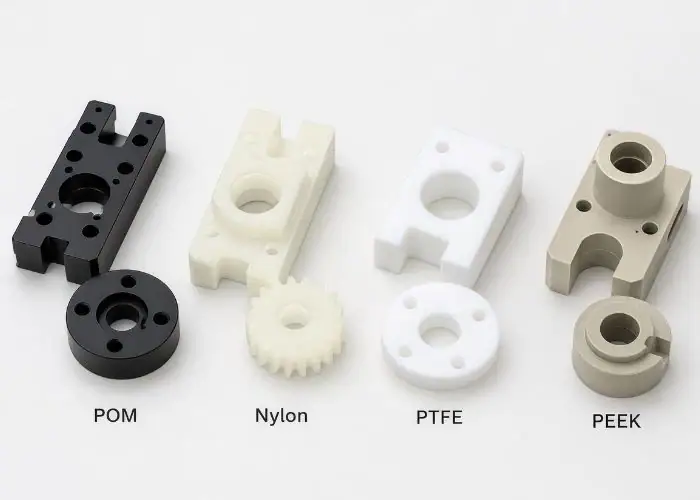
Common plastics for CNC machining include ABS, HDPE, POM, nylon, acrylic, polycarbonate, PEEK, and PTFE. These materials offer different combinations of mechanical strength, wear resistance, chemical compatibility, electrical insulation, and thermal stability. The best plastic for CNC machining depends on the operating environment, part geometry, dimensional requirements, and manufacturing cost.
ABS and HDPE: General-Purpose Plastics
ABS is a general-purpose engineering plastic offering impact resistance, moderate stiffness, and relatively good machinability. It is commonly used for equipment housings, brackets, prototype enclosures, and consumer product components.
When CNC machining ABS plastic, machinists use sharp tools and appropriate cutting parameters to control friction and heat. Excessive cutting temperatures may soften the material, while unsuitable feeds can create burrs or poor surface finishes.
HDPE offers good chemical resistance, toughness, and low moisture absorption. It is suitable for guides, wear strips, protective parts, and fluid-handling components. However, its flexibility and relatively high thermal expansion can make close tolerances more difficult to maintain.
POM and Nylon: Low-Friction and Wear-Resistant Plastics
POM, also called acetal, is widely used for precision mechanical components because of its low friction, favorable machinability, and relatively good dimensional stability. Typical applications include bushings, gears, spacers, rollers, and mechanical guides.
Nylon offers toughness, wear resistance, and useful mechanical properties for moving components. Common grades include PA6 and PA66, although moisture absorption can affect the material’s dimensions and mechanical behavior.
POM is often preferred for parts requiring accurate dimensions and low friction, while nylon can be suitable for components needing toughness and wear performance. Engineers must still consider creep, operating temperature, moisture exposure, and sustained mechanical loads.
Acrylic and Polycarbonate: Transparent Plastics
Acrylic, or PMMA, is commonly machined into transparent windows, display components, optical covers, and protective panels. It offers excellent optical clarity but can crack or chip if cutting forces and workholding are not properly controlled.
Polycarbonate provides greater impact resistance than acrylic and is frequently used for machine guards, protective covers, and transparent equipment housings. However, its surfaces are more susceptible to scratching, and certain chemicals can cause stress cracking.
Both materials require careful tool selection and controlled heat generation. Mechanical polishing and other compatible finishing methods can improve surface transparency, but excessive processing may damage the surface or alter critical dimensions.
PEEK and PTFE: High-Performance Plastics
PEEK is a high-performance thermoplastic with excellent mechanical strength, chemical resistance, and elevated-temperature capability. CNC-machined PEEK components are used in precision industrial equipment, electrical assemblies, medical equipment, and specialized mechanical systems.
PTFE provides extremely low friction and broad chemical resistance. It is commonly selected for seals, bushings, valve components, and chemically exposed parts. However, its low stiffness and tendency to creep under sustained loading can complicate machining and dimensional control.
PEEK is often selected when structural performance is important, while PTFE is useful when low friction or chemical resistance is the primary requirement. Both materials need suitable workholding and cutting strategies.
| Material | Main Properties | Typical CNC Parts | Main Machining Challenge |
| ABS | Impact resistance, moderate stiffness | Enclosures, brackets | Heat and burr formation |
| HDPE | Chemical resistance, toughness | Guides, wear strips | Flexibility and expansion |
| POM | Low friction, dimensional stability | Gears, bushings | Heat control |
| Nylon | Toughness, wear resistance | Rollers, mechanical parts | Moisture absorption |
| Acrylic | Optical clarity | Windows, transparent covers | Cracking and chipping |
| Polycarbonate | Impact resistance, transparency | Protective housings | Stress cracking |
| PEEK | Heat resistance, strength | Precision functional parts | Material cost and process control |
| PTFE | Low friction, chemical resistance | Seals, bushings | Creep and deformation |
Key Factors When Selecting CNC Plastics
Mechanical Performance: Evaluate strength, stiffness, wear resistance, and long-term loading.
Thermal Stability: Consider operating temperature, thermal expansion, and heat sensitivity.
Chemical Compatibility: Confirm resistance to oils, solvents, cleaning agents, and process fluids.
Dimensional Stability: Consider moisture absorption, residual stress, and expected tolerance requirements.
Manufacturing Cost: Compare material price, stock availability, machining difficulty, and inspection needs.
Which CNC Machining Processes Are Used for Plastics?
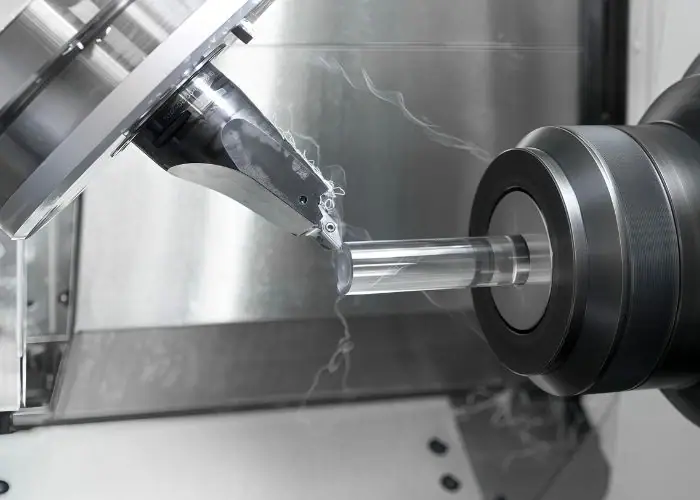
The main CNC machining processes for plastics are milling, turning, and drilling. CNC milling is used for housings, plates, pockets, and complex profiles, while CNC turning produces cylindrical components such as bushings, sleeves, and spacers. Drilling creates holes and can be combined with milling or turning to manufacture complete functional components.
CNC Milling for Plastic Components
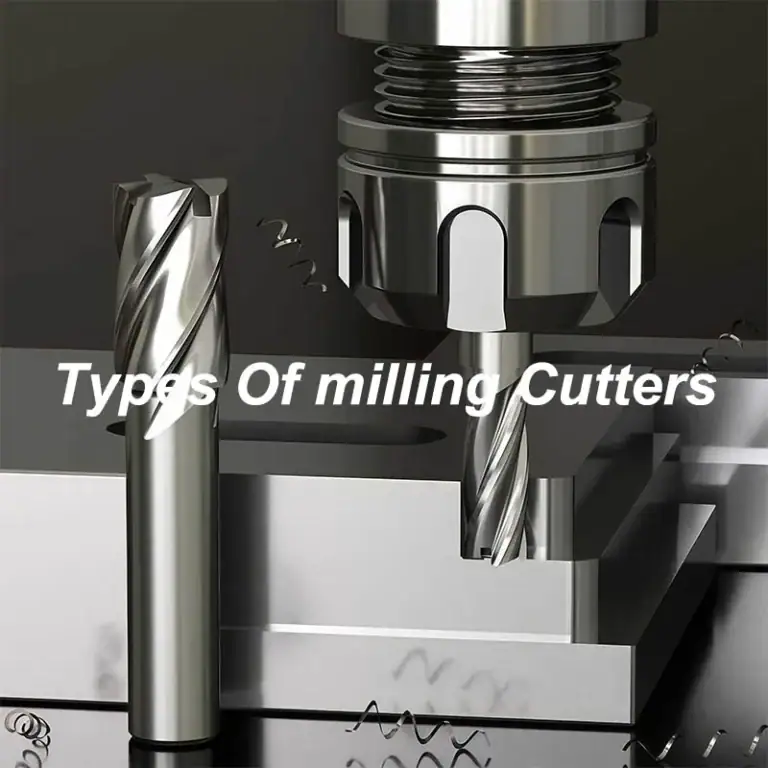
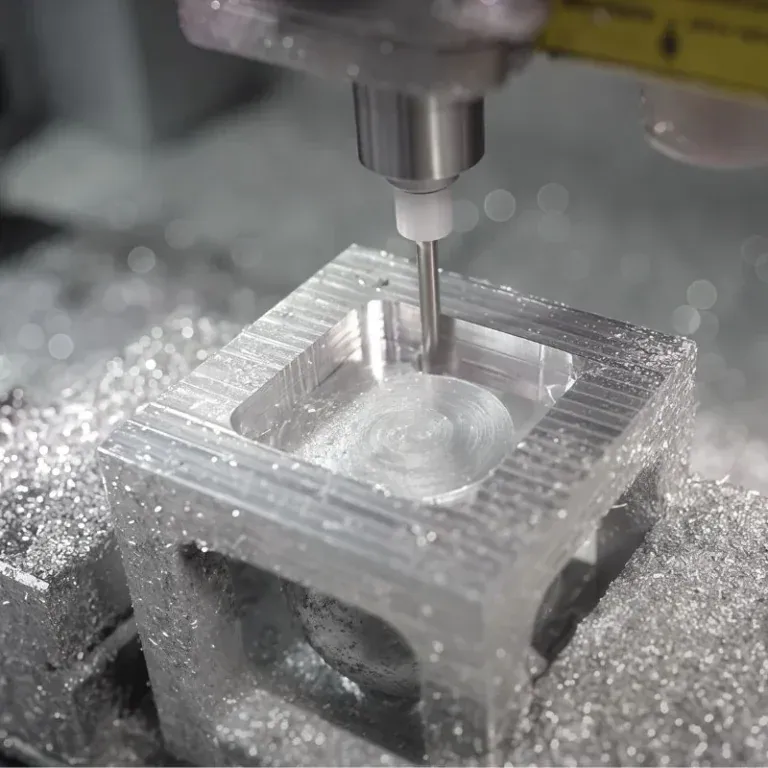
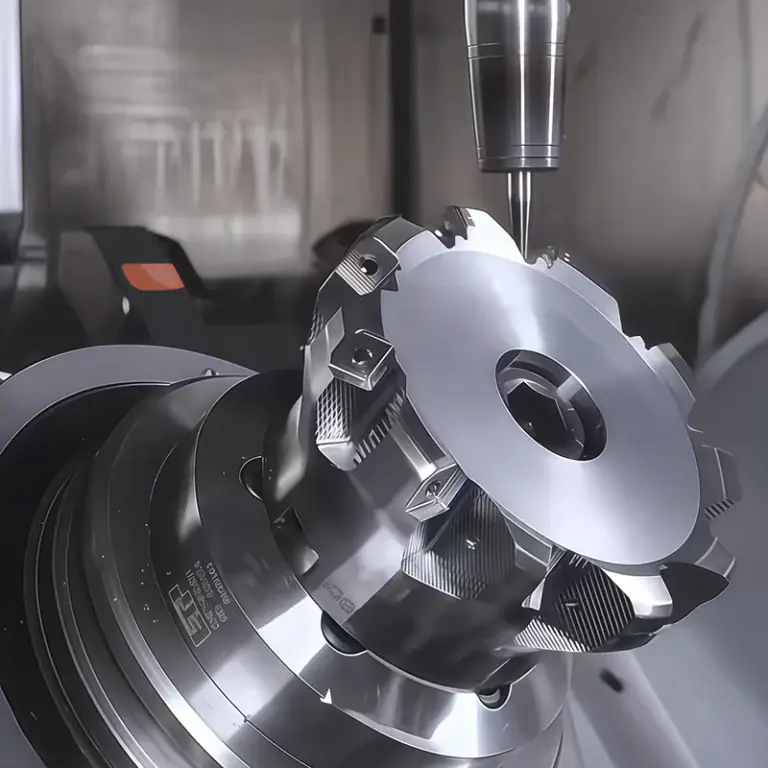
CNC milling uses rotating cutting tools to remove material from plastic sheets, blocks, and plates. It is commonly used for brackets, housings, insulating plates, pockets, slots, custom fixtures, and complex profiles.
3-axis CNC milling is suitable for many straightforward components. Four-axis and five-axis machines provide additional tool access for angled features, curved surfaces, and parts requiring machining from multiple directions.
Sharp cutting tools and appropriate chip clearance help reduce heat and improve surface finish. Excessive rubbing can soften the material, while unsuitable cutting loads may produce vibration, chipping, or dimensional deformation.
CNC Turning and Drilling for Plastic Parts
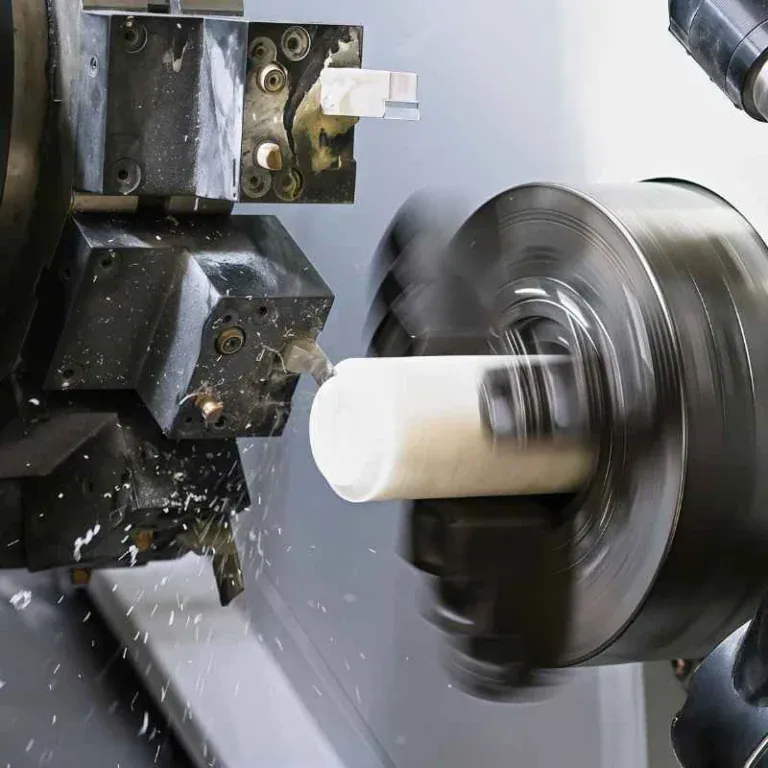
CNC turning rotates the plastic workpiece while a cutting tool removes material to create cylindrical features. It is commonly used for bushings, rollers, sleeves, spacers, threaded parts, and other rotational components.
For engineers looking for the best plastic for lathe turning, POM is frequently a practical choice because of its machinability and dimensional stability. PEEK, nylon, and PTFE can also be turned, but each requires different cutting and workholding considerations.
CNC drilling creates holes and internal features using rotating drills. Chip evacuation is particularly important for deep holes because trapped chips can generate heat, damage the surface, and affect hole accuracy.
Cutting Tools, Speeds, Feeds, and Cooling Methods
Cutting tools for plastics should have sharp edges, suitable rake angles, and sufficient chip clearance. Carbide tools are widely used in production machining, while high-speed steel tools may be appropriate for specific operations or materials.
Spindle speed and feed rate must work together to produce effective chip formation. Excessively low feed rates can cause rubbing and heat buildup, while excessive cutting loads may lead to chipping, deflection, or poor surface quality.
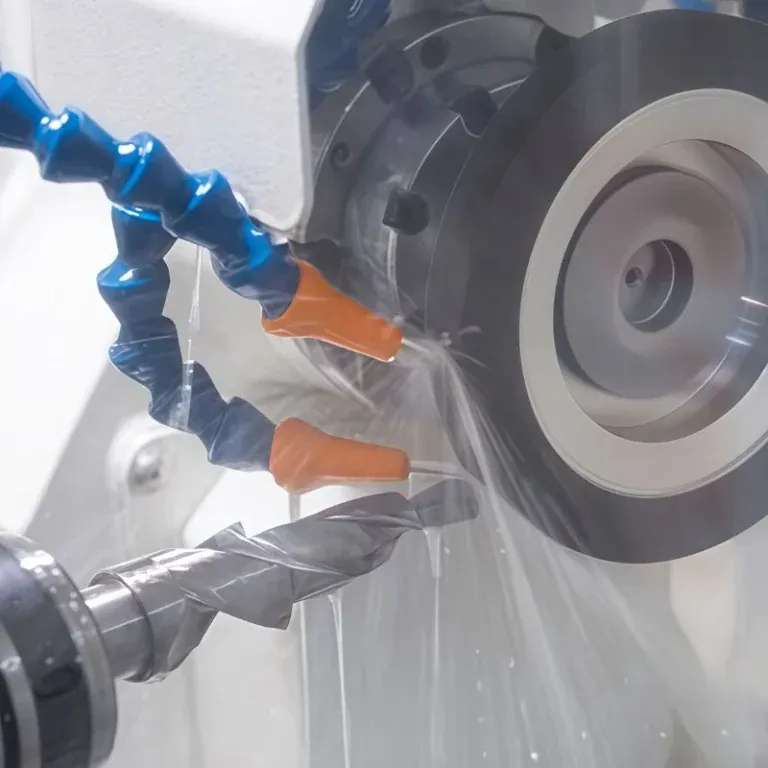
Cooling methods depend on material compatibility. Compressed air is often used for chip evacuation and temperature control, while selected liquid coolants may be suitable when the formulation is compatible with the plastic.
Practical Cutting Guidelines
- Use sharp tools designed to cut cleanly rather than rub against the material.
- Maintain suitable chip thickness to reduce friction and local heating.
- Support thin walls and flexible components during machining.
- Remove chips efficiently, especially when drilling deep holes.
- Verify coolant compatibility before applying liquid cutting fluids.
| Machining Factor | Recommended Approach | Purpose |
| Cutting tools | Sharp edges and suitable geometry | Reduce cutting resistance |
| Flute design | Adequate chip clearance | Prevent chip packing |
| Feed rate | Maintain effective chip formation | Avoid rubbing |
| Spindle speed | Match tool and material | Control cutting temperature |
| Workholding | Distributed clamping pressure | Reduce deformation |
| Cooling | Air or compatible coolant | Remove chips and heat |
What Parts Can CNC Plastic Machining Produce?
CNC plastic machining can produce bushings, gears, seals, electrical insulators, housings, transparent covers, fixtures, and functional prototypes. These parts are manufactured from engineering plastics selected for their mechanical, thermal, electrical, or chemical properties. CNC machining is particularly useful when the component requires custom geometry, precise interfaces, or flexible production quantities.
Bushings, Gears, and Load-Bearing Components
CNC-machined plastic bushings, rollers, and gears are used in mechanical systems requiring low friction, reduced weight, or controlled wear. POM and selected nylon grades are common materials for these applications.
Plastic mechanical components can offer quieter operation and corrosion resistance compared with certain metal alternatives. However, plastics generally have lower stiffness and can deform under sustained loading.
For load-bearing components, engineers should consider creep, wear rate, operating temperature, and expected service life. Material selection must reflect the actual mechanical requirements rather than assuming that all low-friction plastics perform equally.
Seals, Fluid-Control Parts, and Electrical Insulators
CNC machining produces seals, valve seats, fluid-control components, and electrical insulating parts from engineering plastics. The material must withstand the application’s chemical, mechanical, and thermal conditions.
PTFE is frequently selected for chemically resistant sealing components, while PEEK may be useful when higher mechanical strength or thermal performance is required. Other materials, such as POM, may be appropriate for selected fluid-control applications.
Electrical insulating components include spacers, support blocks, mounting fixtures, and protective covers. Their suitability depends on dielectric properties, temperature, moisture exposure, and dimensional requirements.
Housings, Transparent Components, and Prototypes
CNC machining is widely used for custom plastic housings, protective covers, equipment enclosures, and prototype assemblies. These parts often require mounting holes, pockets, slots, threaded features, and accurately positioned interfaces.
Functional prototypes allow engineers to evaluate assembly fit, mechanical performance, and geometry before investing in injection molding tools. CNC machining also supports design changes without the need to manufacture a new production mold.
Transparent acrylic and polycarbonate components may require polishing after machining. The finishing process must be controlled so that improved appearance does not compromise critical dimensions or mechanical performance.
| CNC Plastic Part | Typical Material | Main Machining Process |
| Precision bushing | POM, PEEK, PTFE | CNC turning |
| Wear-resistant gear | POM, nylon | CNC milling |
| Electrical insulator | PEEK, POM, PTFE | CNC milling |
| Equipment housing | ABS, POM, polycarbonate | CNC milling |
| Transparent cover | Acrylic, polycarbonate | CNC milling and polishing |
| Valve component | PEEK, PTFE, POM | CNC turning or milling |
| Functional prototype | ABS, POM, PEEK | CNC milling or turning |
What Industries Use CNC-Machined Plastic Parts?
CNC-machined plastic parts are used in automotive, industrial automation, medical equipment, aerospace, electronics, consumer products, chemical processing, and marine applications. These industries use engineering plastics for their low weight, electrical insulation, wear resistance, chemical compatibility, or thermal performance. CNC machining supports custom parts with accurate features and application-specific material properties.
Automotive and Industrial Automation
Automotive manufacturers use CNC-machined plastics for prototype housings, electrical insulation parts, bushings, spacers, fixtures, and mechanical guides. Engineering plastics can reduce component weight and provide corrosion resistance in suitable applications.
Industrial automation equipment uses machined plastic components in conveyor systems, robotics, fixtures, and moving assemblies. POM and selected nylon grades are common for guides, rollers, and wear-related components.
These parts often require accurate assembly interfaces and stable mechanical performance. Engineers must consider operating loads, temperature, wear, and dimensional changes when determining whether a plastic component can replace a metal part.
Medical Devices and Aerospace
Medical equipment manufacturers use CNC-machined plastics for instrument housings, laboratory fixtures, fluid-handling components, and specialized mechanical parts. PEEK and other engineering polymers may be selected when their documented properties match the application.
Aerospace equipment can use precision plastic components for insulation, lightweight fixtures, equipment housings, and certain interior or support applications. Material requirements depend on environmental conditions and applicable product specifications.
For regulated or safety-critical applications, machining accuracy is only one requirement. Material traceability, inspection records, cleanliness, qualification, and other relevant documentation must also be considered.
Electronics and Consumer Products
Electronics manufacturers use CNC-machined plastics for insulating plates, connectors, sensor housings, equipment covers, and assembly fixtures. These parts often contain accurately positioned mounting holes and features for electronic or mechanical assemblies.
ABS, POM, acrylic, and polycarbonate can support different electrical, structural, and appearance requirements. Transparent materials are useful for observation windows and protective display covers.
Consumer product development also benefits from CNC plastic prototypes. Engineers can test design details, assembly fit, and functional behavior before committing to high-volume manufacturing processes.
Chemical Processing and Marine Equipment
Chemical processing equipment uses machined plastic components for valve seats, seals, bushings, spacers, and fluid-handling parts. PTFE, PEEK, and HDPE may be suitable depending on chemical exposure, temperature, pressure, and mechanical loading.
Marine equipment may use engineering plastics for corrosion-resistant guides, bushings, protective parts, and mechanical components. The selected material must tolerate moisture, wear, and the expected service environment.
Chemical resistance should always be evaluated under actual operating conditions. A polymer may resist a chemical at room temperature but behave differently at elevated temperatures or under sustained mechanical stress.
What Affects CNC Plastic Machining Accuracy and Quality?
CNC plastic machining accuracy depends on material stability, cutting temperature, workholding pressure, tool geometry, part design, and inspection conditions. Plastics typically expand more with temperature and deform more easily under mechanical loads than metals. Achieving reliable precision therefore requires appropriate machining parameters, stable fixturing, and tolerances that reflect the material’s actual behavior.
Machining Tolerances and Dimensional Stability
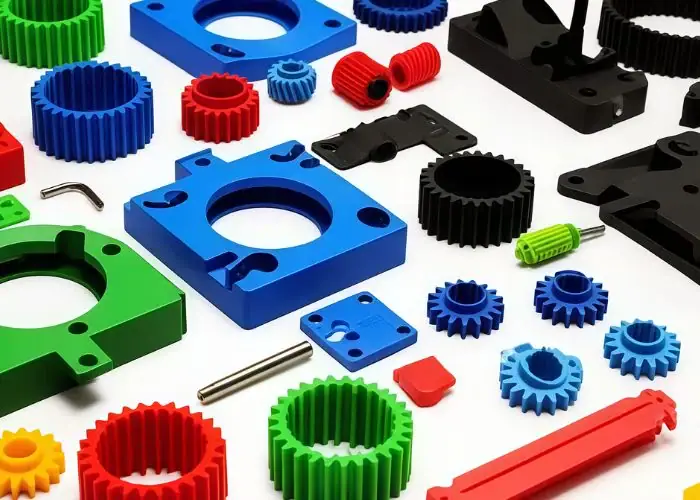
CNC-machined plastic components can achieve close tolerances when the material and geometry support stable cutting conditions. Rigid engineering plastics such as POM and PEEK are generally easier to control than highly flexible or moisture-sensitive materials.
For many precision plastic components, ±0.05 mm may be a useful initial tolerance reference. Tighter requirements, such as ±0.02 mm, may be feasible for selected features under controlled conditions, but should be confirmed through process evaluation rather than treated as universal capabilities.
Temperature can create measurable dimensional changes. For example, if a plastic has a linear thermal expansion coefficient of 100 × 10⁻⁶/K, a 100 mm feature could change by approximately 0.10 mm after a 10°C temperature increase. This is an illustrative calculation, not a universal value for all plastics.
Preventing Heat Buildup, Warping, Vibration, and Burrs
Heat buildup, warping, vibration, and burr formation are common CNC plastic machining problems. These defects often result from unsuitable cutting parameters, poor chip evacuation, unstable workholding, or internal material stress.
Heat damage may appear as melted edges or smeared surfaces. Warping can occur when residual stresses are released unevenly, while vibration may create visible tool marks or inconsistent dimensions on thin or unsupported features.
The most effective prevention strategy is to control material removal, cutting heat, and workpiece support. Roughing and finishing should be planned so that the component remains sufficiently rigid throughout the machining process.
| Machining Problem | Common Cause | Practical Solution |
| Melting or smeared edges | Excessive friction | Sharp tools and proper chip load |
| Warping | Residual stress or uneven material removal | Balanced machining and stabilization |
| Vibration | Flexible sections or long tools | Better support and shorter tools |
| Burr formation | Unsuitable cutting geometry | Optimized tool geometry and cutting parameters |
| Poor surface finish | Heat, tool wear, or unstable cutting | Tool maintenance and finishing adjustments |
| Dimensional variation | Thermal expansion or clamping distortion | Controlled temperature and workholding |
Design Guidelines for Wall Thickness, Radii, and Threads
Good design for CNC plastic machining reduces deformation, improves tool access, and avoids unnecessary manufacturing operations. Wall thickness, internal radii, thread geometry, and unsupported sections should be reviewed before programming.
Thin walls are vulnerable to bending during machining, especially when cutting forces or clamping pressure are not properly controlled. Deep narrow cavities may require long tools, increasing vibration and heat generation.
Thread design also requires attention because plastic threads may wear or strip under repeated assembly. Where appropriate, metal threaded inserts can improve fastening durability, but installation methods must be compatible with the selected polymer.
Practical Design Considerations
- Wall Thickness:Maintain sufficient rigidity and avoid unnecessarily thin unsupported sections.
- Internal Radii:Use radii that allow standard cutting tools to reach internal corners.
- Deep Cavities:Improve tool access and avoid excessive cutting-tool overhang.
- Threaded Features:Consider engagement length, repeated assembly, and insert requirements.
- Critical Tolerances:Apply tight specifications only where function requires them.
Inspection and Material Traceability
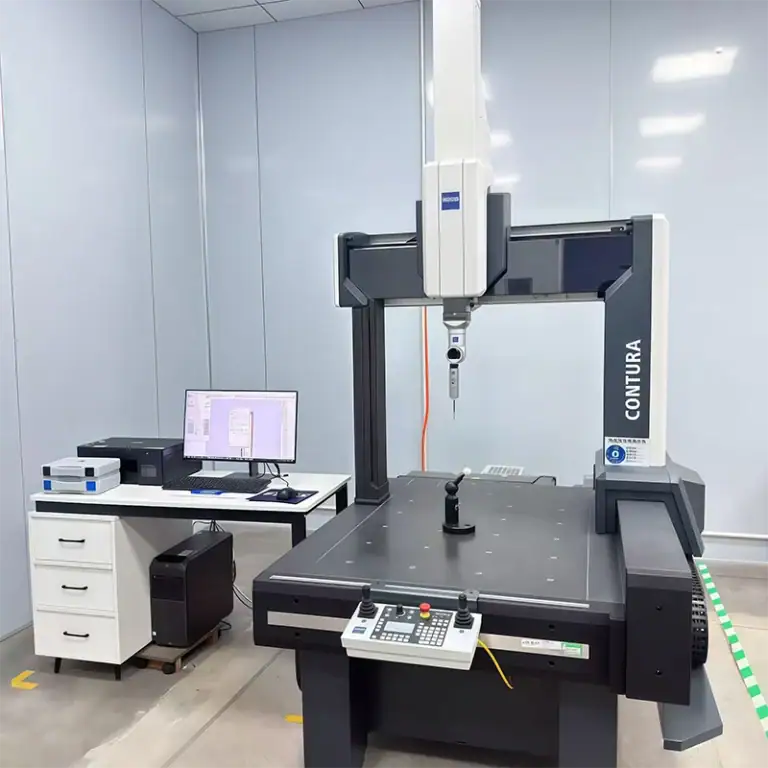
Quality inspection verifies that CNC-machined plastic components meet their dimensional, geometric, and surface requirements. Common tools include calipers, micrometers, height gauges, optical measurement systems, and coordinate measuring machines.
Measuring pressure must be controlled when inspecting flexible plastics. Excessive contact force can compress or deform a feature, producing misleading results. Temperature and humidity should also be considered for materials sensitive to environmental conditions.
Material traceability is particularly important for applications requiring verified polymer grades or controlled manufacturing records. Supplier certificates, inspection documentation, and defined acceptance criteria help support consistent production quality.
What Surface Finishes and Post-Processing Options Are Available?
CNC-machined plastic parts can receive sanding, polishing, bead blasting, vapor polishing, annealing, coating, marking, metallization, and assembly operations. The appropriate treatment depends on the plastic type, desired appearance, functional surface requirements, and material compatibility. Some finishing processes can change dimensions or introduce chemical or thermal stress, so they must be selected carefully.
Sanding, Polishing, and Bead Blasting
Sanding removes machining marks, burrs, and minor surface imperfections. It is commonly used on suitable plastic surfaces before polishing or coating.
Mechanical polishing can improve gloss and transparency on materials such as acrylic and polycarbonate. The process must be controlled to avoid excessive heat, scratches, and unintended material removal.
Bead blasting can produce a uniform matte finish on compatible plastics. However, soft or brittle materials may be damaged by aggressive blasting, making process testing important before production.
Vapor Polishing and Stress-Relief Annealing
Vapor polishing uses controlled solvent exposure to smooth the surfaces of compatible plastic materials. It can improve transparency and appearance on selected acrylic or polycarbonate parts when performed using an appropriate process.
Not every plastic is compatible with vapor polishing. Unsuitable solvents or processing conditions may cause stress cracking, surface defects, or dimensional changes.
Stress-relief annealing can reduce internal material stress in certain plastics. Depending on the material and stock condition, it may be performed before machining or between roughing and finishing to improve dimensional stability.
Coating, Marking, Metallization, and Assembly
Plastic components can be painted, coated, engraved, laser marked, or metallized when the selected process is compatible with their material properties. These treatments can improve appearance, identification, protection, or electrical functionality.
Metallization may add a conductive or decorative layer, but surface preparation and adhesion are critical. Some plastic grades require specialized activation or pretreatment.
Machined components may also undergo threaded insert installation, bonding, or mechanical assembly. These operations should be considered during design because installation heat, adhesive compatibility, and fastening forces can affect part quality.
| Finishing Method | Main Purpose | Key Consideration |
| Sanding | Remove tool marks | Material removal |
| Mechanical polishing | Improve gloss and clarity | Heat and scratches |
| Bead blasting | Create matte appearance | Material compatibility |
| Vapor polishing | Smooth selected transparent surfaces | Solvent compatibility |
| Annealing | Reduce residual stress | Temperature control |
| Coating | Appearance or protection | Surface adhesion |
| Laser marking | Part identification | Heat response |
| Metallization | Add functional metal layer | Surface preparation |
How Much Does CNC Plastic Machining Cost?
CNC plastic machining costs depend on raw material price, stock size, machining time, setup requirements, part complexity, tolerances, production quantity, finishing, and inspection. Common materials such as ABS and POM may be relatively economical, while high-performance plastics such as PEEK can increase material expenses. Complex features and demanding quality requirements also affect the final manufacturing cost.
Material, Machining Time, and Setup Costs
Material costs vary according to polymer grade, stock dimensions, certification, and availability. High-performance materials such as PEEK are generally more expensive than common engineering plastics, making stock selection and waste reduction especially important.
Machining time depends on the amount of material removed, tool access, feature complexity, and cutting conditions. Deep pockets, numerous small holes, and thin walls may require slower cutting or additional finishing operations.
Programming, setup, workholding preparation, and inspection also contribute to cost. Reducing unnecessary setups and simplifying tool access can improve manufacturing efficiency without changing the component’s function.
Prototyping, Small Batches, and Production Volume
CNC plastic machining is suitable for prototypes and small batches because it avoids the upfront expense of dedicated injection molds. However, programming and setup costs must still be distributed across the number of parts produced.
For example, assume a hypothetical project has a fixed setup cost of $120 and a variable manufacturing cost of $20 per component. The unit cost decreases as more identical parts share the setup expense.
| Quantity | Setup Cost per Part | Variable Cost per Part | Illustrative Unit Cost |
| 1 | $120.00 | $20.00 | $140.00 |
| 10 | $12.00 | $20.00 | $32.00 |
| 100 | $1.20 | $20.00 | $21.20 |
These figures are illustrative and do not represent actual supplier quotations. Real costs depend on material purchasing, machine time, tooling, inspection, finishing, and process efficiency.
When Should You Choose CNC Plastic Machining?
CNC plastic machining is a suitable manufacturing choice when a project requires functional engineering plastics, accurate machined features, frequent design changes, or production quantities that do not justify dedicated molding tools. It is particularly useful for prototypes, custom components, replacement parts, and low-volume production. Injection molding or 3D printing may be preferable when volume, geometry, or tooling economics favor those methods.
CNC Plastic Machining vs. Injection Molding and 3D Printing
CNC plastic machining removes material from solid stock, while injection molding shapes molten plastic inside a mold. CNC machining offers flexibility for prototypes and small batches, whereas injection molding is often more economical for suitable high-volume production.
3D printing builds components layer by layer and can produce internal geometries that conventional cutting tools cannot easily reach. However, material properties, surface finish, and dimensional accuracy depend on the printing technology and post-processing method.
CNC machining is often preferred for components requiring precision mechanical interfaces or specific solid-stock engineering polymers. The best process depends on the complete design rather than the manufacturing method alone.
| Manufacturing Method | Best Application | Main Advantage | Main Limitation |
| CNC Plastic Machining | Functional prototypes and custom parts | Flexible machining and material selection | Material waste and machining time |
| Injection Molding | High-volume repeat production | Low unit cost at suitable volumes | Upfront mold investment |
| 3D Printing | Complex prototypes and low-volume designs | Geometric freedom | Process-dependent material and finish limits |
Choosing the Right Process and Supplier for Precision Parts
The right CNC plastic machining process should be selected according to part geometry, material behavior, tolerances, production quantity, and functional requirements. A rigid housing, low-friction bushing, and transparent cover may each require different machining and finishing strategies.
Supplier selection should also consider material expertise, machine capability, fixture design, inspection procedures, and experience with similar plastic components. A supplier familiar with metal machining may still require additional process development for temperature-sensitive polymers.
Design-for-manufacturing review helps identify excessive tolerances, unstable wall thicknesses, difficult tool access, and material-related risks before production begins.
CNC Plastic Machining Is Particularly Useful When:
- Functional prototypes must be produced without dedicated injection molds.
- The project requires custom parts or relatively small production batches.
- Components contain precise holes, pockets, threads, or mating surfaces.
- Engineering plastics such as PEEK, POM, or PTFE are required.
- Design changes are expected during product development.
FAQs
How Does CNC Machining Plastics Work?
CNC machining plastics works by converting a CAD model into programmed cutting instructions that guide milling, turning, or drilling operations. The machine removes material from plastic stock to create the required geometry. A typical workflow includes CAM programming, material preparation, workholding, rough machining, finishing, and dimensional inspection. Unlike injection molding, CNC machining does not require a dedicated mold. Successful processing depends on tool geometry, cutting temperature, chip evacuation, and the material’s mechanical and thermal properties.
Can A CNC Machine Cut Plastic Or Will It Melt?
Yes, a CNC machine can cut plastic without melting it when appropriate cutting tools, spindle speeds, feed rates, and cooling methods are used. Melting or surface softening occurs when friction generates excessive local heat. Sharp cutting edges and effective chip evacuation help reduce this risk. Plastics have different thermal limits, so ABS, POM, PEEK, and PTFE require different machining strategies. The correct parameters depend on material grade, cutter geometry, tool diameter, and cutting conditions.
What Is The Best CNC Machine For Plastic?
The best CNC machine for plastic depends on part geometry, material, dimensions, and required tolerances. Three-axis CNC mills are suitable for most housings, brackets, plates, and pockets, while CNC lathes are better for bushings, sleeves, and cylindrical components. Five-axis machines may improve access to complex features, and CNC routers are often suitable for larger plastic sheets. Machine rigidity, spindle performance, tooling, workholding, and inspection capability are more important than choosing the machine with the greatest number of axes.
What Plastics Can Be Used With CNC Machine Coolant?
Many engineering plastics can be machined with compatible cutting fluids, but coolant suitability depends on the specific polymer and fluid formulation. POM and PEEK may be machined using compressed air or appropriately selected coolants. Acrylic, polycarbonate, and certain other plastics can develop stress cracking when exposed to incompatible chemicals. Water-based coolants are not automatically safe for every polymer. Engineers should check material supplier recommendations, coolant composition, and exposure conditions before choosing a cooling method.
Why Choose Custom CNC Machining Plastic Injection Mould Bases?
Conventional injection mould bases are normally manufactured from steel or aluminum because they must withstand clamping forces, injection pressure, and repeated thermal cycles. Engineering plastics are generally not suitable substitutes for structural mold bases in standard injection molding. However, custom CNC-machined plastic components can be useful for prototype patterns, insulating spacers, assembly fixtures, and supporting tooling elements. Material choice should reflect the actual mechanical loading, temperature, service life, and whether the component is structural tooling or an auxiliary part.
Conclusion
CNC plastic machining is a flexible manufacturing method for producing functional prototypes, precision mechanical parts, and custom engineering components. Materials such as ABS, POM, nylon, PEEK, and PTFE provide different combinations of strength, wear resistance, chemical compatibility, and dimensional performance.
At TiRapid, we provide precision CNC machining and manufacturing services for custom engineering plastic components. Our team supports CNC milling, turning, material selection, DFM analysis, surface finishing, and dimensional inspection to help customers produce accurate, reliable, and application-ready plastic parts.