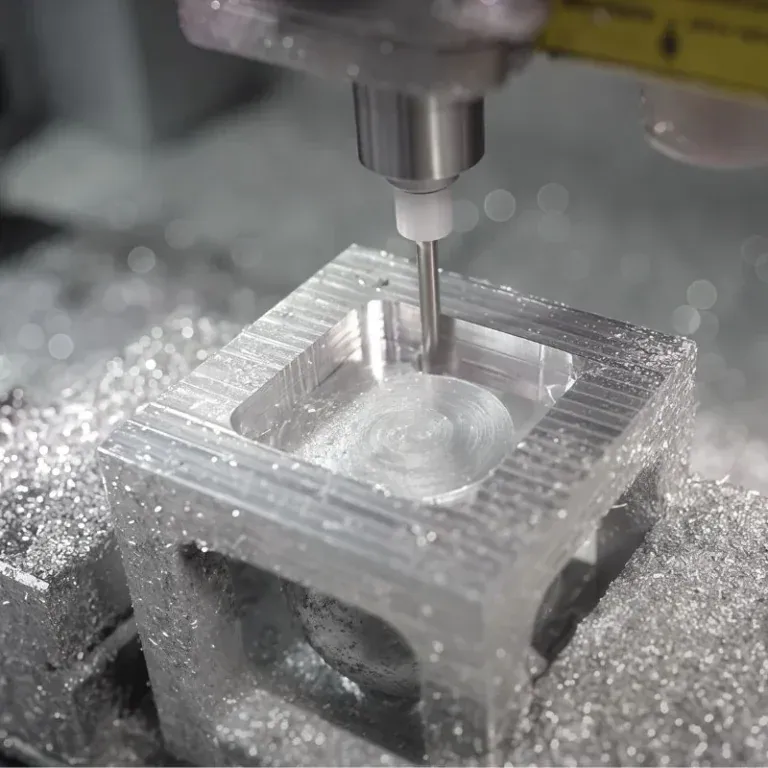
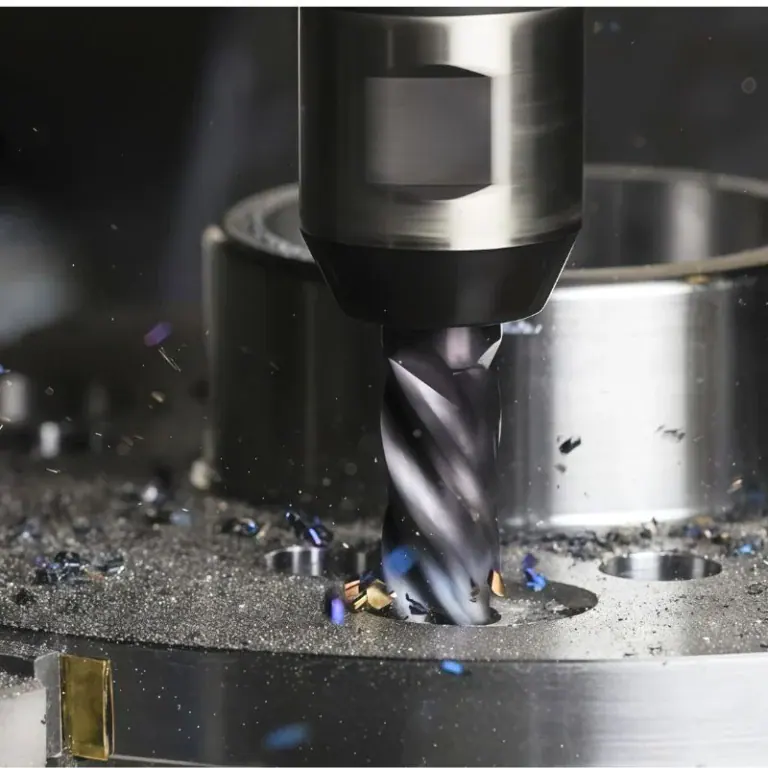
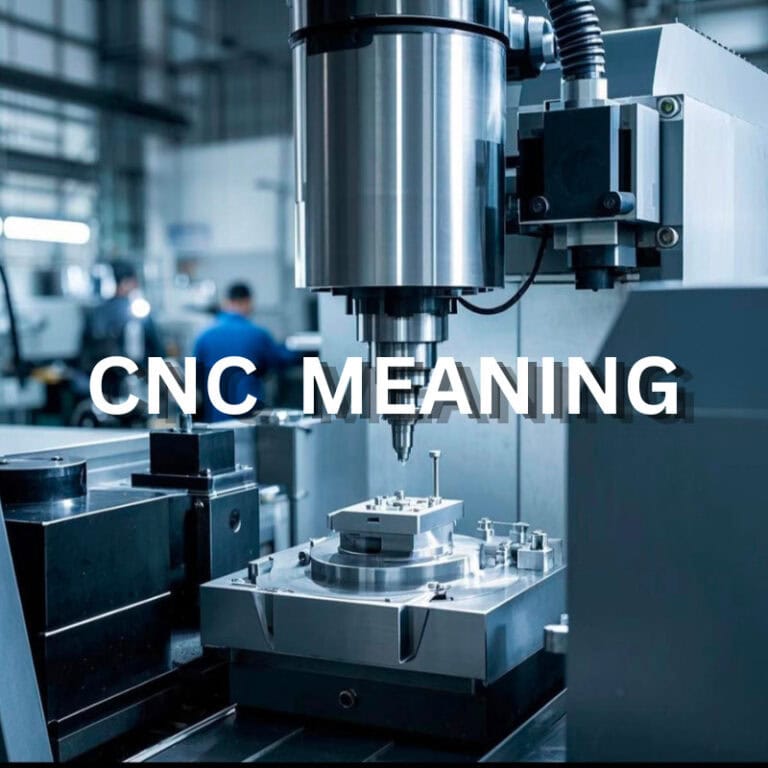
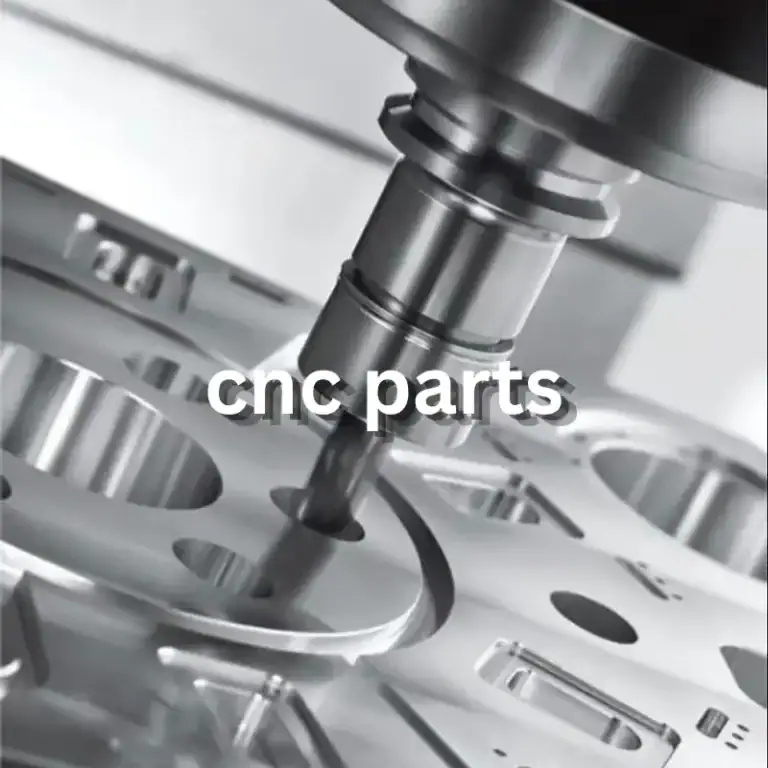
CNC machining is used to manufacture precise metal and plastic components for automotive, medical, aerospace, industrial equipment, and electronic products. It transforms raw material into functional parts through computer-controlled milling, turning, drilling, and other cutting operations.
This guide explains what CNC machining is used for, how CNC machines work, the different machine types, suitable materials, and real-world applications.
What Is CNC Machining Used For?
CNC machining is used to produce precision components by removing material from metal, plastic, or other solid workpieces through computer-controlled cutting operations. Common applications include machine housings, shafts, brackets, medical instruments, aerospace components, molds, and custom prototypes. It is particularly useful when parts require accurate dimensions, complex features, and consistent manufacturing quality.
CNC Machining Definition and Core Capabilities
CNC machining is a subtractive manufacturing process in which programmed machine tools remove material from a workpiece to create the required geometry. CNC stands for Computer Numerical Control, meaning the machine follows digital instructions that define cutting movements, spindle operation, and machining sequences.
Unlike manual machining, CNC equipment can execute programmed movements repeatedly with limited operator intervention during cutting. This makes it suitable for components containing accurately positioned holes, machined surfaces, internal cavities, threads, and complex external profiles.
Its main capabilities include CNC milling, turning, drilling, boring, tapping, and contour machining. The achievable accuracy depends on part geometry, material behavior, machine capability, tooling, workholding, and process control rather than computer control alone.
Why Manufacturers Choose CNC Machining
Manufacturers choose CNC machining because it combines dimensional control, material versatility, repeatability, and design flexibility. It can produce functional components directly from engineering models without requiring dedicated casting or injection molds for every new design.
CNC machining is especially valuable during product development because engineers can modify a CAD model and update the machining program. This allows prototypes to be tested and improved before committing to expensive production tooling.
For repeat manufacturing, validated programs, stable fixtures, and controlled inspection procedures help reduce variation between parts. However, consistent results still depend on tool condition, material quality, machine maintenance, and effective quality management.
| CNC Capability | Manufacturing Benefit | Typical Application |
| Dimensional control | Produces specified features and fits | Precision mechanical parts |
| Flexible programming | Supports design changes | Prototype development |
| Material versatility | Machines metals and plastics | Custom industrial components |
| Repeatable operations | Supports batch consistency | Production machining |
| Complex geometry | Produces pockets and contours | Housings and structural parts |
| Multiple cutting operations | Combines features in planned setups | Finished mechanical assemblies |
How Does CNC Machining Work?
CNC machining works by converting a digital part design into machine instructions that control cutting tools and workpiece movements. The process generally includes CAD modeling, CAM programming, material preparation, machine setup, machining, finishing, and quality inspection. Each stage helps transform raw stock into a finished component that meets its engineering specifications.
CAD Design, CAM Programming, and G-Code
CNC machining begins with a CAD model or technical drawing that defines the part’s geometry, dimensions, and critical features. Engineers use this information to identify machining surfaces, tolerances, material requirements, and potential manufacturing difficulties.
CAM software converts the digital geometry into toolpaths and machining strategies. The programmer selects cutting tools, spindle speeds, feed rates, and material-removal sequences according to the workpiece material and machine capability.
A post-processor then generates machine-specific instructions, commonly including G-code and M-code. G-code typically defines positioning and cutting movements, while M-code controls functions such as spindle rotation and coolant. Exact commands vary between controllers.
Machine Setup, Cutting, and Finishing
Machine setup involves installing the correct workpiece, fixtures, cutting tools, and coordinate offsets before machining begins. The operator verifies tool lengths, workpiece position, clamping stability, and program suitability to reduce collision and machining risks.
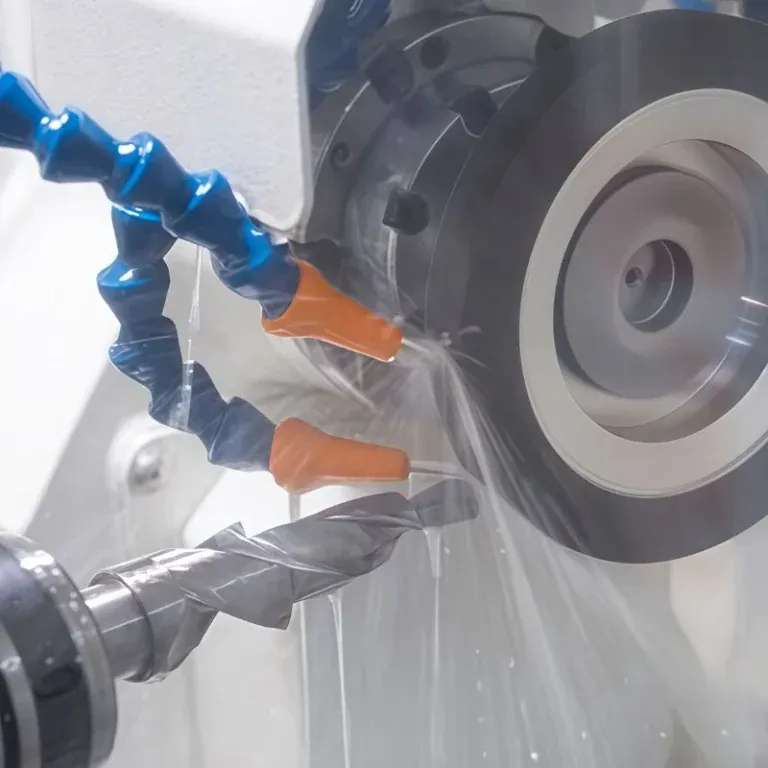
During cutting, the CNC machine removes material through programmed operations such as rough milling, drilling, tapping, or finishing. Roughing removes most excess stock, while finishing controls the final dimensions and surface condition.
After machining, the component may require deburring, cleaning, surface treatment, or additional operations. Aluminum housings, for example, may undergo bead blasting and anodizing, while steel components may require grinding or protective coating.
| Process Step | Main Operation | Purpose |
| Design review | Check drawings and CAD files | Confirm geometry and requirements |
| CAM programming | Develop toolpaths and cutting strategies | Plan material removal |
| Machine setup | Install stock, fixtures, and tools | Establish stable cutting conditions |
| Rough machining | Remove excess material | Create approximate part geometry |
| Finish machining | Machine critical surfaces | Achieve dimensions and finish |
| Secondary processing | Deburr, clean, or coat | Meet final surface requirements |
| Inspection | Verify part specifications | Confirm manufacturing quality |
Dimensional Inspection and Quality Control
CNC-machined parts are inspected to confirm that dimensions, tolerances, and surface requirements match the engineering drawing. Inspection may occur during setup, between machining operations, and after the part is completed.
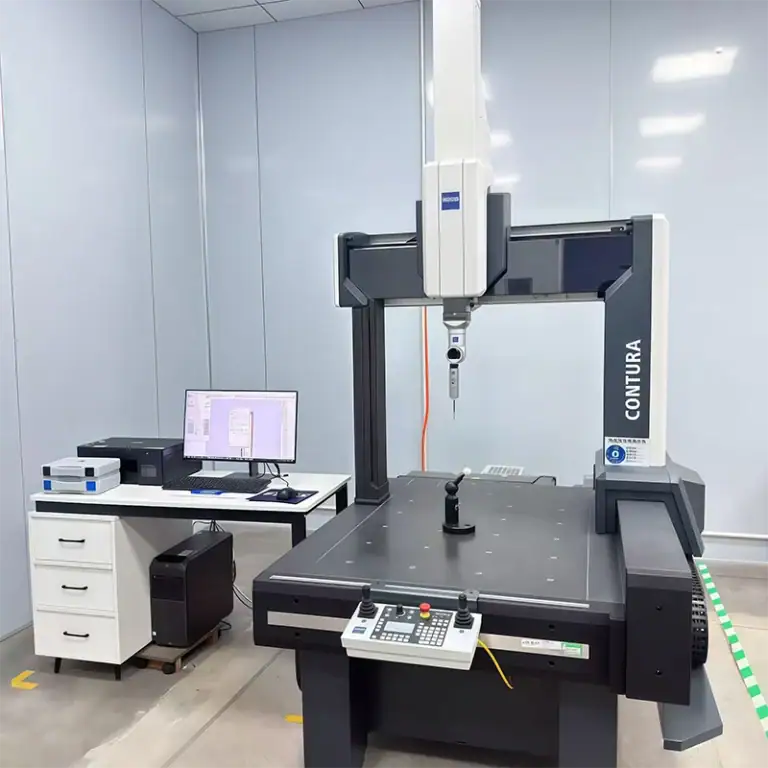
Common inspection equipment includes calipers, micrometers, height gauges, bore gauges, and coordinate measuring machines. A CMM is useful for evaluating complex geometry, hole positions, and geometric tolerances when the required measuring strategy is appropriate.
Quality control also considers tool wear, machine stability, and part-to-part variation. For functional components, critical features should be identified early so the machining and inspection processes are designed around their actual engineering requirements.
What Types of CNC Machines Are Used?
The main types of CNC machines used in manufacturing include CNC milling machines, lathes, turning centers, multi-axis machining centers, EDM machines, waterjet cutters, and plasma cutting systems. Each machine uses computer-controlled motion, but the cutting method and suitable part geometry differ. CNC milling and turning are among the most common processes for manufacturing precision mechanical components.
5-Axis CNC Machining Centers
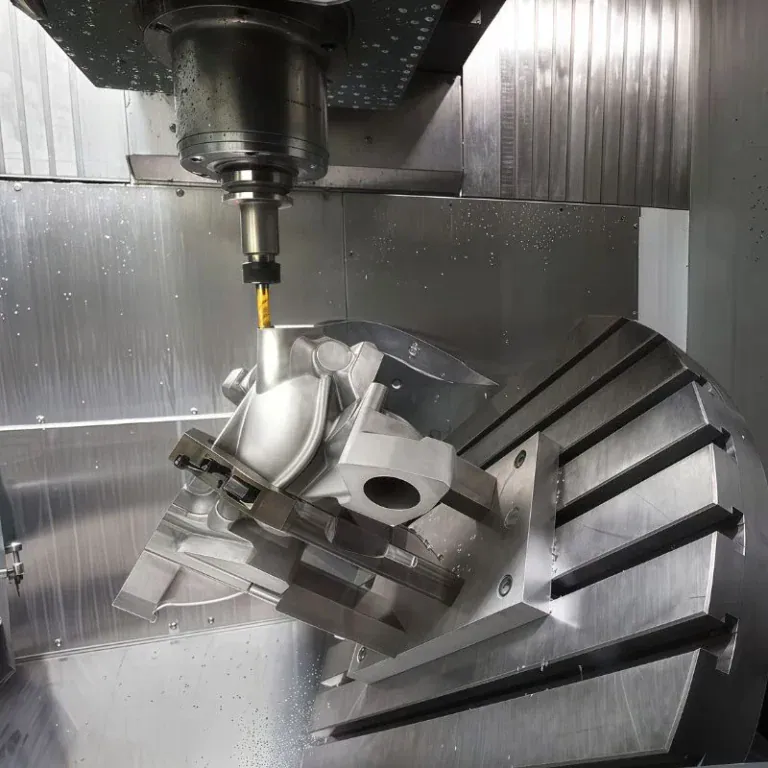
5-axis CNC machining centers use three linear axes and two rotational axes to machine complex parts from multiple angles. They are commonly used to manufacture aerospace components, medical implants, precision housings, molds, and parts with curved or angled surfaces.
5-axis machining is particularly useful for components that require complex contours, angled holes, and features on multiple sides. It can reduce repositioning and improve access to difficult features compared with conventional three-axis machining.
5-axis machines can perform simultaneous 5-axis cutting or indexed machining, depending on the application. By reducing setups and maintaining consistent workpiece positioning, they can improve manufacturing efficiency and dimensional consistency for complex precision parts.
CNC Milling Machines
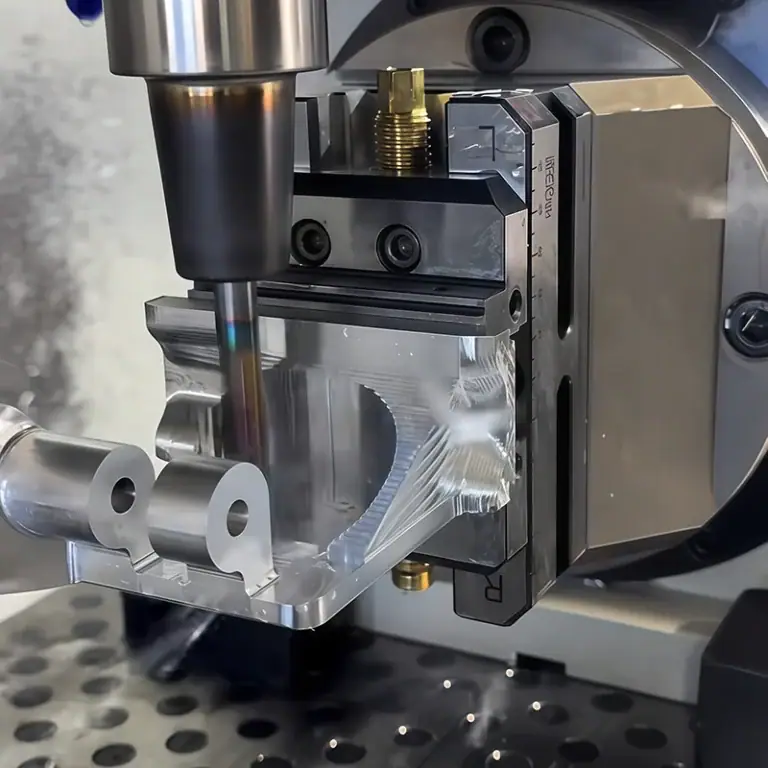
CNC milling machines use rotating cutting tools to remove material from a workpiece. They are commonly used to manufacture brackets, housings, plates, molds, pockets, slots, and components with multiple machined faces.
For engineers asking what is a CNC milling machine used for, its primary purpose is to create prismatic and contoured features that cannot be efficiently produced through conventional turning alone.
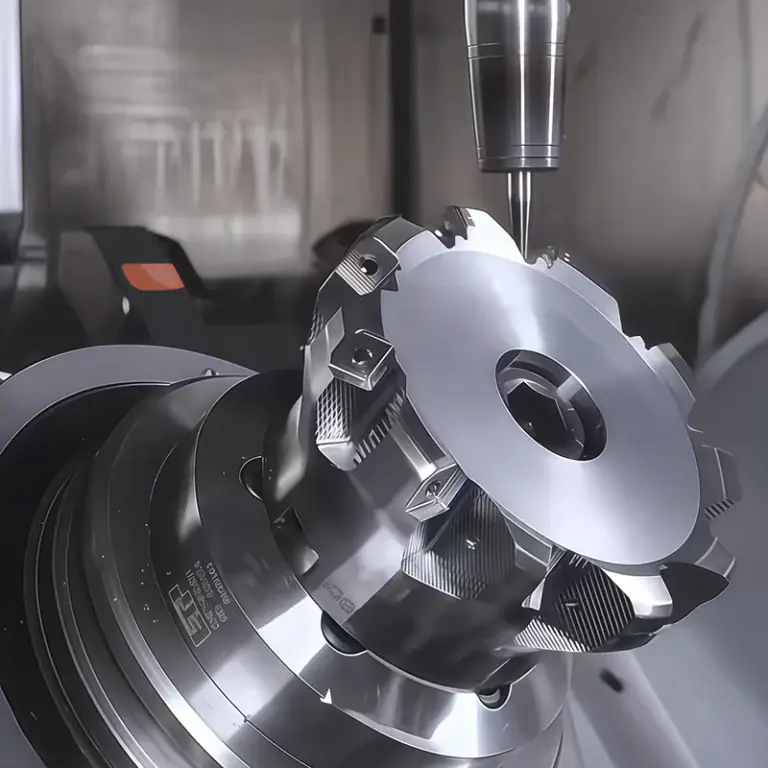
CNC mills can use end mills, face mills, drills, and other tools during one setup. The machine may be vertical or horizontal, while the number of controlled axes determines how easily it can reach different features.
CNC Lathes and Turning Centers
CNC lathes and turning centers rotate the workpiece while cutting tools remove material to create cylindrical features. They are commonly used to manufacture shafts, bushings, pins, sleeves, threaded components, and other precision round parts.
For engineers asking what is a CNC lathe machine used for, its primary purpose is to produce accurate external diameters, internal bores, grooves, threads, and stepped cylindrical surfaces that are difficult to manufacture efficiently through milling alone.
CNC turning centers can perform facing, boring, threading, and grooving operations during one setup. Advanced machines equipped with live tooling can also perform certain milling and drilling operations, reducing secondary setups and improving production efficiency.
CNC Lathes and Turning Centers
CNC lathes produce cylindrical components by rotating the workpiece while cutting tools remove material. They are commonly used for shafts, bushings, pins, threaded parts, sleeves, and precision round components.
A frequent question is what is CNC lathe machine used for. Its main purpose is to machine rotational features such as outside diameters, inside bores, grooves, threads, and accurately positioned shoulders.
Advanced turning centers may include driven tools and additional axes that support drilling or milling operations. These configurations can reduce the need to transfer a turned component to a separate milling machine.
3-Axis vs. Multi-Axis Machining Centers
Three-axis machining centers move cutting tools or workpieces along the X, Y, and Z directions. They are commonly used for flat surfaces, holes, slots, pockets, and parts that can be accessed from straightforward machining directions.
Four-axis and 5-axis machining centers add rotational positioning or simultaneous rotational movement. They are useful for angled surfaces, complex contours, and features located on multiple sides of a component.
Multi-axis machining can reduce the number of setups and improve access, but it also introduces more complex programming and machine requirements. Three-axis machining may remain more economical for simple components.
Other CNC-Controlled Processes: EDM, Waterjet, and Plasma Cutting
EDM, waterjet cutting, and plasma cutting also use computer-controlled movement, although their material-removal mechanisms differ from conventional milling and turning.
EDM removes material through electrical discharges and requires an electrically conductive workpiece. It is useful for intricate cavities, narrow slots, and certain hardened materials. Waterjet cutting uses high-pressure water, often combined with abrasive particles, to cut material without a conventional thermal cutting process.
Plasma cutting uses a high-temperature plasma arc to cut electrically conductive materials. It is commonly used for sheet and plate profiles rather than precision three-dimensional milled features.
| Machine Type | Cutting Method | Typical CNC Machines Examples |
| CNC milling machine | Rotating cutting tool | Housings, brackets, plates |
| CNC lathe | Rotating workpiece | Shafts, bushings, sleeves |
| 5-axis machining center | Linear and rotational axes | Complex angled components |
| Wire EDM machine | Electrical discharge erosion | Precision profiles and narrow slots |
| Waterjet cutting machine | High-pressure water and abrasive | Sheet profiles and plate blanks |
| Plasma cutting machine | Thermal plasma arc | Conductive metal sheet and plate |
What Materials Can Be CNC Machined?
CNC machining can process a wide range of engineering metals and plastics, including aluminum, copper, brass, carbon steel, stainless steel, titanium, PEEK, POM, and nylon. Material suitability depends on hardness, strength, thermal behavior, machinability, and the required component performance. Each material requires appropriate cutting tools, machining parameters, and workholding methods.

Aluminum and Other Nonferrous Metals
Aluminum is widely CNC machined because of its favorable strength-to-weight ratio, machinability, and versatility. Common applications include equipment housings, mounting plates, brackets, heat sinks, and lightweight structural components.
Alloys such as 6061 are often selected for general engineering components, while 7075 may be considered where higher strength is required. Aluminum can be machined efficiently, but cutting tools must control built-up edge, chip evacuation, and burr formation.
Copper and brass are also used for electrical, thermal, and mechanical applications. Copper’s ductility and heat conductivity can affect machining performance, while many brass grades support efficient production of fittings, connectors, and precision turned components.
Carbon Steel, Stainless Steel, and Titanium
Carbon and alloy steels are CNC machined for structural components, shafts, tooling, and mechanical parts requiring strength or wear resistance. Machining conditions depend heavily on material grade, hardness, and heat-treatment condition.
Stainless steel is used for corrosion-resistant components such as medical instruments, valve bodies, and equipment parts. Some grades can work-harden and generate substantial cutting heat, making proper chip load and tool selection important.
Titanium alloys are useful where high strength, low weight, and corrosion resistance are required. However, their thermal behavior and cutting characteristics demand careful tool selection, stable machining conditions, and controlled heat generation.
Engineering Plastics
Engineering plastics can be CNC machined into lightweight, corrosion-resistant, insulating, or low-friction components. Common examples include POM, PEEK, nylon, PTFE, and certain high-performance thermoplastics.
Plastic machining presents different challenges from metal cutting. Heat buildup, elastic deformation, moisture absorption, and clamping pressure may affect dimensional accuracy or surface quality.
Sharp tools, controlled cutting loads, suitable fixtures, and proper temperature management are often important. The appropriate machining strategy depends on the specific polymer rather than treating all plastics as one material category.
| Material | Typical Parts | Main Machining Consideration |
| Aluminum 6061 | Housings, brackets, plates | Burrs and chip evacuation |
| Aluminum 7075 | Structural and precision parts | Material condition and distortion |
| Stainless Steel 304 | Instruments, fittings, components | Work hardening and heat |
| Alloy Steel 4140 | Shafts and mechanical components | Hardness and cutting force |
| Titanium Ti-6Al-4V | Lightweight precision components | Heat and tool wear |
| POM | Bushings and mechanical plastic parts | Dimensional stability |
| PEEK | High-performance functional components | Heat and material cost |
What Parts and Products Are Made with CNC Machining?
CNC machining produces products such as equipment housings, brackets, shafts, bushings, fixtures, molds, connectors, prototype components, and precision mechanical assemblies. These parts are used in machines and products where dimensions, material performance, and component fit matter. CNC milling typically creates non-cylindrical features, while turning is particularly suitable for round parts.
Housings, Brackets, and Structural Components
CNC machining is commonly used for equipment housings, mounting brackets, base plates, and structural components. These parts often require flat surfaces, accurate hole positions, pockets, and mounting interfaces.
For example, an aluminum automation housing may contain internal cavities for electronics, threaded mounting holes, and machined reference surfaces for assembly. Milling can produce these features from a solid block or prepared casting.
Bracket and structural-part quality depends on more than appearance. Hole position, perpendicularity, flatness, and mating surfaces must support the intended assembly and load conditions. Tool access and workholding also influence manufacturing feasibility.
Shafts, Bushings, and Precision Rotating Parts
CNC turning is frequently used to manufacture shafts, sleeves, bushings, spacers, and other rotational components. These parts commonly require controlled diameters, shoulders, bores, grooves, and threaded features.
A precision shaft may need bearing seats, concentric diameters, and a suitable surface finish. Turning establishes the basic geometry, while additional milling, drilling, or grinding may be necessary for specific features.
For rotating assemblies, dimensional relationships can be more important than individual sizes. Runout, fit requirements, material hardness, and surface condition must be considered when selecting manufacturing and inspection methods.
Prototypes, Custom Fixtures, and Complex Components
CNC machining is commonly used for functional prototypes because parts can be produced directly from engineering materials without dedicated production molds. This allows designers to test mechanical fit, assembly, and performance.
Custom fixtures, inspection gauges, and manufacturing jigs are also typical CNC products. These components support assembly, inspection, and production processes, often requiring accurate locating surfaces and repeatable positioning.
Complex components may combine pockets, thin walls, angled holes, and contoured surfaces. Multi-axis machining or multiple carefully planned setups can improve access, although each additional operation must be justified by the design requirements.
| CNC-Machined Part | Typical Material | Main Manufacturing Process |
| Equipment housing | Aluminum 6061 | CNC milling |
| Precision shaft | Alloy steel | CNC turning |
| Mounting bracket | Aluminum or stainless steel | CNC milling |
| Threaded bushing | Brass or steel | CNC turning |
| Inspection fixture | Aluminum or POM | CNC milling |
| Complex structural component | Aluminum or titanium | Multi-axis CNC milling |
| Prototype enclosure | Aluminum or engineering plastic | CNC milling |
What Industries Use CNC Machining?
Industries that use CNC machines include automotive, industrial equipment, automation, medical devices, aerospace, electronics, consumer products, and energy systems. These industries rely on CNC machining to manufacture functional parts with controlled dimensions, suitable materials, and consistent quality. The applications differ according to each industry’s performance, reliability, and production requirements.
Automotive
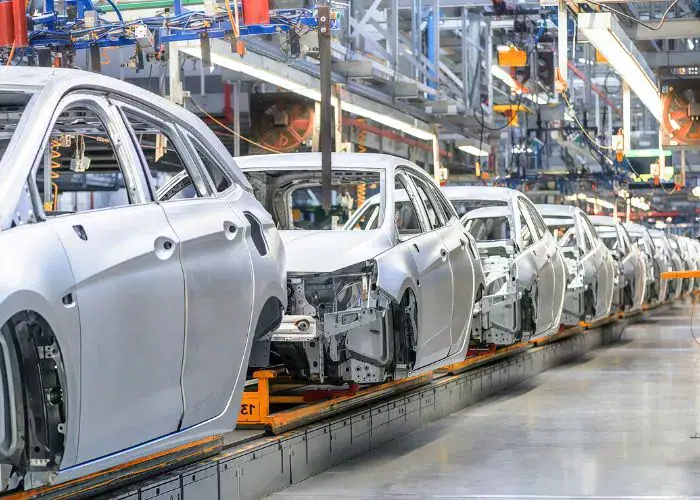
The automotive industry uses CNC machining for engine components, transmission housings, shafts, brackets, steering parts, and precision tooling. Electric vehicle manufacturing also uses machined motor housings, structural parts, and thermal management components.
CNC milling is suitable for complex housings and mounting surfaces, while turning produces shafts, bushings, and cylindrical features. Many assemblies require both processes to achieve their final geometry.
Automotive production places strong emphasis on dimensional consistency and process repeatability. Tool-life management, fixture stability, and inspection planning become particularly important when the same components are manufactured across larger production batches.
Industrial Equipment and Automation
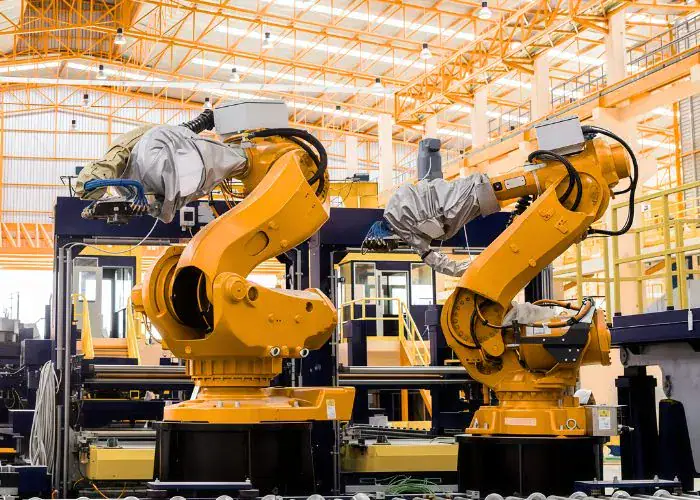
Industrial equipment and automation manufacturers use CNC machining for fixture plates, robot mounting brackets, valve bodies, machine bases, linear-motion components, and custom mechanical parts.
These applications often involve components that must align accurately with bearings, rails, sensors, actuators, or other assembled equipment. Hole position, flatness, and mechanical fit can directly affect machine performance.
Automation projects also frequently require custom parts in small quantities. CNC machining allows engineers to develop and modify equipment components without investing in dedicated molding or casting tooling for every design change.
Medical Devices and Instruments
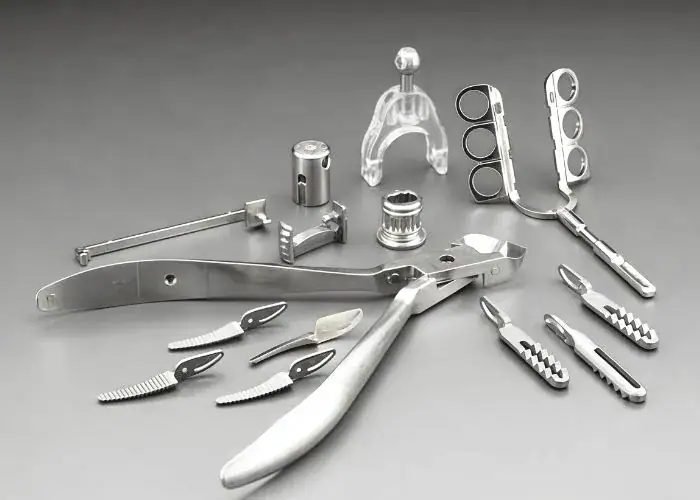
Medical manufacturing uses CNC machining for surgical instruments, diagnostic equipment components, instrument housings, orthopedic components, and specialized fixtures.
Stainless steel, titanium, and engineering plastics are selected according to mechanical, corrosion, cleaning, and other application requirements. CNC machining can create detailed features and accurately located interfaces using these materials.
Medical applications may also require controlled surface conditions, traceability, inspection records, and appropriate downstream processing. Machining accuracy is one part of product quality, material compliance, cleanliness, validation, and regulatory requirements must be addressed separately where applicable.
Aerospace and Defense
Aerospace manufacturing uses CNC machining for lightweight structural parts, avionics housings, mounting brackets, precision connectors, and certain engine-related components.
Materials such as aerospace aluminum alloys, titanium, and high-performance alloys may be selected according to strength, weight, temperature, and corrosion requirements. Multi-axis machining is useful when components contain angled surfaces and complex contours.
Defense-related manufacturing also includes precision housings, electronic enclosures, and mechanical support components. Where applicable, manufacturing plans must account for material traceability, inspection requirements, and controlled process documentation.
Electronics and Consumer Products
Electronics manufacturers use CNC machining for aluminum enclosures, heat sinks, semiconductor fixtures, connectors, sensor housings, and equipment components.
Precision machining helps produce mounting surfaces, internal cavities, and interfaces for circuit boards or mechanical assemblies. Aluminum and copper components may also support thermal management when designed appropriately.
Consumer product companies use CNC machining for prototypes, custom hardware, functional components, and molds for later production. CNC is especially useful when designers need to evaluate physical products before committing to high-volume manufacturing methods.
Energy and Power Systems
Energy and power equipment manufacturers use CNC machining for valve bodies, pump components, shafts, flanges, connectors, and precision mechanical assemblies.
These components may operate under demanding loads, temperatures, fluid pressures, or corrosive conditions. Material selection and design requirements therefore determine the machining method and inspection strategy.
For example, a stainless steel valve component may require accurately machined sealing surfaces and threaded connections. A pump shaft may require controlled bearing fits and surface finish to support reliable rotation.
When Is CNC Machining the Right Manufacturing Choice?
CNC machining is the right manufacturing choice when a part requires functional engineering materials, controlled dimensions, detailed features, or production flexibility without dedicated forming molds. It is especially suitable for prototypes, custom components, low-volume manufacturing, and repeat production of precision parts. Its suitability depends on geometry, material, tolerances, quantity, and overall manufacturing cost.
Prototyping, Low-Volume, and Production Applications
CNC machining is well suited to functional prototypes because it can use production-representative metals and plastics. This allows engineers to evaluate dimensions, mechanical behavior, and assembly interfaces before finalizing a design.
For low-volume production, CNC machining avoids much of the dedicated tooling investment associated with molding or die-based processes. However, programming and setup costs still affect the unit price of small orders.
For larger quantities, fixtures, toolpath optimization, automated loading, and standardized inspection can improve production efficiency. CNC machining remains useful for repeat production when part complexity or precision justifies the process.
Part Complexity, Tolerances, and Surface Finish
CNC machining is appropriate for parts that contain accurately located holes, machined mating surfaces, pockets, threads, and complex contours. The process can support close dimensional requirements when the geometry and setup allow suitable control.
However, extremely deep cavities, inaccessible internal features, thin walls, and complex undercuts can increase machining difficulty. Multi-axis equipment or secondary processes may be necessary.
Surface finish also affects process selection. A machined surface may be sufficient for many mechanical components, while demanding sealing, sliding, or bearing surfaces may require grinding, honing, or other finishing processes.
CNC Machining vs. 3D Printing and Other Processes
CNC machining removes material from solid stock, while 3D printing builds material layer by layer. The processes differ in design freedom, material properties, surface condition, tooling requirements, and manufacturing cost.
CNC machining is often preferred for solid metal parts with machined interfaces and demanding dimensional requirements. Additive manufacturing may be advantageous for internal channels, highly complex shapes, and geometries that would otherwise require substantial material removal.
Casting, molding, and stamping may offer lower unit costs for suitable high-volume products, but usually require greater upfront tooling investment. Process selection must therefore consider the complete product lifecycle.
| Manufacturing Method | Best Suited For | Main Limitation |
| CNC machining | Precision functional parts and flexible production | Material removal and setup costs |
| 3D printing | Complex prototypes and difficult internal geometries | Material, finish, and process-dependent limitations |
| Injection molding | High-volume plastic parts | Upfront mold investment |
| Die casting | Repeat metal components at suitable volumes | Tooling and design constraints |
| Sheet metal fabrication | Enclosures, panels, and formed sheet parts | Limited suitability for solid machined features |
What Affects CNC Machining Costs?
CNC machining costs depend on material price, machining time, programming, machine setup, cutting tools, part complexity, tolerances, production quantity, surface finishing, and inspection requirements. Parts that require multiple setups, difficult tool access, or specialized processing generally cost more than simple components made under similar conditions.
Material Selection and Machining Time
Material selection affects CNC machining costs through raw stock price, machinability, cutting-tool wear, and achievable machining speed. Aluminum may be relatively economical for many applications, while titanium and some high-performance alloys can require more expensive material and slower processing.
Machining time depends on the amount of material removed, cutter size, tool engagement, and the required finishing operations. Deep pockets and thin structural features may require longer machining cycles than simple external profiles.
The initial stock size also influences cost. A component machined from a large block may generate substantial waste, while a suitably sized extrusion, bar, or preform may reduce material removal.
Tool Access, Setups, and Design for Manufacturability
Tool accessibility directly affects machining time and equipment requirements. Features that cannot be reached from the current setup may require additional workholding arrangements or specialized machines.
Sharp internal corners, deep narrow pockets, small inaccessible features, and unnecessary undercuts can increase cutting time or require additional processes.
Design for manufacturability helps engineers identify these issues early. Using suitable internal radii, accessible features, practical wall thicknesses, and simplified setups can improve production efficiency while preserving essential functionality.
| Design Feature | Possible Cost Impact | Practical Design Consideration |
| Sharp internal corners | Special tooling or secondary process | Use suitable corner radii |
| Deep narrow pockets | Long tools and slower cutting | Improve tool access |
| Multiple machining directions | Additional setups | Simplify feature orientation |
| Very thin walls | Deflection and careful machining | Support stable geometry |
| Unnecessary tight tolerances | Longer machining and inspection | Apply tolerances by function |
| Complex surface finish requirements | Extra finishing operations | Specify finish only where needed |
Production Quantity, Finishing, and Inspection
Production quantity affects the cost per part because programming, setup, and fixture preparation may be distributed across multiple identical components. A single prototype typically carries a larger share of these initial costs.
For example, assume a simplified machining job has a fixed setup cost of $150 and a variable machining cost of $25 per part. Excluding material, inspection, finishing, and other expenses, the estimated unit cost changes as quantity increases.
| Quantity | Setup Cost per Part | Variable Cost per Part | Illustrative Unit Cost |
| 1 | $150.00 | $25.00 | $175.00 |
| 10 | $15.00 | $25.00 | $40.00 |
| 100 | $1.50 | $25.00 | $26.50 |
These figures illustrate setup-cost distribution rather than actual supplier prices. Real production costs may change with tooling, cycle-time improvements, material purchasing, and inspection planning.
Surface treatment and inspection also contribute to the final cost. Anodizing, plating, bead blasting, detailed dimensional reports, or specialized measurements should be considered when evaluating the complete manufacturing process.
FAQs
Is CNC Machining Cost-Effective For One-Off Prototypes And Small Batches?
CNC machining can be cost-effective for one-off prototypes and small batches because it generally avoids dedicated mold or die investment. However, programming, setup, tooling, and inspection still create fixed costs. For example, a $150 setup distributed across 1 part adds $150 per unit, while the same setup across 10 parts adds $15 per unit. CNC machining is particularly valuable when engineers need functional materials, accurate features, and design flexibility before committing to larger production quantities.
What Design Features Make A Part Difficult To CNC Machine?
Deep narrow cavities, sharp internal corners, inaccessible undercuts, thin walls, and very small features can make CNC machining difficult. A deep pocket may require a long cutting tool that is more vulnerable to deflection and vibration. Sharp internal corners cannot be produced directly using ordinary cylindrical milling cutters. Designers can improve manufacturability by adding appropriate radii, allowing tool access, and avoiding unnecessary complexity. These changes can reduce machining time, setup requirements, and manufacturing risk.
Can CNC Machining Maintain Tight Tolerances On Thin-Walled Parts?
Yes, CNC machining can achieve tight tolerances on thin-walled parts when material behavior, workholding, cutting forces, and temperature are properly controlled. Thin sections can deform during machining or after clamps are released. Techniques include balanced stock removal, carefully supported fixtures, reduced cutting loads, and controlled finishing passes. A tolerance of ±0.01 mm may be feasible for selected features under suitable conditions, but it is not guaranteed for every thin-wall design. Final capability depends on material, geometry, equipment, and inspection strategy.
When Should CNC Machining Be Combined With EDM Or Grinding?
CNC machining should be combined with EDM or grinding when milling and turning alone cannot efficiently achieve the required geometry, hardness-related machining demands, or surface quality. Wire EDM can produce narrow through-features in electrically conductive materials, while sinker EDM can create specialized cavities. Grinding is often used for demanding bearing fits, surface finish, or dimensional control. A combined process may improve manufacturability, but engineers must evaluate additional setup time, datum transfer, inspection, and total manufacturing cost.
How Can Part Design Reduce CNC Machining Costs Without Affecting Function?
Part design can reduce CNC machining costs by improving tool accessibility, limiting unnecessary tight tolerances, selecting suitable stock dimensions, and reducing machining setups. For example, replacing an unnecessary sharp internal corner with an appropriate radius may allow a standard end mill to complete the feature. Standard hole sizes and accessible surfaces can also simplify tooling. The goal is to preserve essential fit, strength, and assembly requirements while removing manufacturing complexity that provides no functional value.
Conclusion
CNC machining is widely used to manufacture precision parts for automotive, industrial equipment, medical devices, aerospace, electronics, and energy applications. Its flexibility allows engineers to produce functional prototypes, custom components, and repeat-production parts using a broad range of engineering materials. Choosing the right CNC process requires understanding part geometry, material properties, tolerance requirements, production quantity, and manufacturing cost. When these factors are considered together, CNC machining can provide an effective balance of accuracy, flexibility, and production reliability.
At TiRapid, we provide precision CNC machining and manufacturing services for custom metal and plastic components. Our team supports CNC milling, turning, material selection, DFM analysis, surface finishing, and quality inspection to help customers achieve accurate parts, consistent quality, and practical manufacturing solutions.