Stiffness and strength are often treated as if they describe the same material behavior, but they answer different engineering questions. Stiffness tells you how much a material or part deforms under load, while strength describes how much stress it can withstand before yielding or failing. A component can therefore be very strong but still flexible, or extremely stiff yet fail at a relatively low stress.
This guide explains stiffness vs strength, how each property is measured, how stress-strain behavior connects them, and why material choice alone does not determine part performance. It also compares common engineering materials and shows how stiffness, strength, geometry, machining, weight, cost, and service conditions should be balanced when designing reliable CNC machined parts.
What Is Stiffness?
Stiffness is the resistance of a material or structure to elastic deformation when a load is applied. A stiffer component bends, stretches, or twists less under the same loading condition. In engineering, stiffness is especially important when excessive deflection could affect alignment, dimensional accuracy, vibration, or assembly performance.
The stiffness meaning in engineering is closely related to deformation rather than failure. If two parts carry the same load but one deflects less, that part has greater structural stiffness.
However, stiffness can describe either a material property or an entire component. Material behavior is commonly represented by elastic modulus, while part stiffness also depends heavily on geometry.
For example, a steel sheet and a steel beam may use exactly the same material, but the beam can be dramatically stiffer because its cross-section distributes material farther from the neutral axis.
Young’s Modulus And Elastic Deformation
Young’s modulus describes the relationship between stress and strain in the linear elastic region of a material. A high modulus means that greater stress is required to produce the same elastic strain.
Steel typically has a much higher Young’s modulus than aluminum. As a result, similarly shaped steel components usually deflect less than aluminum parts under the same load.
Elastic deformation disappears when the load is removed, provided the material remains below its elastic limit. This is why Young’s modulus is useful when engineers care about maintaining alignment or limiting temporary deformation during service.
Material Stiffness Vs Structural Stiffness
Material stiffness describes how resistant the material itself is to elastic deformation. Structural stiffness describes how resistant the complete part is to deformation.
The distinction matters because engineers can often increase structural stiffness without changing materials. Increasing wall thickness, adding ribs, changing the cross-section, or shortening an unsupported span may reduce deflection significantly.
This is often more efficient than switching to a heavier or more expensive material. A well-designed aluminum structure, for example, can sometimes achieve adequate stiffness while remaining much lighter than a poorly optimized steel design.
What Is Strength?
Strength describes a material’s ability to resist stress without yielding, fracturing, or suffering another form of mechanical failure. Unlike stiffness, which focuses on deformation under load, strength focuses on how close the material is to a defined failure limit.
Yield Strength And Permanent Deformation
Yield strength is the stress at which a material begins to deform permanently. Below this level, most conventional engineering metals return close to their original shape after the load is removed.
Once the yield point is exceeded, plastic deformation begins. A bracket may remain bent, a hole may distort, or an interface may permanently lose alignment even though the component has not fractured.
For many metal parts, yield strength is more useful than ultimate strength because the component becomes functionally unacceptable before it actually breaks.
Ultimate Tensile Strength And Fracture
Ultimate tensile strength is the maximum tensile stress a material reaches during a tensile test before necking and final fracture.
It is useful when evaluating the overall load-carrying capacity of a material, but it should not automatically be used as the normal operating limit. Engineering designs normally include safety factors and are often governed by yield, fatigue, buckling, or deflection before ultimate tensile failure occurs.
A high ultimate strength therefore does not mean that a part can safely operate continuously near that value.
Compressive, Shear, Fatigue, And Impact Strength
Strength depends on how the material is loaded. Tensile strength describes pulling loads, compressive strength relates to crushing loads, and shear strength describes resistance to sliding failure along a plane.
Fatigue strength becomes important when loading is repeated for thousands or millions of cycles. A part may fail under cyclic stresses far below its single-load tensile strength.
Impact behavior is different again. Materials that perform well under slow static loading may behave differently when subjected to sudden shock, making service conditions critical when interpreting strength data.
What Is The Difference Between Stiffness And Strength?
The main difference between stiffness and strength is simple: stiffness measures resistance to deformation, while strength measures resistance to failure. They are independent properties, so a stronger material is not automatically stiffer, and a stiffer material is not automatically stronger.
| Property | Stiffness | Strength |
| Main Question | How much will it deform? | How much load can it withstand before failure? |
| Common Measure | Young’s modulus | Yield or ultimate strength |
| Typical Concern | Deflection, alignment, vibration | Yielding, fracture, overload |
| Strongly Affected By Geometry | Yes, for part stiffness | Yes, for actual load capacity |
| Can Be Changed By Heat Treatment | Usually little for metals | Often significantly |
| Design Example | Machine frame deflection | Bracket yielding under load |
Resistance To Deformation Vs. Resistance To Failure
A stiff part stays close to its original shape when loaded. A strong part can withstand greater stress before yielding or breaking.
Consider a flexible high-strength wire. It may carry a substantial tensile load without failing, yet still bend easily. By contrast, a brittle ceramic component can be very stiff but fail suddenly when its allowable stress is exceeded.
This distinction is why engineering requirements should specify the actual performance limit instead of simply asking for the “strongest” material.
Young’s Modulus Vs. Yield Strength
Young’s modulus represents stiffness, while yield strength indicates when permanent deformation begins.
For many steels, Young’s modulus remains relatively similar across different grades even though yield strength can vary significantly. Heat treatment can dramatically increase the strength of some steels without causing an equivalent increase in modulus.
This illustrates why stiffness and strength must be treated separately during material selection. Increasing tensile or yield strength does not necessarily solve a deflection problem.
Can A Material Be Strong But Not Stiff?
Yes. Titanium is a useful example. Many titanium alloys offer excellent strength, but their elastic modulus is considerably lower than that of steel.
A titanium component can therefore withstand high stresses while still deflecting more than an equivalent steel component with the same geometry.
This can be acceptable in aerospace structures where low weight and strength are critical, but less suitable for fixtures or machine structures where small deflection is the primary requirement.
Can A Material Be Stiff But Not Strong?
Yes. Some materials resist elastic deformation well but have limited ability to tolerate high stress, flaws, impact, or crack growth.
Certain ceramics illustrate this behavior. They can have high modulus and excellent dimensional rigidity but relatively low tolerance for tensile stress and impact.
Designers must therefore consider stiffness together with strength, toughness, fatigue, and actual loading conditions rather than ranking materials on one property alone.
How Does The Stress-Strain Curve Explain Stiffness And Strength?
The stress-strain curve connects stiffness and strength in one mechanical test. The initial slope describes elastic stiffness, the yield region marks the beginning of permanent deformation, and the upper portion of the curve shows how the material behaves as it approaches ultimate strength and fracture.
At the beginning of a tensile test, many engineering materials behave approximately linearly. Stress increases in proportion to strain.
The slope of this linear region is Young’s modulus. A steeper slope indicates a stiffer material because more stress is needed to create the same amount of strain.
If the load is removed within this region, the material normally returns to approximately its original length.
Yield Point And Plastic Deformation
As stress increases, the material eventually reaches a point where deformation is no longer completely reversible.
This is the yield point. Beyond it, permanent strain remains after unloading.
For precision assemblies, yielding may be considered failure even if the component remains intact. A permanently distorted fixture, bearing seat, bracket, or alignment surface may no longer perform its intended function.
Ultimate Strength And Fracture
After yielding, many ductile metals continue to carry increasing stress as they plastically deform.
The maximum engineering stress reached is the ultimate tensile strength. Beyond this point, localized necking typically develops before fracture.
Brittle materials may show much less plastic deformation. Their stress-strain curves can end abruptly, highlighting why fracture behavior must also be considered during material selection.
How Engineers Read The Curve For Material Selection
Engineers use different parts of the curve depending on the design problem.
If the priority is deflection, the elastic slope matters most. If permanent deformation must be avoided, yield strength becomes important. If fracture or extreme overload is the concern, ultimate strength and ductility must also be considered.
The entire curve therefore provides more useful information than a single strength number.
How Do Common Materials Compare In Stiffness And Strength?
Different engineering materials offer very different combinations of stiffness, strength, weight, cost, corrosion resistance, and machinability. Material selection should therefore compare the complete performance profile rather than choosing whichever material has the highest strength value.
Steel: High Stiffness And High Strength
Steel combines high stiffness with a wide range of achievable strengths. Its Young’s modulus is roughly three times that of aluminum, so similarly shaped steel parts generally deflect much less.
Different steel grades and heat treatments can greatly change yield and tensile strength while the elastic modulus remains relatively stable.
This makes steel attractive for machine structures, shafts, fixtures, tooling, and highly loaded components where rigidity is important. The trade-offs are higher density and, depending on grade, corrosion protection and machining difficulty.
Aluminum: Lower Stiffness With Low Weight
Aluminum is much lighter than steel but also substantially less stiff. An aluminum part with exactly the same geometry will generally deflect more under the same load.
However, low density allows designers to increase section thickness without creating the same weight penalty associated with steel. Ribs, thicker walls, and optimized profiles can recover structural stiffness efficiently.
This is why aluminum CNC parts are common in aerospace, robotics, automation, electronics, and other applications where weight reduction matters.
Titanium: High Strength-To-Weight Performance
Titanium alloys offer high strength with relatively low density and excellent corrosion resistance.
Their modulus is lower than steel, so titanium should not automatically be selected when maximum rigidity is required. Its main advantage lies in high strength relative to weight.
Titanium is therefore valuable in aerospace, medical, and demanding structural applications where mass reduction and environmental resistance justify the higher material and machining cost.
Engineering Plastics: Lower Stiffness With Design Flexibility
Engineering plastics typically have much lower stiffness than metals, although their properties vary widely.
PEEK, reinforced nylon, POM, and other polymers can provide useful strength, low weight, electrical insulation, chemical resistance, or low friction.
Their modulus can also be affected more strongly by temperature, moisture, and loading duration. Engineers must therefore consider creep and environmental conditions rather than using only room-temperature short-term data.
Fiber-Reinforced Materials: Directional Stiffness And Strength
Fiber-reinforced plastics can provide high stiffness and strength at relatively low weight.
However, these properties are often directional. A composite may perform extremely well along the fiber direction but much less effectively across it.
This anisotropy makes fiber orientation, manufacturing process, and load direction essential parts of the design. Published values should not be treated as identical in every direction.
What Factors Affect Stiffness And Strength?
Material properties provide a starting point, but actual performance depends on composition, heat treatment, temperature, load direction, loading history, and part geometry. Some factors primarily change strength, while others have a much larger effect on structural stiffness.
Chemical composition changes microstructure and mechanical properties.
Different aluminum, steel, titanium, and polymer grades can have significantly different strengths even when they belong to the same general material family.
For many metals, elastic modulus changes much less between grades than yield strength. Selecting a higher-strength grade therefore may improve failure resistance without solving excessive elastic deflection.
Heat Treatment And Material Condition
Heat treatment can strongly change strength by modifying material microstructure.
Aluminum temper conditions and steel hardening treatments are common examples. Yield and tensile strength may increase substantially after suitable treatment.
However, Young’s modulus usually changes relatively little. If a part is too flexible, changing geometry may be more effective than increasing heat-treatment strength.
Temperature And Service Environment
Temperature can affect both stiffness and strength, especially in plastics.
Many polymers lose stiffness rapidly as temperature increases. Metals may also experience reduced strength and modulus at elevated temperatures.
Moisture, chemicals, corrosion, UV exposure, and long-term loading can further change performance. Material selection should therefore use properties relevant to actual service conditions.
Loading Direction, Rate, And Duration
A short static load is different from an impact or repeated cyclic load.
Fatigue can cause failure after many cycles even when peak stress remains below static yield strength. Plastics may also experience creep under sustained loads.
Direction matters particularly for composites, rolled products, and additively manufactured materials whose properties can vary with orientation.
Part Geometry And Cross-Section
Geometry can dominate structural stiffness.
Increasing the thickness of a beam or changing its cross-section can reduce bending deflection dramatically even when the material remains unchanged.
This is why engineers should not solve every stiffness problem by switching materials. Ribs, box sections, shorter unsupported lengths, and larger section depths may deliver greater improvement at lower cost.
When Should You Prioritize Stiffness Or Strength In Design?
The correct priority depends on the failure mode that limits function. If excessive movement causes problems before the material yields, stiffness controls the design. If the primary risk is permanent deformation or fracture, strength becomes more important. Many real parts require both.
Prioritize Stiffness When Deflection Controls Performance
Stiffness matters when small movement affects alignment, accuracy, sealing, vibration, optical positioning, or tool location.
Machine frames, fixtures, robotic arms, bearing supports, and precision mounting plates are typical examples.
These parts may experience stresses well below yield strength yet still fail functionally because they bend too much. In such cases, increasing strength alone may provide little benefit.
Prioritize Strength When Failure Risk Controls Performance
Strength becomes the main concern when the component must survive high stress without permanent deformation or fracture.
Bolts, lifting components, highly loaded shafts, pressure-containing parts, and structural connections are common examples.
However, even strength-controlled designs still require adequate stiffness. Excessive elastic deformation can redistribute loads or create secondary stresses before the material reaches its strength limit.
When A Part Needs Both High Stiffness And High Strength
Many aerospace, robotics, medical, and industrial parts need both properties.
A robotic arm, for example, must resist permanent failure but also maintain positional accuracy under changing loads.
Engineers therefore evaluate both allowable stress and allowable deflection. Whichever requirement produces the larger or heavier section may ultimately control the design.
How Geometry Can Improve Performance Without Changing Material
Geometry is one of the most effective design tools available.
Adding ribs, increasing section depth, shortening spans, or using hollow box sections can improve stiffness while adding relatively little mass.
Local material can also be added near high-stress regions to improve strength. This allows designers to use material efficiently instead of simply increasing thickness everywhere.
How Do Stiffness And Strength Affect CNC Machined Parts?
Stiffness and strength affect not only how a finished part performs but also how it behaves during CNC machining. Thin walls, flexible features, cutting forces, workholding, and residual stress can all change dimensions before the part ever enters service.
Thin-Wall Deflection During Machining
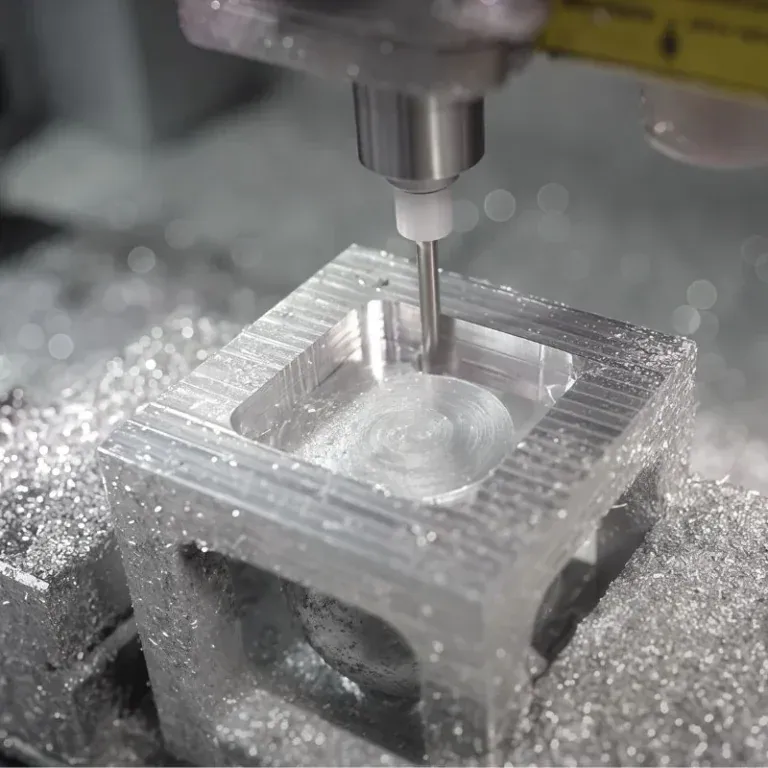
Thin walls can bend away from the cutting tool under machining force.
If the wall springs back after the cutter passes, the final dimension may differ from the programmed toolpath. Surface finish can also become inconsistent.
Machinists often reduce cutting force with lighter finishing passes, suitable tool geometry, optimized toolpaths, and temporary support. The part design itself can also be modified when excessive flexibility creates manufacturing risk.
Workholding And Clamping Deformation
Fixtures must hold the part securely enough to resist cutting forces.
However, excessive clamping pressure can elastically deform thin or flexible components. The part may measure correctly while clamped and change shape after release.
Soft jaws, distributed clamping, supporting fixtures, and careful datum selection help reduce this problem. Stiffness therefore directly affects both machining strategy and inspection results.
Cutting Forces, Vibration, And Dimensional Accuracy
A flexible workpiece is more susceptible to vibration and chatter.
These effects can reduce surface quality, increase tool wear, and create dimensional variation.
Strength also matters when aggressive cutting or poor workholding creates concentrated loads that can permanently deform small features. Process parameters must therefore match both the material and the geometry.
Material Behavior After Material Removal
Machining changes the stress balance inside a workpiece.
When substantial material is removed, internal residual stresses from rolling, extrusion, heat treatment, or previous processing may redistribute and distort the part.
Large plates, thin walls, and asymmetric components are particularly sensitive. Rough machining, stress relief, staged material removal, and controlled finishing can help maintain dimensional stability.
How To Choose Materials Based On Stiffness And Strength
Effective material selection begins with the part’s actual functional limits. Engineers should define allowable stress and deflection first, then compare candidate materials while also considering weight, temperature, fatigue, manufacturability, availability, and cost.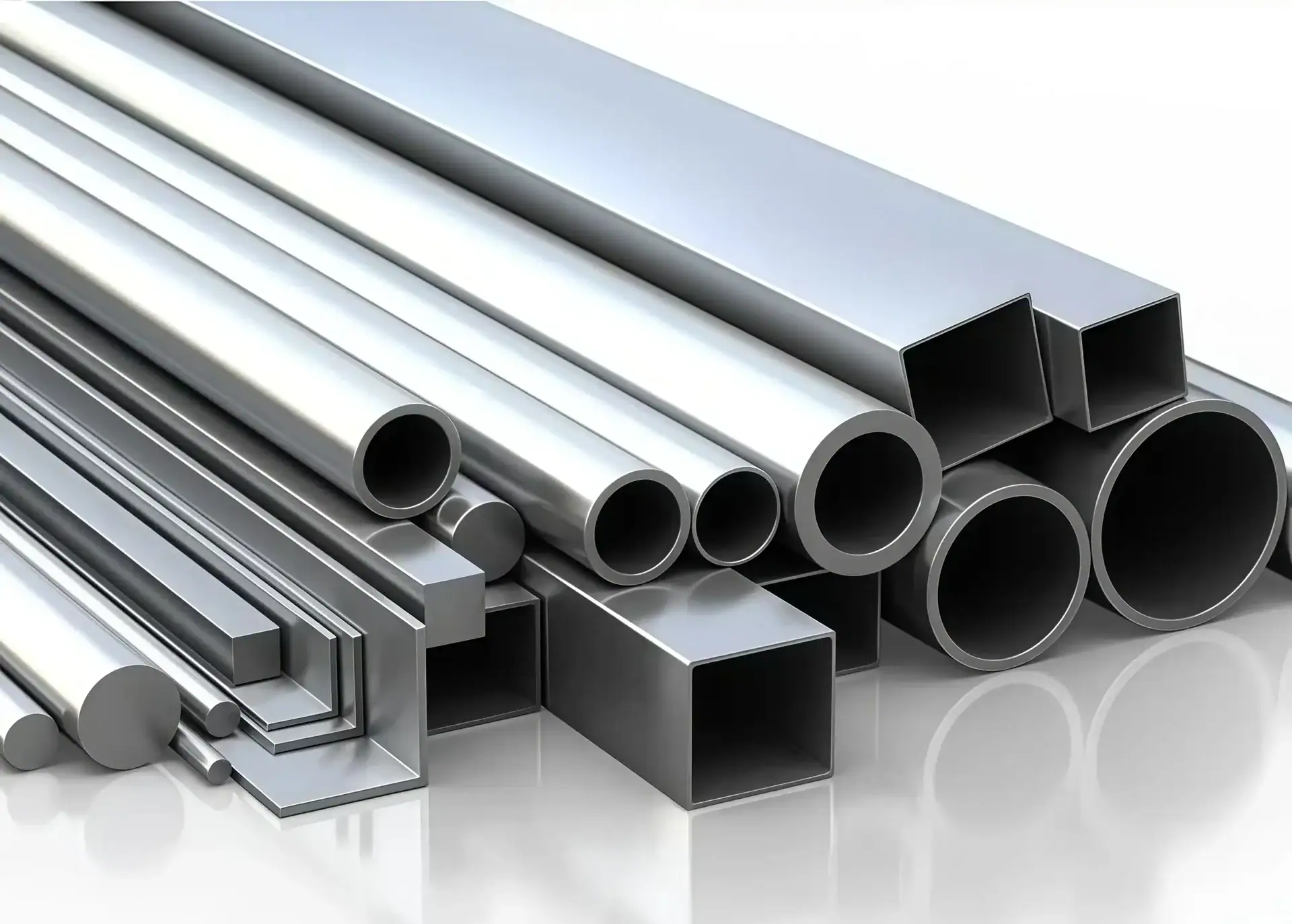
Start by identifying the load cases the component must survive.
Determine both maximum acceptable stress and maximum allowable deformation. A part may satisfy one requirement while failing the other.
Safety factors should reflect load uncertainty, manufacturing variation, environment, consequences of failure, and applicable industry requirements.
Compare Specific Stiffness And Strength-To-Weight Ratio
Weight-sensitive designs often benefit from comparing properties relative to density.
Specific stiffness relates elastic modulus to density, while specific strength compares strength with density.
These metrics help explain why aluminum, titanium, and composites can outperform heavier materials in aerospace and mobile equipment even when their absolute modulus is lower than steel.
Consider Fatigue, Temperature, And Environment
Static room-temperature data is not enough for every application.
Parts exposed to repeated loading require fatigue evaluation. High-temperature components need properties at operating temperature, while plastics may require creep and moisture analysis.
Corrosion and chemical exposure can also reduce long-term strength or change surface condition.
Balance Machinability, Weight, Cost, And Performance
The mechanically best material may not be the best manufacturing choice.
Titanium may provide excellent strength-to-weight performance but require longer machining time and more expensive tooling. Aluminum may need a larger section to achieve stiffness but machine much faster.
Material decisions should therefore consider complete part cost rather than raw material price alone.
Validate The Design With Analysis And Prototyping
Calculations and simulation help identify stress and deformation before production.
However, real prototypes remain valuable when loading, joints, manufacturing variation, or boundary conditions are difficult to predict accurately.
CNC machining allows engineers to produce functional prototypes in final or representative materials, making it useful for verifying stiffness, strength, fit, and assembly behavior before committing to larger production volumes.
Common Misconceptions About Stiffness And Strength
Many material-selection mistakes come from treating stiffness, strength, and hardness as interchangeable. They describe different behaviors, and using the wrong property can lead to parts that are technically strong enough but still perform poorly.
Stronger Does Not Always Mean Stiffer
A higher-strength alloy may have nearly the same Young’s modulus as a lower-strength version of the same base metal.
Upgrading to a higher-strength steel, for example, may increase resistance to yielding but produce almost no improvement in elastic deflection.
If deflection is the real problem, geometry or a higher-modulus material is usually the better direction.
Harder Does Not Always Mean Stronger Or Stiffer
Hardness describes resistance to localized indentation, scratching, or wear.
It can correlate with tensile strength for certain materials, but it is not equivalent to either strength or stiffness.
Heat treatment may increase steel hardness and strength dramatically while leaving Young’s modulus almost unchanged.
Material Properties Alone Do Not Determine Part Stiffness
A material datasheet cannot tell you how stiff a complete component will be without geometry.
Length, thickness, support conditions, cross-section, and load position all influence deformation.
This is why comparing modulus values alone is insufficient when designing real structures.
Increasing Thickness Can Matter More Than Changing Material
Small geometry changes can sometimes improve bending stiffness more than changing to a higher-modulus material.
For beams and plates, thickness strongly influences bending resistance.
This allows lightweight designs to achieve excellent rigidity through efficient cross-sections, ribs, and local reinforcement instead of relying only on heavier materials.
FAQs
Is Stiffness The Same As Rigidity?
They are closely related and often used similarly, but stiffness can be quantified as the relationship between applied load and deformation. Rigidity is more commonly a general description of resistance to deformation.
Does Heat Treatment Increase Material Stiffness?
For most common metals, heat treatment can significantly increase strength and hardness but usually has only a small effect on Young’s modulus. Therefore, heat treatment is rarely the main solution to an elastic deflection problem.
Why Can A Thick Aluminum Part Be Stiffer Than A Thin Steel Part?
Structural stiffness depends on both material modulus and geometry. Increasing thickness or section depth can greatly increase bending stiffness, so an optimized aluminum section can be stiffer than a much thinner steel one.
Should CNC Machined Parts Always Use The Stiffest Material Available?
No. Material choice should balance stiffness with strength, weight, machinability, corrosion resistance, temperature, cost, and part geometry. The stiffest material is not automatically the best overall engineering solution.
Conclusion
Understanding stiffness vs strength is essential because the two properties control different failure modes. Stiffness determines how much a part elastically deforms, while strength determines how much stress it can withstand before permanent deformation or fracture. Reliable design therefore requires engineers to consider modulus, yield strength, geometry, load direction, temperature, fatigue, and allowable deflection together rather than choosing a material from a single datasheet value.
At TiRapid, we provide precision CNC machining and manufacturing services for prototypes and production parts in aluminum, stainless steel, titanium, engineering plastics, and other materials. Our team combines practical material selection, machining strategy, dimensional control, and inspection to help produce components that meet both mechanical performance and manufacturing requirements.