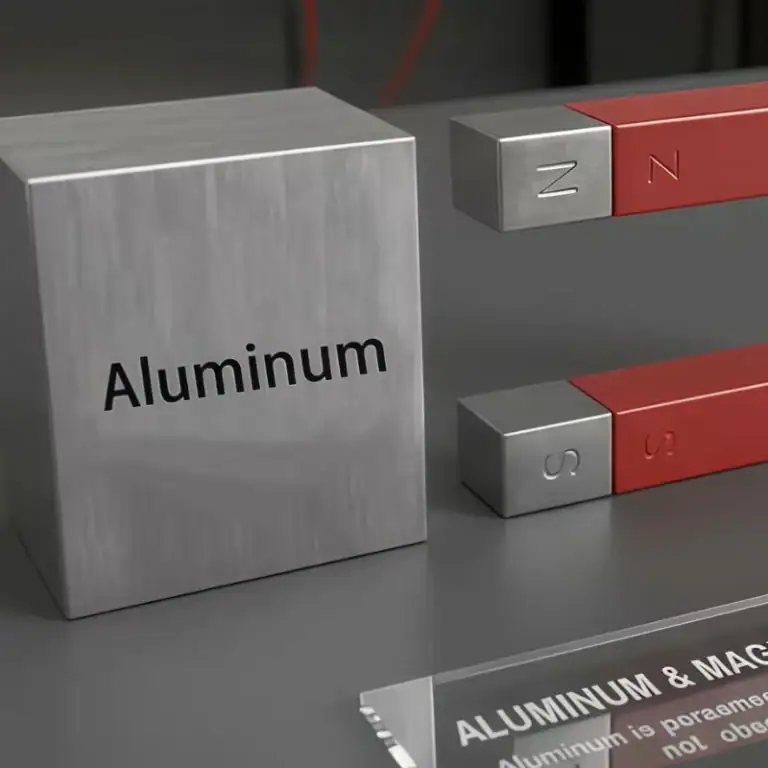
Aluminum is a weakly paramagnetic metal, meaning it responds slightly to an external magnetic field but does not behave like iron or ordinary carbon steel. A typical refrigerator magnet will not stick to a clean aluminum surface because the attraction is extremely small.
This guide explains whether aluminum is magnetic, why magnets usually do not stick to it, and how aluminum alloys behave in different magnetic conditions.
Is Aluminum Magnetic Material?
Aluminum is a weakly paramagnetic material with a small positive magnetic susceptibility of approximately 2.2 × 10⁻⁵ in SI volume units at room temperature. This means it is slightly attracted to an applied magnetic field but does not exhibit the strong attraction or permanent magnetization associated with ferromagnetic metals. In most everyday applications, aluminum is therefore described as practically non-magnetic.
Understanding Ferromagnetism, Paramagnetism, and Diamagnetism
Ferromagnetism, paramagnetism, and diamagnetism describe different ways materials respond to external magnetic fields. Ferromagnetic metals, including iron, nickel, and cobalt, can exhibit strong magnetic attraction. Certain materials can also retain substantial magnetization after an applied field is removed.
Paramagnetic materials experience a small attraction when exposed to a magnetic field. Their induced magnetization is weak and generally disappears when the field is removed. Aluminum belongs to this category under ordinary conditions.
Diamagnetic materials respond in the opposite direction, producing a weak repulsion. Copper, for example, is diamagnetic. However, the magnetic responses of most ordinary paramagnetic and diamagnetic metals are far smaller than those of ferromagnetic materials.
| Magnetic Property | Ferromagnetic | Paramagnetic | Diamagnetic |
| Response to magnetic field | Strong attraction | Weak attraction | Weak repulsion |
| Typical materials | Iron, nickel, cobalt | Aluminum, magnesium | Copper, bismuth |
| Retains strong magnetization | Possible | No | No |
| Attracted to ordinary magnets | Usually noticeable | Usually not noticeable | Usually not noticeable |
| Magnetic susceptibility | Large and often nonlinear | Small and positive | Small and negative |
Why Aluminum Is Weakly Paramagnetic
Aluminum is weakly paramagnetic because the electronic behavior of metallic aluminum produces only a small net magnetic response. Its electrons do not organize into the strongly aligned magnetic domains characteristic of ferromagnetic materials.
In an external magnetic field, aluminum develops a slight magnetization in the field’s direction. However, this effect is too small to create the familiar attraction seen when a magnet approaches an iron or carbon steel surface.
Magnetic susceptibility describes the strength of this response. For pure aluminum, a commonly reported SI volume susceptibility is approximately +2.2 × 10⁻⁵. The positive sign indicates paramagnetism, while the small magnitude explains why ordinary magnet tests show little visible attraction.
| Property | Pure Aluminum |
| Magnetic classification | Paramagnetic |
| Approximate SI volume susceptibility | +2.2 × 10⁻⁵ |
| Relative magnetic permeability | Approximately 1.000022 |
| Permanent magnetization | No significant retention |
| Ordinary magnet attraction | Generally not noticeable |
Why Don’t Magnets Stick to Aluminum?
Magnets usually do not stick to aluminum because its paramagnetic attraction is extremely weak compared with the ferromagnetic attraction of iron and many steels. Aluminum does not develop the strongly aligned magnetic domains needed to hold a conventional magnet against its surface. Even a powerful magnet does not turn ordinary aluminum into a permanent magnet.
How Aluminum Differs From Ferromagnetic Metals
Aluminum differs from ferromagnetic metals because it cannot produce the same strong, cooperative alignment of magnetic moments. Iron and many steels contain magnetic domains whose behavior allows a large response to an external magnetic field.
When a permanent magnet approaches a carbon steel plate, the steel can become strongly magnetized, producing an attractive force sufficient to hold the magnet in place. Aluminum produces only a tiny induced response under comparable stationary conditions.
This difference also explains why aluminum and magnets behave differently from steel and magnets. A simple attraction test can identify many ferromagnetic materials, but it cannot reliably identify aluminum because other metals and some stainless steels may also show little attraction.
Can Strong Magnetic Fields Make Aluminum Magnetic?
Strong magnetic fields can produce a measurable magnetic response in aluminum, but they do not ordinarily make it ferromagnetic or permanently magnetized. Aluminum’s weak paramagnetic response exists only while the external field is applied.
Powerful laboratory magnets can generate conditions where aluminum’s magnetic behavior is measurable using specialized instruments. The effect remains fundamentally different from the domain-based magnetization of common ferromagnetic steels.
Another important distinction is the behavior of aluminum in a changing magnetic field. A strong moving magnet can induce electrical currents inside aluminum, generating noticeable drag or repulsion. These temporary effects do not indicate that aluminum has become a conventional permanent magnet.
How Does Aluminum Interact With Magnetic Fields?
Aluminum interacts with magnetic fields through weak paramagnetism and electromagnetic induction. A stationary magnetic field produces only a slight magnetic attraction, while a changing magnetic field can generate circulating electrical currents inside aluminum. These induced currents create their own magnetic fields and may produce noticeable forces, heating, or resistance to movement.

Aluminum in Static Magnetic Fields
In a static magnetic field, aluminum exhibits weak paramagnetism without becoming a permanent magnet. The induced magnetic response is small, and ordinary magnets generally cannot produce an observable holding force on a clean aluminum surface.
A stationary aluminum component does not generate eddy currents merely because it is conductive and located in an unchanging magnetic field. Significant induced currents require changing magnetic flux or relative movement that produces an equivalent change.
For engineering applications, this means aluminum is often suitable where strong ferromagnetic attraction is undesirable. However, the material’s conductivity, geometry, and the presence of other metals still matter when evaluating its performance in electromagnetic environments.
Eddy Currents and Moving Magnets
Eddy currents are circulating electrical currents generated inside aluminum when the magnetic flux through the material changes. These currents arise because aluminum conducts electricity, even though it is not ferromagnetic.
According to Lenz’s law, the magnetic field produced by induced currents opposes the change that created them. When a strong magnet moves past an aluminum plate, the resulting force can resist the relative motion.
A common demonstration involves dropping a neodymium magnet through a vertical aluminum tube. The magnet falls more slowly than it would through a nonconductive tube because induced currents create a magnetic braking effect. The aluminum does not retain that magnetization after the motion stops.
Magnetic Braking and Other Practical Effects
Magnetic braking uses electromagnetic induction to generate resistance to motion without direct friction between the magnet and conductor. When aluminum moves through a magnetic field, induced currents create forces that oppose its movement.
This principle is used in certain noncontact braking and damping systems. Similar electromagnetic interactions support induction-based metal sorting, where conductive nonferrous materials can be separated from other materials.
Changing magnetic fields can also generate heat in aluminum through electrical resistance. However, the magnitude of any effect depends on field strength, frequency, conductor geometry, material conductivity, and relative motion.
| Application | Magnetic Interaction | Practical Result |
| Magnetic braking | Eddy currents oppose movement | Noncontact resistance to motion |
| Eddy-current separation | Induced forces act on conductive metals | Nonferrous metal sorting |
| Moving-magnet demonstration | Changing flux generates currents | Slower magnet movement |
| Induction heating | Electrical losses generate heat | Controlled material heating |
| Static magnet test | Very weak paramagnetism | Little visible attraction |
Do Aluminum Alloys and Everyday Products Behave Differently?
Most common aluminum alloys, aluminum foil, and aluminum beverage cans remain practically non-magnetic under ordinary conditions. However, their magnetic behavior can vary because of alloy composition, ferromagnetic contamination, attached steel components, and the thickness or geometry of the product. These differences must be considered before interpreting the results of a magnet test.
Pure Aluminum vs. Aluminum Alloys
Pure aluminum is weakly paramagnetic, while most common aluminum alloys remain practically non-magnetic. Alloying elements change strength, corrosion resistance, machinability, and other engineering properties, but do not normally make conventional aluminum alloys strongly ferromagnetic.
Aluminum 6061 and 7075, for example, are widely used in mechanical and structural components. Neither normally behaves like carbon steel when tested with an ordinary stationary magnet.
However, susceptibility varies with composition and material condition. Significant ferromagnetic contamination, embedded particles, or attached components may produce localized attraction. Engineers should verify the exact material and finished assembly when magnetic performance is a critical requirement.
| Aluminum Material | Common Application | Typical Magnet Response |
| Commercially pure aluminum | Electrical and general products | Very weak paramagnetism |
| Aluminum 5052 | Sheet metal enclosures | No noticeable ordinary attraction |
| Aluminum 6061 | CNC-machined housings and brackets | No noticeable ordinary attraction |
| Aluminum 7075 | High-strength precision components | No noticeable ordinary attraction |
| Contaminated aluminum part | Recycled or poorly controlled material | Possible localized attraction |
Is Aluminum Foil Magnetic?
Aluminum foil is not strongly magnetic because it has essentially the same weak paramagnetic behavior as the aluminum from which it is manufactured. A stationary household magnet will not normally stick to clean aluminum foil.
Foil thickness does not transform aluminum into a ferromagnetic material. Its small thickness, however, affects the electrical currents that can circulate through it when exposed to changing magnetic fields.
Aluminum foil can attenuate certain electromagnetic signals under suitable conditions, but it should not be confused with a material that effectively blocks static magnetic fields. Shielding performance depends on frequency, thickness, continuity, and the overall enclosure design.
Are Aluminum Cans Magnetic?
Aluminum beverage cans are generally not attracted to ordinary magnets because their bodies are made from aluminum alloys rather than ferromagnetic steel. A stationary magnet usually will not stick to a clean aluminum can.
Many beverage cans use aluminum alloys such as 3004 or 3104 for their bodies, although material specifications vary. Their practical magnetic response remains very different from that of common steel food cans.
Not every metal can is aluminum. Some food containers use steel with protective coatings. A magnet may strongly attract those containers, so the results of a magnet test depend on the actual base material rather than the product’s appearance.
How Impurities and Steel Components Affect Magnetic Behavior
Ferromagnetic impurities and steel components can make an aluminum part appear magnetic even when the aluminum base material is not strongly magnetic. This can happen when steel particles remain on a surface or metal inserts are incorporated into the assembly.
During manufacturing, steel chips, abrasive contamination, threaded inserts, and attached fasteners may influence magnet tests. A magnet that attracts only one small area of an aluminum component may be detecting localized ferromagnetic material.
For precision manufacturing, unusual magnetic attraction should trigger a review of material traceability, surface condition, and assembly components. A magnet test can help identify a problem, but it cannot determine alloy chemistry or contamination levels by itself.
How Can You Test Whether Aluminum Is Magnetic?
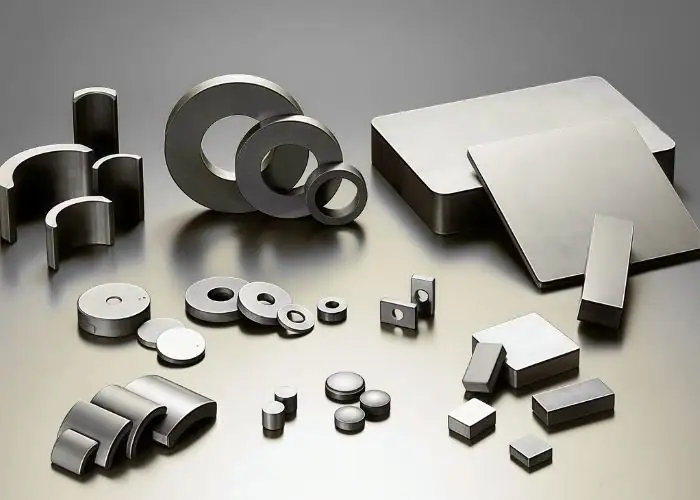
You can test aluminum’s practical magnetic response by bringing a stationary permanent magnet close to a clean sample and observing whether it is attracted. A second test using a moving magnet can demonstrate electromagnetic induction. However, neither test alone can positively identify aluminum or verify a specific alloy grade.
Simple Tests With a Stationary Magnet
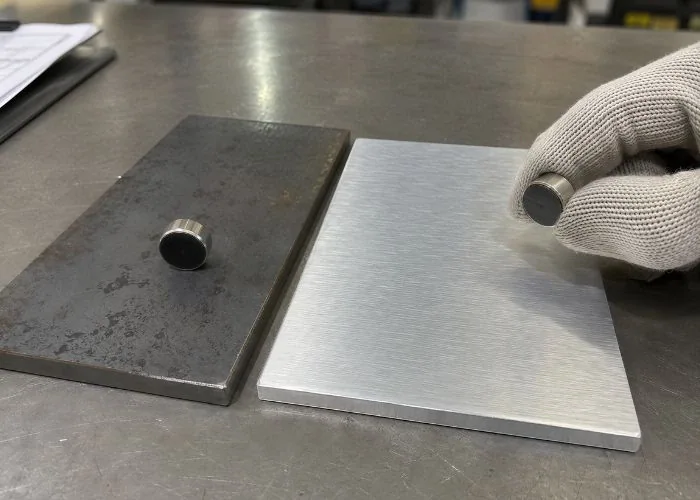
A stationary magnet test checks whether a material exhibits noticeable attraction to a permanent magnet. Clean aluminum normally shows little or no visible attraction, whereas ordinary carbon steel often attracts the magnet strongly.
To perform a simple test, place a clean aluminum sample on a stable surface and slowly bring a small permanent magnet toward it. Observe whether the magnet is pulled toward the sample or remains attached.
Repeat the test on a known steel sample for comparison. Avoid making conclusions from painted, coated, or assembled parts without checking their construction, because hidden ferromagnetic materials can affect the result.
Moving-Magnet Tests and Their Limitations
A moving-magnet test demonstrates how conductive aluminum responds to changing magnetic flux. A strong magnet moving near a sufficiently thick aluminum conductor can generate eddy-current forces that resist its motion.
One practical method is to compare the movement of a magnet through an aluminum tube with its movement through a nonconductive tube of similar dimensions. The conductive tube may noticeably slow the magnet.
These experiments have limitations. Results depend on magnet strength, material thickness, tube geometry, electrical conductivity, and movement speed. A weak effect does not prove that a sample is not aluminum, and an induced-force response does not uniquely identify its composition.
Can a Magnet Distinguish Aluminum From Steel?
A magnet can often distinguish aluminum from ordinary carbon steel because carbon steel is typically ferromagnetic and aluminum is not. However, it cannot reliably separate aluminum from every type of stainless steel or other nonferromagnetic metal.
Austenitic stainless steels such as 304 and 316 may show little magnetic attraction in certain conditions, while ferritic stainless steels such as 430 are generally magnetic. Cold working can also change the magnetic response of some stainless grades.
For confirmed material identification, engineers should rely on supplier certification and suitable material verification methods. Density, electrical conductivity, and composition testing may provide additional evidence, depending on the alloy and inspection objective.
| Test Method | What It Can Reveal | Main Limitation |
| Stationary magnet test | Noticeable ferromagnetic attraction | Cannot confirm aluminum grade |
| Moving-magnet test | Conductive material’s eddy-current response | Depends on geometry and movement |
| Density measurement | Approximate material family | Cannot reliably identify an alloy alone |
| Electrical conductivity test | Conductivity-related material differences | Overlapping alloy properties |
| Material composition analysis | Elemental composition | Requires suitable equipment and methods |
| Material certificate review | Declared alloy and material condition | Requires reliable traceability |
How Do Aluminum’s Magnetic Properties Affect Material Selection?
Aluminum’s weak paramagnetism can be an advantage when strong magnetic attraction is undesirable, but it should not be the only reason for choosing an aluminum alloy. Engineers must also evaluate electrical conductivity, weight, strength, corrosion resistance, thermal performance, machinability, and compatibility with the surrounding equipment.
Aluminum vs. Steel and Stainless Steel
Aluminum is much lighter than most steels and normally exhibits no noticeable attraction to ordinary magnets. Its density is approximately 2.70 g/cm³, compared with about 7.85 g/cm³ for typical carbon steel.
Carbon steels are generally ferromagnetic, making them useful for applications that require strong magnetic attraction or magnetic circuits. Aluminum is usually selected for different reasons, including low weight, corrosion resistance, and favorable machining characteristics.
Stainless steel requires more careful classification. Austenitic grades may be weakly magnetic or practically non-magnetic depending on composition and processing, while ferritic and martensitic grades are generally magnetic. Therefore, the term stainless steel alone does not establish magnetic behavior.
| Material | Approximate Density | Typical Magnetic Behavior | Common Engineering Use |
| Aluminum | 2.70 g/cm³ | Weakly paramagnetic | Lightweight housings and brackets |
| Carbon steel | 7.85 g/cm³ | Ferromagnetic | Structural and mechanical components |
| Stainless steel 304 | 8.00 g/cm³ | Often weakly magnetic, condition-dependent | Corrosion-resistant components |
| Stainless steel 430 | 7.70 g/cm³ | Ferromagnetic | Appliances and structural applications |
| Copper | 8.96 g/cm³ | Diamagnetic | Electrical conductors |
Benefits and Limitations in Electrical and Magnetic Applications
Aluminum can be useful in electrical equipment because it combines low weight, good electrical conductivity, and little ferromagnetic attraction. Its conductivity can support electrical current flow and electromagnetic shielding against certain changing fields.
However, aluminum is not a universal magnetic shield. A thin aluminum enclosure may provide useful shielding against some high-frequency electromagnetic interference while offering little protection against a static magnetic field.
Conductivity also creates design challenges. Changing magnetic fields can induce circulating currents and unwanted heating. Engineers must consider field frequency, conductor geometry, grounding, electrical connections, and thermal management when evaluating aluminum components.
Aluminum Applications in Electronics and Industrial Equipment
Aluminum is used in electronic housings, heat sinks, motor enclosures, instrument structures, and industrial automation components. Its combination of machinability, conductivity, and low weight supports many precision mechanical designs.
In electronics, CNC-machined aluminum housings can provide accurate mounting interfaces, thermal paths, and protective enclosures. Their electromagnetic performance depends on the complete construction, including joints, openings, surface treatments, and electrical continuity.
Industrial equipment may also use aluminum fixtures, brackets, frames, and nonferromagnetic structural components. When magnetic sensors or electromagnetic systems are involved, engineers should evaluate the entire assembly rather than assuming that an aluminum base material eliminates interference.
Choosing Aluminum Alloys for Precision CNC Components
Choosing an aluminum alloy for CNC machining requires balancing mechanical performance, machinability, corrosion resistance, dimensional stability, and application-specific magnetic requirements. Magnetic behavior alone rarely determines the best alloy.
Aluminum 6061 is widely used for precision housings, brackets, plates, and structural components because it offers a practical balance of strength, corrosion resistance, and machinability. Aluminum 7075 is often selected when higher strength is required.
For components operating near sensitive magnetic equipment, material identification and assembly design deserve additional attention. Steel inserts, coatings, tooling contamination, and conductive loops may affect performance even when the aluminum base material is practically non-magnetic.
| Aluminum Alloy | Typical CNC Application | Main Selection Consideration |
| 6061 | Housings, plates, brackets | General strength and machinability |
| 7075 | High-strength structural parts | Strength and dimensional requirements |
| 5052 | Sheet metal parts and enclosures | Corrosion resistance and formability |
| 2024 | Aerospace-related structural components | Strength and application environment |
| 6082 | Industrial structural components | Mechanical properties and availability |
FAQs
Is Galvanized Aluminum Magnetic?
The term galvanized aluminum is potentially misleading because conventional galvanizing usually means applying a zinc coating to steel. Zinc-coated steel typically remains magnetic because the underlying steel is ferromagnetic. If an aluminum component has a zinc-containing coating, the aluminum substrate normally remains practically non-magnetic. Aluminum-zinc coated steel products may also be confused with aluminum. A magnet test can help distinguish these constructions, but material documentation is necessary to identify the substrate and coating reliably.
Is Aluminum Can Magnetic?
An aluminum can is generally not magnetic in the everyday sense because it does not contain the ferromagnetic structure found in ordinary steel. Many beverage cans use aluminum alloys such as 3004 or 3104 for their bodies, and an ordinary magnet will not stick to them. However, some food cans are manufactured from steel and can strongly attract magnets. A magnet test is therefore useful for distinguishing many aluminum and steel containers, although coatings and mixed-material components can complicate identification.
Is Aluminum Magnetic to MRI?
Aluminum is weakly paramagnetic rather than ferromagnetic, but that does not automatically make an aluminum object safe for MRI use. Clinical scanners commonly operate at magnetic field strengths such as 1.5 T or 3 T. Conductive aluminum components may still experience induced currents, radiofrequency heating, or image artifacts. MRI compatibility depends on the complete device, its construction, and validated safety testing. Items intended for MRI environments must follow applicable screening procedures and appropriate MR Safe, MR Conditional, or MR Unsafe labeling.
Is Aluminum Foil Magnetic?
Aluminum foil is weakly paramagnetic but does not exhibit noticeable attraction to an ordinary stationary magnet. Its thin structure does not change aluminum into a ferromagnetic material. Because foil conducts electricity, changing magnetic fields can induce currents, although the resulting response depends on thickness, geometry, frequency, and field strength. Aluminum foil can attenuate certain electromagnetic signals, but it is not an effective general-purpose shield against static magnetic fields. Its practical behavior should not be confused with magnetic attraction or permanent magnetization.
Conclusion
Aluminum is weakly paramagnetic, meaning it responds slightly to magnetic fields without behaving like iron or ordinary carbon steel. Its magnetic susceptibility is too small for most conventional magnets to produce noticeable attraction, but changing magnetic fields can generate eddy currents and measurable forces.
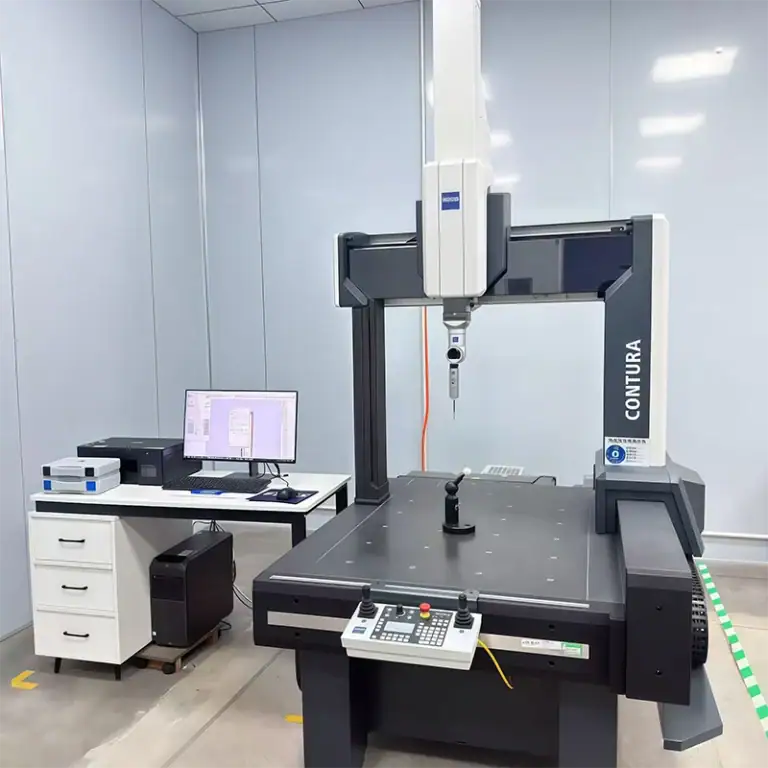
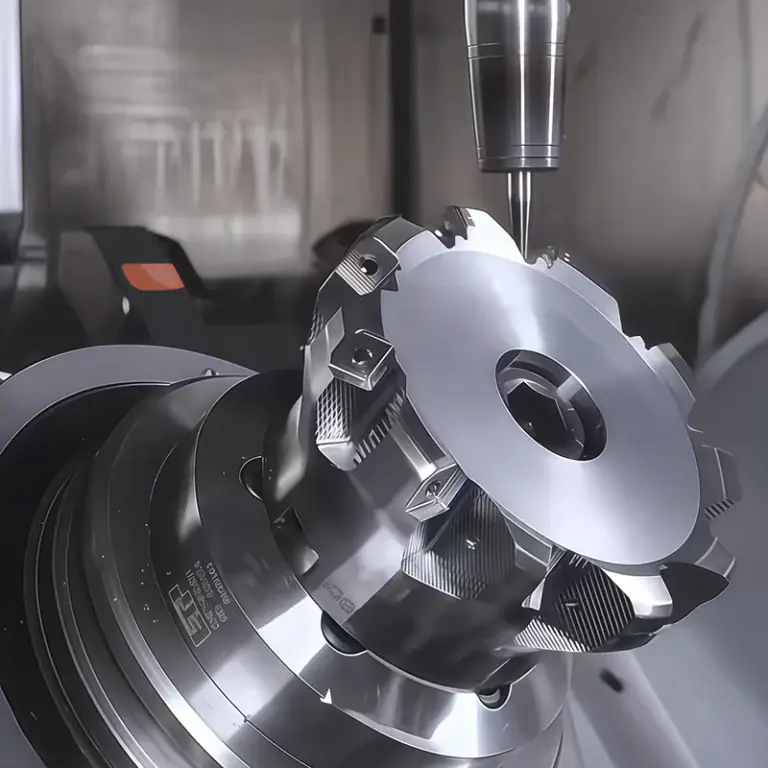
At TiRapid, we provide precision CNC machining and manufacturing services for custom aluminum components, including housings, brackets, structural parts, and complex precision designs. Our team supports aluminum alloy selection, CNC milling, turning, and quality inspection to help customers achieve accurate dimensions, reliable component performance, and practical manufacturing solutions.