Personal watercraft (PWC), commonly known as jet skis, operate in high-speed, humid, and vibration-intensive environments. Components such as engine mounts, transmission parts, steering components, brackets, shafts, and connection parts require high dimensional accuracy, mechanical strength, and corrosion resistance. Aluminum alloys and stainless steel are widely used to balance lightweight design with durability and structural performance.TiRapid provides CNC precision machining solutions for personal watercraft parts, covering material selection, prototype development, CNC machining, surface finishing, quality inspection, and batch production. The machining process can be customized according to part geometry, tolerance requirements, application conditions, and production volume.
Get 20% offf
Your First Order
Need custom metal and plastic parts?
What Are the Key Machining Requirements for Personal Watercraft Parts?
Complex Curves and Irregular Structures
Many personal watercraft components feature curved surfaces, angled structures, holes, slots, and multi-directional mounting features. Engine brackets, pump housings, steering components, and transmission parts may require machining from multiple directions.
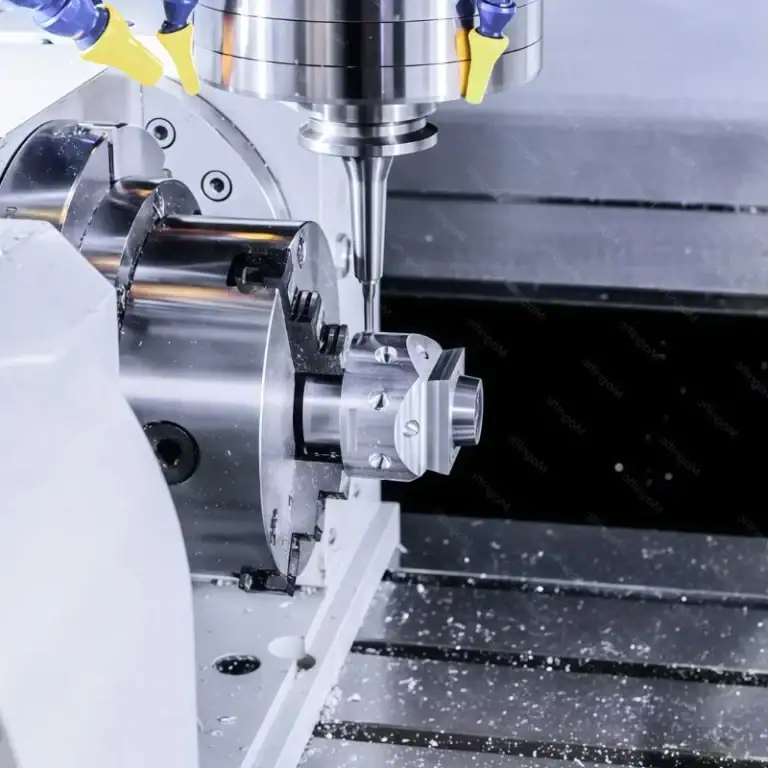
Depending on the part geometry, 3-axis, 4-axis, or 5-axis CNC machining can be selected. 5-axis CNC machining can reduce the number of setups required for complex components, helping improve positioning accuracy and machining consistency.
High Dimensional Accuracy for Reliable Assembly
Shafts, bushings, mounting brackets, and connecting components often need to work together with bearings, fasteners, or other moving parts. Variations in hole diameter, shaft diameter, concentricity, or hole position can affect assembly and operating performance.
For this reason, the machining process should be developed according to engineering drawings, dimensional tolerances, and assembly requirements. Critical dimensions can then be verified through precision inspection to maintain consistent part quality.
Material Selection for Precision Machining
Personal watercraft components must balance mechanical strength, weight, corrosion resistance, and machinability. The appropriate material should be selected according to the component’s load, installation position, operating environment, and performance requirements.
Part Type
Common Materials
Key Machining Considerations
Engine Mounts
Aluminum Alloy
Lightweight design and hole accuracy
Steering Connectors
Aluminum Alloy, Stainless Steel
Dimensional accuracy and corrosion resistance
Shafts
Stainless Steel
Concentricity, roundness, and surface quality
Pump Components
Aluminum Alloy
Complex surfaces and sealing fits
Mounting Bases
Aluminum Alloy
Flatness and hole positioning
Bushings and Sleeves
Stainless Steel, Engineering Plastics
Inner/outer diameter and fit accuracy
TiRapid offers CNC machining for a wide range of materials, including Aluminum 6061, Aluminum 7075, Aluminum 5083, Stainless Steel 304, Stainless Steel 316L, as well as engineering plastics such as POM, PPS, and PEEK. Material selection can be customized according to the application requirements of each component.
CNC Machining Solutions for Personal Watercraft Parts
5-Axis CNC Machining for Complex Components
For personal watercraft parts with multi-angle surfaces, complex contours, and multiple hole positions, 5-axis CNC machining can reduce repeated setups and improve machining consistency. This process is particularly suitable for components with complex geometries and demanding positioning requirements.
CNC Turning for Shafts and Bushings
Rotational components such as shafts, sleeves, and bushings can be manufactured using CNC turning. Key dimensions such as outer diameter, inner diameter, length, and end-face geometry can be precisely controlled to meet assembly requirements.
CNC Milling for Brackets and Connectors
Engine brackets, mounting bases, steering connectors, and other structural components often include multiple mounting holes, slots, and positioning surfaces. CNC milling can be used to machine flat surfaces, holes, grooves, and complex contours while maintaining the dimensional requirements specified in engineering drawings.
Surface Finishing and Quality Inspection
Personal watercraft components are frequently exposed to moisture and potentially corrosive environments, making surface finishing an important part of the manufacturing process. Depending on the material and application, suitable treatments such as anodizing or passivation can be selected to improve surface performance.
TiRapid provides a wide range of material and surface finishing options and offers inspection services such as CMM measurement to support quality control from prototype development through batch production.
From Prototype to Batch Production
Developing a new personal watercraft component often requires design verification and manufacturing validation. TiRapid can review 3D CAD files and provide DFM analysis to identify potential manufacturing issues before production begins.
A typical workflow includes:
3D CAD Drawing → DFM Analysis → Material Confirmation → CNC Machining → Surface Finishing → Dimensional Inspection → Prototype Approval → Batch Production
This workflow is suitable for new personal watercraft components, replacement parts, low-volume production, and larger-scale manufacturing. By combining engineering analysis with precision CNC machining, manufacturers can reduce manufacturing risks and establish a more consistent production process.
Why Choose a Professional Precision Machining Solution?
Personal watercraft components are more than simple machined metal parts. Their performance depends on the combined effects of material selection, component design, machining accuracy, surface quality, and dimensional consistency.
A dedicated CNC machining solution can help manufacturers select appropriate materials and processes for different components while reducing unnecessary machining operations. This approach can improve assembly consistency and provide better control over production quality.
TiRapid provides CNC milling, CNC turning, 5-axis CNC machining, and precision manufacturing services for powersports components. From prototype development to batch production, machining processes can be customized according to part geometry, material, tolerance, surface finishing, and production requirements.
For personal watercraft manufacturers, combining appropriate material selection, precision CNC machining, surface finishing, and quality inspection provides a practical manufacturing approach for components that require lightweight construction, dimensional accuracy, mechanical performance, and durability in demanding marine environments.
Author
Galen Director and Founder
Committed to ensuring we provide the best possible service in the manufacturing industry.
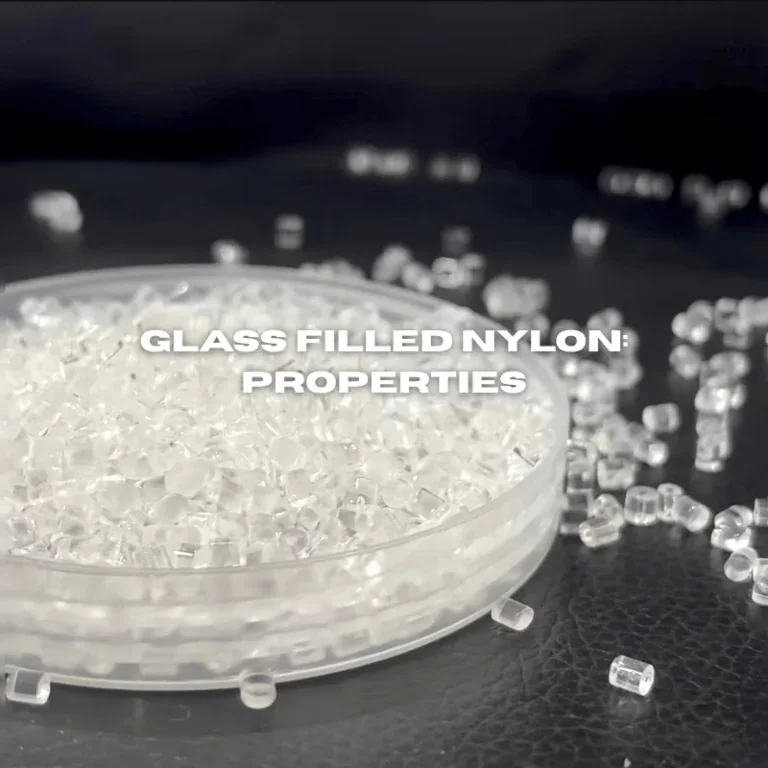
Glass filled nylon is a reinforced engineering plastic that combines the versatility of nylon with the strength and stiffness of glass fibers. Compared with unfilled nylon, it offers better resistance
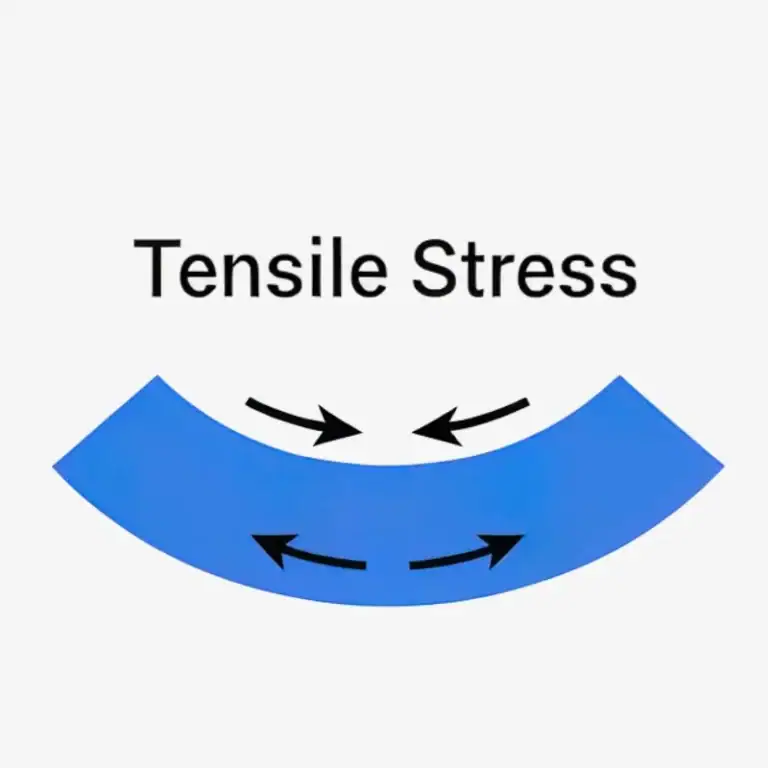
Tensile stress is the internal force per unit area produced when a material is pulled by an external load. It is calculated by dividing the applied tensile force by the
CNC machining programming connects a digital part design with the movements of a CNC machine. A well-built program defines where the cutting tool moves, which tools are used, how fast
Vertical and horizontal milling use the same basic cutting principle, but spindle orientation changes how the tool reaches the workpiece, clears chips, and handles different part geometries. This guide explains
Chamfer machining is the process of removing material from an edge, hole, or contour to create a controlled angled surface. In CNC manufacturing, chamfers are commonly used to remove sharp
Custom machining is used when a part cannot be sourced as a standard component or when its geometry, material, tolerance, or function must be tailored to a specific project. Instead
Undercut machining creates recessed, hidden, or back-facing features that a standard straight-shank cutter cannot reach from the primary machining direction. The main challenge is usually not removing the material, but
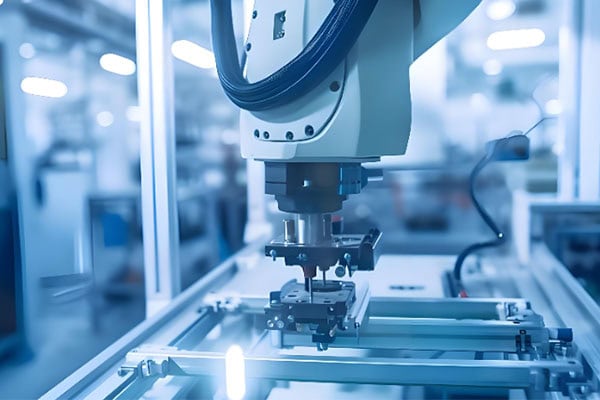
Semiconductor equipment depends on far more than electronics and process technology. Behind every wafer-handling system, test station, inspection tool, and process chamber is a network of precision-machined parts, structural components,
AI CNC machining combines traditional computer numerical control with artificial intelligence, machine learning, manufacturing data, sensors, and intelligent CAM software. Instead of replacing CNC technology, AI adds a decision-support layer
Robotic process automation is a software-based automation technology that uses digital bots to complete repetitive, rules-based tasks normally performed by people on computers. RPA bots can enter and transfer data,
Computer numerical control machining is an automated manufacturing process in which programmed computer instructions control machine tools to remove material and produce precise parts. CNC technology can control tool movement,
Semiconductor manufacturing is the process of turning high-purity semiconductor materials into functional chips through a sequence of wafer preparation, thin-film formation, photolithography, etching, doping, metallization, testing, dicing, packaging, and final