CNC turning process parameters have a direct impact on machining efficiency, dimensional accuracy, surface finish, tool life, and overall production stability. During actual machining, spindle speed, cutting speed, feed rate, depth of cut, tool material, nose radius, coolant flow, and lubrication conditions all influence the final machining result. Different materials and component structures require different parameter combinations. For example, aluminum alloys generally allow relatively high cutting speeds, while stainless steel and alloy steel require more careful control of cutting speed and cutting load. Rough machining focuses more on efficient material removal and machine load control, while finishing operations place greater emphasis on dimensional accuracy, surface roughness, and process stability. Properly setting CNC turning parameters can reduce abnormal tool wear, vibration, and excessive heat while shortening machining cycles and improving batch consistency. For CNC machining companies, establishing parameter databases for different materials, tools, component structures, and machining stages can improve production efficiency and reduce overall manufacturing costs.
CNC Turning Spindle Speed and Cutting Speed
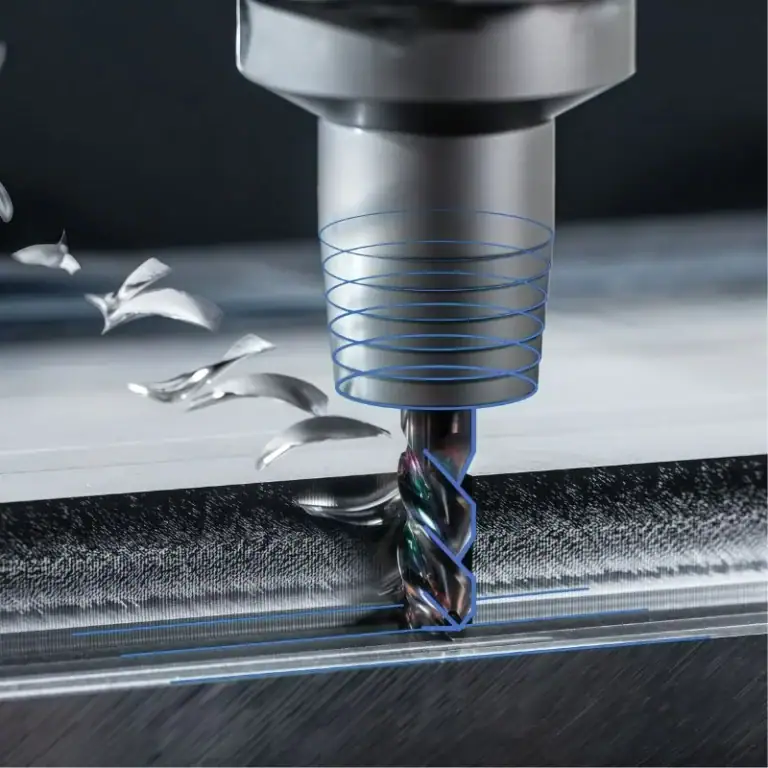
Spindle speed and cutting speed are two important parameters in CNC turning. The spindle rotates the workpiece while the cutting tool follows the programmed path to remove material. Changes in spindle speed directly affect the relative cutting conditions between the tool and workpiece. Excessively low cutting speeds may reduce material removal efficiency, while excessively high speeds can increase cutting temperature, accelerate tool wear, and negatively affect surface quality. Actual parameter selection should consider workpiece material, tool material, component diameter, and machining stage.
Cutting Speed Affects Machining Efficiency
Cutting speed represents the relative speed between the cutting edge and workpiece surface and has a significant influence on machining efficiency. Materials such as aluminum alloys and brass generally offer good machinability and can support higher cutting speeds when machine and tool capabilities allow. Stainless steel, titanium alloys, and certain alloy steels require more controlled cutting speeds to prevent excessive heat and premature tool failure.
- Increase material removal efficiency
- Shorten machining time
- Control cutting temperature
- Reduce abnormal tool wear
- Maintain stable surface quality
- Improve machine utilization
Cutting speed should not simply be increased as much as possible. A suitable balance must be maintained between machining efficiency, tool life, dimensional accuracy, and component quality.
Spindle Speed Should Match Workpiece Diameter
During CNC turning, changes in workpiece diameter affect the actual cutting speed. Even when spindle speed remains unchanged, the cutting conditions at different diameters can vary significantly. CNC systems with constant surface speed control can automatically adjust spindle speed as the tool moves across different diameters, helping maintain more stable cutting conditions.
Proper spindle speed control can reduce fluctuations in cutting temperature and machine load while improving the machining quality of external diameters, end faces, and tapered surfaces.
CNC Turning Feed Rate Parameters
Feed rate determines how quickly the cutting tool moves relative to the workpiece during machining. It has a direct influence on machining time, cutting force, surface roughness, and tool wear. An excessively low feed rate may unnecessarily extend the machining cycle, while an excessively high feed rate can increase cutting forces, vibration, and surface roughness. Roughing and finishing operations require different feed strategies, and actual feed settings should be matched with tool geometry, nose radius, material properties, and machine rigidity.
Roughing Uses a Higher Feed Rate
The main purpose of roughing is to remove large quantities of material efficiently. When machine rigidity, tool strength, and workholding stability are sufficient, a relatively high feed rate can be used to improve material removal efficiency. Increasing feed rate within a reasonable range can reduce roughing cycles and increase output per machine hour.
- Improve material removal efficiency
- Shorten roughing time
- Reduce the number of machining passes
- Improve machine utilization
- Control cutting load
- Increase batch production efficiency
During roughing, spindle load, chip formation, vibration, and tool condition should be monitored continuously to prevent excessive feed rates from causing tool chipping or workpiece instability.
Finishing Uses a Lower and More Stable Feed Rate
Finishing operations place greater emphasis on dimensional accuracy and surface quality. A controlled feed rate can reduce visible machining marks and help achieve a smoother surface finish.
- Improve surface smoothness
- Increase dimensional stability
- Reduce machining marks
- Lower vibration risk
- Improve profile accuracy
- Increase batch consistency
The finishing feed rate should also be selected according to the tool nose radius. Simply reducing feed rate excessively may improve surface finish but can also reduce productivity unnecessarily.
Depth of Cut Affects Material Removal
Depth of cut represents how deeply the cutting tool enters the workpiece during each pass. It directly influences roughing efficiency, cutting force, and machine load. Properly selecting depth of cut can reduce the number of passes and shorten machining cycles. Excessive depth of cut may overload the machine and tool, while an excessively small depth of cut can reduce productivity. Different machining stages require different cutting strategies.
Roughing Depth of Cut Should Balance Efficiency and Load
Roughing requires efficient material removal, so a relatively large depth of cut can be used when machine rigidity, tool strength, and fixture stability are sufficient.
- Reduce the number of cutting passes
- Increase material removal rate
- Shorten machining cycles
- Reduce auxiliary time
- Improve roughing efficiency
- Reduce unnecessary machine operation
When a workpiece contains a large amount of machining allowance, material should be removed progressively according to machine and tool capabilities instead of applying an excessively heavy cut in a single pass.
Finishing Depth of Cut Should Remain Stable
During finishing, the remaining machining allowance is relatively small, so depth of cut should remain stable whenever possible. Uneven finishing allowance can cause fluctuations in cutting load, dimensional variation, and surface quality.
Before finishing, semi-finishing should create a relatively uniform allowance so that the finishing tool can operate under stable cutting conditions and achieve the required final dimensions.
CNC Turning Tool Parameters Affect Machining Results
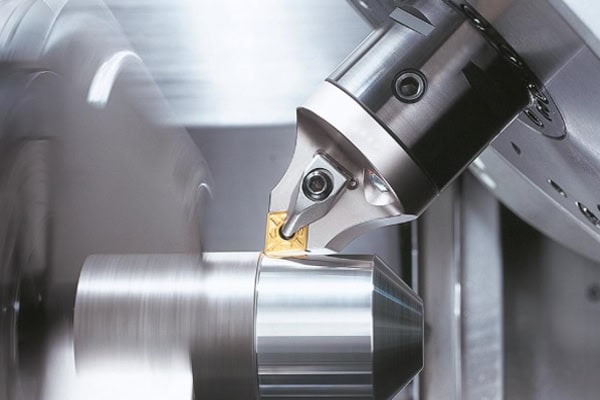
Cutting tools are critical components of the CNC turning system. Tool material, cutting-edge geometry, nose radius, coating, and tool-holder rigidity all influence the selection of machining parameters. The appropriate cutting speed and feed rate may vary significantly when the same workpiece material is machined using different tools. Proper tool selection can reduce cutting resistance, control temperature, improve surface quality, and extend tool life.
Tool Material Should Match the Workpiece
Different workpiece materials require tools with suitable cutting characteristics. Conventional carbide tools are commonly used for carbon steel, while stainless steel requires greater wear resistance and toughness. Aluminum alloys generally benefit from sharp cutting edges, while high-hardness materials may require specialized coated tools.
- Carbon steel can use conventional carbide tools
- Stainless steel benefits from high-toughness tools
- Aluminum alloys benefit from sharp cutting edges
- Copper alloys require effective chip evacuation
- High-hardness materials benefit from wear-resistant coatings
- Precision components require highly stable tooling
Matching tool material with the workpiece allows cutting speed and feed parameters to be optimized while improving machining efficiency and tool life.
Tool Nose Radius Affects Surface Quality
Tool nose radius affects cutting geometry, surface texture, cutting force, and tool strength. A larger nose radius can improve tool strength and surface finish under suitable conditions but may also increase cutting forces. A smaller nose radius can be useful for certain precision profiles but may be more sensitive to vibration and edge damage.
In practical production, the nose radius should be selected according to component geometry, machining allowance, machine rigidity, and required surface roughness.
CNC Turning Cooling and Lubrication Parameters
Machining generates significant heat, and insufficient heat removal can cause tool wear, workpiece thermal deformation, and dimensional instability. Cutting fluid helps remove heat from the cutting zone while reducing friction between the tool and workpiece. Cooling and lubrication are particularly important when machining stainless steel, alloy steel, titanium alloys, and other difficult-to-machine materials.
Coolant Flow Rate Affects Heat Dissipation
Cutting fluid should reach the cutting zone effectively to remove machining heat. Insufficient coolant flow can cause tool temperature to rise rapidly, reducing tool life and negatively affecting surface quality.
- Reduce cutting temperature
- Improve tool life
- Reduce thermal deformation
- Improve chip evacuation
- Reduce the risk of surface burning
- Improve continuous machining stability
For deep-hole machining, groove machining, and long-duration turning operations, more effective coolant delivery methods may be required according to machine capabilities.
Lubrication Performance Affects Surface Quality
Cutting fluid is not only used for cooling but also helps reduce friction between the cutting tool and workpiece. Good lubrication can reduce built-up edge formation, improve chip flow, and help produce more stable machined surfaces.
The cutting fluid type and concentration should be selected according to material, tool, machining process, and production requirements. Simply increasing coolant quantity cannot solve every machining problem.
Different Materials Require Different Turning Parameters
There is no single CNC turning parameter set suitable for every material. Aluminum alloys, brass, carbon steel, stainless steel, alloy steel, and titanium alloys differ in hardness, thermal conductivity, toughness, chip formation, and work-hardening behavior. These differences require machining parameters to be adjusted according to actual material characteristics.
Aluminum Alloy Turning Characteristics
Aluminum alloys generally offer good machinability and thermal conductivity and can often be machined at relatively high cutting speeds when machine and tool capabilities permit. Sharp cutting tools and effective chip evacuation are important to prevent aluminum chips from adhering to the cutting edge and damaging the surface.
- Suitable for relatively high cutting speeds
- Use sharp cutting tools
- Maintain effective chip evacuation
- Control built-up material on the cutting edge
- Achieve good surface quality
- Improve production efficiency
Proper parameter selection can fully utilize the excellent machinability of aluminum alloys.
Stainless Steel Turning Characteristics
Stainless steel has relatively high strength and can be susceptible to work hardening. During machining, prolonged rubbing or insufficient cutting action should be avoided. Cutting temperature and tool load also need to be carefully controlled.
- Control cutting speed
- Maintain stable feed rate
- Use wear-resistant tools
- Strengthen cooling and lubrication
- Improve chip-breaking performance
- Reduce work-hardening effects
Stable parameter combinations can reduce tool wear and improve the machining quality of stainless steel components.
Carbon Steel and Alloy Steel Turning Characteristics
Carbon steel and alloy steel are widely used in mechanical manufacturing. Their turning parameters should be selected according to steel grade, hardness, and heat-treatment condition. Low-carbon steel is generally easier to machine, while quenched, tempered, or otherwise heat-treated alloy steel may have higher hardness and require more wear-resistant tools and greater machine rigidity.
- Adjust cutting speed according to material hardness
- Select feed rate according to tool capability
- Control roughing depth of cut
- Maintain a stable finishing allowance
- Monitor tool wear
- Ensure secure workholding
Proper parameter control allows manufacturers to balance machining efficiency, tool life, and component quality.
CNC Turning Process Parameter Optimization
CNC turning parameter optimization is not simply a matter of increasing spindle speed or feed rate. Parameters should be adjusted according to component geometry, material, tooling, machine condition, and production requirements. Manufacturers can record machining time, tool life, spindle load, surface roughness, dimensional inspection results, and other production data, then use this information to identify more stable parameter combinations. For batch production, validated parameters can be converted into standardized process sheets or machining databases to reduce variations between operators and improve repeatability.
Adjust Parameters According to Machining Stage
Roughing, semi-finishing, and finishing operations have different objectives, so their process parameters should also be different.
- Roughing focuses on efficient material removal
- Semi-finishing focuses on uniform machining allowance
- Finishing focuses on dimensional accuracy
- Threading focuses on synchronized feed movement
- Groove machining focuses on cutting load control
- Interrupted cutting focuses on tool impact resistance
Adjusting parameters according to the machining task helps maintain more stable machine and tool operating conditions.
Adjust Parameters According to Machine Condition
The same component may require different parameters on different CNC machines. Machine rigidity, spindle power, fixture stability, tool-holder configuration, and machine condition all affect actual cutting capability.
Production operators can evaluate whether parameters are appropriate by monitoring spindle load, vibration, cutting temperature, chip shape, and tool wear. When excessive vibration, high temperature, or abnormal tool wear occurs, parameters should be adjusted rather than continuing with unsuitable settings.
Establish a Standardized Parameter Database
For long-term batch production, CNC machining companies can establish process parameter databases based on material, tool, component type, and machining operation. After first-piece verification and quality inspection, stable parameters can be recorded for future production.
- Record material parameters
- Record tool models
- Record cutting speeds
- Record feed rates
- Record depths of cut
- Record cooling methods
- Record tool life
- Record component inspection data
A comprehensive parameter database reduces trial cutting, improves new-order introduction efficiency, and provides valuable production data for continuous process optimization.
Common CNC turning process parameters mainly include cutting speed, spindle speed, feed rate, depth of cut, cooling, and lubrication conditions. These parameters must also be matched with tool material, tool nose radius, machine rigidity, and workpiece material. Different materials, component structures, and machining stages require different parameter combinations. Roughing should emphasize efficient material removal and machine load control, while finishing should focus more on dimensional accuracy and surface quality. By matching tools with workpiece materials, optimizing cutting parameters, improving cooling and chip evacuation, monitoring tool wear, and establishing standardized process databases, manufacturers can improve CNC turning efficiency, reduce tool consumption and scrap rates, and maintain stable dimensional consistency in batch production. For CNC machining companies, continuously collecting production data and optimizing machining parameters is an important foundation for improving manufacturing capabilities, controlling production costs, and delivering high-quality precision components.