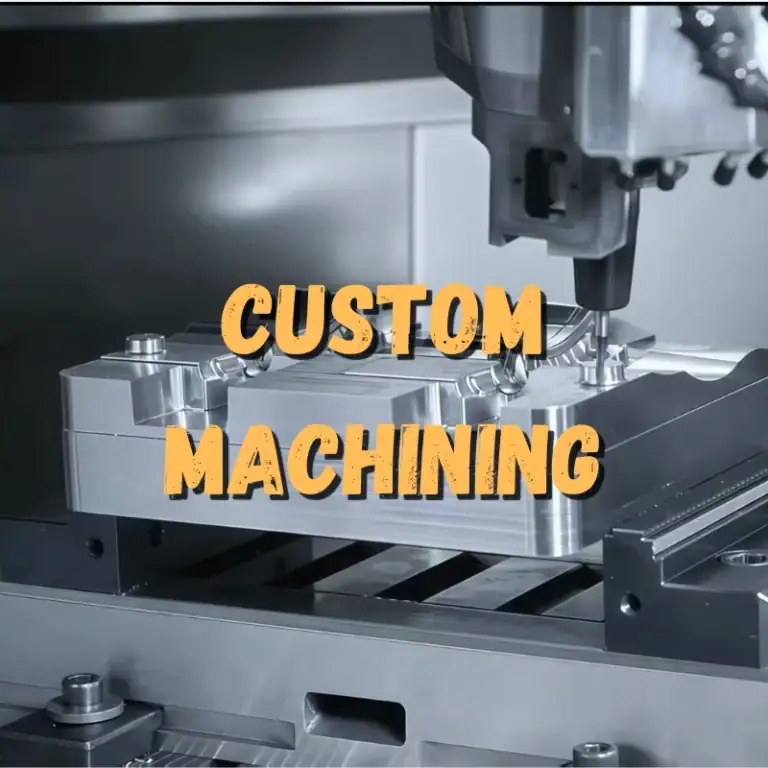
Two parts made from the same material can have very different milling prices. One may fit a standard vise and run with common tools. The other may need several setups, long-reach cutters, careful distortion control, and a detailed inspection report. The difference lies in the work required to deliver an acceptable part.
Understanding CNC milling cost helps product engineers evaluate those requirements before releasing a design. This guide explains published hourly rates, the components of a quote, and a practical estimating method. It also shows where design changes can reduce expense while preserving the features that make the part function.
How Much Does CNC Milling Cost?
Published supplier guides list CNC milling rates from about $35 per hour for some 3-axis work to $250 per hour or more for 5-axis machining. These broad budget references describe machine service rates. the price of a finished part also depends on machining time, preparation, materials, and delivery requirements.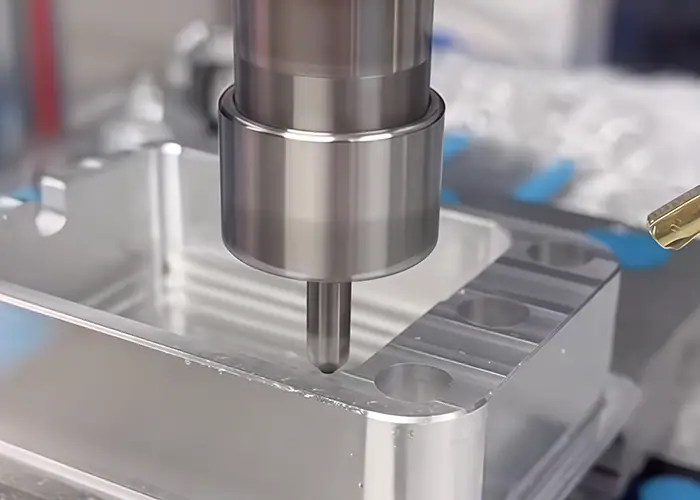
Typical Hourly Rates for 3-Axis, 4-Axis, and 5-Axis Milling
The following ranges, drawn from a published supplier pricing guide, provide an initial budgeting reference in US dollars across different service conditions.
| Machine type | Published hourly reference | Typical application |
| 3-axis CNC milling | $35–$120 | Accessible pockets, faces, slots, and holes |
| 4-axis CNC milling | $50–$150 | Features accessed by rotating the workpiece |
| 5-axis CNC milling | $75–$250+ | Angled features, multiple faces, and complex surfaces |
A shop’s rate reflects its equipment, operating costs, and service scope. The lower end of a range should not be used automatically for every part that fits that machine category.
More expensive equipment can be economical when it removes enough setup or machining work. The useful comparison is the total effort required to produce the same accepted part.
Hourly Rates, Part Prices, and Total Order Costs
An hourly rate becomes meaningful when paired with a realistic time estimate. Cutting, tool changes, probing, and other machine activities may all contribute to the charged cycle, depending on the quoting method.
The unit price then includes the applicable share of preparation and other project charges. A small order can therefore have a high unit price even when the actual cutting cycle is short.
Always distinguish the machine rate, the finished-part price, and the order total. They answer different budget questions.
How Location and Quote Scope Affect Pricing
Labor, facility costs, and the local supply chain influence pricing, but a geographical comparison is useful only when both quotes cover the same work. Check the drawing revision, material grade, quantity, finishing, inspection, packaging, and delivery terms.
A lower piece price may exclude an inspection report or a finishing operation included elsewhere. Compare the complete deliverable before deciding which offer is more economical.
What Is Included in a CNC Milling Quote?
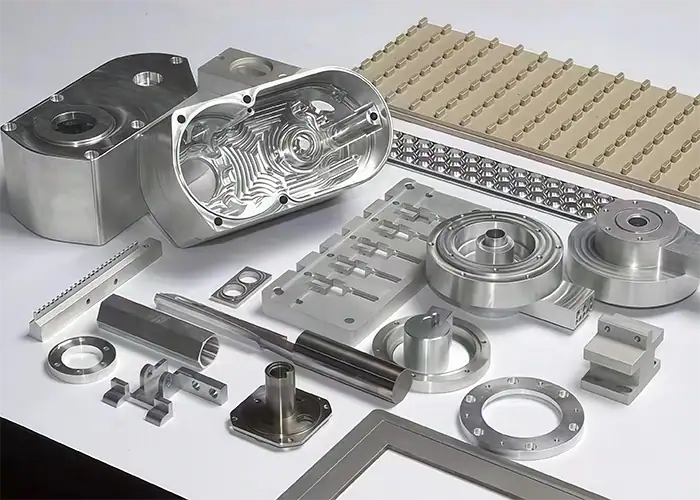
A milling quote typically combines material, production preparation, machining, and any specified finishing or verification. Some charges apply to the batch, while others increase with each part. Understanding that distinction helps you compare quotations and avoid counting the same expense twice.
Raw Material and Stock Preparation
Material cost starts with the purchased blank, not the weight of the finished component. The blank may need extra stock for facing, workholding, and finishing cuts. Sawing and preparation also require work.
Stock availability matters. A design that fits a readily available plate or bar can be easier to source than one requiring an unusual size. For a heavily pocketed part, much of the purchased material becomes chips, so the relationship between blank size and finished geometry deserves attention.
Programming, Setup, and Workholding
Before cutting begins, the shop reviews the model and drawing, prepares the machining program, selects tools, and establishes the workholding arrangement. The first setup may also require prove-out and adjustment.
Dedicated fixtures or machined soft jaws can add preparation costs. Some work can be reused on repeat orders, but reloading a job, checking tools, and verifying the setup still take time. A repeat order does not automatically eliminate every preparation charge.
Machining Time and Tooling
The process plan determines how much roughing, finishing, repositioning, and tool changing the job requires. Special cutters or additional toolpath development can make a seemingly small feature disproportionately expensive.
Standard tool consumption may be included in the shop rate. Special cutters or unusually demanding tool wear may be treated separately. Likewise, operator labor, equipment overhead, and margin can already be included in a quoted hourly rate. Confirm its scope before adding separate allowances.
Finishing, Inspection, and Delivery
Deburring, anodizing, coating, heat treatment, and special cleaning can introduce additional operations. Inspection effort depends on what must be measured, how it must be verified, and which records are requested.
Finishing and inspection may combine batch charges with per-part charges. Packaging and freight should also be identified when comparing delivered costs.
| Cost category | Common charging basis | What to check |
| Programming and initial process planning | Project or batch | Reuse on repeat orders |
| Setup and dedicated workholding | Batch or separate tooling charge | Included setups and fixture ownership |
| Material and machining | Per part | Blank size and rate inclusions |
| Finishing and inspection | Batch, per part, or both | Minimum charges and documentation |
| Packaging and delivery | Shipment or order | Packaging requirements and destination |
Which Factors Have the Biggest Impact on CNC Milling Cost?
The largest cost drivers are the amount of work a part requires and how reliably that work can be completed. Material, geometry, precision requirements, setup strategy, quantity, and lead time influence cutting time, preparation, tool consumption, and verification effort.

Material Machinability and Stock Removal
The cheapest raw material does not always produce the cheapest finished part. A material that requires slower cutting, more frequent tool replacement, or additional process control can outweigh a lower purchase price.
Readily machinable aluminum often supports efficient milling. Stainless steels, titanium alloys, and some engineering plastics present different challenges involving heat, tool wear, chip behavior, or dimensional stability. Evaluate the specified grade and condition rather than assuming all metals or plastics behave alike.
The amount of stock removed matters too. A large blank reduced to a thin, deeply pocketed component requires both substantial roughing and a plan for maintaining stability.
Part Geometry and Tool Access
A deep pocket with small internal radii may require a slender cutter with limited stiffness. The shop may need slower passes, additional tools, or a different machining approach to reach the bottom accurately.
Thin walls and unsupported features can move under cutting or clamping loads. Undercuts and obstructed features may require special tools or additional orientations. These details can add more work than the overall size of the part suggests.
Tool access is therefore a useful early warning sign: if reaching a feature is difficult, producing it consistently may also be expensive.
Tolerances, Surface Finish, and Inspection Requirements
A demanding tolerance can affect the entire manufacturing sequence. The shop may need controlled finishing cuts, intermediate measurements, or changes to the locating strategy to maintain the required relationship between features.
Surface roughness requirements can add passes even when the dimensions are straightforward. Inspection requirements also influence cost: checking a few accessible dimensions differs from documenting complex geometric relationships across a component.
A dimensional requirement also needs a workable measurement method. If a feature is difficult to access for inspection, verification may require special fixtures or an agreed alternative approach.
Machine Selection and Number of Setups
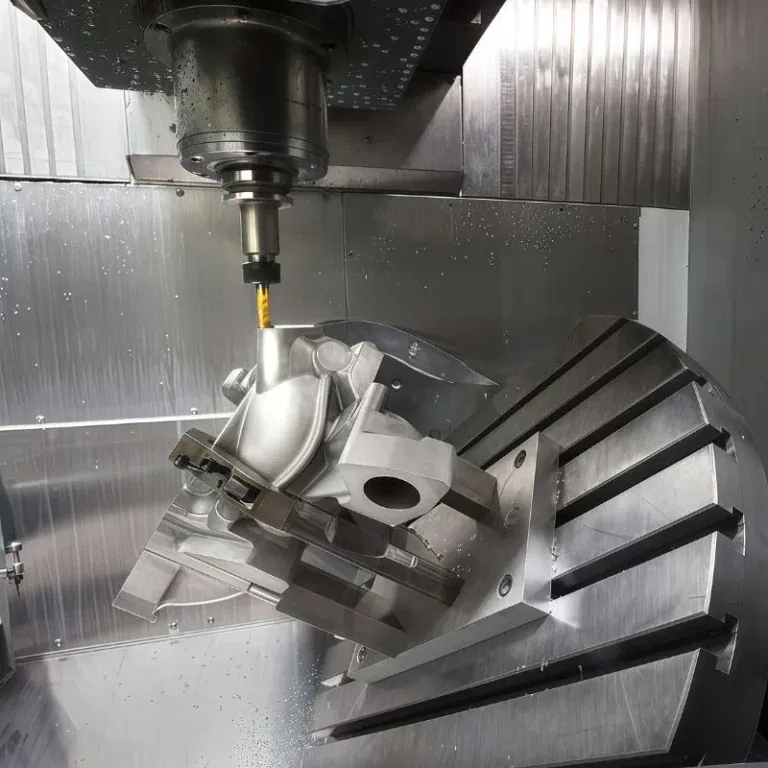
A 3-axis mill can be an economical choice for features accessible from straightforward orientations. A part with several angled faces may instead benefit from indexed or simultaneous multi-axis machining.
Compare programming, workholding, setup changes, and cycle time together. Reducing repeated handling can make a higher-rate machine competitive, but the result depends on the geometry and production plan.
The number of axes alone does not establish either the final price or the achievable quality.
Order Quantity and Lead Time
Larger batches spread preparation costs across more parts. They may also justify dedicated workholding or a more efficient production arrangement. However, each additional part still consumes material, machine time, and other resources.
Urgent delivery can limit scheduling options or require expedited materials and finishing. When timing is flexible, the supplier has more opportunity to plan the job around available capacity and normal procurement.
How Can You Estimate CNC Milling Cost per Part?
Estimate the recurring cost of making each part, then add its share of batch preparation. Use a defined machining scope and a realistic cycle-time assumption. A transparent calculation is more useful than a single price guessed from the material or the part’s overall size.
Build a Simple Cost Estimate
A practical starting point is:
Estimated unit cost = recurring cost per part + batch preparation cost ÷ quantity
For the machining portion:
Machining cost per part = chargeable cycle time in hours × hourly rate
Add only charges that are outside the selected rate. Treat finishing minimums, batch inspection work, and shipment charges according to how they are actually billed.
At the design stage, machining time is usually the most uncertain input. Ask for feedback on the features driving the cycle instead of treating an early estimate as a measured production result.
- Build the estimate around the current drawing revision.
- Separate batch charges from recurring charges.
- Record what the hourly rate already includes.
- Keep optional finishing and documentation visible.
This makes later revisions easier to compare. If a quote changes, you can check whether the difference comes from geometry, quantity, scope, or a revised production assumption.
Worked Example: A Machined Aluminum Bracket
Consider an illustrative aluminum bracket with accessible faces and holes, standard workholding, and an as-machined, deburred finish. To demonstrate the arithmetic, assume the following budget inputs.
| Estimate input | Assumed value |
| Material and blank preparation | $8 per part |
| Chargeable machine cycle | 24 minutes, or 0.4 hour per part |
| Milling rate, including on-machine labor, standard tooling, and overhead | $60 per hour |
| Separate off-machine handling, deburring, and basic inspection | $3 per part |
| Combined programming and batch setup | $240 per order |
| Coatings, special reports, packaging, freight, and taxes | Outside this example |
Machining contributes 0.4 × $60 = $24 per part. The recurring amount is therefore $8 + $24 + $3 = $35 per part.
For an order of 10 brackets, preparation adds $240 ÷ 10 = $24 per part. The estimated unit cost is $59, and the order subtotal is $590.
The off-machine allowance covers work outside the charged machine cycle. Keeping these activities separate prevents the same labor from being counted in both the hourly rate and a second handling charge.
Cycle-time sensitivity is worth testing. In this example, an additional 6 minutes adds 0.1 hour × $60 = $6 per part. Across 100 parts, that adds $600 to the subtotal. This is why clarifying a difficult feature can matter more than negotiating a small reduction in preparation fees.
Compare Prototype and Batch Quantities
Keeping the same assumptions isolates the effect of spreading preparation costs:
| Quantity | Recurring cost per part | Setup allocation per part | Estimated unit cost | Order subtotal |
| 1 | $35 | $240 | $275 | $275 |
| 10 | $35 | $24 | $59 | $590 |
| 100 | $35 | $2.40 | $37.40 | $3,740 |
The unit price falls, but the total order value rises. Ordering more parts makes sense when demand supports the quantity, not simply because the price per piece looks attractive.
Real production may involve different cycle times or tooling at different volumes. Recalculate those inputs when the manufacturing plan changes instead of extending this simplified model indefinitely.
How Can You Reduce CNC Milling Cost Without Compromising Part Requirements?
Reduce unnecessary work before trying to reduce the supplier’s rate. Improve tool access, reserve demanding specifications for functional features, and plan the order around an efficient manufacturing sequence. Every proposed change should preserve the part’s fit, performance, and service requirements.
Simplify Deep Pockets, Small Internal Radii, and Thin Walls
Review whether each difficult feature serves a necessary purpose. A shallower pocket or larger internal radius may allow a stiffer tool and a more efficient toolpath. Removing an unnecessary thin section can simplify workholding and distortion control.
Discuss accessible alternatives with the manufacturer. A relief feature, revised pocket layout, or changed approach direction may preserve the assembly function while improving machinability.
Where a design is split into separate components, include fastening, alignment, assembly labor, and performance requirements in the comparison. A simpler machining operation is only useful if the complete design benefits.
Apply Tight Tolerances Only Where Function Requires Them
Separate critical interfaces from noncritical dimensions. Identify mating surfaces, locating features, sealing faces, and relationships that determine assembly performance.
Use suitable general tolerances for the remaining geometry and avoid unnecessary surface-finish requirements. Clear datum references help the supplier understand how the finished part will be evaluated.
Any relaxation should follow an engineering review of the assembly and tolerance stack. The objective is to remove unnecessary precision requirements while retaining those that matter.
Choose Suitable Materials and Standard Stock Sizes
Compare approved material options using finished-part cost as well as purchase price. Include mechanical properties, corrosion resistance, temperature, weight, and compatibility with the application.
Then review the blank. Small changes to external dimensions may allow the part to fit a more convenient stock size or reduce the volume removed during roughing. Confirm availability with the supplier before finalizing the design.
Avoid assuming that switching to plastic automatically saves money. Material grade, stock price, dimensional stability, and finishing requirements can change the result.
Reduce Setups and Standardize Machined Features
Where function permits, arrange holes and pockets so they can be reached from fewer orientations. Common hole sizes, consistent thread specifications, and compatible internal radii can reduce the variety of tools needed.
Provide stable locating and gripping surfaces, especially for later operations. A part that becomes difficult to hold halfway through production may need custom workholding that could have been avoided during design.
Review repeated features as a group. Consistency across a part family can make process planning and tooling reuse easier on future orders.
Plan Batch Sizes, Finishing, and Delivery Early
Request prices at quantities that match your actual prototype, pilot, and production needs. This shows where preparation costs dominate and where additional volume offers less benefit.
Specify finishing and inspection at the quotation stage. Adding them later can change handling, masking, dimensional allowances, or the production sequence.
For a design still undergoing testing, consider the cost of committing to a large batch before validation is complete. A lower purchase price per piece can be offset by obsolete inventory if the design changes. Align the ordering decision with design maturity and expected demand.
A short comparison of the released design and the proposed revision is useful during DFM review. Mark the features that may change and the interfaces that must remain fixed, so the supplier can evaluate savings without guessing at product requirements.
| Potential change | Cost mechanism | Engineering check |
| Enlarge an internal radius | Improve tool access and stiffness | Mating-part clearance |
| Simplify a nonfunctional pocket | Reduce stock removal and toolpath work | Weight and surrounding interfaces |
| Relax a noncritical tolerance | Reduce finishing or verification effort | Assembly tolerance stack |
| Consolidate machining orientations | Reduce setup and handling | Access to all required features |
| Use an approved alternative material | Change material and processing costs | Performance in the service environment |
How Can TiRapid Help You Control CNC Milling Costs?
TiRapid’s DFM support and CNC machining capabilities provide a practical route to controlling cost through design and process planning. The opportunity lies in identifying expensive features early and evaluating how the part can be produced with suitable equipment and workholding.
Identify Cost Drivers Through DFM Review
TiRapid offers design-for-manufacturing support that can bring machining considerations into the discussion before production. Use that review to identify difficult tool access, unclear drawing requirements, and features that may add avoidable work.
Ask which changes would affect the manufacturing approach and which requirements should remain fixed. This makes the discussion useful to the product engineer, who can evaluate alternatives against the part’s actual function.
Match the Machining Process to the Part
TiRapid can help evaluate 3-axis and 5-axis machining approaches. For a straightforward component, discuss a simple process route. For complex multi-face geometry, assess whether multi-axis machining can reduce repeated positioning and handling.
The cost advantage comes from matching the process to the work: keep straightforward operations simple, and use multi-axis capability where reduced repositioning justifies it.
Plan Efficient Production from Prototypes to Repeat Orders
TiRapid supports prototype and production work. Share expected follow-on quantities so the quotation discussion can address preparation, possible tooling reuse, and the requirements that need to remain consistent between batches.
For a useful review, provide the STEP model, current drawing, material, quantity, critical tolerances, finishing, inspection needs, and delivery target. Ask for alternative quantities or a manufacturability review where the design is still flexible.
FAQs
How Much Does CNC Milling Cost?
CNC milling cost depends on the material, part geometry, tolerances, machining time, and order quantity. The unit price includes machining and materials plus a share of programming and setup costs, which makes small orders more expensive per part.
How Much Does CNC Machining Cost per Hour?
Hourly rates vary with the machine type, location, and job requirements. To compare quotes accurately, check whether each rate includes operator labor, standard tooling, and overhead. A higher hourly rate can still produce a lower part price if it reduces machining time or setups.
How Much Does It Cost to Have Aluminum CNC Milled?
The cost depends on the aluminum grade, blank size, material removal, tolerances, and finishing requirements. Simple parts with accessible features generally require less work than deeply pocketed or thin-walled designs. Provide a CAD model, drawing, and quantity to obtain a part-specific quote.
Conclusion
CNC milling cost depends on the work needed to turn a blank into an accepted part. Hourly rates help establish a budget, but materials, preparation, cycle time, finishing, and verification determine the complete price. The most useful savings come from decisions that remove unnecessary work while preserving function.
At TiRapid, start that discussion with your model, drawing, and production requirements. Request a machining review and quotation to explore practical options for your prototype or production order, with quality requirements and delivery expectations defined from the beginning.