Tirapid

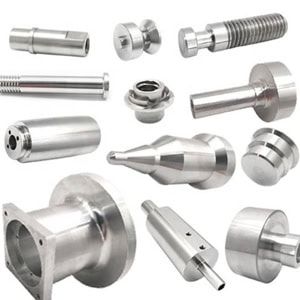
How to Choose a CNC Turning Manufacturer

How to Choose a CNC Turning Manufacturer?

When looking for a CNC turning manufacturer, purchasing teams and engineers usually evaluate much more than machining price. Machining accuracy, prototype lead time, production capacity, material selection, quality inspection, surface finishing, and delivery reliability can all influence the success of a manufacturing project. For shafts, bushings, sleeves, connectors, threaded components, flanges, and other precision turned

How to Choose a CNC Turning Manufacturer? Read More »
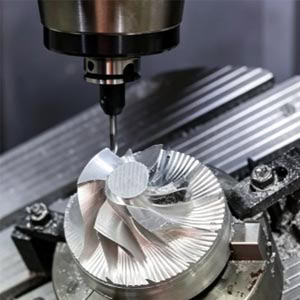
What Are the Key Factors That Cause Overcutting in Five Axis Milling of Impellers

What Are the Key Factors That Cause Overcutting in Five-Axis Milling of Impellers?

Impellers are typical complex-surface components with narrow spaces between blades and significant curvature changes, requiring high levels of tool orientation control and five-axis synchronization accuracy. In actual CNC milling, overcutting is usually caused by a combination of factors, including toolpath planning, tool dimensions, machine movement, stock allowance, and workholding conditions. Once overcutting occurs at the

What Are the Key Factors That Cause Overcutting in Five-Axis Milling of Impellers? Read More »

What Are the Characteristics of CNC Machining Copper Parts

What Are the Characteristics of CNC Machining Copper Parts? What Should You Consider When Machining Conductive Components?

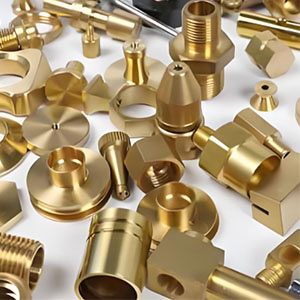
Copper has excellent electrical conductivity, thermal conductivity, ductility, and corrosion resistance, making it widely used for electrical connectors, terminals, busbars, heat dissipation components, electronic components, and industrial equipment. As the electronics and precision manufacturing industries continue to develop, copper components are required to achieve higher dimensional accuracy, better surface quality, and reliable electrical performance. CNC

What Are the Characteristics of CNC Machining Copper Parts? What Should You Consider When Machining Conductive Components? Read More »

What Is Thermal Deformation in Metal Machining1

What Is Thermal Deformation in Metal Machining? Why Does Temperature Affect Machining Accuracy?

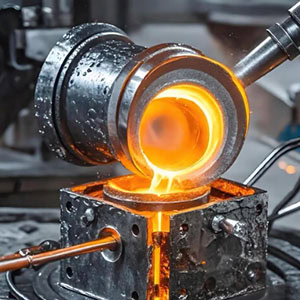
Temperature is one of the important factors affecting precision in CNC metal machining. Cutting speed, feed rate, friction between the tool and workpiece, and continuous machine operation all generate heat. When this heat cannot be dissipated effectively, the machine tool, cutting tool, and metal workpiece may experience different levels of thermal deformation, affecting dimensions, tolerances,

What Is Thermal Deformation in Metal Machining? Why Does Temperature Affect Machining Accuracy? Read More »

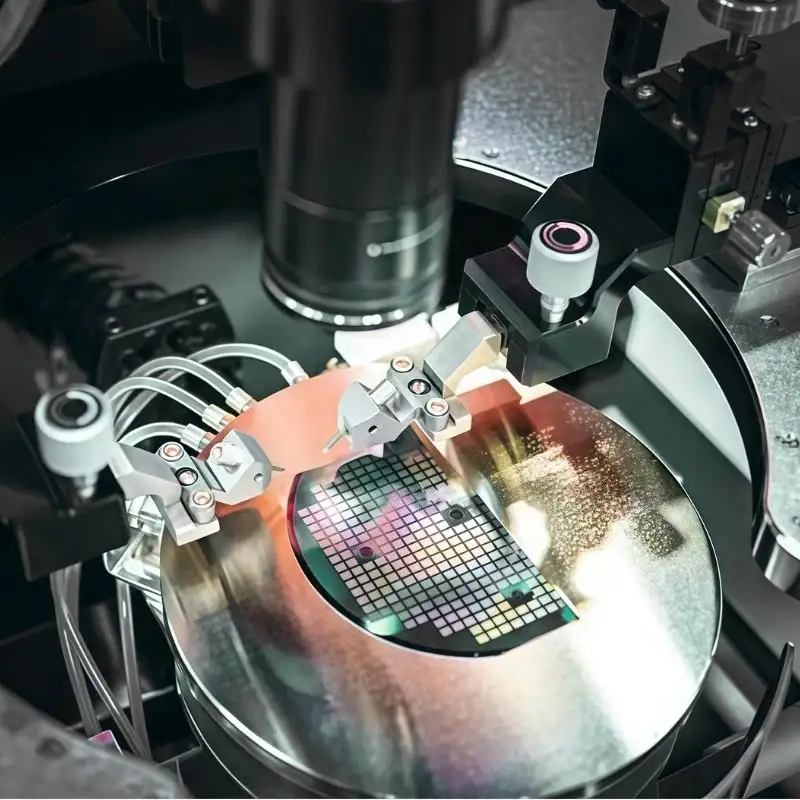
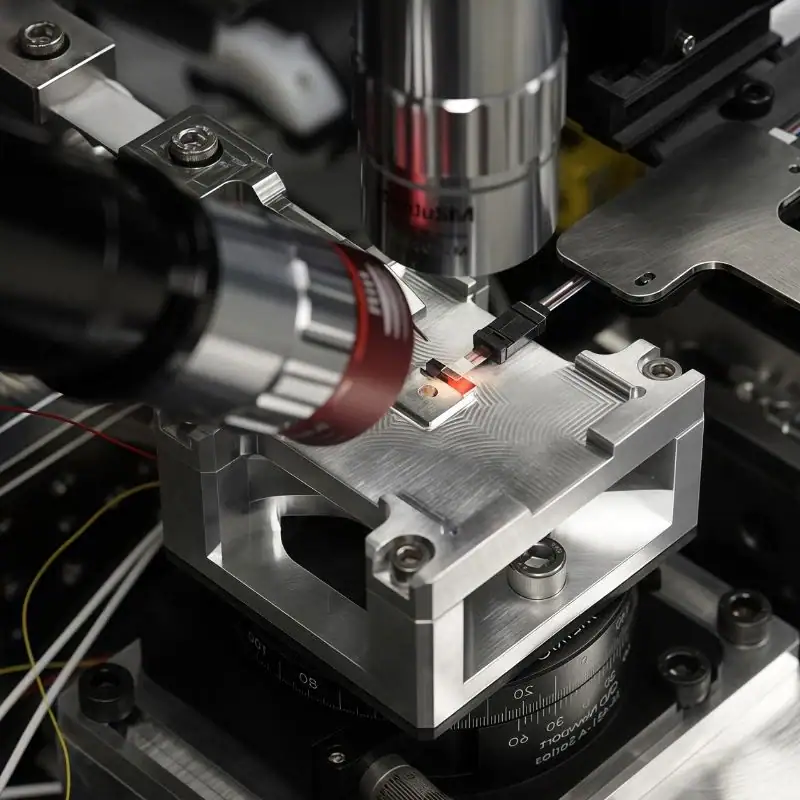
The equipment is performing precision processing on silicon wafers for semiconductor manufacturing

What Is Semiconductor Manufacturing? Process And Steps

Semiconductor manufacturing is the process of turning high-purity semiconductor materials into functional chips through a sequence of wafer preparation, thin-film formation, photolithography, etching, doping, metallization, testing, dicing, packaging, and final inspection. Unlike conventional manufacturing, semiconductor fabrication builds microscopic electrical structures layer by layer under tightly controlled cleanroom conditions. This guide explains what is semiconductor manufacturing,

What Is Semiconductor Manufacturing? Process And Steps Read More »

How to Ensure Dimensional Consistency When Machining Large Metal Parts1

How to Ensure Dimensional Consistency When Machining Large Metal Parts?

Large metal parts are widely used in aerospace, energy equipment, construction machinery, rail transportation, and industrial equipment. Compared with standard-sized components, large metal parts are more susceptible to thermal deformation, residual stress, clamping deformation, machine tool errors, and tool wear during CNC metal machining. As the overall size of a workpiece increases, even a small

How to Ensure Dimensional Consistency When Machining Large Metal Parts? Read More »

How Can You Get an Accurate Quote for CNC Plastic Machining

How Can You Get an Accurate Quote for CNC Plastic Machining?

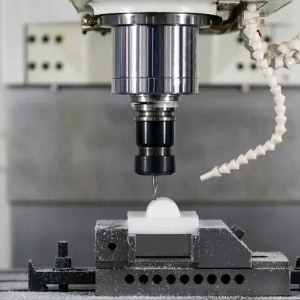
CNC plastic machining is commonly used for product prototyping, small-batch parts, equipment components, and precision structural parts. Compared with injection molding, CNC machining can directly cut plastic sheets, rods, or blocks without the need to manufacture molds in advance, making it suitable for projects with small quantities, adjustable dimensions, or products still in the development

How Can You Get an Accurate Quote for CNC Plastic Machining? Read More »

Metal cutting and machining site.

Is CAM Template-Based Programming a Shortcut to Efficiency or a Source of Hidden Risks?

In CNC milling production, programming time often affects delivery schedules. For parts with similar structures and relatively large production volumes, CAM template-based programming can reuse proven toolpaths, cutting tools, and machining parameters, reducing repetitive programming work. However, different materials, dimensions, stock allowances, and machine conditions can all change the actual cutting conditions, so templates cannot

Is CAM Template-Based Programming a Shortcut to Efficiency or a Source of Hidden Risks? Read More »

CNC Precision Turning Complete Guide

CNC Precision Turning Complete Guide

As a core process in modern mechanical manufacturing, CNC turning bears the key responsibility of producing high-precision shafts, discs, and complex rotary components. With increasingly stringent tolerance requirements across the aerospace, medical device, and new energy vehicle industries, mastering systematic cutting parameter configuration, tool geometry selection, and challenging workpiece processing control techniques is essential for

CNC Precision Turning Complete Guide Read More »

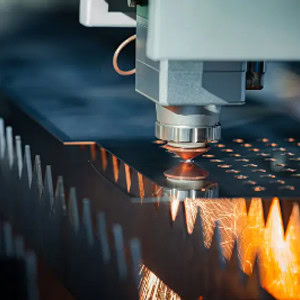
CNC laser cutting of metal

What is precision machining used for?

Many people hear the term “precision machining” and assume it is something reserved for advanced factories or highly specialized industries. In reality, it is already used in many everyday manufacturing sectors. From metal components inside automobiles to small structural parts in medical equipment, aerospace systems, and semiconductor machinery, precision machining plays an important role in

What is precision machining used for? Read More »

CNC milling processing semiconductor precision components

What Are Semiconductors? Materials, Types, And Applications

Semiconductors are materials whose electrical conductivity can be controlled between that of conductors and insulators. Silicon is the most widely used semiconductor material, but germanium, silicon carbide, gallium nitride, gallium arsenide, and other compounds are also important. By controlling electrons and holes through doping and device structures, semiconductors can switch, amplify, store, sense, and process

What Are Semiconductors? Materials, Types, And Applications Read More »

Scroll to Top
Simplified Table

To ensure successful upload, please compress all files into one .zip or .rar file before uploading.
Upload CAD files (.igs | .x_t | .prt | .sldprt | .CATPart | .stp | .step | .pdf).