Tirapid

How Are Small Precision Metal Parts Machined

How Are Small Precision Metal Parts Machined?

Small precision metal parts are widely used in medical devices, aerospace, electronics, automotive components, robotics, optical equipment, and precision machinery. Although these components are small in size, they often require tight dimensional tolerances, accurate positioning, excellent surface finish, and consistent production quality. So, how are small precision metal parts machined? The answer depends on the

How Are Small Precision Metal Parts Machined? Read More »
What Are the Challenges of Deep Hole Metal Machining

What Are the Challenges of Deep-Hole Metal Machining? Common Problems and Process Recommendations

Deep-hole metal machining is an important process in precision manufacturing and is widely used for automotive components, hydraulic equipment, molds, aerospace parts, medical devices, and industrial machinery. Compared with conventional hole machining, deep holes have a relatively large depth-to-diameter ratio, making them more difficult to manufacture accurately. During deep-hole machining, manufacturers may encounter problems such

What Are the Challenges of Deep-Hole Metal Machining? Common Problems and Process Recommendations Read More »

Are Thin Wall Metal Parts Prone to Deformation During Machining

Are Thin-Wall Metal Parts Prone to Deformation During Machining?

Thin-wall metal parts are widely used in aerospace, automotive, medical equipment, electronics, robotics, and precision machinery. Their lightweight design helps reduce material usage and overall component weight. However, compared with conventional parts, thin-wall components are more likely to deform during CNC machining because they have lower structural rigidity and are more sensitive to cutting forces,

Are Thin-Wall Metal Parts Prone to Deformation During Machining? Read More »

How to Machine HDPE Using a CNC Machine

How to Machine HDPE Using a CNC Machine?

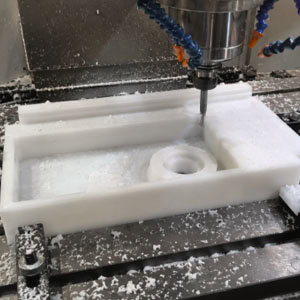
HDPE (High-Density Polyethylene) is a common thermoplastic with good impact resistance, chemical resistance, and low water absorption. It is therefore commonly used for mechanical equipment components, wear-resistant parts, guides, backing plates, protective panels, container components, and various non-metal structural parts. For HDPE parts that require rapid prototyping or small-batch production, CNC machining can directly perform

How to Machine HDPE Using a CNC Machine? Read More »

CNC Turning Precision Control and Cost Optimization Guide

CNC Turning Precision Control and Cost Optimization Guide

CNC turning plays a central role in mechanical manufacturing. Balancing high-precision machining with single-piece cost control is a primary focus for engineers and procurement decision-makers across industries. Minor adjustments in technical parameters directly dictate the final surface roughness, dimensional tolerances, and production cycle times of components. Factors Influencing CNC Turning Precision The actual machining precision

CNC Turning Precision Control and Cost Optimization Guide Read More »

CNC machine tool precision machining

What is precision machining for 3D printing molds?

3D printing has made mold prototyping much faster. A complex mold that once required considerable preparation can now be produced quickly for evaluation. However, a printed mold is not necessarily ready for use immediately after printing. Surface layer lines, hole position deviations, flatness of mounting surfaces, and cavity dimensions can all affect assembly and product

What is precision machining for 3D printing molds? Read More »

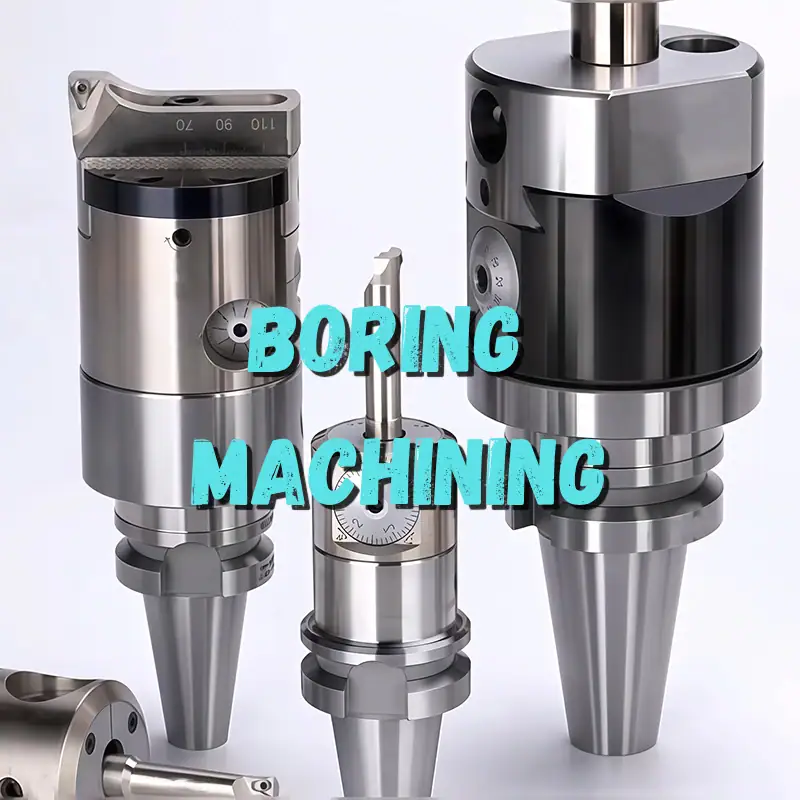
Boring machining tools used for precision CNC hole machining

Boring Machining: Process, Tolerances & Applications

Boring machining is a precision cutting process used to enlarge and correct an existing hole. Unlike drilling, which creates the initial hole, boring improves diameter, roundness, straightness, alignment, and internal surface quality when the original hole cannot meet the final functional requirements. This guide explains the boring machining process, common methods and tools, hole tolerances,

Boring Machining: Process, Tolerances & Applications Read More »

Why Are Complex Metal Parts Suitable for Multi Axis Machining1

Why Are Complex Metal Parts Suitable for Multi-Axis Machining?

As industries such as aerospace, automotive, medical equipment, robotics, and precision machinery continue to develop, metal parts are becoming increasingly complex. Traditional 3-axis CNC machining can meet the requirements of many standard components, but it may face limitations when machining curved surfaces, angled holes, deep cavities, thin walls, and multi-angle structures. Multi-axis CNC machining allows

Why Are Complex Metal Parts Suitable for Multi-Axis Machining? Read More »

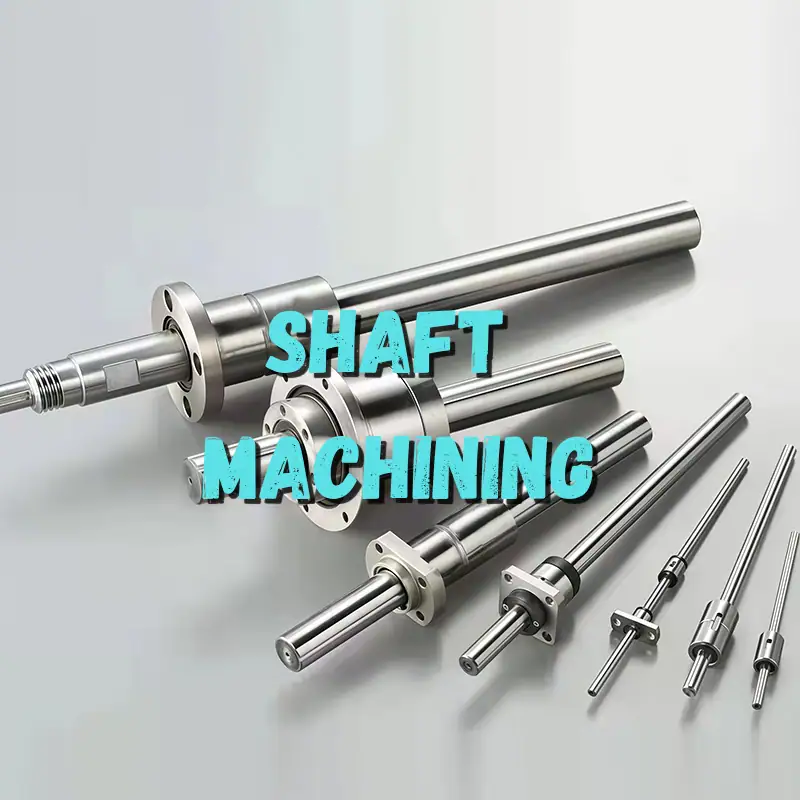
Precision shaft machining for custom CNC machined shaft components

Shaft Machining: CNC Process, Tolerances & Materials

Shaft machining is the precision manufacturing of cylindrical components that transmit torque, support rotating elements, or provide controlled motion within mechanical systems. Although a shaft may appear simple, its performance often depends on the relationship between several critical features, including diameters, bearing seats, shoulders, threads, keyways, runout, straightness, and surface finish. CNC turning normally creates

Shaft Machining: CNC Process, Tolerances & Materials Read More »

Drilling process of CNC machining center.

What Conditions Are Required for MQL to Replace Traditional Flood Cooling?

During CNC milling, the cooling method affects not only tool life but also machining efficiency, surface quality, and production costs. Traditional flood cooling can continuously remove a large amount of cutting heat, but it also involves high coolant consumption, high maintenance costs, and a considerable post-processing burden. Minimum Quantity Lubrication (MQL) delivers a small amount

What Conditions Are Required for MQL to Replace Traditional Flood Cooling? Read More »

Precision Control and Efficiency Optimization Strategies in CNC Turning

Precision Control and Efficiency Optimization Strategies in CNC Turning

CNC turning is a core process in precision mechanical manufacturing, playing a decisive role in machining cylindrical components. Facing increasingly strict customer tolerances and compressed production schedules, optimizing cutting efficiency while ensuring dimensional accuracy and surface finish remains a top technical priority for process engineers and machine operators. Dimensional Tolerance Control in Precision CNC Turning

Precision Control and Efficiency Optimization Strategies in CNC Turning Read More »

Scroll to Top
Simplified Table

To ensure successful upload, please compress all files into one .zip or .rar file before uploading.
Upload CAD files (.igs | .x_t | .prt | .sldprt | .CATPart | .stp | .step | .pdf).