Tirapid

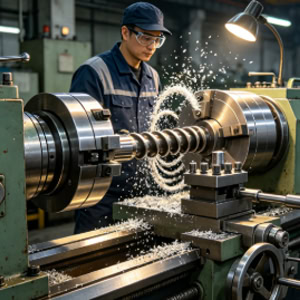
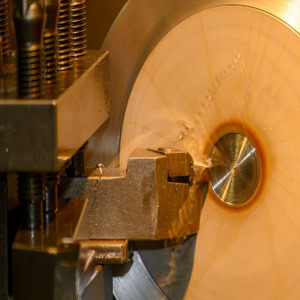
Turning tool angle diagram

How to Choose Turning Tool Angles?

During turning operations, tool angles directly affect cutting force, chip evacuation, surface finish, and tool life. Different materials, cutting methods, and precision requirements demand different tool angle configurations. Improper angle selection can lead to accelerated tool wear, cutting vibration, workpiece heat buildup, or poor surface finish. Therefore, selecting appropriate tool angles is essential for stable

How to Choose Turning Tool Angles? Read More »
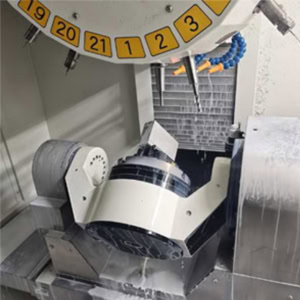
Five-axis CNC machining

How to Improve Dimensional Stability in Precision Machining?

In precision machining, achieving the required dimensions once is not the real challenge—the real difficulty is maintaining those dimensions consistently over time. Many parts pass first-piece inspection perfectly, but dimensional drift, fluctuation, or tolerance issues appear during mass production. This is a typical dimensional stability problem. It affects not only production yield, but also assembly

How to Improve Dimensional Stability in Precision Machining? Read More »

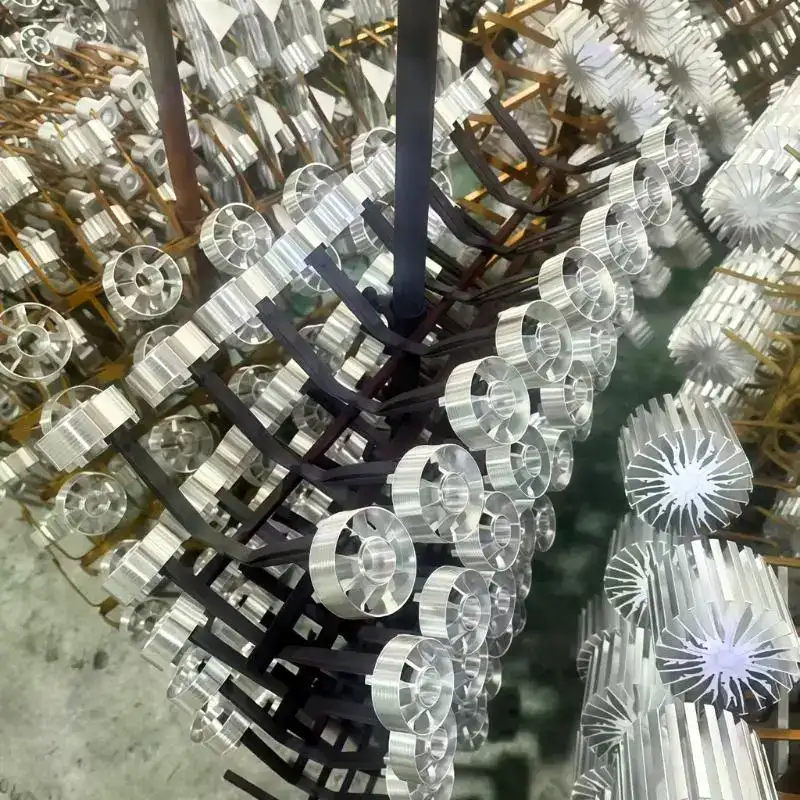
Hard coat anodized aluminum components arranged on a finishing rack

Hard Coat: A Practical Guide

Hard coat is widely used when aluminum parts need better wear resistance, higher surface hardness, and longer service life. Compared with standard anodizing, it creates a thicker and more durable oxide layer, making it a practical surface treatment for parts used in demanding working conditions. This guide explains what hard coat is, how it works,

Hard Coat: A Practical Guide Read More »

CNC plastic machining special drill bit and workpiece

Considerations for Tool Selection in CNC Plastic Machining

In CNC plastic machining, tool selection often directly determines the upper limit of machining quality. Compared with metal machining, plastic materials are more “sensitive”: they are prone to heat, compression, dull tools, and are more likely to develop burrs, stringing, burning edges, or dimensional deviations due to inappropriate tooling. Therefore, cutting tools are not simply

Considerations for Tool Selection in CNC Plastic Machining Read More »

What Are the Difficulties in High Performance Plastic CNC Machining

What Are the Difficulties in High-Performance Plastic CNC Machining?

High-performance plastic CNC machining may look similar to ordinary plastic processing, but in practice, it is often much more difficult. The reason is not only that the materials are more expensive, but also that during cutting these materials are more prone to deformation, burrs, dimensional drift, and unstable surface quality. What Is High-Performance Plastic CNC

What Are the Difficulties in High-Performance Plastic CNC Machining? Read More »

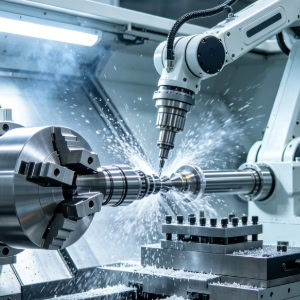
Intelligent car cutting technology processing picture

What Are the Applications of Intelligent Turning Technology?

Intelligent turning technology is an advanced manufacturing method built on CNC turning by integrating sensor monitoring, data analysis, automatic control, and intelligent algorithms. It collects real-time data such as cutting force, vibration, temperature, and tool condition during machining, and dynamically adjusts machining parameters to achieve a more stable and efficient process. In modern manufacturing systems,

What Are the Applications of Intelligent Turning Technology? Read More »

Car polishing technology and polishing technology category

What Is the Difference Between Turning Technology and Grinding Technology?

In the field of mechanical machining, turning and grinding are two widely used processing methods, commonly applied to shaft parts, precision fitting components, and high-accuracy surface finishing. These two processes differ significantly in machining principles, accuracy performance, efficiency levels, and application scenarios. In practical production, the selection is usually based on part requirements, material properties,

What Is the Difference Between Turning Technology and Grinding Technology? Read More »

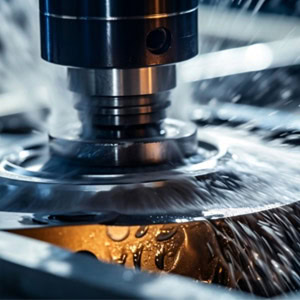
Milling process images

How can CNC milling improve product consistency?

In the modern manufacturing industry’s continuous pursuit of higher efficiency and precision, product consistency has become a crucial standard for measuring production quality. For industries such as aerospace, medical devices, automotive parts, and electronic equipment, the stability of part dimensions, structure, and surface quality directly impacts product performance and subsequent assembly results. CNC milling technology,

How can CNC milling improve product consistency? Read More »

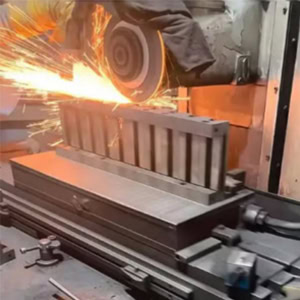
Surface grinder for grinding

Why Does Precision Machining Easily Cause Deformation?

In precision machining, deformation is one of the most common and difficult problems to eliminate completely. Even when high-precision equipment is used, parts may still warp, spring back, or deviate locally after machining. This is not due to a lack of advanced technology, but rather the combined effects of material properties, applied forces, and thermal

Why Does Precision Machining Easily Cause Deformation? Read More »

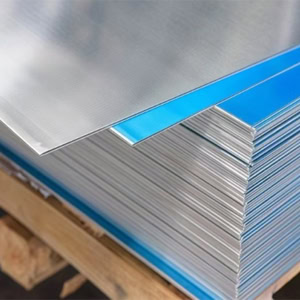
Industrial aluminum alloy sheets

Can Precision Machining Produce Ultra-Thin Parts?

Ultra-thin parts are increasingly used in electronics, medical devices, optical systems, and high-end industrial equipment—such as micro brackets, thin-wall structural components, and flexible connectors. These parts are characterized by extremely small thickness while demanding very high dimensional accuracy, flatness, and structural stability. Many people assume such parts are difficult or even impossible to machine. In

Can Precision Machining Produce Ultra-Thin Parts? Read More »

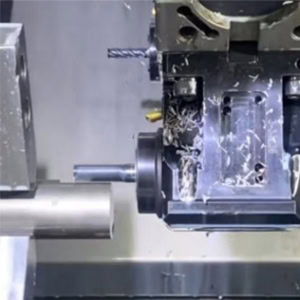
CNC turning and milling composite machine tool

The Most Cost-Effective Ways to Reduce Precision Machining Costs

In precision machining, cost differences can be surprisingly large. The same drawing may receive completely different quotes from different manufacturers. Many assume this is caused by equipment differences, but in reality, the main drivers are design rationality, process planning, material selection, and production management. With systematic optimization instead of isolated cost-cutting, precision machining can significantly

The Most Cost-Effective Ways to Reduce Precision Machining Costs Read More »

Scroll to Top
Simplified Table

To ensure successful upload, please compress all files into one .zip or .rar file before uploading.
Upload CAD files (.igs | .x_t | .prt | .sldprt | .CATPart | .stp | .step | .pdf).