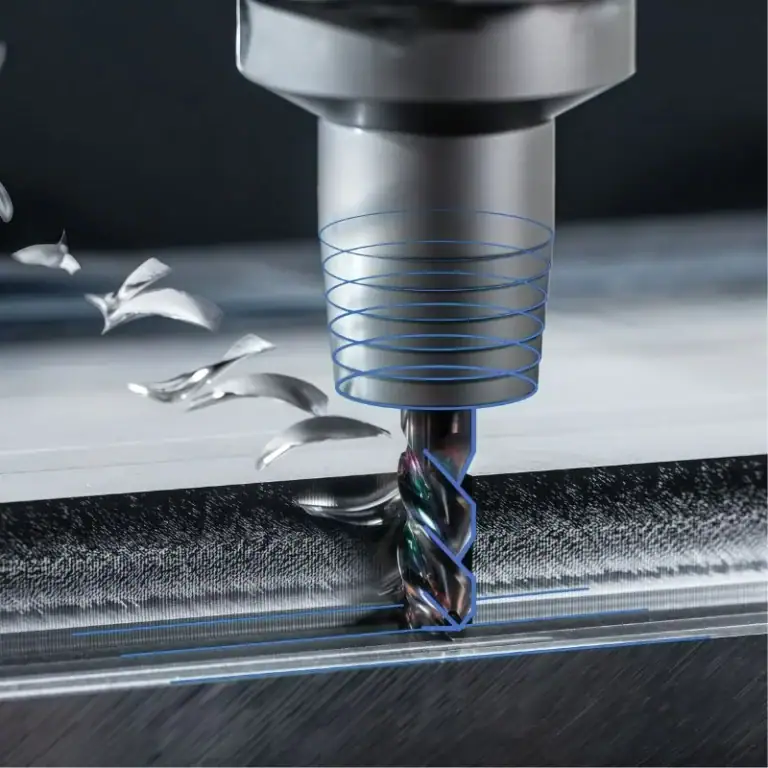
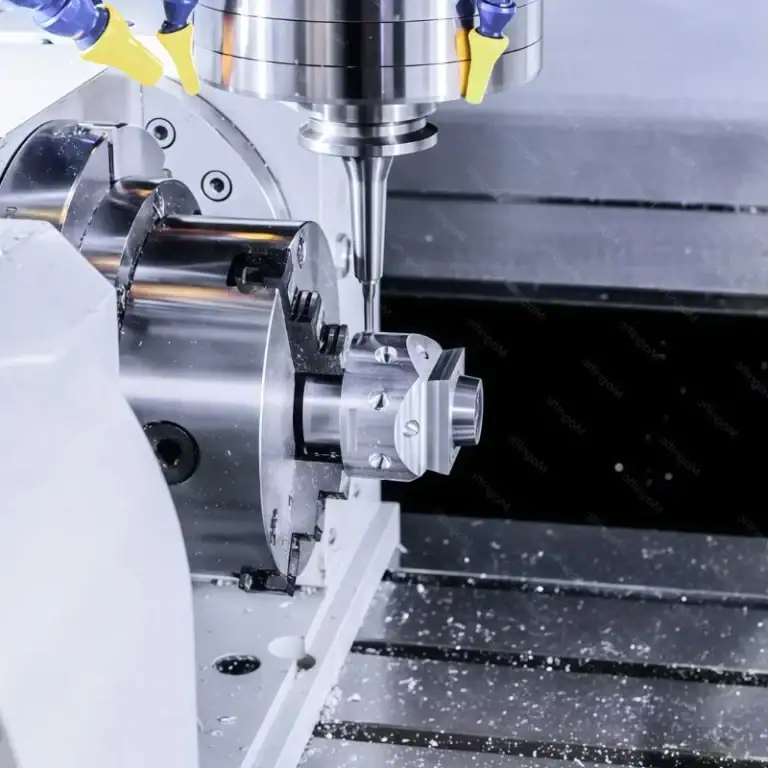
In the field of mechanical machining, turning and grinding are two widely used processing methods, commonly applied to shaft parts, precision fitting components, and high-accuracy surface finishing. These two processes differ significantly in machining principles, accuracy performance, efficiency levels, and application scenarios. In practical production, the selection is usually based on part requirements, material properties, and cost control rather than judging which process is more advanced.
Turning belongs to forming cutting machining, where a cutting tool removes material continuously from a rotating workpiece to form external diameters, end faces, or threads. Grinding belongs to ultra-precision machining, where a high-speed rotating grinding wheel removes material in very small increments to achieve higher surface quality and dimensional accuracy. In most manufacturing systems, the two processes complement each other and work together in different stages of production.
Fundamental Differences in Machining Principles
Turning and grinding differ completely in how material is removed. This difference determines their behavior in cutting energy distribution, machining rhythm, and surface formation mechanisms. Turning relies on macroscopic shear cutting, while grinding relies on microscopic cutting by a large number of abrasive grains.
Turning Removes Material Through Direct Cutting
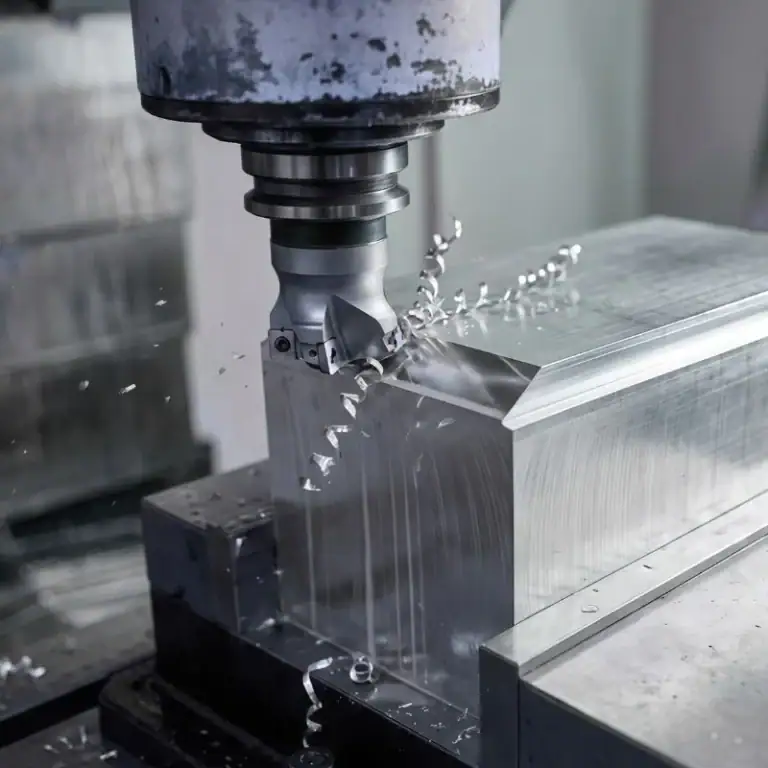
In turning operations, the workpiece rotates at high speed while the tool feeds into the material at a controlled rate. Material is removed through a shearing action, and the cutting process is continuous with relatively concentrated cutting forces. This requires strong tool sharpness and machine rigidity.
Characteristics of turning include:
- Continuous and stable cutting process
- Relatively large material removal per pass
- Strong dependence on tool condition
- Suitable for medium-precision machining
- High machining efficiency
Turning is mainly used for rapid shaping of workpiece geometry and is typically positioned in the early stages of machining.
Grinding Removes Material Through Abrasive Micro-Cutting
Grinding uses countless abrasive grains on the surface of a grinding wheel to perform micro-scale cutting. Each grain removes only a tiny amount of material, but the collective effect enables extremely precise machining. The high-speed rotation of the grinding wheel creates a dense contact frequency, making the process closer to surface refinement.
Characteristics of grinding include:
- Extremely small material removal per contact
- Highly refined machining process
- Concentrated heat generation with lower cutting force
- Higher surface quality
- Suitable for finishing and ultra-finishing
Grinding is mainly used as a final processing step for dimensional correction and surface quality improvement.
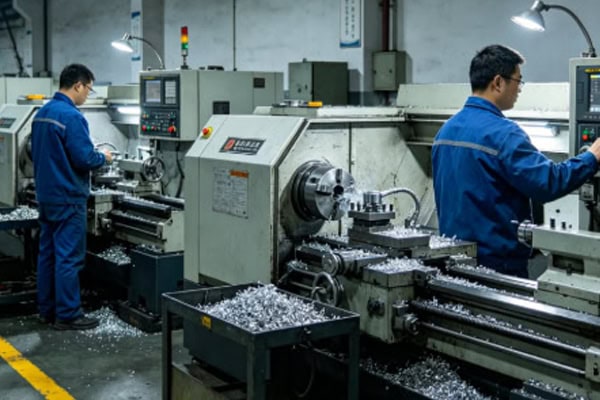
Differences in Accuracy and Surface Quality
In terms of machining accuracy, grinding is generally superior to turning. However, modern CNC turning can also achieve relatively high precision under optimized conditions. The differences mainly lie in stability, surface roughness control, and thermal deformation resistance.
Turning Accuracy Meets General Manufacturing Requirements
Turning can meet the dimensional requirements of most mechanical parts, especially shaft components. With CNC control over feed rate, spindle speed, and tool path, stable batch consistency can be achieved.
Turning accuracy characteristics include:
- Medium-level dimensional accuracy
- Good batch consistency
- High requirement for machine rigidity
- Noticeable tool wear influence
- Sensitivity to cutting parameters
With optimized process conditions, turning can reach near-finish levels but still has limitations in surface texture control.
Grinding Achieves High-Precision Surface Control
Grinding provides higher dimensional accuracy and lower surface roughness, making it essential in precision manufacturing. The random distribution of abrasive grains produces a more uniform microscopic surface structure.
Advantages of grinding include:
- Higher dimensional accuracy
- Lower surface roughness
- Ability to correct heat treatment deformation
- Suitable for hardened materials
- Strong process stability
- Capability of ultra-precision finishing
It is widely used in bearings, hydraulic components, and precision mating surfaces.
Differences in Efficiency and Production Cycle
Turning has a clear advantage in efficiency, while grinding focuses more on stable output and quality consistency. Their production cycle characteristics differ significantly.
Turning Is More Suitable for High-Volume Production
Turning removes material quickly through larger cutting depths, resulting in shorter machining cycles. It is highly effective in mass production environments, especially automated production lines.
Efficiency advantages include:
- Short single-part machining time
- High material removal rate
- Suitable for automated production lines
- Flexible process switching
- Suitable for rough machining stages
- Continuous machining capability
Turning plays a key role in increasing production capacity.
Grinding Has Lower Efficiency but Higher Stability
Grinding removes material in very small increments, leading to longer machining time but higher consistency. Its strength lies in precision stability rather than speed.
Grinding characteristics include:
- Longer machining time per part
- Minimal material removal per pass
- High process stability
- Lower operator dependency
- Suitable for high-precision requirements
- Strong dimensional consistency
Grinding is mainly used for final finishing rather than bulk material removal.
Differences in Material Applicability
Material properties such as hardness, toughness, and thermal conductivity directly influence the choice between turning and grinding.
Turning Has a Wider Application Range
Turning can be applied to a wide range of metals, including carbon steel, alloy steel, aluminum alloys, and some stainless steels. Its strong adaptability makes it widely used in general manufacturing.
Common applications include:
- Medium and low hardness materials
- Shaft and disk components
- Rough and semi-finishing operations
- Mass production parts
- Continuous cutting operations
- Automated manufacturing systems
Turning is a fundamental machining capability in most factories.
Grinding Is Better for High-Hardness Materials
Grinding can process heat-treated and hardened materials, making it essential for high-hardness components. The hardness of abrasive grains allows it to handle materials that turning cannot efficiently process.
Typical applications include:
- Hardened steel machining
- High-hardness alloys
- Precision bearing components
- High-accuracy mating surfaces
- Surface repair processes
- Dimensional fine adjustment
Grinding is irreplaceable in high-hardness precision finishing.
Differences in Cost and Equipment Requirements
Cost structure and equipment complexity also differ significantly between the two processes, affecting production planning and investment decisions.
Turning Equipment Has Lower Cost
Turning relies mainly on lathes and cutting tools, resulting in relatively low equipment investment and manageable maintenance costs.
Cost characteristics include:
- Lower equipment investment
- Controllable tool cost
- Simple maintenance
- Suitable for large-scale production
- Strong automation scalability
- Lower operational complexity
This makes turning widely used across manufacturing industries.
Grinding Equipment Has Higher Cost
Grinding machines are more complex and require higher precision control, leading to higher investment and maintenance costs.
Characteristics include:
- High precision machine requirements
- Higher abrasive wheel consumption cost
- Strict cooling system requirements
- Longer setup and adjustment time
- Higher skill requirements
- More demanding maintenance
Grinding is usually used in high-value, high-precision production stages.
The Two Processes Are Often Used Together
In real manufacturing workflows, turning and grinding are not competing technologies but complementary processes. Turning focuses on efficient material removal and basic shaping, while grinding focuses on final dimensional accuracy and surface quality improvement.
A typical process chain includes:
- Turning for rough machining
- Semi-finishing to control allowance
- Grinding for final precision correction
- Surface quality optimization
This combined approach balances efficiency and quality, enabling stable and efficient production suitable for modern precision manufacturing industries such as aerospace, automotive, and precision machinery.