High-performance plastic CNC machining may look similar to ordinary plastic processing, but in practice, it is often much more difficult. The reason is not only that the materials are more expensive, but also that during cutting these materials are more prone to deformation, burrs, dimensional drift, and unstable surface quality.
What Is High-Performance Plastic CNC Machining?
Why is high-performance plastic difficult to machine?
High-performance plastics generally refer to engineering or specialty plastics such as PEEK, PPS, PI, PEI, PTFE, etc. These materials have characteristics such as high temperature resistance, corrosion resistance, good insulation, and high strength. They are widely used in medical, semiconductor, automotive, aerospace, and precision equipment industries.However, these materials also have obvious machining characteristics: some are highly tough and tend to produce stringing during cutting; some are thermally sensitive and soften as soon as the tool heats up; some have insufficient rigidity and deform easily when clamped with slight force. In other words, the stronger their performance, the more precise control they require.
Where do the difficulties come from?
The core difficulties in high-performance plastic CNC machining usually come from three aspects:
First, the risk of thermal deformation of the material itself;
Second, springback and stress release after cutting;
Third, the difficulty of achieving both dimensional accuracy and surface quality at the same time.
Therefore, this type of machining is not simply about “cutting it out,” but about balancing material properties, tool parameters, fixturing methods, and process rhythm.
How to Perform High-Performance Plastic CNC Machining?
Material evaluation before machining
Before starting the machine, it is necessary to confirm the material grade, thickness, internal stress, and application purpose. Different plastics require completely different temperature, spindle speed, and feed settings.For example, PEEK is suitable for high-precision structural parts but requires strict thermal control; PTFE has a low friction coefficient but tends to have dimensional instability; PEI is suitable for electrical and high-temperature environments but requires tighter edge control during machining.
More careful programming and fixturing
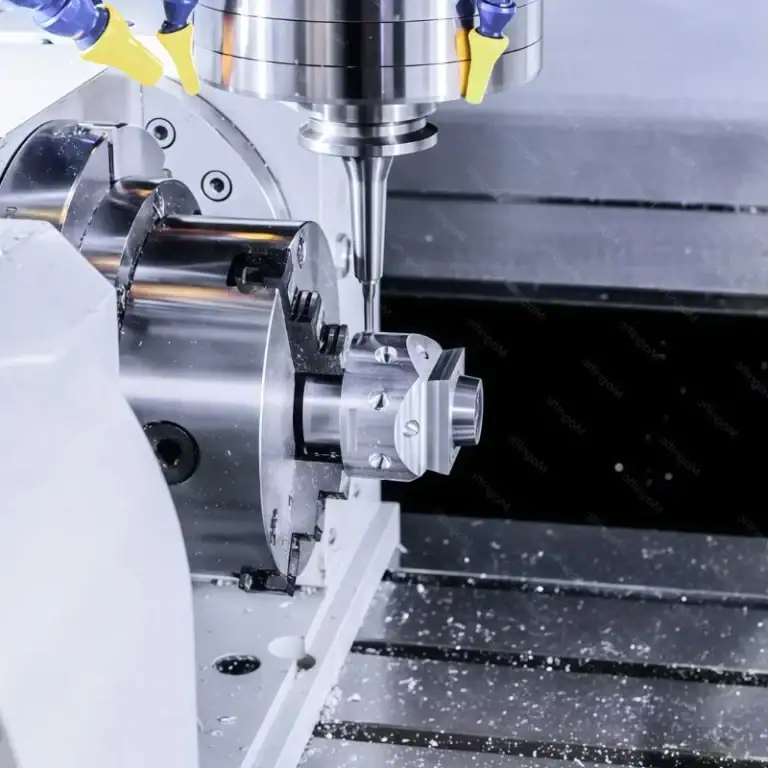
Unlike metals, high-performance plastics cannot “resist force.” If the clamping pressure is too high, the part may appear fine during machining but warp after being released.Therefore, clamping methods should be as uniform as possible. In some cases, vacuum fixturing, soft jaws, or dedicated fixtures should be used. In programming, deep single-pass cutting should be avoided. Layered machining and stable toolpaths should be used to reduce localized heat buildup.
Separate control of roughing, finishing, and inspection
The machining process is generally divided into three stages: roughing, semi-finishing, and finishing. Roughing focuses on efficiency, while finishing focuses on stability.Each stage should be paired with inspection, especially for critical dimensions, hole positions, tolerances, and assembly surfaces. The common issue with high-performance plastics is not “inability to machine the part,” but “it passes inspection initially, but changes after a period of time.”Therefore, inspection should not only be done at completion, but also after material relaxation and stabilization.
How to Properly Machine High-Performance Plastics
Heat control is the top priority
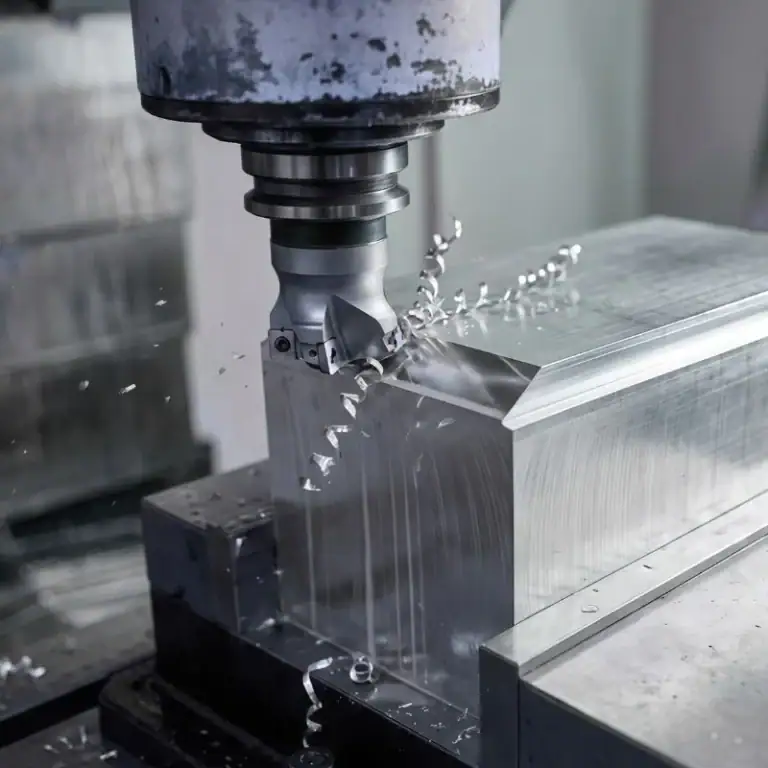
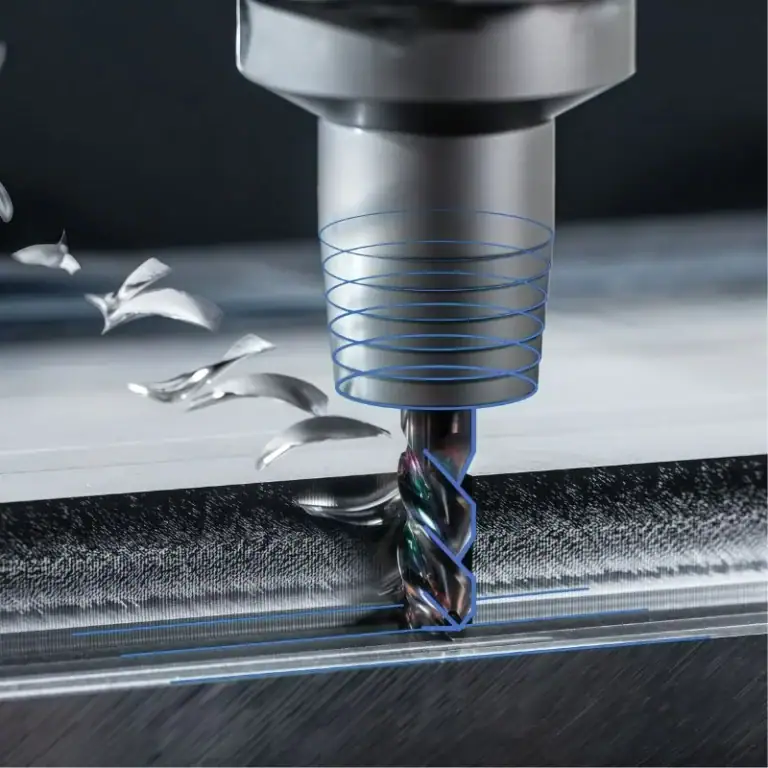
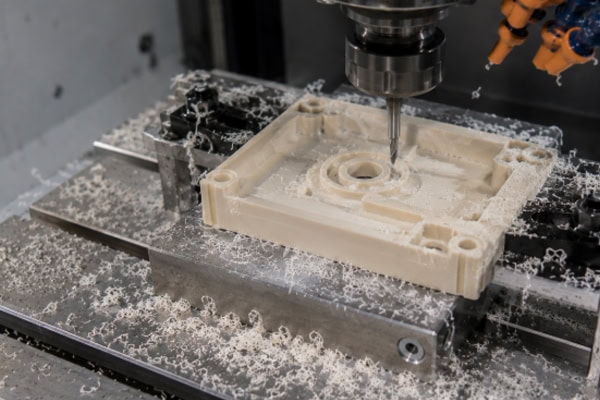
Plastics are highly sensitive to heat. Excessive cutting heat can cause melting edges, stringing, whitening, dimensional deviation, and even tool marks that are difficult to correct.Therefore, tools must remain sharp, and geometries suitable for plastics should be used. Cutting parameters should avoid both “high-speed dry rubbing” and “low-speed friction.” Chip evacuation must also be properly controlled to reduce secondary friction from chips.
Tool selection determines surface quality
High-performance plastic machining requires sharp tools with smooth chip removal and light cutting action.If the cutting edge becomes dull, the material will not simply become “harder to cut” like metal. Instead, it will directly cause burrs, stringing, localized heat buildup, and edge collapse. Therefore, tool life management is more important than in ordinary plastic machining. Tools should not be used until severe wear occurs.
Dimensional stability relies on process compensation
A typical issue with high-performance plastics is: “it looks correct during machining, but deviates after cooling.”These materials exhibit thermal expansion, moisture absorption, and internal stress release. Therefore, experienced machinists often leave compensation allowances in the process and improve final accuracy through staged cooling, stabilization holding, and re-measurement correction.For high-precision parts, process compensation is almost essential.
Machining Difficulties of Different Materials
PEEK
PEEK has high strength and high temperature resistance and is suitable for high-end structural parts. However, it is prone to dimensional changes due to heat accumulation during machining. It requires extremely high tool sharpness and cutting stability.
PTFE
PTFE is corrosion-resistant and has low friction, but it is relatively soft and easily deformed. Clamping and forming control are difficult. Special attention must be paid to edge collapse and springback during machining.
PEI / PPS
PEI and PPS are widely used in electronics, medical, and industrial fields. However, they are sensitive to cutting heat and surface finish. Small mistakes can affect appearance and assembly accuracy.
Material selection must match application
Not all high-performance plastics are suitable for high-precision parts. If heat resistance is the priority, PEEK and PEI are preferred. If chemical resistance is more important, PPS and PTFE are better options. If insulation and lightweight properties are key, selection must be based on specific working conditions.Proper material selection is often more important than later correction.
Main Difficulties in High-Performance Plastic CNC Machining
Heat control is difficult: Materials are heat-sensitive; unstable cutting may cause melting edges and deformation, affecting dimensions and appearance.
Fixturing is difficult: Limited rigidity means over-clamping causes damage, while under-clamping leads to vibration.
Accuracy retention is difficult: Being correct during machining does not guarantee dimensional stability after cooling.
Surface quality is difficult: Burrs, stringing, whitening, and tool marks easily occur and are harder to correct than in metals.
Material selection is difficult: Different high-performance plastics vary greatly and must be evaluated based on application, temperature, strength, and machinability.
Common Questions
The most common customer question is not “can it be made,” but “can it be produced consistently.”This is the key value of high-performance plastic CNC machining. For precision parts, producing a single qualified piece is not difficult; the challenge is batch consistency, repeatable dimensions, and assembly reliability.Professional machining usually considers materials, tools, fixtures, parameters, and inspection plans from the early stage. This reduces rework, shortens lead time, and improves stability in real-world use.
In conclusion
High-performance plastic CNC machining is not simply “using a more expensive material on a machine.” It is a comprehensive test of process understanding, equipment control, and accumulated experience.If the material is heat-sensitive, cutting heat must be controlled; if the part is prone to deformation, fixturing must be optimized; if high precision is required, inspection and compensation must be refined.This type of machining is not about a single parameter, but about the stability of the entire process. Whoever understands material behavior better is more likely to produce parts with accurate dimensions, good appearance, and stable performance.Therefore, choosing the right material, defining the right process, and controlling every detail are the real keys to stable and successful high-performance plastic CNC machining.