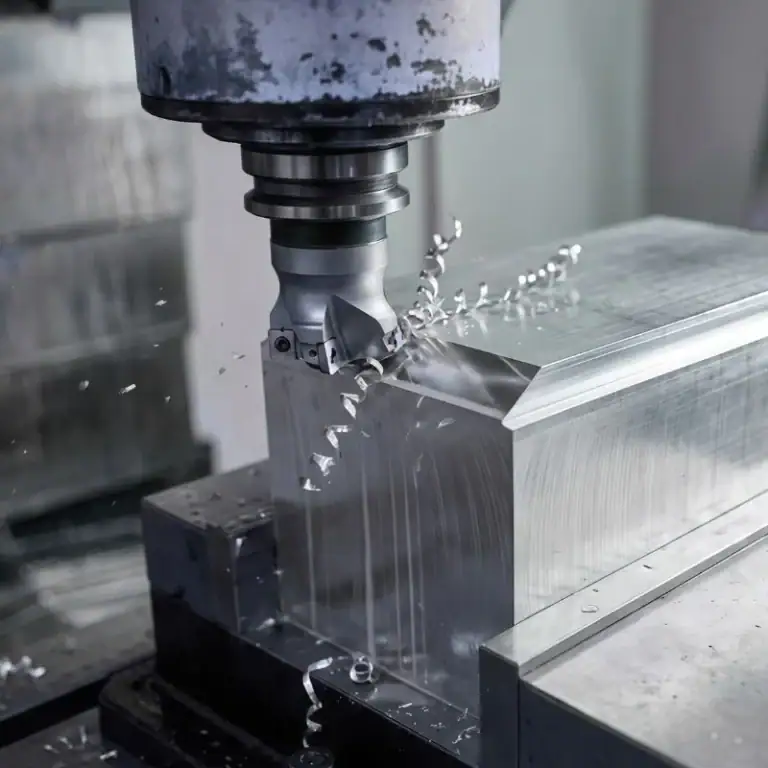
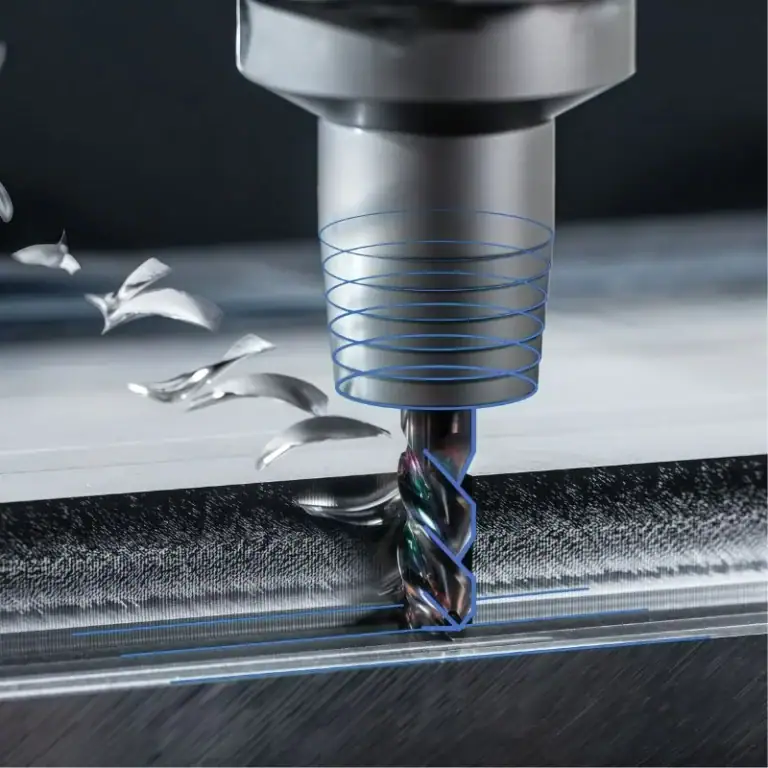
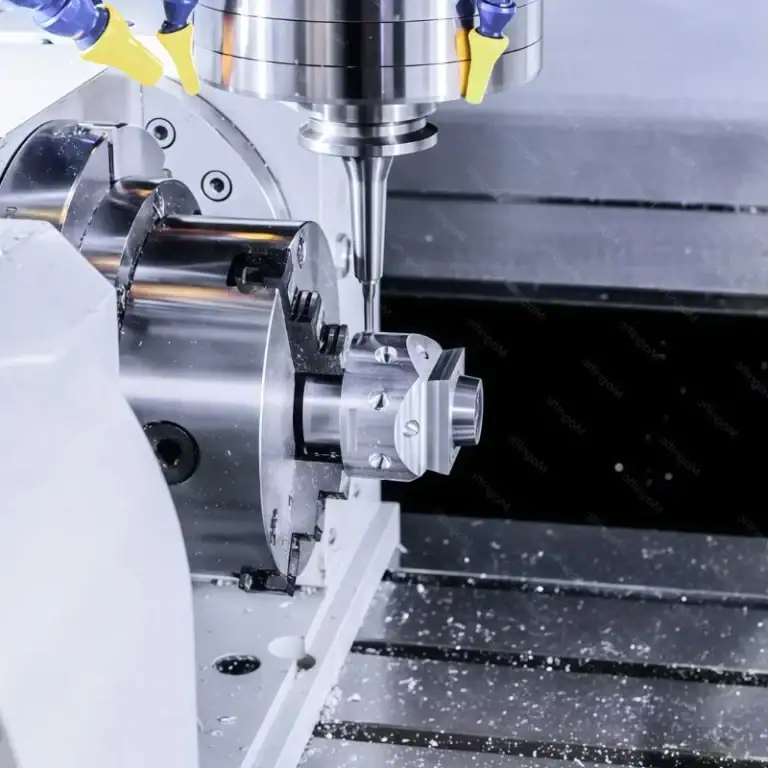
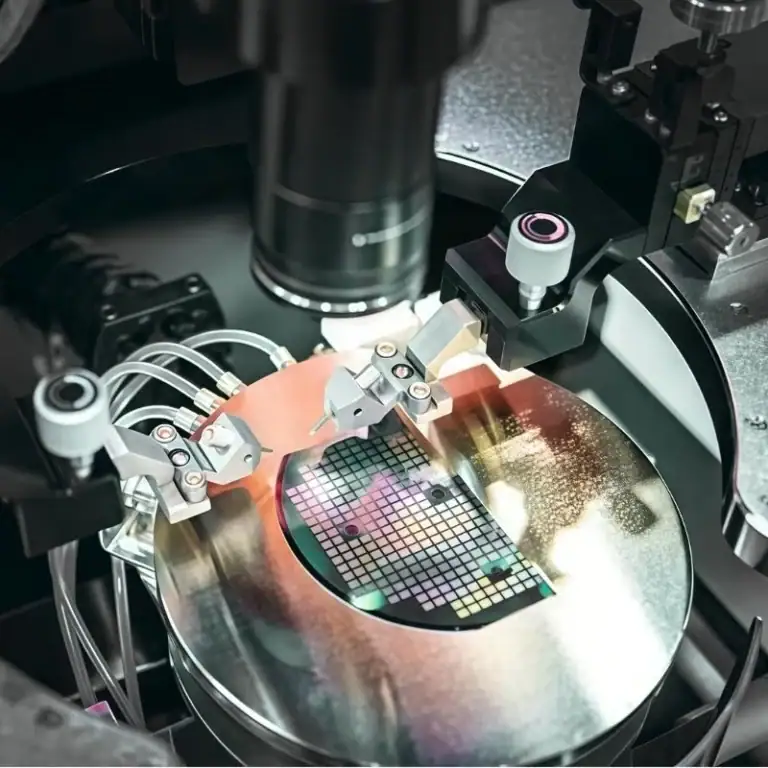
In precision machining, deformation is one of the most common and difficult problems to eliminate completely. Even when high-precision equipment is used, parts may still warp, spring back, or deviate locally after machining. This is not due to a lack of advanced technology, but rather the combined effects of material properties, applied forces, and thermal and stress changes during processing. Understanding where deformation comes from is the key to controlling quality in precision machining.
Material Properties That Lead to Deformation Risk
Before machining even begins, every material already contains internal structure and stress states. Machining disrupts this balance, which often triggers deformation.
Internal stress release causes shape changes
Materials often retain uneven internal stress from rolling, casting, or previous manufacturing processes.
- Once material is removed, the original stress balance is broken
- Stress release causes bending or twisting of the part
- The thinner or larger the structure, the more obvious the effect
- Uneven stress release leads to non-uniform deformation
Many deformations are not caused by machining itself, but by the material “releasing itself.”
Insufficient stiffness leads to easy deformation
Many precision parts have thin or slender structures, which naturally lack rigidity.
- Thin-walled parts easily deform under cutting forces
- Slender structures are prone to vibration and displacement
- Excessive clamping force can cause local indentation
- Low stiffness amplifies machining errors
The lighter the structure, the harder it is to keep stable.
Thermal expansion differences between materials
Different materials respond differently to temperature changes, which also leads to deformation.
- Aluminum alloys are sensitive to temperature changes and expand noticeably
- Stainless steel has low thermal conductivity, leading to heat accumulation
- Uneven thermal expansion causes local warping
- Longer machining time increases thermal effects
Temperature itself becomes an invisible deformation force.
Force and Process Factors During Machining
Even with stable materials, forces and process design during machining can still cause deformation.
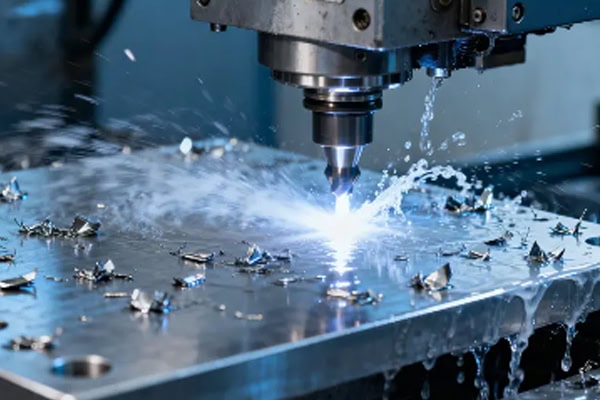
Cutting forces cause elastic deformation
The interaction between tool and material generates cutting force, a direct source of deformation.
- Excessive cutting force bends thin-walled parts temporarily
- Uneven force distribution leads to dimensional deviation
- High feed rates can cause impact deformation
- Tool wear changes cutting force and reduces consistency
- Complex toolpaths cause constantly changing force directions
The less stable the cutting force, the harder it is to control deformation.
Clamping methods induce structural deformation
Poor fixture design is a common cause of machining distortion.
- Excessive clamping force can permanently deform thin walls
- Point contact fixtures create localized stress concentration
- Multiple setups accumulate positioning errors
- Weak fixture rigidity reduces machining stability
Many deformations occur the moment the part is clamped.
Improper machining sequence and toolpath design
Incorrect process planning can significantly increase deformation risk.
- Removing large areas first weakens structural support
- Single-sided machining creates force imbalance
- Incorrect roughing and finishing order increases stress release
- Localized machining creates deformation concentration zones
The machining sequence determines how stress is released.
Environmental and System Factors Behind Hidden Deformation
Beyond materials and machining itself, external environment and system control also play important roles.
Temperature variation causes dimensional drift
Unstable temperature conditions directly affect precision.
- Machine thermal deformation affects tool positioning accuracy
- Workpieces expand during continuous machining
- Ambient temperature changes cause measurement errors
- Long machining cycles accumulate heat effects
Poor temperature control makes stable precision difficult.
Vibration amplifies machining errors
Vibration in precision machining is often magnified through the process.
- Insufficient machine rigidity causes resonance
- Long tools are more prone to deflection
- Uneven cutting increases vibration intensity
- Vibration directly affects surface finish and accuracy
The greater the vibration, the less controllable the error.
Tool condition and system stability
Tool condition also strongly influences deformation outcomes.
- Tool wear increases cutting force
- Dull edges create uneven cutting loads
- Different tool batches may vary in consistency
- Improper tool replacement affects machining stability
Changes in tool condition are essentially system instability.
Deformation in precision machining is not caused by a single factor, but by the combined effects of material behavior, mechanics, heat, and process systems. To truly control deformation, optimization must be applied across multiple dimensions, including material selection, structural design, toolpath planning, and environmental control. In high-end manufacturing, platforms like Tirapid, which specialize in complex and high-precision machining, reduce deformation risks through systematic process control and stable manufacturing capabilities, improving overall consistency and reliability.