In precision machining, cost differences can be surprisingly large. The same drawing may receive completely different quotes from different manufacturers. Many assume this is caused by equipment differences, but in reality, the main drivers are design rationality, process planning, material selection, and production management. With systematic optimization instead of isolated cost-cutting, precision machining can significantly reduce expenses while maintaining quality.
Design Optimization (Determines Most of the Cost)
Once a design is finalized, the machining route and difficulty are largely fixed. This stage often determines the majority of total cost.
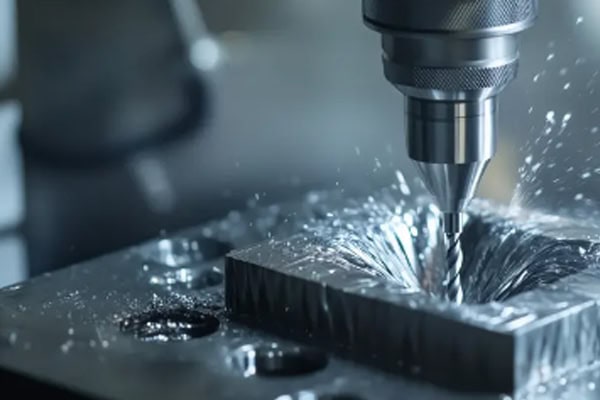
Reduce structural complexity
More complex structures lead to longer machining time, higher tool wear, and increased risk of rework.
- Deep cavities restrict tool length and require slower cutting speeds to avoid vibration
- Multi-surface geometries often require 5-axis machining, increasing both machine and programming cost
- Non-functional features (decorative grooves, unnecessary chamfers) add wasted machining steps
- Thin-walled structures lack rigidity and may require multiple passes to avoid deformation
- Highly fragmented structures increase clamping frequency, introducing additional positioning errors
Simpler geometry directly leads to shorter machining time and lower cost.
Grade tolerance and precision requirements
A common cost mistake is applying overly strict precision across the entire part.
- Only mating and functional surfaces require high precision control
- Uniform tight tolerances significantly slow down machining and inspection
- Different functional zones should have different accuracy levels
- Overly strict requirements reduce process stability and increase rework risk
Focusing precision only where it is functionally needed is far more economical.
Optimize material selection
Material choice affects both machining cost and processing efficiency.
- Aluminum alloys are easy to machine, with high efficiency and low overall cost
- Stainless steel requires slower cutting speeds and increases tool wear
- Titanium alloys generate heat easily and significantly shorten tool life
- When function allows, choosing easier-to-machine materials can greatly reduce cost
Material selection defines the baseline of machining cost.
Process and Manufacturing Optimization (Core Efficiency Driver)
After design is fixed, machining strategy becomes the main cost control factor.
Equipment matching strategy
Machines are not better just because they are more advanced—they must be appropriate.
- 3-axis machines are ideal for simple geometries with the lowest cost
- 5-axis machines handle complex surfaces but come with higher operational costs
- Using 5-axis equipment for simple parts wastes resources
- Using low-end machines for complex parts increases defect and rework risk
Proper matching directly affects final pricing.
Process route optimization
Process planning determines how efficiently a part is produced.
- Combining operations reduces repeated clamping and improves accuracy
- Rough machining should remove excess material before finishing operations
- Optimized toolpaths reduce non-cutting idle movements
- Minimizing repeated repositioning improves dimensional consistency
- Poor process planning leads to significant machine idle time
Efficient process design essentially removes wasted machining time.
Production batch and rhythm control
Production scale has a direct impact on unit cost.
- Small batches have high setup and adjustment cost per part
- Larger batches distribute fixed costs such as tooling and programming
- Continuous machining is more stable and efficient than intermittent runs
- Proper scheduling increases machine utilization and reduces idle time
Scale efficiency strongly influences unit price.
Management and Quality Control Optimization (Hidden Cost Source)
Many costs do not come from machining itself but from management inefficiencies.
Reduce rework and scrap rate
Rework is one of the most expensive hidden cost drivers.
- Poor first-article inspection can lead to full batch errors
- Unstable process parameters cause dimensional variation
- Inaccurate fixtures amplify machining deviations
- Operator inconsistency affects repeatability
- Lower first-pass yield directly increases total cost
Reducing rework is the most direct way to save cost.
Control inspection cost properly
Inspection is necessary, but excessive inspection increases cost.
- Critical dimensions should be fully inspected for safety
- Non-critical dimensions can be sampled instead of fully checked
- Efficient measurement tools reduce inspection time
- Avoid repeated measurement of identical features
Inspection should manage risk, not create overhead.
Stabilize supply chain and machining coordination
Supply chain stability significantly affects hidden costs.
- Fixed suppliers reduce communication and trial costs
- Long-term cooperation improves process optimization
- Frequent supplier changes cause quality fluctuations
- Standardized processes reduce repeated development efforts
Stability itself is a cost advantage.
The cost reduction logic in precision machining is not about lowering prices blindly, but about eliminating waste through systematic optimization: better design, more efficient processes, and stable production management. Once the entire workflow becomes more efficient, costs naturally decrease. In high-precision manufacturing, platforms like Tirapid, which specialize in complex part machining, can provide more cost-effective solutions through mature processes and stable production capabilities.