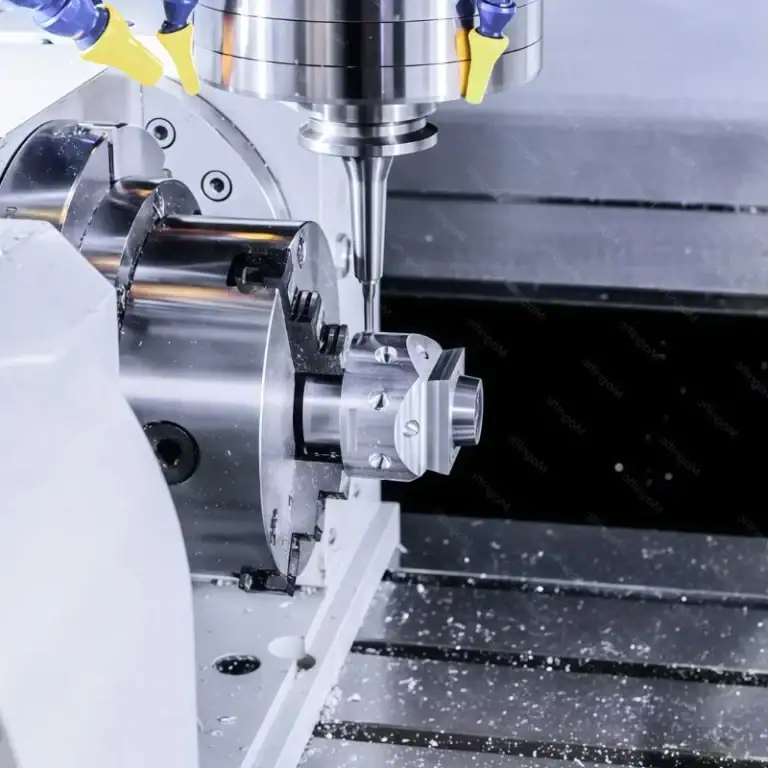
During turning operations, tool angles directly affect cutting force, chip evacuation, surface finish, and tool life. Different materials, cutting methods, and precision requirements demand different tool angle configurations. Improper angle selection can lead to accelerated tool wear, cutting vibration, workpiece heat buildup, or poor surface finish. Therefore, selecting appropriate tool angles is essential for stable machining.
In modern CNC machining, tool angles not only influence cutting efficiency but also affect production stability and consistency in batch processing. Proper coordination of rake angle, clearance angle, main cutting edge angle, and tool inclination angle helps maintain stable cutting conditions under different machining environments, improving overall productivity.
Rake Angle Affects Cutting Ease
The rake angle is one of the most important tool geometry parameters. It directly influences cutting deformation, cutting force, and cutting temperature. A larger rake angle results in lighter cutting action but reduces edge strength, while a smaller rake angle increases tool strength but also increases cutting resistance. Therefore, it must be selected based on material properties. In practice, rake angle also affects chip flow and heat distribution. Improper settings may cause unstable cutting, abnormal tool wear, or poor surface quality. In high-speed machining, a suitable rake angle can also reduce machine load and improve operational stability.
Large Rake Angle for Soft Materials
When machining aluminum, copper, or low-carbon steel, a larger rake angle is typically used. A larger rake angle reduces cutting resistance, makes chip formation easier, and helps reduce built-up edge formation.
Common advantages include:
- Reduced cutting resistance
- Improved surface finish
- Reduced cutting heat
- Better chip evacuation
- Lower machine load
This is especially beneficial in high-speed finishing operations.
Small Rake Angle for High-Hardness Materials
When machining hardened steel or interrupted cuts, higher tool strength is required, so a smaller rake angle is used. A reduced rake angle increases edge strength and reduces the risk of chipping. In high-load machining conditions, it improves tool stability and impact resistance, making it suitable for rough machining and heavy-duty cutting environments.
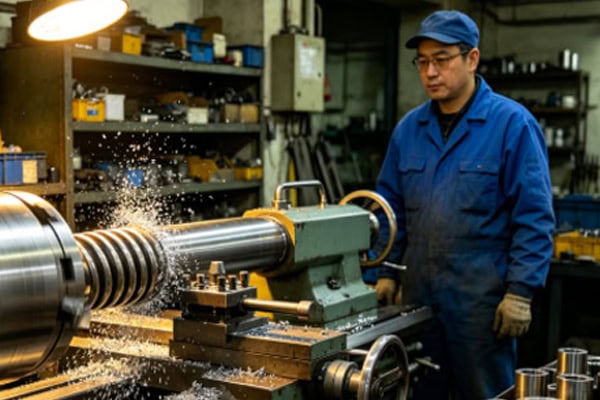
Clearance Angle Determines Friction Conditions
The clearance angle affects the friction between the tool flank and the workpiece surface. If it is too small, excessive friction and heat may occur; if it too large, tool edge strength decreases. Therefore, a balance is required. Clearance angle also influences tool wear rate and surface quality. During continuous machining, excessive flank friction may lead to surface burning, tearing, or dimensional variation. Proper adjustment based on cutting depth, feed rate, and material characteristics is essential for stable machining.
Larger Clearance Angle Reduces Friction
In finishing or light cutting operations, increasing the clearance angle helps reduce flank friction, resulting in smoother surfaces and lower cutting temperature.
Common characteristics include:
- Reduced friction on workpiece
- Improved surface quality
- Lower tool temperature
- Reduced vibration marks
- Higher finishing stability
It is commonly used in non-ferrous metal machining.
Smaller Clearance Angle Increases Tool Strength
In rough machining or heavy cutting conditions, the clearance angle is usually kept smaller. This increases the tool cross-sectional strength and improves rigidity. Under high-load continuous cutting, a smaller clearance angle helps extend tool life and reduces abnormal wear.
Main Cutting Edge Angle Influences Cutting Force Direction
The main cutting edge angle affects cutting force distribution, workpiece stress, and chip flow direction. Improper selection may cause workpiece deformation, increased vibration, or abnormal tool load. It plays an especially important role in slender shaft machining. A proper configuration improves machining stability and helps distribute cutting heat more evenly, resulting in more uniform tool wear.
Large Main Cutting Edge Angle for Slender Shafts
When machining slender shafts, excessive radial force can cause deformation. A larger main cutting edge angle helps reduce radial cutting force.
Key advantages include:
- Reduced workpiece deformation
- Lower vibration risk
- Improved dimensional stability
- Higher precision for slender parts
- Reduced radial load
This is widely used in precision shaft machining.
Small Main Cutting Edge Angle for Heavy Cutting
In rough machining or deep cutting operations, a smaller main cutting edge angle helps distribute cutting load more evenly across the tool edge. Under heavy-duty conditions, this improves tool durability and stability, making it suitable for high-efficiency material removal processes.
Tool Inclination Angle Affects Chip Flow Direction
The tool inclination angle influences chip flow direction and cutting edge loading conditions. Proper adjustment improves chip evacuation stability and reduces cutting anomalies. In high-speed turning, chip flow directly affects machining safety and surface quality. If chips wrap around the tool, they may damage the workpiece or reduce machining stability. Therefore, inclination angle optimization is especially important in automated production systems.
Positive Inclination Angle Ensures Smooth Cutting
A positive inclination angle directs chips away from the machined surface, reducing the risk of surface scratching.
Common advantages include:
- Improved chip flow direction
- Reduced chip entanglement
- Better surface quality
- Lower tool impact
- Stable continuous cutting
It is commonly used in finishing operations.
Negative Inclination Angle for High-Strength Cutting
A negative inclination angle increases tool edge strength, making it suitable for heavy-load machining conditions. In interrupted cutting or hard material machining, impact forces are high. A negative inclination angle improves edge support and impact resistance, making it more suitable for rough machining.
Stainless Steel Machining Requires Balanced Strength
Stainless steel has strong work hardening tendencies and low thermal conductivity, which leads to heat concentration in the cutting zone and increased tool wear. Therefore, tool angle selection must balance sharpness and strength. If the angles are too sharp, the cutting edge may chip easily; if too blunt, cutting temperature increases and wear accelerates. In practical machining, tool geometry must be combined with proper cutting speed and feed rate to maintain stable cutting conditions, reduce built-up edge formation, and improve surface quality.
Different Machining Stages Require Different Tool Angles
Rough machining, semi-finishing, and finishing require different tool angle configurations. Proper matching of machining stages ensures stable tool performance. In CNC production, multiple tools are often used for different stages of a single part, so tool geometry must be adjusted according to the process plan. Rough machining focuses on strength and efficiency, while finishing emphasizes surface quality and dimensional accuracy. Proper alignment between tool angles and machining tasks improves efficiency and reduces machining issues.