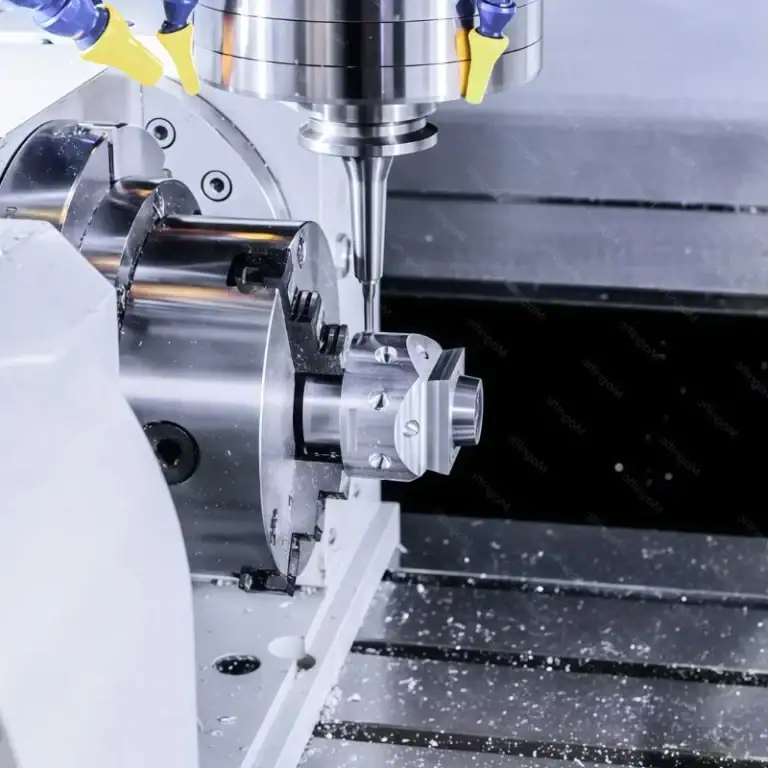
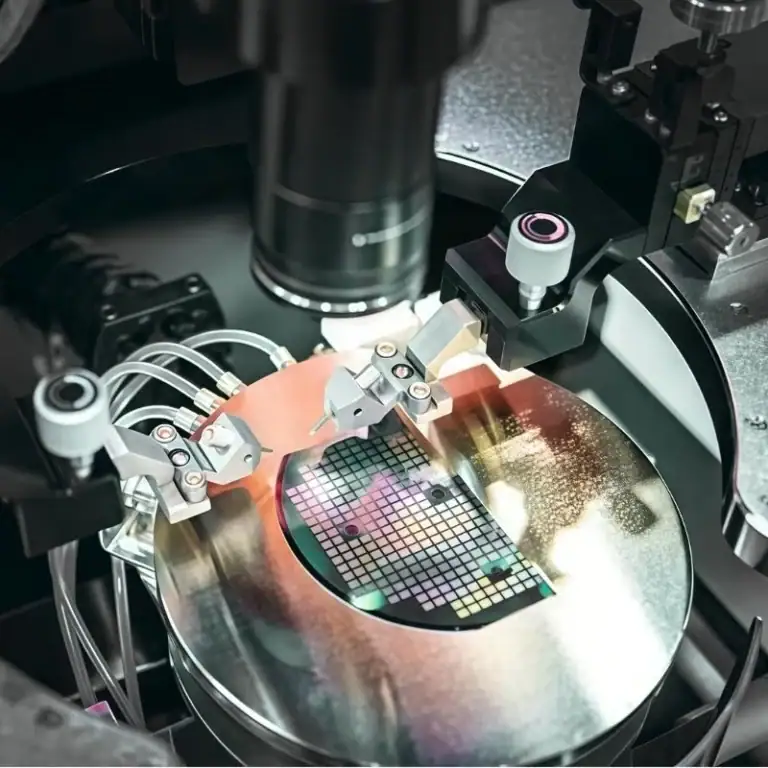
Intelligent turning technology is an advanced manufacturing method built on CNC turning by integrating sensor monitoring, data analysis, automatic control, and intelligent algorithms. It collects real-time data such as cutting force, vibration, temperature, and tool condition during machining, and dynamically adjusts machining parameters to achieve a more stable and efficient process. In modern manufacturing systems, intelligent turning has evolved from a single machining tool into a self-learning and adaptive machining system, widely used in high-precision parts and mass production environments.
With the increasing level of industrial automation, intelligent turning not only improves machining quality but also plays an important role in production efficiency, tool life management, and quality control. It has become a key component in high-end manufacturing.
Applications of Intelligent Turning in Precision Part Machining
Intelligent turning shows outstanding performance in precision part manufacturing, especially for shaft components, medical device parts, and high-precision mating components. These parts require high dimensional stability and surface quality, and traditional machining methods are easily affected by equipment fluctuations or operator experience. Intelligent systems continuously adjust machining conditions through real-time feedback, making the entire process more stable and controllable. In long-term mass production environments, this stability advantage becomes even more significant, effectively reducing dimensional drift and repeated machine adjustments.
Precision Shaft Machining Control
In shaft machining, intelligent turning can automatically compensate for tool wear by adjusting the machining path, ensuring consistent part diameters. The system monitors changes in cutting force and vibration signals in real time and dynamically adjusts feed rate to keep the machining process within a stable cutting zone, reducing dimensional fluctuations.
Key application features include:
- Automatic compensation for dimensional changes caused by tool wear
- Control of errors caused by thermal deformation
- Improved consistency in batch production
- Reduced need for manual adjustment
- Improved surface finish stability
This approach is especially suitable for long continuous production environments and offers even greater advantages in unattended machining scenarios.
Stability Improvement in Medical and Aerospace Part Machining
Medical and aerospace components often have complex structures and strict tolerance requirements. Intelligent turning uses multi-sensor data fusion to continuously analyze machining conditions, making key dimension control more reliable. During complex contour or thin-wall machining, the system can automatically adjust cutting paths and parameters to reduce the impact of vibration on part structure, lowering deformation and surface defect risks. As a result, the machining process becomes more stable and better able to meet strict inspection standards.
Applications of Intelligent Turning in Automated Production Lines
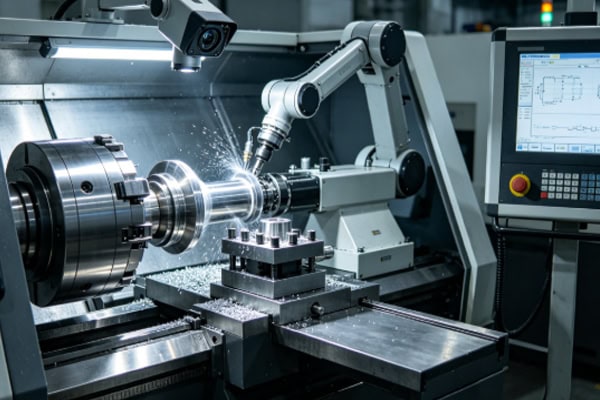
Intelligent turning plays a central role in automated production lines. It can integrate with robotic arms, conveyor systems, and inspection equipment to form a fully connected manufacturing system. In continuous machining environments, the system automatically optimizes production cycles based on load conditions, maintaining high equipment utilization while reducing idle time and improving overall productivity.
Automated Loading and Unloading System Integration
Intelligent turning machines are often integrated with robotic loading and unloading systems to achieve fully automated production. The system identifies the condition and position of workpieces and completes clamping and unloading automatically, ensuring continuous and stable production.
Automation features include:
- Automatic recognition of workpiece position and condition
- Automatic clamping and unloading operations
- Reduced human intervention
- Improved production continuity
- Lower risk of operational errors
This model is widely used in mass production scenarios, especially for standardized parts.
Intelligent Optimization of Production Cycle
The intelligent system dynamically adjusts production rhythm based on machine load, tool condition, and machining time data, maintaining balance between different processes and avoiding bottlenecks or idle resources. By analyzing historical data, machining paths and cutting parameters can also be optimized to further improve efficiency.
Applications of Intelligent Turning in Tool Management
Tool management is a key application area of intelligent turning. Compared with traditional experience-based judgment methods, intelligent systems provide more accurate tool life control through data collection and analysis.
Real-Time Tool Wear Monitoring
Using vibration sensors, cutting force sensors, and temperature monitoring systems, the tool condition can be analyzed in real time to determine wear level and issue early warnings, preventing batch quality issues caused by sudden tool failure.
Monitoring data includes:
- Cutting force variation trends
- Abnormal vibration frequency
- Machined surface condition changes
- Temperature increase levels
- Total tool usage time
These data together form a tool health evaluation model, making decisions more objective and reliable.
Tool Life Prediction and Optimized Usage
By analyzing historical machining data and real-time status data, the system can predict remaining tool life and schedule replacements at optimal times. This avoids both premature replacement waste and overuse risks. At the same time, cutting parameters can be optimized to extend tool life while maintaining machining quality, making overall production costs more controllable.
Applications of Intelligent Turning in Complex Material Machining
For difficult-to-machine materials such as stainless steel, high-temperature alloys, and titanium alloys, intelligent turning improves machining stability through adaptive control. These materials typically generate high heat and tool wear during machining, requiring more precise process control.
Stable Control of High-Temperature Material Machining
During high-temperature alloy machining, cutting zone temperature fluctuates significantly, affecting tool life and machining accuracy. Intelligent systems adjust cutting speed and feed rate in real time to achieve more uniform heat distribution, reducing localized overheating.
Common optimization methods include:
- Dynamically reducing cutting speed in high-load areas
- Enhancing cooling control strategies
- Controlling cutting depth variations
- Optimizing tool paths
- Reducing localized heat concentration
These measures significantly improve machining stability and extend tool life.
Optimization of Stainless Steel Machining
Stainless steel machining often produces built-up edge, which negatively affects surface quality. Intelligent turning adjusts spindle speed and feed rate in real time to stabilize the cutting process and reduce material adhesion. During continuous machining, this adaptive control maintains consistent surface quality and reduces the need for secondary polishing processes.
Applications of Intelligent Turning in Quality Inspection Integration
Intelligent turning is not only responsible for machining but also integrates with online inspection systems to achieve closed-loop quality control. This shifts quality control from post-process inspection to in-process control, improving overall manufacturing stability.
Online Dimensional Inspection Feedback Control
Through online measurement systems, real-time dimensional data is collected and fed back into the machining system. The system then automatically adjusts parameters to correct errors during machining, reducing defective output.
Application features include:
- Real-time correction of machining errors
- Reduced manual inspection processes
- Improved batch consistency
- Lower defect rates
- Enhanced quality stability
This closed-loop control is essential in high-precision manufacturing.
Intelligent Surface Quality Analysis
Using vision recognition and data analysis technologies, machining surface conditions can be evaluated to determine whether parameter adjustments are needed. The system can detect scratches, vibration marks, and surface roughness variations, making the machining process more controllable and reducing quality fluctuations.
Future Development of Intelligent Turning in Manufacturing Systems
Intelligent turning technology is continuously evolving toward digital manufacturing and smart factory integration. It is gradually merging with industrial internet systems, digital twins, and artificial intelligence. In future manufacturing environments, machining equipment will not only act as execution units but also as data nodes participating in decision-making processes, making production more automated and intelligent. This development will further enhance high-precision manufacturing capabilities and promote flexible and customized production models.