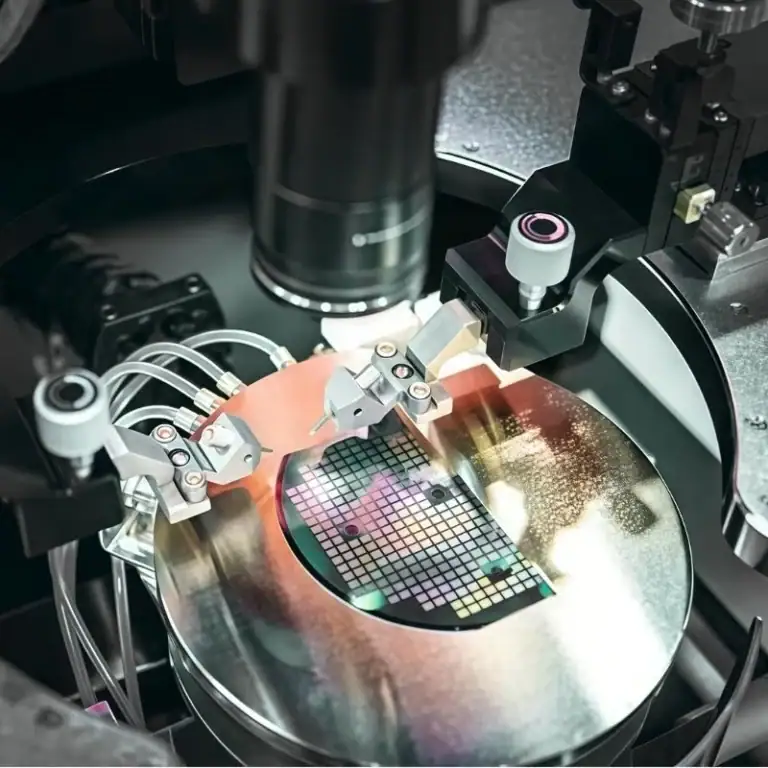
Hydraulic systems are widely used in construction machinery, industrial equipment, automotive manufacturing, agricultural machinery, aerospace, marine equipment, and automated production lines. Since hydraulic systems rely on hydraulic fluid to transfer pressure and power, their internal components must provide excellent mechanical strength while maintaining high dimensional accuracy, fitting precision, and sealing performance. Components such as hydraulic valves, valve spools, hydraulic fittings, piston rods, guide sleeves, cylinder connectors, and precision sleeves all require reliable machining processes to meet the requirements of long-term hydraulic system operation.
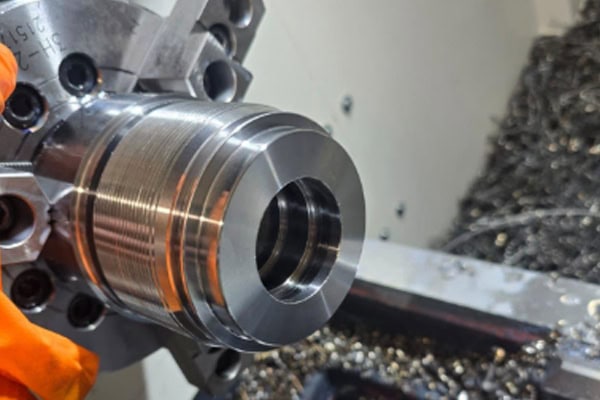
CNC turning uses digitally programmed machine movements to perform operations such as external turning, internal boring, facing, grooving, threading, and contour machining according to component drawings. Compared with conventional turning, CNC turning reduces dimensional variations caused by manual operation and maintains excellent consistency during repeated production. For hydraulic component manufacturers, this stable machining capability improves assembly quality, reduces leakage risks, and shortens production cycles.
As hydraulic equipment continues to develop toward higher pressure, greater efficiency, compact structures, and intelligent operation, hydraulic components require increasingly sophisticated manufacturing processes. CNC turning can be combined with automatic tool changing, in-process measurement, automatic loading and unloading, and CNC compensation technologies to achieve stable continuous production and provide efficient precision machining solutions for the hydraulic industry.
Hydraulic Valve Components Widely Use CNC Turning
Hydraulic valves are critical control components in hydraulic systems and are responsible for controlling the direction, pressure, and flow of hydraulic fluid. Valve spools, sleeves, stems, and valve body connection structures require high machining accuracy. If the fitting clearance between components is excessive, internal leakage may occur. If the clearance is too small, movement may become restricted. Hydraulic valve components therefore require careful control of dimensions, tolerances, roundness, and surface roughness.
Hydraulic Valve Spool Machining
Valve spools move or rotate inside valve bodies and require strict control of external diameter, roundness, and surface finish. CNC turning can accurately machine spool surfaces, end faces, grooves, and other structural features according to programmed parameters while maintaining consistent dimensions across production batches.
- Valve spool external diameter machining
- Precision groove machining
- End-face machining
- Positioning structure machining
- Sealing structure machining
- High-volume small valve spool production
High-quality valve spool machining reduces movement resistance, improves hydraulic fluid control, and minimizes the possibility of internal leakage. For hydraulic equipment operating continuously for long periods, stable spool quality contributes to improved control accuracy and operational reliability.
Valve Sleeve and Valve Body Connection Component Machining
Valve sleeves are precision mating components. Their internal diameter, roundness, and surface finish directly affect valve spool movement. CNC turning can produce high-quality internal bores while combining external diameter and end-face machining to maintain excellent concentricity.
- Precision internal boring
- Valve sleeve external diameter machining
- Stepped structure machining
- Sealing groove machining
- Positioning groove machining
- Threaded connection machining
Stable valve sleeve machining ensures smooth spool movement and provides a reliable mating foundation for long-term hydraulic valve operation.
Hydraulic Fittings and Pipeline Connectors Are Ideal for CNC Turning
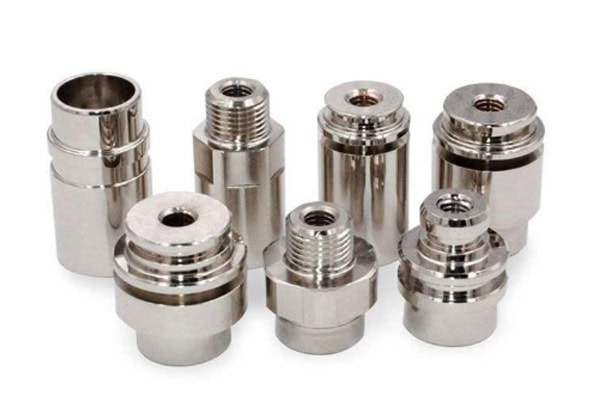
Hydraulic pipelines rely on numerous fittings to establish connections. Different types of fittings perform pressure transfer, directional conversion, and sealing functions. Hydraulic fittings commonly contain external diameters, internal bores, tapered surfaces, threads, and sealing grooves. CNC turning can continuously produce these features, making it highly suitable for standardized and high-volume production.
Hydraulic Threaded Fitting Machining
The quality of hydraulic fitting threads directly affects connection strength and sealing performance. CNC turning precisely controls pitch, thread profile, cutting depth, and tool movement to maintain consistent thread dimensions across different production batches.
- Metric thread machining
- Imperial thread machining
- Tapered pipe thread machining
- Internal thread machining
- External thread machining
- Customized thread machining
High-precision threads improve hydraulic pipeline assembly efficiency while reducing problems such as loose connections and inadequate sealing. This allows fittings to meet the installation requirements of different hydraulic systems.
Hydraulic Sealing Structure Machining
Hydraulic systems commonly rely on O-rings, sealing rings, and metal sealing structures to prevent hydraulic fluid leakage. The width, depth, and position of sealing grooves must remain consistent to ensure proper installation and performance.
CNC turning can accurately produce circular grooves, sealing grooves, and positioning grooves according to technical drawings. Precision control of groove bottoms and side walls improves sealing reliability and reduces the risk of leakage during long-term operation.
Hydraulic Cylinder Components Are Important CNC Turning Applications
Hydraulic cylinders are important actuators used in construction machinery, industrial equipment, and automated systems. They convert hydraulic pressure into linear motion. Hydraulic cylinders contain numerous precision components, including piston rods, guide sleeves, pistons, connectors, and precision sleeves. These components require high dimensional accuracy, concentricity, and surface quality.
Piston Rod Machining
Piston rods must withstand substantial mechanical loads while moving repeatedly through sealing structures. The external diameter and surface condition of the rod directly affect seal life and hydraulic cylinder performance.
- Piston rod external diameter machining
- End-thread machining
- Stepped structure machining
- Groove machining
- Connector machining
- Positioning structure machining
CNC turning maintains accurate dimensions across different sections of the piston rod and improves assembly precision. After precision machining, piston rods can achieve suitable surface quality for subsequent chrome plating, grinding, or other surface treatment processes.
Guide Sleeve and Piston Machining
Guide sleeves support piston rods and maintain stable movement, while pistons withstand hydraulic pressure and drive the actuator. These components commonly require external diameter, internal bore, sealing groove, and positioning structure machining.
- Guide sleeve internal bore machining
- Guide sleeve external diameter machining
- Piston sealing groove machining
- Piston end-face machining
- Positioning structure machining
- Precision mating surface machining
Stable CNC turning accuracy improves the assembly quality of hydraulic cylinder components while reducing friction and abnormal wear during operation.
Hydraulic Pump and Motor Components Require Precision Turning
Hydraulic pumps convert mechanical energy into hydraulic energy, while hydraulic motors use hydraulic energy to generate mechanical movement. Both types of equipment contain numerous precision rotating components that require high machining accuracy, excellent surface quality, and reliable mating performance.
Pump Shaft and Motor Shaft Machining
Pump shafts and motor shafts rotate continuously at high speeds while being subjected to torque and radial loads. Their roundness, concentricity, and shoulder positioning accuracy directly influence equipment performance.
- Pump shaft external diameter machining
- Hydraulic motor shaft machining
- Shaft shoulder machining
- Keyway structure machining
- Threaded end machining
- Bearing mating surface machining
Precision CNC turning improves dimensional consistency in shaft components, reduces vibration and eccentricity during operation, and provides reliable mounting surfaces for bearings, couplings, and other associated components.
Precision Sleeve and Rotating Mating Component Machining
Hydraulic pumps and motors commonly contain various sleeves, positioning rings, and support components. These parts must maintain accurate internal and external mating relationships to prevent excessive clearance during operation.
CNC turning can continuously complete internal bore, external diameter, end-face, and groove machining while controlling critical dimensions during finishing operations. For high-volume production, digitally programmed machining paths can be repeatedly executed, improving product consistency and reducing the need for frequent manual adjustments.
CNC Turning Supports Different Hydraulic Component Materials
Hydraulic components require material selection based on working pressure, operating environment, wear resistance, and production cost. Common materials include carbon steel, alloy steel, stainless steel, aluminum alloys, copper alloys, and engineering plastics. Different materials require corresponding adjustments to cutting parameters, tool selection, and cooling strategies.
Carbon Steel and Alloy Steel Hydraulic Components
Carbon steel and alloy steel provide excellent mechanical strength and are commonly used for piston rods, connectors, shafts, and load-bearing components. During machining, suitable cutting inserts must be selected according to material hardness, while cutting speed and feed rate should be carefully controlled.
- High-strength shaft components
- Hydraulic connectors
- Piston rods
- Pump shafts
- Motor shafts
- Load-bearing structures
Appropriate machining parameters reduce tool wear, improve process stability, and ensure that critical dimensions meet design requirements.
Stainless Steel and Aluminum Alloy Hydraulic Components
Stainless steel provides excellent corrosion resistance and is suitable for humid environments, chemical applications, and specialized industrial equipment. Aluminum alloys offer low weight and good machinability, making them suitable for lightweight hydraulic systems.
Stainless steel machining requires careful control of tool wear, cutting heat, and work hardening. Aluminum alloy machining requires attention to built-up edge formation and chip evacuation. Optimizing tools and machining parameters according to material characteristics produces more stable machining results.
CNC Turning Improves Hydraulic Component Mass Production Efficiency
Hydraulic components often have standardized specifications and relatively high production volumes. CNC turning uses programmed machining processes to manufacture each component according to the same process route, providing excellent repeatability. Automatic tool changers reduce manual tool-changing time, while automated loading and unloading systems further reduce clamping and part-removal time.
During high-volume production, in-process measurement can monitor critical dimensions in real time. When dimensional deviations begin to develop, tool compensation values can be adjusted promptly to reduce the risk of producing large quantities of nonconforming components. Digital production management systems can also record machining time, tool life, and inspection data, providing useful information for subsequent process optimization.
Key Benefits of CNC Turning for Hydraulic Component Production
Proper application of CNC turning can significantly improve hydraulic component manufacturing efficiency and quality consistency.
- Improved dimensional consistency
- Reduced manual operating errors
- Better thread machining quality
- Improved sealing groove accuracy
- Higher internal and external diameter accuracy
- Shorter high-volume production cycles
- Lower rework and scrap rates
- Higher machine utilization
- Support for automated loading and unloading
- Support for customized machining requirements
By combining precision equipment, suitable cutting tools, and stable machining processes, hydraulic components can achieve more reliable manufacturing quality and provide a dependable foundation for long-term hydraulic equipment operation.
CNC Turning Drives Hydraulic Component Manufacturing Toward Higher Precision
Hydraulic equipment continues to develop toward higher pressure, faster response, compact structures, and intelligent operation, creating higher precision requirements for hydraulic components. CNC turning can manufacture a wide range of products, including valve spools, valve sleeves, hydraulic fittings, piston rods, guide sleeves, pump shafts, motor shafts, and precision sleeves. This provides the hydraulic industry with highly efficient and consistent precision machining capabilities.
In the future, multi-axis CNC machines, automated loading and unloading, in-process measurement, intelligent tool management, and digital manufacturing technologies will continue improving hydraulic component production. By optimizing material selection, tool configuration, cutting parameters, and inspection processes, manufacturers can further improve component accuracy, reduce manufacturing costs, and shorten delivery cycles. For hydraulic equipment that requires long-term stable operation, high-quality CNC-turned components can improve assembly accuracy, sealing performance, and operational reliability, providing advanced precision machining support for construction machinery, automated equipment, industrial hydraulic systems, and high-end equipment manufacturing.