Oil and gas extraction equipment operates under demanding conditions, including heavy loads, strong vibration, high pressure, and exposure to complex media. The manufacturing quality of critical components directly affects equipment efficiency, service life, and operational safety. With the development of deep-well drilling, offshore oil and gas projects, and smart oilfields, equipment requires higher standards for dimensional accuracy, material properties, structural strength, and batch consistency.
Conventional machining methods may struggle to meet these requirements consistently. CNC precision machining uses numerical programming, precision turning and milling, deep-hole machining, and strict quality inspection to manufacture components according to engineering specifications. These solutions support drilling systems, wellhead equipment, downhole tools, and auxiliary oilfield machinery.
Key Advantages of High-Reliability CNC Machining for Oil and Gas Extraction Equipment
Oil and gas extraction equipment typically consists of drilling power systems, wellhead control devices, downhole tools, hydraulic actuators, and auxiliary support structures. Different components must withstand torsional loads, axial pressure, impact, and long-term friction. Some parts are also exposed to hydrogen sulfide, saltwater, and other corrosive media.
CNC machining allows manufacturers to develop dedicated processes based on component geometry and operating requirements. It reduces variations caused by manual operations and improves consistency in critical dimensions and mating surfaces.
Precision Machining Improves the Operating Stability of Critical Components
Transmission shafts, connection joints, guide sleeves, and actuator components in oil and gas extraction equipment often require high dimensional accuracy and precise mating surfaces.
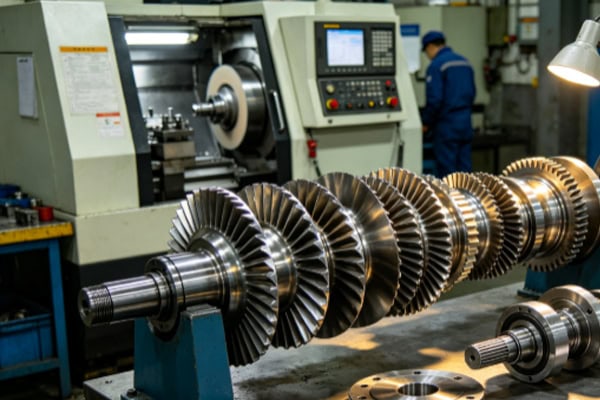
The concentricity, cylindricity, and surface finish of shaft components affect rotational stability. Thread accuracy and end-face perpendicularity of connection joints influence assembly quality and connection reliability. CNC turning, milling, grinding, and boring can manufacture critical dimensions using consistent machining references, reducing deviations caused by manual operations.
The main advantages of precision machining include:
- Improved Dimensional Consistency: Numerical programs control machining paths and cutting parameters, helping maintain stable dimensions across production batches.
- Better Component Fit: Accurate control of shaft diameters, bore sizes, threads, and positioning features reduces problems caused by excessive or insufficient assembly clearance.
- Reduced Surface Defects: Appropriate tool selection and cutting parameters help minimize chatter marks, burrs, and localized machining damage.
- Repeatable Manufacturing: Verified machining programs and process parameters can be retained for future replacement parts and repeat production orders.
For oil and gas equipment that operates continuously, consistent machining quality helps reduce abnormal wear and unplanned downtime. Tolerance levels should be determined according to actual component functions to avoid unnecessary precision requirements.
High-Strength Materials Support Demanding Extraction Conditions
Deep-well drilling, offshore oilfields, and highly corrosive oil and gas environments place demanding requirements on equipment materials. Components may experience mechanical loads, corrosive media, temperature fluctuations, and repeated impact at the same time.
CNC machining can process various engineering metals, but differences in hardness, toughness, thermal conductivity, and work-hardening behavior require specific tooling and cutting strategies.
Common material options include:
- Alloy Steel: Suitable for transmission shafts, load-bearing joints, mechanical connectors, and other components requiring high strength.
- Stainless Steel: Used for equipment housings, connection structures, and auxiliary components requiring corrosion resistance. The appropriate grade depends on the operating environment.
- Nickel-Based Alloys: Suitable for selected components exposed to high temperatures and corrosive conditions, although cutting heat and tool wear require careful control.
- Titanium Alloys: Used for specialized components where weight reduction and high strength-to-weight ratios are important. Machining requires careful temperature and deformation control.
Material selection should not rely solely on material names or hardness. Manufacturers must verify material standards, heat treatment conditions, media composition, operating temperatures, and design loads. For sour-service environments, resistance to sulfide stress cracking and other relevant properties should be evaluated according to applicable material standards and environmental requirements.
Customized Manufacturing Supports Different Oil and Gas Extraction Systems
Different oilfields have different geological conditions, well depths, extraction methods, and equipment configurations. Standard components may not satisfy every project requirement.
CNC machining supports custom manufacturing based on customer-provided 2D engineering drawings, CAD files, or 3D models. Component lengths, connection dimensions, thread specifications, oil passage positions, and mounting interfaces can be adjusted according to project requirements.
For older equipment maintenance projects, replacement components can also be manufactured using verified physical dimensions and technical documentation. This helps improve spare parts availability and maintenance efficiency.
Customized machining supports small-batch prototyping, special-specification orders, and repeat production, making it suitable for equipment manufacturers, oilfield engineering service providers, and maintenance companies.
Machining Methods and Applications of Key Oil and Gas Extraction Components
High-reliability machining requires manufacturing processes to be selected according to component geometry, material condition, and actual operating requirements.
Different components have different loading conditions. Rotating transmission parts require concentricity and dynamic balance. Hydraulic components require accurate internal bores and sealing surfaces. Drilling connections require precise thread geometry and load-bearing sections.
By arranging machining operations properly, selecting suitable equipment, and establishing inspection plans, manufacturers can improve component quality and consistency.
CNC Machining Workflow and Key Process Controls
Oil and gas extraction components generally undergo material verification, blank preparation, rough machining, finish machining, heat treatment coordination, and final inspection. For high-strength materials and complex components, machining difficulty, material allowance, and workholding stability should be evaluated in advance.
Common manufacturing procedures include:
- Engineering Drawing Evaluation: Confirm dimensions, tolerances, thread standards, material grades, heat treatment requirements, and critical assembly features.
- Material and Blank Inspection: Check material certificates, surface conditions, and required material properties to ensure that blanks meet order specifications.
- Rough Machining and Datum Establishment: Remove major material allowances and create stable positioning references for subsequent finishing operations.
- Precision Turning and Milling: Complete critical features such as external diameters, internal bores, end faces, grooves, threads, and complex profiles.
- Heat Treatment and Surface Treatment: Arrange quenching, tempering, or other suitable processes according to engineering requirements. Select surface protection methods based on operating conditions.
- Final Inspection and Delivery: Verify dimensions, geometric tolerances, surface quality, and specified material or performance requirements. Prepare quality documentation.
For deep-hole components, manufacturers should control bore diameter, straightness, concentricity, and chip evacuation. Long shaft components require appropriate support positions to reduce bending and vibration during machining. For high-hardness materials, tool grades, feed rates, and cooling methods should be adjusted according to actual cutting conditions.
A clearly defined process route helps reduce uncertainty during production. For critical load-bearing components, first-article production and process validation can be used to confirm the machining strategy before batch manufacturing begins.
Machining Applications for Drilling and Downhole Tool Components
Drilling systems rely on various mechanical components to transfer power, connect drilling tools, control direction, and perform downhole operations.
Common components include drill tool joints, transmission shafts, guide components, stabilizer connections, and downhole tool housings. These parts may experience torque, impact, axial loads, and cyclic vibration, requiring suitable material strength, thread accuracy, and structural integrity.
CNC turning can produce precision external diameters, end faces, and connection threads, while CNC milling is suitable for keyways, flats, and specialized connection profiles.
For long or high-precision transmission components, concentricity and straightness must be carefully controlled. Drill connection threads should be inspected using the specified thread standards and gauges to confirm that connection dimensions and fit meet engineering requirements.
Machining Applications for Wellhead Control and Hydraulic Actuator Components
Wellhead control systems and hydraulic equipment regulate fluid passages, control mechanical movement, and maintain stable equipment operation.
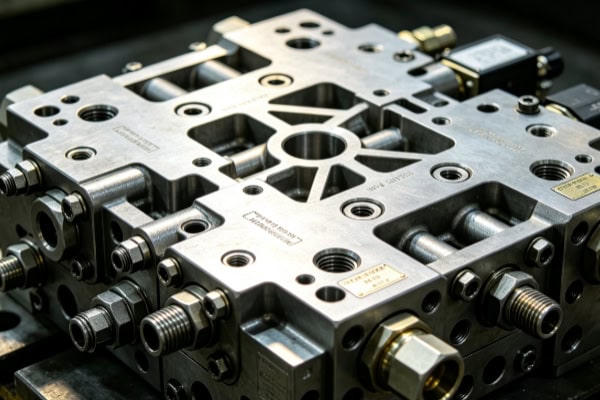
Related components include hydraulic cylinders, piston rods, valve mounting plates, actuator connectors, and pressure control module brackets. These parts often contain precision bores, sealing grooves, intersecting oil passages, and multiple mounting interfaces.
CNC boring and precision turning can control cylinder bore and piston rod dimensions and surface quality. Drilling and milling processes are used to manufacture oil passages, mounting holes, and connection structures.
For hydraulic sealing surfaces, dimensions, tolerances, and surface roughness must meet seal design requirements. Machining defects may otherwise cause leakage or abnormal wear. Components forming part of a pressure boundary must also undergo the pressure testing and leakage inspection required by applicable design specifications.
Common Oil and Gas Extraction Components and Their Machining Requirements
Different equipment components have different functions, loading conditions, and manufacturing challenges. Manufacturers should select materials and processes according to specific applications rather than using identical machining parameters for every component.
| Component Type | Common Materials | Main Machining Processes | Key Quality Requirements | Applications |
| Drilling Tool Joints | Alloy steel | CNC turning, thread machining, heat treatment | Thread accuracy, concentricity, material strength | Drilling tool connections |
| Downhole Transmission Shafts | Alloy steel, selected stainless steels | CNC turning, milling, grinding | Straightness, cylindricity, surface quality | Downhole power transmission |
| Hydraulic Cylinders | Alloy steel, stainless steel | Boring, turning, drilling | Bore dimensions, roundness, sealing fit | Wellhead hydraulic control |
| Piston Rods | Alloy steel, stainless steel | Turning, grinding, surface treatment | Straightness, surface roughness, wear resistance | Hydraulic actuators |
| Downhole Tool Housings | Stainless steel, alloy steel | CNC turning and milling, deep-hole machining | Wall thickness, concentricity, connection dimensions | Downhole measurement and operation tools |
| Equipment Mounting Brackets | Aluminum alloy, stainless steel | CNC milling, drilling, tapping | Hole position accuracy, structural rigidity, assembly dimensions | Monitoring and auxiliary equipment |
Performance and Reliability Assurance for Oil and Gas Extraction Equipment Machining
Oil and gas extraction components must maintain stable performance during long-term operation. Meeting drawing dimensions is only the foundation of quality acceptance. Material properties, heat treatment results, surface conditions, fatigue loads, and actual assembly conditions must also be considered.
For critical components with safety-related functions, a complete inspection and verification plan should be established according to applicable standards to confirm that the parts meet design requirements under specified operating conditions.
Precision Inspection, Material Verification, and Reliability Control
High-reliability components require a quality traceability system covering the entire manufacturing process, from raw materials to final delivery.
For transmission shafts, drilling tool joints, and hydraulic actuator components, inspection items should be selected according to their structural characteristics. Coordinate measuring machines, roundness testers, surface roughness testers, thread gauges, and hardness testers can be used to verify critical dimensions and machining conditions.
Key quality control procedures include:
- Dimensional and Geometric Tolerance Inspection: Check external diameters, internal diameters, lengths, hole positions, concentricity, roundness, and straightness to ensure compliance with design tolerances.
- Thread and Connection Inspection: Use specialized gauges to verify thread specifications, profiles, and fit conditions against technical requirements.
- Material Property Verification: Review material certificates and perform necessary checks of hardness, mechanical properties, or chemical composition according to project requirements.
- Surface and Defect Inspection: Check for burrs, cracks, scratches, and machining marks. Arrange suitable nondestructive testing when required.
- Heat Treatment Quality Control: Verify hardness, deformation, and relevant properties after heat treatment to ensure that the final dimensions and service performance are not adversely affected.
- Functional and Pressure Testing: Perform pressure tests, leakage tests, and other functional verification for hydraulic, pressure-bearing, or sealing components according to engineering specifications and applicable standards.
Reliable quality management helps reduce nonconforming products and provides accurate information for future equipment maintenance and spare parts replacement. For critical oil and gas components, manufacturers should retain material batch information, machining records, inspection reports, and other necessary traceability documents.
In addition to dimensional inspection, wear resistance, corrosion resistance, and fatigue performance must be evaluated according to actual operating conditions. Components exposed to cyclic loading over extended periods require attention to stress concentrations around fillets, shoulders, thread roots, and changes in cross-section.
For components exposed to corrosive media, material selection and surface protection should be determined according to the type of media and operating environment.
Through precision CNC machining, appropriate process planning, and strict quality verification, manufacturers can improve the consistency and operating reliability of critical oil and gas extraction components. These solutions help equipment manufacturers and oilfield service providers reduce maintenance risks and improve field operating efficiency.