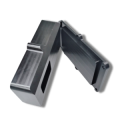
UAV parts are the structural, mechanical, electrical, and electronic components that allow an unmanned aerial vehicle to fly, navigate, communicate, and carry payloads. Common drone components include frames, motors, propellers, batteries, flight controllers, sensors, and cameras. Although every component has a different function, lightweight materials, precise assembly, and reliable manufacturing are essential to overall UAV performance.
This guide explains the main UAV parts, how they work together, and the differences between common drone configurations. It also covers aluminum, titanium, carbon fiber, and engineering plastics, along with lightweight design, CNC milling, turning, multi-axis machining, quality inspection, and supplier selection.
What Are UAV Parts?
UAV parts are the individual components that make up an unmanned aerial vehicle. They include the airframe, propulsion system, power supply, flight electronics, navigation equipment, communication hardware, and payloads. Together, these components provide structural support, controlled flight, and the functions required for a particular mission.
UAV components can be divided into mechanical and electronic categories. Mechanical parts support loads and maintain assembly alignment, while electronic systems control motion, power distribution, and communication.
Understanding this distinction helps engineers identify which components require precision manufacturing and which should be sourced from specialized electronics suppliers.
UAV, Drone, And UAS: Key Terminology
UAV stands for Unmanned Aerial Vehicle, meaning an aircraft that operates without a human pilot onboard. The term drone is commonly used for the same type of aircraft, especially in consumer and commercial applications.
UAS stands for Unmanned Aircraft System. It includes the aircraft, control equipment, communication links, and other systems required for operation. The aircraft itself is therefore only one part of the complete UAS.
For manufacturing and purchasing, terminology helps clarify project scope. A request for drone parts might refer to replacement propellers, while an order for custom UAV parts may involve machined structural components with specified materials, tolerances, and inspection requirements.
How UAV Hardware Components Work Together?
UAV hardware components work together by combining power, propulsion, flight control, navigation, and structural support. The battery supplies electrical energy, motors generate thrust, and the frame maintains the positions of critical components.
Sensors measure movement and orientation. The flight controller processes these measurements and adjusts the propulsion system to maintain the intended flight condition. Communication equipment transfers commands and operating data.
A typical block diagram of drone hardware shows how the main subsystems connect:
| System | Input | Main Function | Output |
| Power System | Stored Energy | Supplies Electrical Power | Electricity |
| Flight Controller | Commands And Sensor Data | Controls Flight Behavior | Motor Control Signals |
| Propulsion System | Electrical Power And Commands | Generates Thrust | Aircraft Motion |
| Navigation System | Position And Motion Measurements | Estimates Aircraft State | Navigation Data |
| Communication System | Radio And Data Signals | Connects Aircraft And Operator | Commands And Telemetry |
| Airframe | Mechanical Loads | Supports And Aligns Components | Structural Stability |
These connections explain why UAV performance depends on the complete system rather than any individual part alone.
What Are The Main Components Of A UAV?
The main components of a UAV are its frame, propulsion system, battery, flight controller, navigation sensors, communication hardware, and payload equipment. Each performs a different function, while mechanical interfaces and electrical connections allow them to operate as one aircraft.
A practical drone parts list should identify both the function of each subsystem and its physical mounting requirements. This helps prevent confusion between purchased electronics and custom-manufactured structural hardware.
Drone Frames And Structural Components
The drone frame is the main structural assembly that supports motors, batteries, electronics, and payloads. It determines where components are installed and how mechanical forces travel through the aircraft.
Multirotor frames commonly include a central body, arms, mounting plates, and connection brackets. Fixed-wing aircraft use wings, fuselage structures, internal supports, and mounting assemblies that perform related structural functions.
Frame design affects stiffness, vibration response, mass distribution, and maintainability. Carbon fiber is common for lightweight panels and arms, while CNC-machined aluminum components can provide accurate interfaces and strong mechanical connections.
Propulsion Systems: Motors, Propellers, And Speed Controllers
The propulsion system generates the forces required for flight. In electric multirotor UAVs, brushless motors rotate propellers, while electronic speed controllers regulate the electrical power delivered to each motor.
Motor speed and propeller characteristics influence thrust, response, efficiency, and vibration. The flight controller coordinates motor commands to control aircraft attitude and movement.
Precision-machined motor mounts, support brackets, and related mechanical interfaces help keep propulsion components aligned. However, motors, electronic speed controllers, and most propellers are specialized products rather than ordinary CNC-machined parts.
Batteries And Power Distribution Systems
The battery stores the energy required for electric UAV operation, while the power distribution system delivers electricity to propulsion and electronic components. Lithium-based rechargeable batteries are widely used in many electric drone configurations.
Battery capacity, voltage, discharge capability, and mass affect aircraft endurance and power availability. The electrical system must support expected operating loads without exceeding component ratings.
Mechanical designers also need to consider battery trays, protective housings, cooling clearance, and secure mounting. These supporting structures may be CNC machined, even though the battery cells and power electronics are produced using different manufacturing processes.
Flight Controllers And Timing Electronics
The flight controller processes sensor measurements and control commands to maintain stable aircraft operation. It commonly uses motion sensors, onboard processors, and control software to coordinate flight.
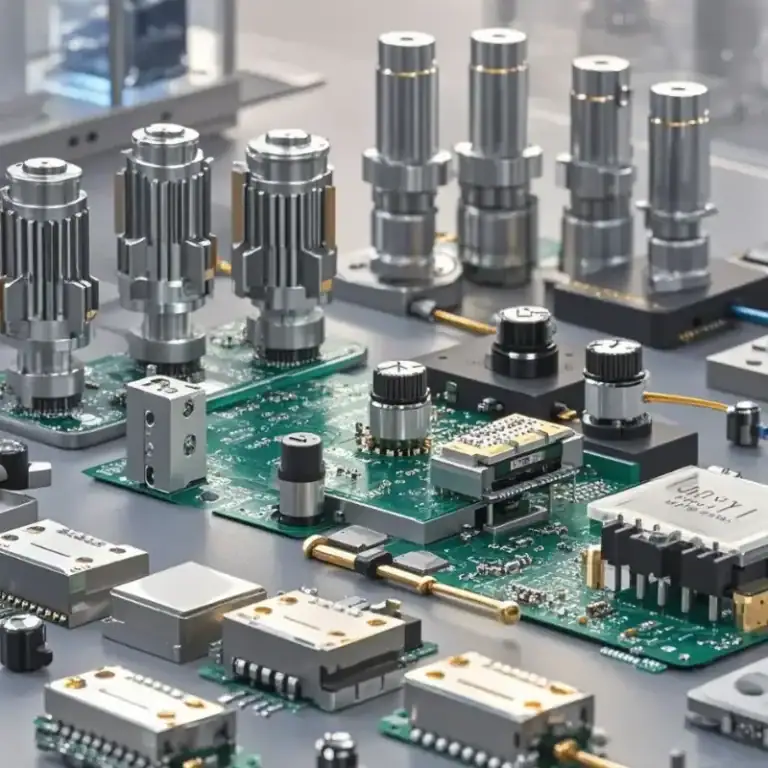
Small electronic components are essential to this process. Crystal oscillators provide accurate timing references for processors and communication systems, while supporting circuits help manage electrical signals and power.
CNC machining is not used to manufacture these semiconductor components. Its role is more relevant to flight-controller housings, protective covers, mounting plates, and mechanical interfaces that support electronic assemblies.
GPS, Navigation Sensors, And Communication Systems
Navigation systems estimate the UAV’s position, movement, orientation, or altitude. Depending on the platform, they may include satellite navigation receivers, inertial sensors, barometers, and other measurement devices.
Communication systems connect the aircraft with a ground controller or wider data network. Reliable operation depends on suitable radio equipment, antennas, signal processing, and mechanical integration.
Sensor positioning matters because vibration, electromagnetic interference, and blocked reception can affect measurement quality. Precision-machined housings and mounting brackets can improve mechanical positioning, while the electronic and radio design remains a separate engineering task.
Cameras, Gimbals, And Payload Components
Payload systems allow UAVs to perform specific tasks such as imaging, mapping, inspection, or environmental monitoring. Common payloads include cameras, optical sensors, measurement instruments, and application-specific equipment.
A gimbal supports and stabilizes a camera or sensor, helping maintain the required orientation as the aircraft moves. Its mechanical structure may include lightweight arms, mounting interfaces, and precision components.
CNC machining is suitable for selected gimbal brackets, sensor housings, and payload adapters. These parts must support accurate alignment without introducing excessive mass or vibration into the payload assembly.
What Are The Main Types Of UAVs?
The three common UAV configurations are multirotor, fixed-wing, and hybrid vertical takeoff and landing aircraft. Each uses a different combination of lifting surfaces, propulsion arrangements, and structural components, so its hardware requirements and manufacturing priorities vary.

The aircraft configuration should be selected according to flight requirements and application conditions. It also influences which structural parts are suitable for CNC machining.
Multirotor UAVs
Multirotor UAVs use multiple propellers to generate lift and control motion. Common configurations include quadcopters with four rotors, hexacopters with six, and octocopters with eight.
Their ability to hover and take off vertically makes them useful for photography, inspection, mapping, and operations in restricted spaces. However, carrying additional structural weight can increase power demand.
These aircraft commonly require lightweight central frames, motor mounts, arm connectors, landing gear components, and payload brackets. CNC machining is valuable for producing accurate interfaces between the structural and electronic systems.
Fixed-Wing UAVs
Fixed-wing UAVs use aerodynamic wings to generate lift during forward flight. They generally require a different structural arrangement from multirotor aircraft because the wings and fuselage carry significant aerodynamic loads.
Their airframes commonly include composite skins, spars, internal ribs, equipment mounts, and mechanical connection points. Material selection depends on structural loads, stiffness, weight, and environmental conditions.
CNC machining is useful for selected wing fittings, structural connectors, equipment brackets, and precision housings. Large aerodynamic shells and lightweight wing surfaces are more commonly produced using composite or other forming processes.
Hybrid VTOL UAVs
Hybrid VTOL UAVs combine vertical takeoff and landing capabilities with a configuration intended for efficient forward flight. They may use separate lifting and cruising propulsion systems or a transition mechanism.
This combination introduces additional mechanical interfaces and packaging requirements. Designers must accommodate different flight loads while maintaining structural alignment and limiting aircraft weight.
Machined mounting brackets, connection fittings, actuator housings, and structural adapters can support these systems. Their geometry and accuracy requirements depend on the specific aircraft architecture and approved engineering design.
What Materials Are Used For UAV Parts?
UAV parts are commonly made from aluminum alloys, titanium alloys, carbon fiber composites, and engineering plastics. These materials are selected according to weight, strength, stiffness, impact resistance, temperature exposure, and manufacturing requirements.
No single material is suitable for every drone component. Engineers often combine several materials within one airframe to balance structural performance and cost.
Aluminum Alloys And Titanium
Aluminum alloys are widely used for UAV brackets, housings, motor mounts, and structural connectors because they offer relatively low density and practical CNC machinability. Common options include 6061 and 7075 aluminum.
6061 provides a useful balance of mechanical strength, corrosion resistance, availability, and machinability. The higher-strength 7075 alloy is often considered when structural loading requires greater strength, although its corrosion behavior and manufacturing cost need evaluation.
Titanium alloys are useful where higher strength or specific environmental requirements justify their additional material and machining costs. They are often more appropriate for selected critical fittings than for every component of a lightweight airframe.
| Material | Approximate Density | Main Advantage | Typical UAV Application |
| 6061 Aluminum | 2.70 g/cm³ | Balanced strength and machinability | Housings and brackets |
| 7075 Aluminum | 2.81 g/cm³ | Higher strength | Structural connectors and mounts |
| Titanium Grade 5 | 4.43 g/cm³ | High specific strength | Critical fittings and joints |
| Carbon Fiber Composite | Grade-dependent | High directional stiffness-to-weight ratio | Frames, arms, and panels |
| PEEK | 1.30 g/cm³ | Thermal and chemical resistance | Specialized insulating components |
Material grades, heat treatment, and composite layup affect actual properties. These examples are selection references rather than universal performance specifications.
Carbon Fiber Composites And Material Selection
Carbon fiber composites are often selected for drone arms, frame plates, and structural panels because they can deliver high stiffness at low weight. Their performance depends strongly on fiber direction, resin system, and laminate construction.
Unlike metals, carbon fiber laminates are direction-dependent materials. A laminate that performs well under loading in one direction may behave differently under transverse or impact loads.
Material selection should therefore consider the actual force direction, attachment method, fatigue exposure, and manufacturing process. Carbon fiber is particularly useful for large lightweight structures, while machined metal inserts can provide accurate connection interfaces.
Engineering Plastics And Hybrid Material Designs
Engineering plastics such as POM, nylon, PEEK, and PEI may be used for UAV housings, spacers, protective components, and specialized mounting parts. Each material offers different mechanical, electrical, and thermal properties.
POM is useful for dimensionally controlled, low-friction mechanical parts, while PEEK and PEI may be considered where higher temperature resistance or specialized performance is required.
Hybrid designs combine metals, composites, and plastics according to function. For example, an aircraft may use carbon fiber arms, aluminum connection brackets, and polymer electrical insulation components to achieve a practical combination of low weight, stiffness, and assembly accuracy.
What Are The Key Design Requirements For UAV Parts?
The main design requirements for UAV parts are low weight, sufficient strength, structural stiffness, vibration resistance, dimensional accuracy, and reliable assembly. Environmental conditions and applicable aviation requirements must also be considered before manufacturing.
A component should be designed for the loads and interfaces it will experience in service. Reducing weight is beneficial only when the remaining structure can perform its intended function safely.
Lightweight Design And Strength-To-Weight Ratio
Lightweight design reduces unnecessary aircraft mass while maintaining sufficient structural performance. Material selection and component geometry both influence the final strength-to-weight ratio.
CNC machining can remove excess material through pockets, ribs, and localized wall-thickness adjustments. However, reducing weight without considering load paths may create stress concentrations or weak connection regions.
Engineers should use load calculations and suitable structural analysis to identify where material is necessary. Weight reduction is most effective when it is based on actual loading conditions rather than uniform removal from every surface.
Structural Stiffness, Vibration, And Load Resistance
UAV structural parts must resist operating loads and maintain suitable stiffness during flight. Propulsion systems produce vibration, while takeoff, landing, and maneuvering create additional mechanical demands.
Insufficient stiffness can affect sensor stability, mechanical alignment, and fatigue performance. Large unsupported sections or poorly designed joints may increase deformation under load.
Designers can improve performance through suitable material selection, rib placement, joint design, and vibration isolation. Finite element analysis may help identify potential high-stress areas, but critical designs still require physical verification.
Dimensional Tolerances And Assembly Compatibility
Dimensional tolerances define the acceptable variation in machined UAV components. Critical features may include motor-mount hole positions, bearing fits, locating surfaces, and interfaces between structural assemblies.
Not every dimension needs an extremely tight tolerance. Applying unnecessarily strict requirements across an entire part increases machining and inspection costs without guaranteeing better flight performance.
Engineers should specify functional datums, geometric tolerances, and inspection methods for the features that control fit and alignment. This supports repeatable assembly and reduces adjustment during production.
Operating Conditions And Regulatory Requirements
Operating conditions affect UAV part selection because components may experience temperature changes, moisture, dust, vibration, and repeated mechanical loading. Material and surface-treatment requirements should reflect the intended environment.
Corrosion resistance and coating durability are important for outdoor operation. Interfaces between carbon fiber and aluminum may also require protection against galvanic corrosion when moisture creates an electrically conductive path.
Regulatory requirements depend on the aircraft, location, and intended operation. In the United States, many small commercial UAV operations are governed by FAA Part 107, but operational compliance does not automatically establish that every individual component meets a particular aerospace certification standard.
Which UAV Parts Can Be CNC Machined?
CNC machining is well suited to UAV structural and mechanical parts that require accurate geometry, reliable fits, and customized mounting features. Common examples include frame connectors, motor mounts, landing gear fittings, sensor housings, camera brackets, shafts, spacers, and adapters.

These components are often produced from aluminum, titanium, or engineering plastics. CNC machining is less suitable for manufacturing batteries, semiconductor devices, complete electronic controllers, and many molded composite structures.
Drone Frames And Structural Brackets
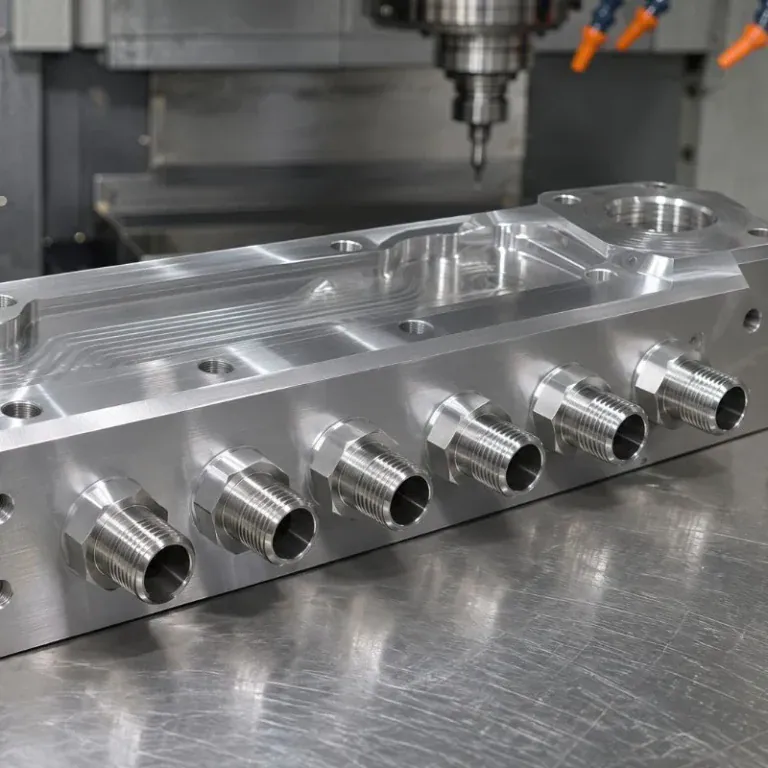
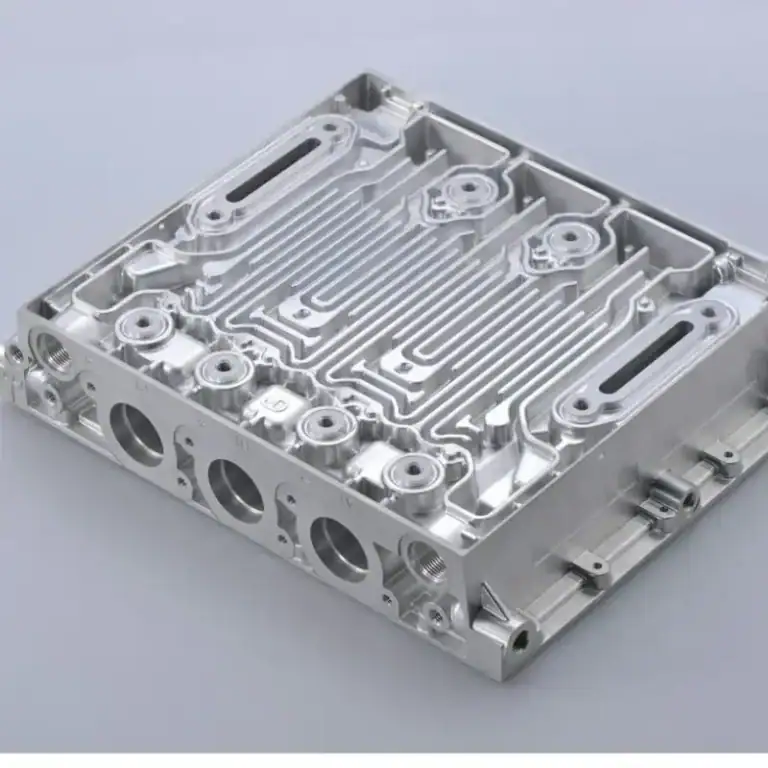
Drone frame components and structural brackets can be CNC milled from aluminum plate or billet. Machining allows designers to create accurate mounting holes, lightening pockets, connection slots, and locating surfaces.
Small multirotor frames may use machined central plates or connectors, while larger UAVs often combine composite tubes or panels with metal fittings. The most economical construction depends on size, quantity, and structural requirements.
For production, bracket geometry should support efficient tool access and stable clamping. Excessively thin sections or inaccessible corners can increase machining time and the risk of distortion.
Motor Mounts And Landing Gear Components
Motor mounts hold propulsion units in the intended position and transfer mechanical loads into the airframe. CNC machining can produce accurate bolt patterns, locating shoulders, and contact surfaces.
Landing gear fittings and support components require suitable strength, impact resistance, and attachment integrity. Their design depends on aircraft weight, landing conditions, and the surrounding structural assembly.
Material selection should follow expected loading rather than appearance alone. Aluminum is useful for many lightweight parts, while titanium or other materials may be justified where specific strength or durability requirements demand them.
Sensor Housings And Camera Mounts
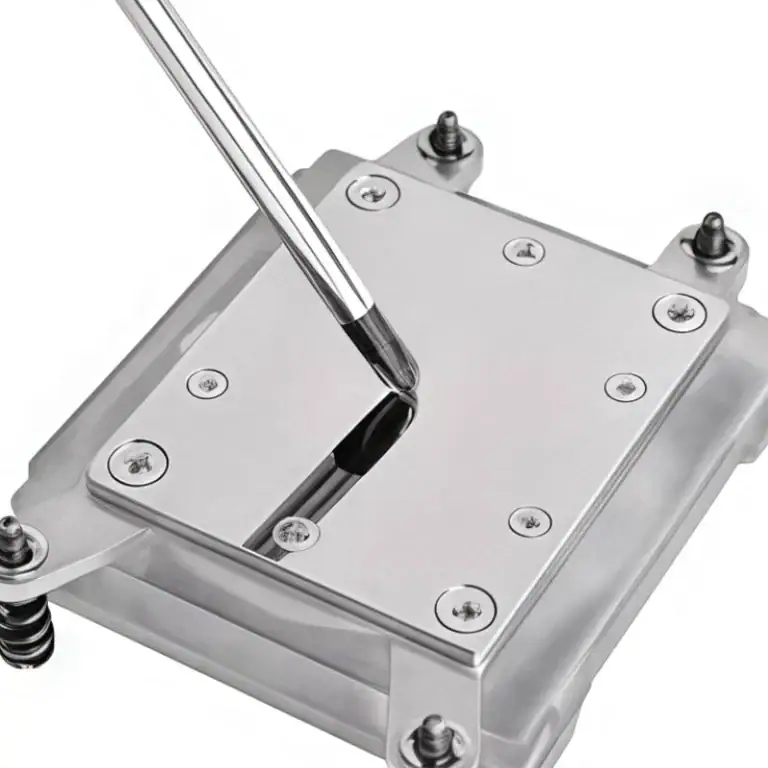
Sensor housings and camera mounts protect components and provide reliable mechanical positioning. CNC machining allows customized openings, mounting interfaces, cable passages, and accurate external geometry.
These parts may require careful control of position and orientation, particularly when multiple sensors must maintain a defined relationship to one another. Surface quality and protective finishing may also matter in outdoor environments.
Engineers should allow for heat dissipation, cable access, serviceability, and vibration isolation. A mechanically accurate housing must still support the functional requirements of the electronic equipment installed inside.
Precision Shafts, Spacers, And Connectors
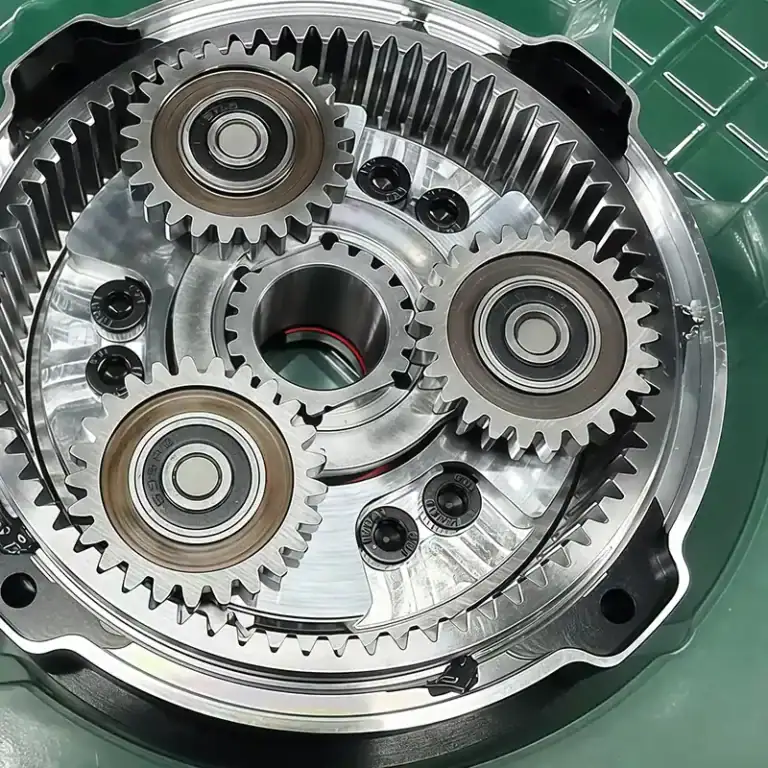
Precision shafts, spacers, bushings, and connectors are suitable for CNC turning or combined turning and milling. These smaller UAV components often control spacing, location, or mechanical engagement within an assembly.
Concentricity, diameter tolerance, and surface finish can be important when parts mate with bearings, rotating assemblies, or accurately located structural elements.
The best manufacturing method depends on geometry and quantity. Simple cylindrical parts may be produced efficiently on CNC lathes, while components with cross-holes, flats, or angled features may require secondary milling operations.
How Are Custom UAV Parts CNC Machined?
Custom UAV parts are CNC machined by converting engineering drawings into controlled milling and turning operations, selecting suitable material stock, and producing features to the required dimensions. Multi-axis machining, finishing, and dimensional inspection may be added for complex or precision-critical components.
The machining process must reflect the component’s function. A thin frame connector, precision shaft, and enclosed sensor housing each require different tooling, setups, and inspection plans.
CNC Milling Of Drone Frames And Housings
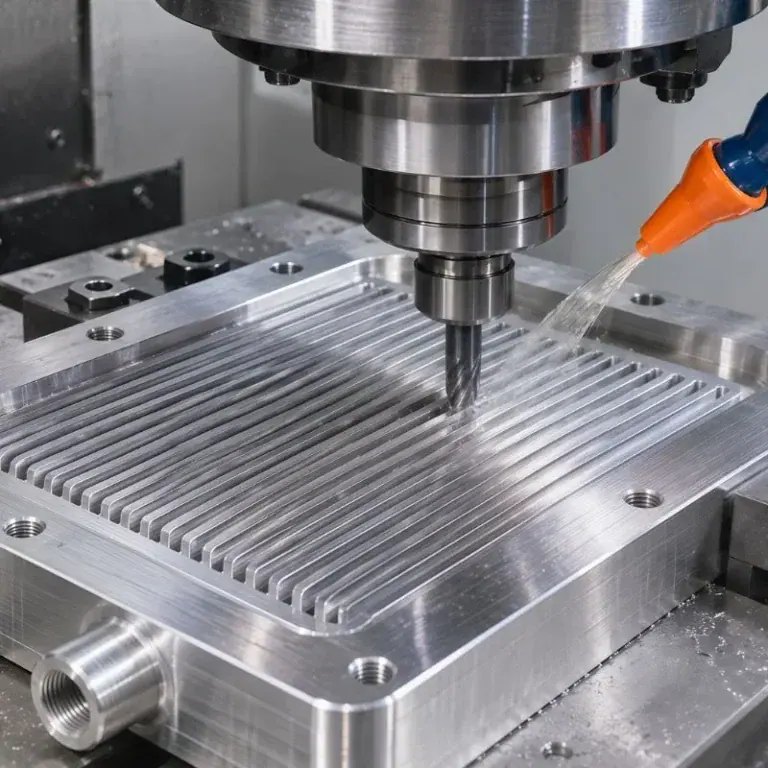
CNC milling removes material from a solid workpiece to create pockets, holes, slots, ribs, and external contours. It is commonly used for aluminum UAV frames, mounting brackets, equipment housings, and structural interfaces.
The manufacturing sequence often begins with rough machining to remove bulk material, followed by controlled finishing operations on critical surfaces. Stable workholding helps maintain feature positions and minimize vibration.
For lightweight components, machining strategy is especially important because removing material changes part stiffness. Engineers should consider remaining wall thickness, machining order, and inspection access before finalizing the toolpath.
CNC Turning Of Precision UAV Components
CNC turning is used to manufacture cylindrical UAV parts such as shafts, spacers, threaded adapters, and precision bushings. The workpiece rotates while a cutting tool forms the required geometry.
Turning is efficient for components dominated by circular features. Depending on machine capability, drilling, threading, grooving, and selected milling operations can be integrated into the production sequence.
Manufacturing control should focus on the functional dimensions and contact surfaces. Proper tool selection, stable clamping, and suitable finishing parameters help maintain diameter accuracy, surface quality, and consistent part geometry.
Multi-Axis CNC Machining For Complex Geometries
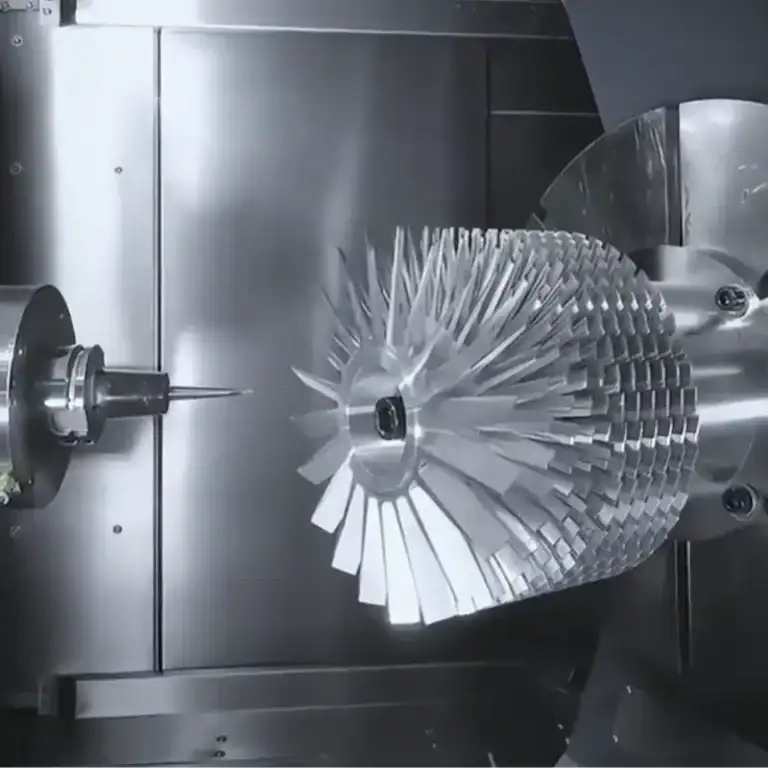
Multi-axis CNC machining is useful when UAV parts contain features on several faces or at different angles. It can improve access to complex housings, angled brackets, and components with difficult mounting geometry.
Five-axis machining may reduce repeated setups and improve the consistency of feature relationships. However, this does not automatically make every operation more accurate or economical than three-axis machining.
The appropriate process depends on part geometry, tolerance requirements, and production volume. A manufacturing review should determine whether multi-axis machining offers a meaningful advantage over simpler equipment and fixtures.
Thin-Wall Machining And Manufacturing Challenges
Thin-wall UAV parts are difficult to machine because removing material reduces stiffness and makes the remaining structure more sensitive to cutting forces. Vibration, spring-back, and distortion can affect dimensional accuracy.
Challenges may also include burr formation, tool deflection, residual stress release, and unstable clamping. These problems are especially important in lightweight aluminum brackets and large, pocketed components.
Common controls include balanced material removal, suitable cutting engagement, sufficient machining allowance, and low-distortion fixturing. Intermediate inspection can help identify movement before the final surfaces are completed.
| Machining Challenge | Possible Effect | Engineering Control |
| Thin Walls | Vibration And Deformation | Controlled Cutting Forces |
| Deep Pockets | Tool Deflection | Appropriate Tool Length And Toolpaths |
| Large Material Removal | Residual Stress Distortion | Balanced Roughing And Finishing |
| Small Holes | Burrs And Positional Error | Proper Drilling And Deburring |
| Multiple Setup Faces | Datum Misalignment | Stable Fixturing Or Multi-Axis Machining |
| Tight Assembly Features | Fit Problems | Functional GD&T And Inspection |
The goal is to produce parts that satisfy structural and assembly requirements consistently, rather than simply achieving the lightest possible machined geometry.
CNC Finishing Of Carbon Fiber And Plastic Components
CNC machining can be used to trim carbon fiber composite panels, create holes, and finish selected connection features. However, composite machining requires different tools and controls from ordinary metal cutting.
Carbon fiber machining can produce abrasive dust and may cause fiber pullout or delamination if the process is poorly controlled. Suitable tooling, dust extraction, and appropriate workplace protection are important.
Engineering plastics also require material-specific machining strategies. Heat generation, tool geometry, and clamping pressure can influence surface quality and dimensional stability, especially for thin or flexible polymer components.
How Are CNC Machined UAV Parts Inspected?
CNC machined UAV parts are inspected by measuring critical dimensions, verifying geometric relationships, checking surface quality, and confirming assembly fit. Additional mechanical testing may be required for components with defined structural or reliability requirements.
Inspection should focus on the features that affect function. A visually acceptable component may still cause assembly problems if mounting interfaces or locating features are inaccurate.
Dimensional Accuracy And Surface Quality Inspection
Dimensional inspection verifies that the manufactured part matches its engineering drawing. Depending on feature size and complexity, measurements may use calipers, micrometers, height gauges, optical systems, or coordinate measuring machines.
Geometric requirements such as flatness, parallelism, perpendicularity, and positional tolerance are important for many mechanical interfaces. The inspection method should be capable of verifying the specified tolerance.
Surface inspection checks for burrs, scratches, tool marks, and coating defects. Critical mating surfaces and precision holes generally require greater attention than external areas with purely cosmetic requirements.
Assembly Fit And Mechanical Performance Verification
Assembly verification confirms that machined components fit correctly with their mating parts. Trial assembly can reveal interference, misaligned holes, poor fastening access, or unacceptable clearance.
For load-bearing components, mechanical verification may include suitable static load, fatigue, vibration, or other tests according to the approved product requirements. These evaluations are not interchangeable with ordinary dimensional inspection.
Quality documentation should identify material specifications, key dimensions, inspection results, and any required validation records. A defined acceptance process helps prevent an individually acceptable part from creating problems in the complete UAV assembly.
Where Are UAV Parts Used?
UAV parts are used in commercial inspection, mapping, agriculture, industrial monitoring, research, public safety, and specialized aerospace applications. Different operating environments determine which airframe structures, sensors, payloads, and mechanical components are required.

The application influences material selection, component size, environmental protection, and manufacturing complexity. Structural parts should be optimized for their intended operating conditions rather than copied from unrelated drone platforms.
Commercial And Industrial UAV Applications
Commercial and industrial UAVs are used for surveying, infrastructure inspection, mapping, photography, and equipment monitoring. Their hardware must support the sensors and payloads required for each application.
Inspection aircraft may need stable sensor mounts, protective equipment housings, and easily serviced mechanical connections. Weight and vibration control are important when measurement accuracy matters.
CNC-machined brackets, camera adapters, and precision enclosures can support these requirements. The final design should also consider outdoor exposure, cable management, and repeated installation or maintenance.
Agricultural Drone Applications
Agricultural UAVs are used for crop monitoring, mapping, and selected field operations. Their structures may need to accommodate additional equipment, exposure to dust and moisture, and frequent servicing.
Mechanical parts in these environments must be selected for corrosion resistance, durability, and maintainability. Mounting hardware and protective enclosures can experience more demanding operating conditions than indoor electronic equipment.
CNC machining can support custom brackets, structural connections, and equipment mounting features. Material and surface-treatment choices should match the intended chemicals, cleaning procedures, and environmental exposure.
Defense And Research UAV Platforms
Defense and research UAV platforms may require specialized structural components, sensor integration, and performance validation. Their requirements vary significantly according to aircraft configuration and operating environment.
Research programs often benefit from rapid prototyping and modular hardware because experimental arrangements may change during development. Replaceable brackets, sensor interfaces, and equipment housings can support this flexibility.
CNC machining can manufacture precision structural components for such platforms. However, aerospace qualification, defense procurement requirements, and other applicable controls must be reviewed separately from general machining capability.
Future Trends In UAV Hardware And Manufacturing
UAV hardware development increasingly emphasizes lightweight structures, integrated sensors, improved autonomy, and more efficient manufacturing. These trends affect both electronic systems and mechanical components.
Hybrid material construction allows designers to place metal only where mechanical interfaces or localized strength are needed, while using composites or polymers elsewhere to control weight.
For CNC manufacturing, this creates opportunities for more complex precision brackets, compact housings, and integrated mounting features. The strongest designs will still depend on documented engineering requirements rather than adopting new technology without a clear performance benefit.
How Do You Choose A UAV Parts Manufacturing Supplier?
A UAV parts manufacturing supplier should be selected based on material capability, machining experience, dimensional inspection, prototype support, and consistent production quality. The supplier must also understand which component features are critical to assembly and structural performance.
Supplier selection should focus on measurable manufacturing capability rather than marketing claims alone. The right process depends on part geometry, required tolerances, production quantity, and applicable quality requirements.
Material Selection And Manufacturing Capabilities
A suitable supplier should understand the machining behavior of aluminum alloys, titanium, engineering plastics, and any other required materials. The material must match the approved design rather than being substituted solely to reduce cost.
Manufacturing capabilities should include the operations needed for the actual part, such as CNC milling, turning, multi-axis machining, drilling, tapping, or precision finishing.
For composite or hybrid components, buyers should confirm whether the supplier can perform the relevant operations and control associated risks. Experience with one material does not automatically establish capability with every UAV structure.
Prototype Development And Production Consistency
Prototype manufacturing helps engineers verify component geometry, assembly fit, and design feasibility before committing to larger production quantities. Early prototypes may also reveal unnecessary complexity or difficult-to-machine features.
Production requires more than reproducing a successful first sample. Tool wear, fixture repeatability, material variation, and machining sequence can all affect consistency across batches.
A supplier should use defined process controls and inspection methods appropriate to the project. Repeatable quality is especially important when several components must fit together without individual adjustment.
Quality Control And Component Sourcing Considerations
Quality control should establish clear acceptance criteria for critical features. Material documentation, dimensional inspection records, and traceability requirements should be agreed upon according to the component’s role.
Purchasing teams should distinguish between a CNC-machined structural part and a complete electronics or propulsion assembly. These products involve different supply chains, testing requirements, and manufacturing responsibilities.
When comparing drone parts price information, the scope of supply matters. A machined bracket without finishing or inspection documentation cannot be compared directly with a fully finished, inspected, and assembly-ready component.
FAQs
What Is The Main Structure Of A Drone Called?
The main structure of a drone is called the frame or airframe. In a typical quadcopter, it includes a central body and four arms supporting the propulsion units. Fixed-wing UAVs use a fuselage, wings, and other load-bearing structures. The frame must maintain suitable stiffness while keeping mass low. For example, a 10% reduction in frame mass can be meaningful, but only if the modified structure still meets its required strength, stiffness, and vibration limits.
What Is A Drone Made Of?
A drone is made from several materials rather than one. Carbon fiber composites are common in lightweight frames and arms, aluminum alloys are used for structural fittings and housings, and engineering plastics support covers and smaller components. Copper is found in electrical wiring, while batteries contain specialized electrode and electrolyte materials. For comparison, aluminum has a density near 2.7 g/cm³, while titanium Grade 5 is approximately 4.43 g/cm³. The best material depends on the part’s function.
What Part Of The US Has UAV Operations Popular?
UAV activity is found across the United States, including states such as California and Texas and agricultural regions in the Midwest. Commercial applications include mapping, inspection, agricultural operations, and public safety. However, registration totals, pilot certifications, and actual flight counts measure different things, so they cannot be treated as one definitive activity ranking. Businesses planning operations should check current FAA requirements and local airspace restrictions. Commercial flights commonly fall under Part 107, with additional authorization required in certain controlled airspace.
Can Aluminum And Carbon Fiber UAV Parts Be Connected Directly?
Aluminum and carbon fiber parts can be connected mechanically, but their interface requires careful design. Carbon fiber composites can be electrically conductive, creating a potential galvanic corrosion risk when moisture connects the composite to aluminum. Protective coatings, insulating washers, compatible fasteners, or other isolation methods may be needed. Engineers should also consider bolt preload and local bearing stresses. A connection that looks secure during assembly must still withstand the intended vibration, environmental exposure, and mechanical loads.
How Should Engineers Set Tolerances For CNC Machined UAV Parts?
UAV machining tolerances should be based on the function of each feature, not on a single strict value for the entire component. For example, a motor-mount locating feature may require tighter position control than a noncritical external edge. Engineers should identify assembly datums, mating dimensions, and inspection methods before releasing the drawing. A ±0.02 mm tolerance may be achievable for selected features, but it should be specified only when needed and confirmed against the part geometry and manufacturing process.
Conclusion
UAV parts form the mechanical and electronic foundation of unmanned aircraft, from frames and propulsion mounts to navigation systems and payload equipment. Selecting the right materials and manufacturing processes requires balancing low weight, structural strength, stiffness, dimensional accuracy, and cost. CNC machining is particularly useful for custom structural brackets, housings, connectors, and precision mechanical components. Reliable results depend on practical design, appropriate machining strategies, functional inspection, and clear supplier quality requirements.
At TiRapid, we provide precision CNC machining and manufacturing services for custom UAV components. Our CNC milling, turning, multi-axis machining, DFM support, and dimensional inspection help customers produce precise drone frames, brackets, housings, and mechanical parts for demanding applications.