Smartphones, tablets, and wearable devices have high requirements for housing dimensional accuracy, surface appearance, and structural design. The housing must not only protect internal components but also accommodate screens, buttons, ports, and brackets. For R&D and procurement teams, material selection, machining costs, surface finish, and assembly compatibility are all important considerations during customization. CNC machining is suitable for product prototypes, small-batch parts, and precision finishing of complex structures. It can also be combined with die casting, injection molding, and other processes to meet different production requirements.
What Are the Key Requirements for CNC Machining Consumer Electronics Housings?
Consumer electronics housings often feature thin walls, curved surfaces, openings, and precision-fit structures. Machining must account for both appearance and practical assembly requirements.
Appearance and Structural Dimensions Must Be Balanced
Structural details affect both the appearance of the product and the installation of internal components. Key considerations include:
- Outer Contours: Control curved surfaces, corners, and profile lines to maintain the intended design.
- Port and Button Positions: Ensure that USB ports, speaker openings, and button cutouts meet installation requirements.
- Internal Mounting Structures: Make sure screw bosses, slots, and support points match the internal components.
- Thin-Wall Areas: Control wall thickness and material removal to reduce the risk of machining deformation.
Dimensional deviations in these areas may affect housing assembly and product performance.
Wireless Signals Must Be Considered for Metal Housings
Aluminum alloy, magnesium alloy, and stainless steel housings may block or weaken Wi-Fi, Bluetooth, GPS, and cellular signals. During the design stage, non-metallic windows, antenna breaks, or structural clearances should be arranged according to antenna locations. Plastic inserts may also be used when necessary. The housing structure should be coordinated with the antenna layout to avoid affecting device connectivity.

How Should Housing Materials and CNC Machining Processes Be Selected?
Materials affect housing weight, strength, and surface appearance, while machining methods should be selected according to structural complexity and order volume.
Common Housing Materials and Their Characteristics
Consumer electronics housings commonly use metals and engineering plastics. Each material has different machining characteristics.
| Material | Main Characteristics | Common Applications |
| Aluminum Alloy | Lightweight, easy to machine, suitable for anodizing | Electronic device housings and frames |
| Stainless Steel | High strength and good corrosion resistance | Precision decorative parts and structural housings |
| Magnesium Alloy | Low density, suitable for lightweight designs | Structural parts for portable electronic devices |
| POM | Good dimensional stability and easy machinability | Internal supports and insulating components |
| PA | Offers toughness and wear resistance | Connectors and internal functional structures |
Materials should be selected according to part thickness, load conditions, operating environment, and surface requirements. Magnesium alloy machining requires proper chip collection, fire prevention, and machining protection. Suitable corrosion protection should also be selected according to the operating environment.
Match Machining Processes to Part Structures and Order Volumes
Different structures require appropriate machining methods. Choosing an unsuitable process may increase manufacturing costs.
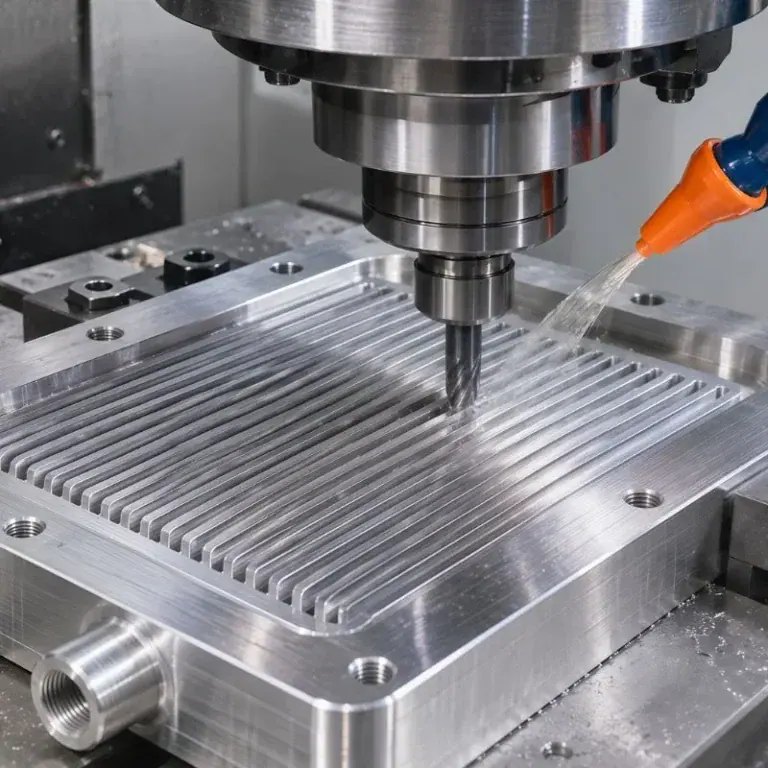
- CNC Milling: Used to machine housing contours, curved surfaces, grooves, and internal cavities.
- Drilling and Tapping: Used for screw holes, port openings, and internal mounting positions.
- Precision Milling: Suitable for edges, mating surfaces, and local structures with high appearance requirements.
- Forming and CNC Finishing: For housings suited to mass production, die casting or injection molding can be used to form the main structure, followed by machining of critical holes and mating surfaces.
CNC machining can be selected for prototypes and small-batch projects based on the part structure. For larger orders, the costs of forming processes and subsequent precision machining should be evaluated together.
How Can Machining Accuracy and Surface Quality Be Controlled for Consumer Electronics Housings?
Housing quality depends not only on overall dimensions but also on hole positions, assembly relationships, and surface treatment results.
Focus on Dimensional and Assembly Accuracy
Housings must fit screens, buttons, connectors, and internal brackets. Inspection requirements should be clearly defined for critical areas:
- Mounting Holes and Threaded Holes: Check hole diameter, depth, and position to ensure proper fastener installation.
- Port Openings: Verify dimensions and positions to avoid interfering with connector insertion and removal.
- Contact and Mating Surfaces: Inspect flatness, position, and related dimensions to ensure proper component fit.
- Thin-Wall and Edge Areas: Check local dimensions and contour changes to reduce deformation issues.
Defining critical dimensions according to assembly requirements helps reduce fit deviations between components.
Select Surface Treatments According to Material Type
Different materials require different surface treatment processes. The choice should be based on appearance design and protection requirements.
- Sandblasting: Creates a uniform matte texture and is suitable for a refined metallic appearance.
- Anodizing: Commonly used for aluminum alloy housings to improve surface protection and provide different color options.
- Polishing: Produces a smoother surface and is suitable for parts that require a specific level of gloss.
- Brushing: Creates directional textures that enhance the decorative appearance of metal.
- Passivation and Coating: Suitable protection methods can be selected according to the properties of stainless steel or magnesium alloy.
The color of anodized aluminum may be affected by the alloy grade, material batch, surface roughness, and pretreatment conditions. Material and treatment requirements should be standardized, and the final appearance should be confirmed through sample parts.

What Procurement Factors Should Be Considered When Customizing CNC Consumer Electronics Housings?
Housing customization involves structural, material, and appearance requirements. The completeness of procurement documents affects machining evaluation and production planning.
Provide Complete Product Design Information
Procurement teams should prepare technical documents that clearly show the part structure and acceptance requirements:
- 2D Engineering Drawings: Specify dimensions, tolerances, hole positions, and surface requirements.
- 3D Models: Show curved surfaces, cavities, thin walls, and internal structures.
- Material Specifications: Define the material grade, thickness, and performance requirements.
- Appearance Standards: Specify colors, textures, gloss levels, and surface treatment requirements.
- Antenna and Assembly Information: Identify antenna areas, non-metallic windows, and internal component positions.
More complete documentation makes it easier to understand design requirements accurately and determine a suitable machining solution.
Evaluate the Supplier’s Customization and Production Capabilities
Procurement teams should determine whether the supplier can handle complex curved surfaces, thin-wall structures, and precision holes. They should also confirm the supplier’s dimensional inspection capabilities and ability to coordinate surface treatments. For different order volumes, the suitability of CNC machining, die casting, or injection molding should be evaluated. Consistency in materials, machining standards, and appearance across repeat orders should also be considered.
Consumer electronics housing manufacturing requires coordination between product appearance, internal structures, wireless communication, and production methods. Selecting suitable materials and machining processes while controlling critical dimensions, surface finishes, and antenna clearance can reduce compatibility issues between the housing and internal components. For customized projects, clearly defining material grades, drawing tolerances, and appearance acceptance standards helps improve the accuracy of the manufacturing plan and ensures that the housing meets product design and practical usage requirements.