Type 3 anodizing is a hardcoat anodizing process used to create a thicker and denser oxide layer on aluminum parts. It is commonly used when a part needs higher surface hardness, better wear resistance, and stronger corrosion protection in demanding working environments. Compared with standard anodizing.
In this guide, you will learn what type 3 anodizing is, how the process works, where it is commonly used, and what factors should be considered when selecting it for custom aluminum parts.
What Is Type 3 Anodizing?
Type 3 anodizing is an electrochemical surface treatment that grows a hard oxide layer from the aluminum itself. Unlike paint or plating, the coating is formed through conversion of the surface, which is why it bonds well and performs effectively under wear.
Type 3 anodizing is a sulfuric-acid-based anodizing process associated with hardcoat performance and the Type III category in military specifications. Its main purpose is to improve hardness, wear resistance, corrosion resistance, and overall service durability on aluminum parts.
| Item | Type II Anodizing | Type 3 Anodizing |
| Main purpose | Decorative and general protection | Hardcoat protection and wear resistance |
| Coating character | Thinner and more appearance-focused | Thicker, denser, and more functional |
| Wear resistance | Moderate | Higher |
| Typical use | Consumer and decorative parts | Industrial and high-wear parts |
How Type 3 Anodizing Works?
Type 3 anodizing works by placing the aluminum part in an electrolyte bath and applying electrical current so a controlled oxide layer forms on the surface. This engineered oxide layer is much thicker than the natural oxide on untreated aluminum and is the reason the process improves hardness and protection.
How the Oxide Layer Forms
The oxide layer forms when the aluminum part acts as the anode in the anodizing bath. During the reaction, aluminum ions move away from the metal while oxygen ions move from the electrolyte toward the surface, building the oxide film.
Why It Improves Hardness, Wear Resistance, and Corrosion Resistance
Type 3 anodizing improves performance because the resulting oxide is thicker and denser than the natural aluminum oxide film. That harder barrier resists abrasion better and provides stronger separation between the aluminum substrate and corrosive environments.
How Type 3 Anodizing Affects Part Dimensions
Type 3 anodizing affects part dimensions because the coating both penetrates the surface and builds above it. Precision Coating states this growth is roughly split in half, which means designers need to account for coating buildup on critical features such as bores, threads, and close-tolerance surfaces.
| Coating Effect | Why It Matters |
| Inward growth | Changes substrate dimension slightly |
| Outward buildup | Increases finished size |
| Thicker coating | May require machining allowance |
| Hard surface | Improves service life |
What Materials Are Suitable for Type 3 Anodizing?
Type 3 anodizing is mainly intended for aluminum and aluminum alloys. Material selection matters because alloy content can affect coating appearance, uniformity, and final performance.
Aluminum Alloys and Other Suitable Substrates
Aluminum alloys are the main substrates used for type 3 anodizing, and sources such as Moldie specifically mention 6061 and 7075 as common choices. In real projects, alloy family influences coating response, color, and consistency.
Materials That Cannot Be Anodized
Materials such as standard steel and brass do not receive type 3 anodizing in the same way because this anodic coating is formed on aluminum. Precision Coating explicitly notes that only aluminum can form this type of anodic coating.
Can Brass or Steel Be Anodized?
Brass or steel cannot be anodized as type 3 hardcoat anodized parts. They may use other finishing methods, but not this aluminum anodizing process.
What Is the Type 3 Anodizing Process Flow?
The type 3 anodizing process is a controlled finishing sequence used to build a hard, thick, and uniform oxide layer on aluminum parts. In simple terms, it includes cleaning the part, preparing the surface, anodizing it under carefully controlled conditions, and then sealing or inspecting it based on the final application.
Although the exact process can vary by alloy, drawing requirement, and coating target, the goal stays the same: create a durable anodic layer with the required hardness, thickness, and surface performance. Because type 3 anodizing is usually used for functional rather than decorative purposes, process control is especially important.
Pre-Anodizing Surface Preparation
Pre-anodizing surface preparation removes grease, dirt, oxide, and other contamination so the coating can form evenly. If oil, machining residue, or surface oxide remains on the part, the anodized layer may become uneven or less stable.
In most production settings, this step may include degreasing, rinsing, acid cleaning, etching, and deoxidizing. These operations help create a clean and consistent aluminum surface before the hardcoat layer begins to grow.
Main Process Steps of Type 3 Anodizing
The main process steps of type 3 anodizing usually include cleaning, rinsing, surface preparation, immersion in a sulfuric-acid-based electrolyte, current application, oxide growth, rinsing, optional sealing, and final inspection. While the flow is straightforward, the final result depends on how well each stage is controlled.
During anodizing, the aluminum part is placed in the electrolyte bath and connected to electrical current. As the reaction proceeds, the oxide layer grows on the surface and develops into the hardcoat finish required for wear resistance and corrosion protection.
Post-Anodizing Sealing Techniques
Post-anodizing sealing techniques are used when the coating needs additional corrosion resistance or other specific surface properties. Sealing helps reduce the porosity of the anodized layer and can improve performance in certain service environments.
Depending on the application, Type III coatings may be hydrothermally sealed, precipitation sealed, or left unsealed. The right choice depends on the part’s working conditions, drawing requirements, and intended function.
Key Process Considerations
Key process considerations include solution chemistry, current density, temperature, treatment duration, alloy type, and target thickness. These factors directly influence coating thickness, hardness, color, and uniformity.
For precision parts, dimensional allowance, masking requirements, and alloy behavior should also be reviewed before production starts. In many projects, stable engineering control is just as important as the anodizing step itself.
| Process Stage | Main Purpose |
| Cleaning | Remove contamination |
| Surface preparation | Improve coating consistency |
| Anodizing | Form the hard oxide layer |
| Sealing | Improve corrosion protection if needed |
| Inspection | Check thickness and finish quality |
“Type 3 Anodizing Process Flow” is the most natural H2 here. If you want, I can revise the rest of the H2 titles to match this style.
What Materials and Equipment Are Needed for Type 3 Anodizing?
Type 3 anodizing depends on stable chemistry and controlled equipment. In production, coating quality is affected not only by the anodizing bath, but also by power delivery, temperature control, and the way parts are held during the process.
Common Process Materials
Common process materials include aluminum parts, sulfuric-acid-based electrolyte, rinsing media, and sealing chemicals when sealing is required. Precision Coating also notes concentrated acid solutions in conventional hard anodizing.
Anodizing Equipment
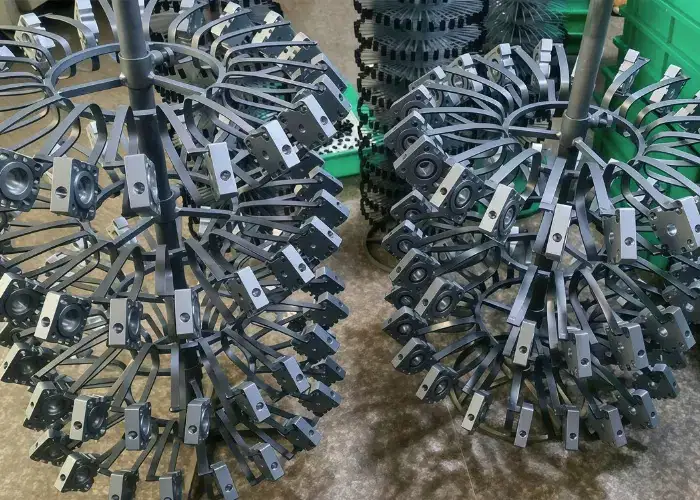
Anodizing equipment usually includes treatment tanks, a DC power supply, temperature-control systems, rinsing tanks, and fixturing or racking systems. Moldie lists tanks, power supply, and heating-related equipment as core items.
Types of Anodizing Equipment
Types of anodizing equipment can include batch systems, continuous systems, and automated anodizing systems. Moldie presents these categories as suitable for different production scales and output needs.
Benefits of Type 3 Anodizing
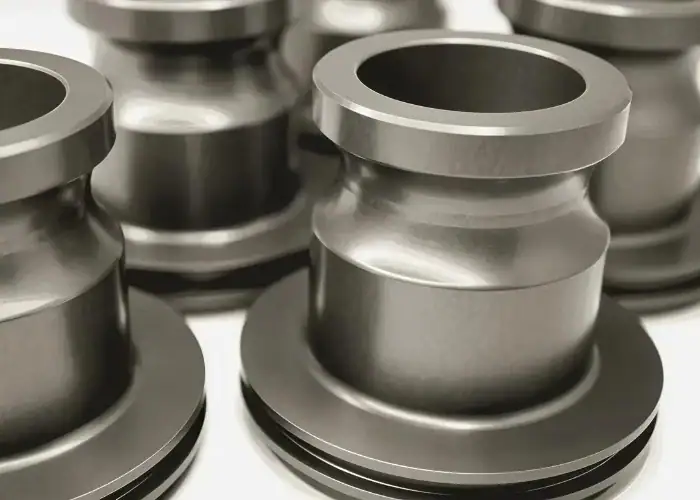
The main benefits of type 3 anodizing are higher surface hardness, better wear resistance, improved corrosion protection, and better suitability for demanding aluminum parts. This is why type 3 hard coat anodizing is usually chosen for functional performance rather than appearance alone.
Higher Surface Hardness
Type 3 anodizing increases surface hardness because it creates a hard oxide layer on the aluminum surface. Krishna reports microhardness values typically around 500 to 530 VPN for hard-anodized aluminum.
This harder surface is one of the main reasons the process is used for functional components instead of appearance-focused parts. A harder oxide layer helps the aluminum resist scratching, indentation, and surface damage during handling or service. For parts exposed to repeated contact or mechanical stress, this added hardness can significantly improve durability and reduce premature wear.
Better Wear Resistance
Type 3 anodizing improves wear resistance because the hard anodic layer withstands friction and surface contact better than ordinary anodized aluminum. Krishna states hard anodized coatings are more than 10 times more wear-resistant than ordinary anodized aluminum, while Finishing & Coating says hard anodic coatings have excellent wear characteristics.
This makes the process especially useful for aluminum parts that slide, rub, or operate in contact with other surfaces. In practical applications, stronger wear resistance helps reduce surface degradation, maintain dimensional stability for longer, and extend the service life of the component. For many industrial parts, this is one of the most important reasons to choose type 3 anodizing over a thinner or more decorative finish.
Improved Corrosion Protection
Type 3 anodizing improves corrosion protection by forming a thicker barrier between the environment and the aluminum substrate. Precision Coating and Krishna both describe corrosion resistance as a core reason the process is used.
Because the anodized layer acts as a protective surface barrier, it helps reduce direct exposure of the aluminum to moisture, chemicals, and other corrosive conditions. This is particularly valuable in industrial, outdoor, marine, and high-humidity environments where untreated aluminum may degrade more quickly. While the final level of protection still depends on alloy type, coating thickness, and whether sealing is used, type 3 anodizing generally offers stronger corrosion resistance than standard anodizing or bare aluminum.
Suitability for Demanding Industrial Parts
Type 3 anodizing is suitable for demanding industrial parts because it combines durability with the lightweight benefits of aluminum. Semano and Moldie both describe its use in industrial and heavy-use applications.
This balance is important because many engineered parts need stronger surface performance without the added weight of heavier metals. Type 3 anodizing helps aluminum remain lightweight and machinable while gaining a more durable working surface. That is why it is often used for machine components, housings, fixtures, transport parts, and other applications where both low weight and strong surface protection are important.
| Benefit | Practical Value |
| Higher hardness | Better scratch and wear resistance |
| Strong wear resistance | Longer service life |
| Better corrosion protection | More durability in harsh environments |
| Lightweight substrate | Keeps aluminum performance advantages |
Limitations of Type 3 Anodizing
Type 3 anodizing also has limitations. It can change dimensions, restrict appearance options, increase process complexity, and may not be the best fit for every part or every tolerance target.
Color and Appearance Limitations
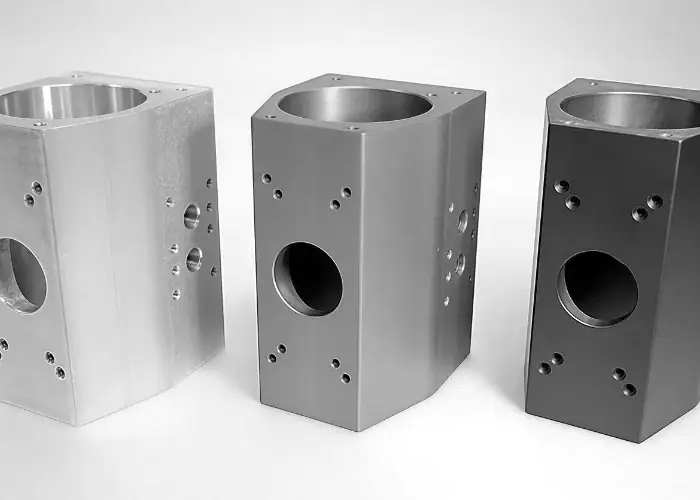
Type 3 anodize colors are more limited than those in lighter anodizing processes. Precision Coating notes that high-voltage hardcoat oxides darken and that final shade can vary by alloy family, while Moldie says darker tones such as black, gray, or bronze are typical.
This means type 3 anodizing is usually less suitable when a part needs a bright, decorative, or highly consistent cosmetic finish. Because alloy composition and process conditions can influence the final appearance, two aluminum alloys may not produce exactly the same shade even under similar process settings. In many cases, the finish is selected for durability first, while color is treated as a secondary result rather than the main requirement.
Dimensional Changes and Tolerance Considerations
Type 3 anodize thickness affects dimensions, so tight-tolerance parts produced by CNC machining may require machining compensation before coating. Moldie notes this can be a limitation for precision components, and Precision Coating explains the penetration/build-up effect behind that dimensional change.
This is especially important for bores, threads, sealing faces, press-fit areas, and other critical features. If the coating allowance is not considered early in the design or machining stage, the finished part may no longer meet fit or function requirements after anodizing. In practical terms, this means type 3 anodizing works best when the drawing, tolerance strategy, and finishing plan are aligned from the beginning.
Cost and Process Complexity
Type 3 anodizing can cost more than lighter anodizing because it requires tighter control of temperature, current, chemistry, thickness, and part handling. This is supported by the stricter process variables described across the reference sources.
The added process control often means more engineering attention, more careful fixturing, more inspection, and sometimes more masking or post-treatment work. For simple parts or lower-performance applications, this extra cost may not always be justified. As a result, type 3 anodizing is often selected only when the required surface performance clearly supports the added finishing cost and process effort.
When It May Not Be the Best Choice
Type 3 anodizing may not be the best choice when a part mainly needs decorative color, minimal dimensional change, or a lower-cost finish for light-duty service. This is an inference drawn from the process’s emphasis on hardcoat performance and thickness.
For example, if a component is mainly cosmetic, carries very tight unadjusted tolerances, or works in a relatively mild environment, a thinner anodizing process or another finish may be more practical. In those situations, type 3 anodizing may provide more protection than the part actually needs while also adding cost and dimensional complexity. This is why finish selection should always be tied to the real function of the part rather than applying the hardest coating by default.
Industries That Benefit from Type 3 Anodizing
Industries that benefit from type 3 anodizing are those using aluminum parts in high-wear, high-contact, or corrosive environments. The sources most often point to automotive, industrial manufacturing, consumer goods, and other demanding sectors.
Automotive Industry
The automotive industry benefits from type 3 anodizing because aluminum parts often face abrasion, vibration, and harsh service conditions. Semano specifically identifies automotive as a major use sector.
Industrial Manufacturing
Industrial manufacturing benefits from type 3 anodizing in machine parts, fixtures, and equipment components that need stronger wear and corrosion performance. Semano names industrial manufacturing among the industries that benefit from hardcoat use.
Consumer Goods
Consumer goods benefit when products need better scratch resistance and longer surface life. Semano includes consumer-oriented uses among the application areas for type 3 hard anodizing.
Other High-Wear and Corrosive Environments
Other relevant environments include marine, electrical, construction, and heavy-use outdoor applications. Moldie lists marine applications and electrical components among its example use categories.
What Standards And Certifications Apply To Type 3 Anodizing?
Standards and certifications matter in type 3 anodizing because they define coating class, thickness expectations, and compliance requirements. In specification-driven industries, the standard can be as important as the process name itself.
Applicable Certifications
Precision Coating lists certifications and standards including Mil-A-8625 Type III Class 1 and 2, MIL-STD 171, AMS 2468 and 2469, BS 5599, BS EN 2536, and ASTM B580 Type A.
Common Industry Requirements
Common industry requirements usually focus on coating thickness, class, sealing condition, dimensional allowance, appearance limits, and inspection criteria. This is an inference based on the standards and process notes given in the reference pages.
FAQs
How Thick Is Type 3 Anodize?
Type 3 anodize is typically about 1.0 to 3.0 mils thick, or roughly 25 to 75μm, although some hardcoat processes can exceed that range for special requirements. Precision Coating notes Type III coatings can reach 50μm (0.002″) or more, while Semano lists a common hardcoat range of 1.0 to 3.0 mil and says it can grow beyond 6.0 mil in some cases.
How To Remove Type 3 Anodize?
Type 3 anodize is usually removed by chemical stripping rather than by simple mechanical cleaning, because the hardcoat layer is dense and strongly bonded to the aluminum surface. In practice, removal must be controlled carefully to avoid attacking the base metal or changing critical dimensions. The exact stripping chemistry and exposure time depend on alloy, coating thickness, and part geometry, so shops normally validate the process before production rework.
Is Type 3 Anodizing Better Than Type 2?
Type 3 anodizing is better than Type 2 when the part needs higher hardness, stronger wear resistance, and thicker corrosion protection, but it is not always better for decorative appearance or low-cost finishing. Precision Coating explains that Type II runs at under 15A/ft², while Type III uses about double that current density; the harder process produces a thicker, more durable coating. Typical Type III thickness is also substantially greater than Type II.
Can Type 3 Anodizing Be Colored?
Type 3 anodizing can be colored, but color options are more limited than with lighter anodizing because hardcoat films naturally tend to darken during processing. Precision Coating notes high-voltage hardcoat oxides darken, and Moldie describes darker shades such as black, gray, or bronze as typical results. In other words, coloring is possible, but type 3 anodizing is usually selected for performance first, with color treated as a secondary requirement.
What Is The Current Density Of Type 3 Anodizing?
The current density of Type 3 anodizing is commonly much higher than standard Type II anodizing and is often around 24 to 36A/ft² in hardcoat production. Anoplate gives that 24 to 36A/ft² range for MIL-A-8625 Type III hardcoat, while Precision Coating notes Type II normally uses under 15A/ft² and Type III uses roughly double that level. Finishing & Coating also emphasizes that hardcoat should be controlled by current density, not voltage alone.
Conclusion
Type 3 anodizing is a hardcoat finishing process that gives aluminum parts higher surface hardness, better wear resistance, and stronger corrosion protection. It is a practical choice for precision components that need longer service life in demanding environments.
At TiRapid, we support custom aluminum part manufacturing with machining and finishing options based on real application needs. If you have a drawing or surface requirement, our team can help evaluate the right anodizing solution for your project.