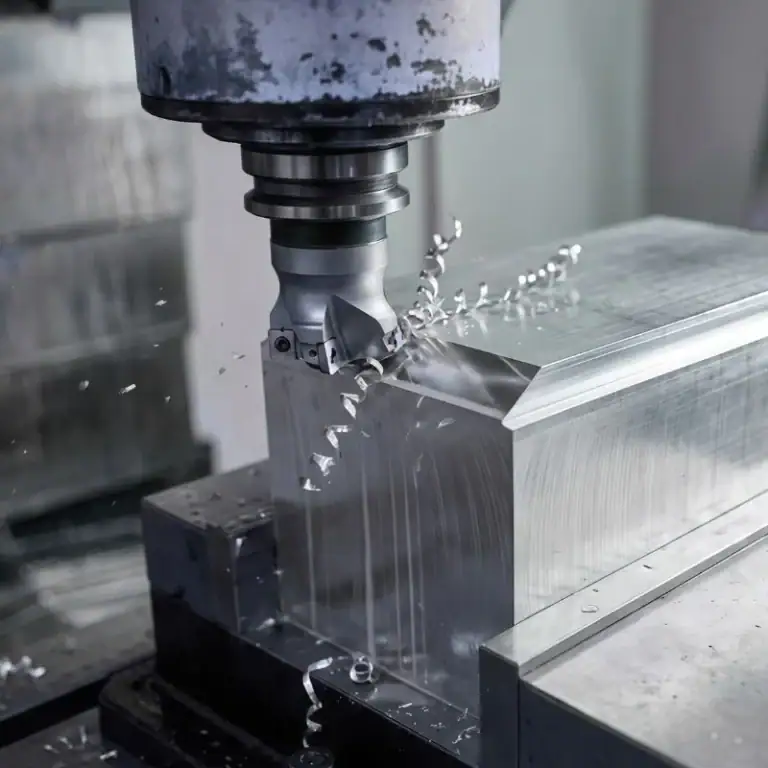
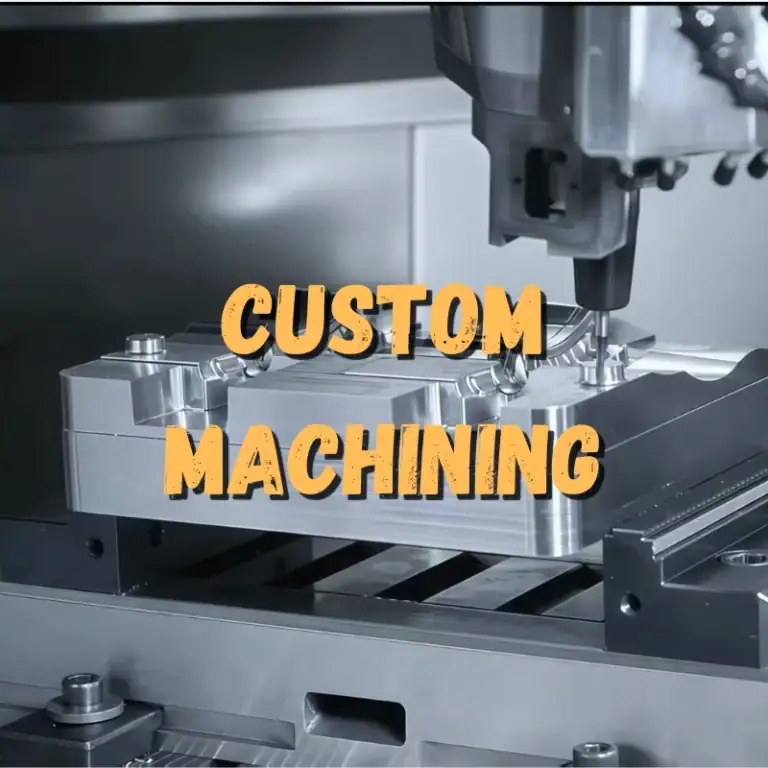
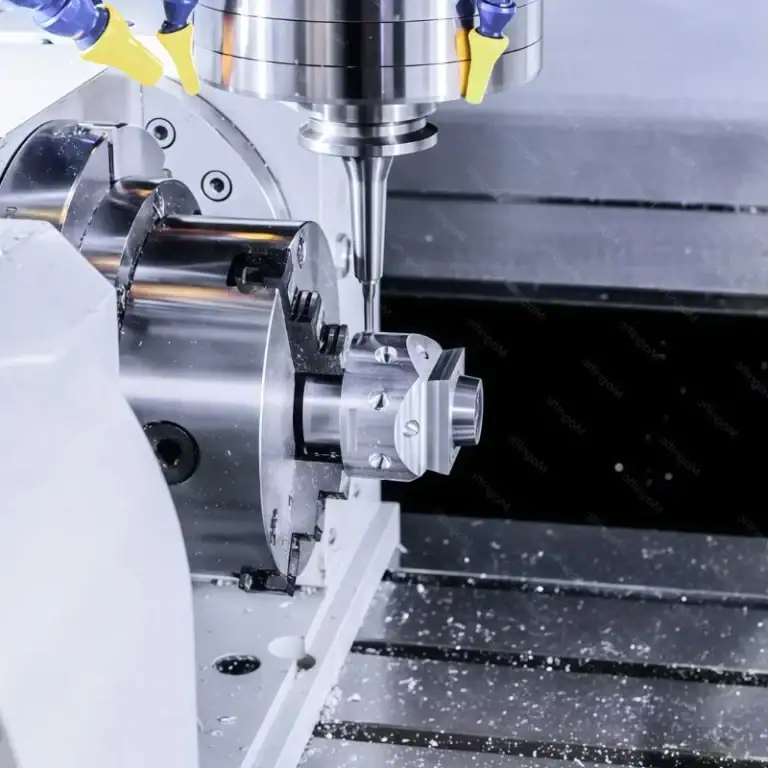
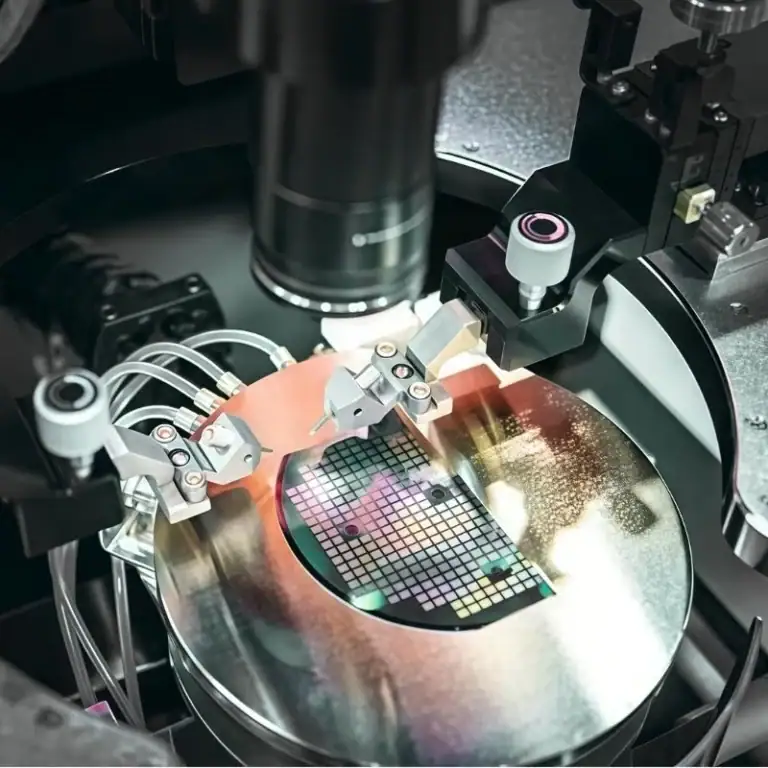
In product development, CNC plastic machining is a highly mature and reliable manufacturing method. It is not only suitable for industrial parts, but is also widely used in consumer electronics, medical devices, automotive components, and structural validation prototypes. Compared with 3D printing or injection molding, CNC machining offers clear advantages in precision, strength, and surface quality. Therefore, it is especially suitable for product designs that require “functionality + stability + appearance” at the same time.
What Types of Products Are Suitable for CNC Plastic Machining?
Product Positioning of CNC Plastic Machining
CNC plastic machining is essentially a process of cutting precise parts from solid blocks of material. Therefore, it is particularly suitable for product designs with clear structures, high dimensional requirements, and well-defined assembly relationships. Unlike rapid prototyping, CNC focuses more on “functional validation + small-batch production + high-precision finished parts,” emphasizing usability and stability rather than just visual representation.
Design Features Suitable for CNC
Product designs suitable for CNC plastic machining generally have the following characteristics: relatively regular structures with high precision requirements, clear assembly relationships, the need to withstand certain mechanical strength, or high surface appearance requirements. These products often cannot be completed by 3D printing alone and are not always suitable for injection molding.
Design Types Not Suitable for CNC
If a product has extremely complex structures (such as multi-layer internal cavities or highly free-form surfaces), or if it requires ultra-high volume production with cost sensitivity, CNC may not be the optimal solution. In such cases, 3D printing or injection molding is usually preferred.
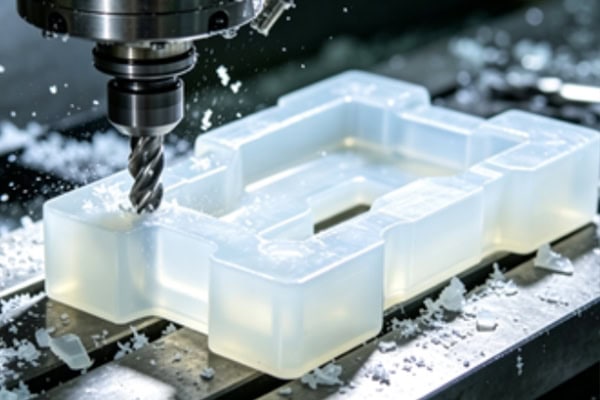
From Design to CNC Machining Implementation Process
Design Stage
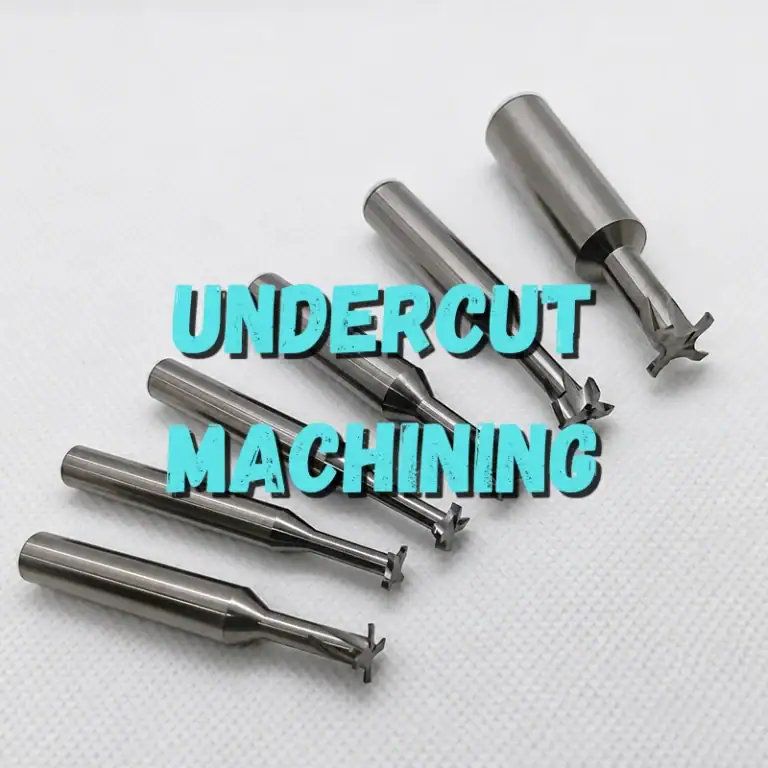
At the product design stage, CNC manufacturability must already be considered. For example, whether there are undercuts that tools cannot reach, overly deep narrow slots, or unnecessarily complex surfaces. The cleaner the design, the more stable the machining process and the lower the cost.
Engineering Breakdown
Complex products usually need to be broken down into multiple CNC-machinable parts and then assembled. For example, housings, brackets, and connectors can be machined separately and then combined using screws, snap-fits, or inserts. This ensures that each part can be produced using standard tools.
Process Planning
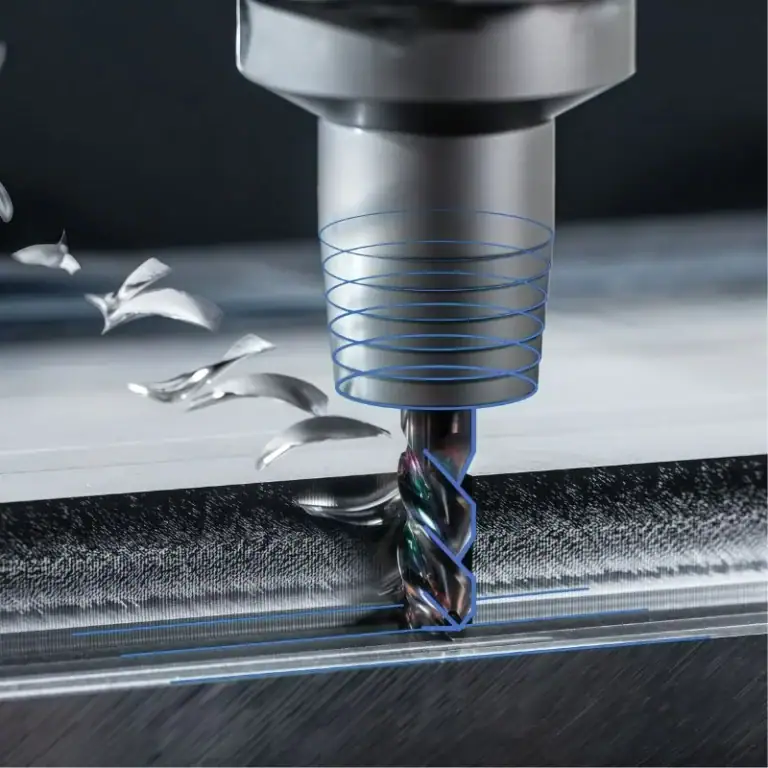
Different designs require different materials and machining strategies. For example, structural parts often use POM or ABS, cosmetic parts may use PMMA or PC, and high-strength parts may use PEEK. At the same time, roughing and finishing toolpaths must be planned to ensure dimensional accuracy and surface quality.
Machining and Validation
One advantage of CNC is the ability to quickly modify designs and re-machine parts, making it ideal for iterative validation during product development. In the prototype stage, structures can be continuously optimized until final design requirements are met.
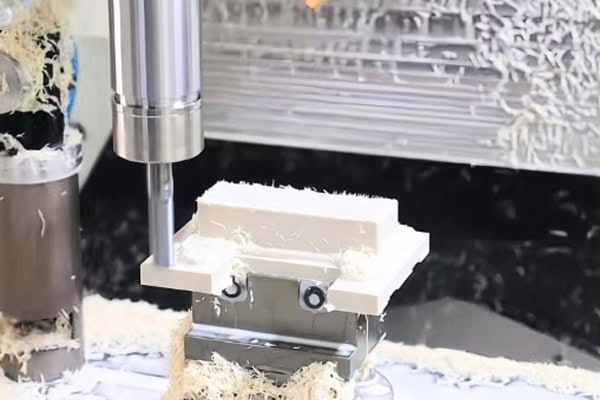
How CNC Supports Product Design Implementation?
High-Precision Structural Capability
CNC machining can achieve high precision in hole positioning, flatness, and assembly tolerances. It is therefore well-suited for product designs requiring precise fits, such as snap-fit structures, sliding mechanisms, and sealing structures.
Reliability of Functional Part Design
Compared with 3D printing, CNC plastic parts are made from homogeneous solid materials. Therefore, they are more reliable in load-bearing performance, fatigue resistance, and long-term stability. This makes them suitable for functional components rather than just appearance models.
Surface Quality for Appearance Design
CNC can achieve high surface finish through optimized toolpaths, finishing operations, and polishing processes. For housings, panels, and display parts, CNC can directly deliver near-final product appearance.
Design Feedback Loop
CNC machining provides fast feedback on design issues such as insufficient wall thickness, weak structures, or assembly interference.This “design–manufacture–validate” cycle makes product optimization more efficient.
Tolerance and Assembly System Design
In product design, CNC enables tight tolerance control, making complex assembly systems possible. Multi-part nesting, precision alignment structures, and modular designs all rely on CNC dimensional stability.
Different Product Designs Correspond to Different Plastics
Structural Part Design
POM is suitable for gears, sliders, and structural connectors, offering high stability and wear resistance.ABS is suitable for housings and general structural parts, with stable machining performance and moderate cost.
Appearance Design
PMMA is suitable for transparent display parts and decorative structures, offering excellent visual effects.PC is suitable for impact-resistant appearance designs such as protective covers or industrial panels.
High-Performance Design
Used in aerospace, medical, and semiconductor applications, these materials offer high temperature resistance, high strength, and chemical stability, making them suitable for demanding functional parts.
Special Functional Design
PTFE is suitable for low-friction structural designs such as seals and sliding components. PA is suitable for elastic structures but requires moisture control, otherwise dimensional stability will be affected.
Types of Product Designs Suitable for CNC Plastic Machining
Precision structural component design: such as snap-fits, connectors, and positioning structures requiring tight tolerances.
Functional prototype design: used for rapid structural and functional testing during product development.
Appearance and display design: such as transparent housings, panels, and display models requiring high surface quality.
Small-batch product design: production without molds but requiring stable quality.
High-performance industrial part design: used in medical, electronics, and automation equipment.
Modular and detachable designs: suitable for products requiring repeated assembly and testing.
Frequently Asked Questions
“Our product design is very complex. Can CNC handle it?”
Many seemingly complex product designs can actually be broken down into multiple simpler machinable structures and then assembled to achieve the overall function. Therefore, the key is not how complex the design is, but whether manufacturability has been considered. If CNC capabilities are taken into account during the design stage, many complex structures can actually be made more stable and more precise.
In conclusion
CNC plastic machining is not just a manufacturing method; it is an important tool for turning product design into reality. It is especially suitable for designs that require precision, structure, and functionality, not just visual expression. CNC is better suited for “designs that work” rather than “designs that look complex.” As long as the structure is well-designed, the material is properly selected, and the machining process is optimized, it is possible to achieve high precision, high stability, and high consistency.Truly mature product design is not only something that can be drawn—it is something that can be reliably manufactured. The value of CNC plastic machining lies in transforming design drawings into real, dependable products, balancing both function and appearance.