Metrology is the science of measurement, but in manufacturing it means much more than simply checking a dimension. It provides the standards, methods, and systems that make measurement results accurate, repeatable, and useful across design, machining, inspection, and quality control.
In this guide, we explain what metrology is, why it matters, the main types, common tools, and its role in precision manufacturing and inspection.
What Is Metrology?
Metrology is the science of measurement. In engineering and manufacturing, it provides the rules, standards, and methods that make measurement results reliable rather than accidental. This includes not only taking a measurement, but also making sure the result is accurate, repeatable, and traceable to recognized standards.
That is why metrology is broader than simply using a measuring tool. A caliper, micrometer, or CMM can generate numbers, but metrology is what gives those numbers technical meaning. It connects measurement practice with calibration, uncertainty, standardization, and consistency so that results can be trusted across machines, operators, suppliers, and production stages.
In real manufacturing, metrology supports everything from design verification to final inspection. It helps manufacturers confirm whether a part actually meets tolerance, whether a process is stable, and whether inspection data can support quality decisions. Without metrology, measurement becomes a number without a reliable system behind it.
Why Is Metrology Important?
Metrology is important because manufacturing quality depends on reliable measurement. If dimensions, form, or surface conditions cannot be checked accurately, then design intent cannot be verified with confidence. Even a well-made part can become a problem if the measurement system behind inspection is inconsistent or poorly controlled.
It also plays a major role in repeatability and process control. In production, one correct measurement is not enough. Companies need results that stay consistent across time, operators, and inspection equipment. Good metrology makes it easier to reduce variation, catch errors early, and maintain quality standards from incoming inspection to final approval.
From a business perspective, metrology helps reduce scrap, improve communication, and strengthen production confidence. It supports better supplier coordination, more reliable documentation, and clearer decisions when tolerances are tight or parts are complex. In practical terms, metrology is one of the foundations of precision manufacturing and stable quality control.
What Are the Main Types of Metrology?
Metrology is not a single activity used in only one environment. In practice, it is divided into several branches depending on whether the focus is measurement standards, industrial production, or regulated measurement under legal control. Understanding these categories makes it easier to see how metrology works across science, manufacturing, and compliance.
Scientific Metrology
Scientific metrology deals with the highest level of measurement accuracy and the definition of standards. It is closely tied to the development, maintenance, and refinement of measurement units and reference systems. This branch is important because all lower levels of measurement confidence ultimately depend on stable and recognized standards.
Although scientific metrology is not something most manufacturers deal with directly every day, it forms the technical base behind trustworthy measurement. It ensures that the measurement systems used in laboratories, factories, and inspection departments are connected to broader standards rather than isolated local practice.
Industrial Metrology
Industrial metrology is the branch most closely connected to manufacturing. It focuses on measurement activities used in production, machining, inspection, and process control. This includes checking dimensions, verifying tolerances, monitoring part consistency, and supporting quality assurance throughout the manufacturing cycle.
In practical factory use, industrial metrology helps confirm whether a part matches its drawing, whether a machine process remains stable, and whether production output is meeting quality requirements. It is one of the most important systems behind precision manufacturing because it turns measurement into useful production control.
Legal Metrology
Legal metrology covers measurements that are regulated by law or compliance requirements. It is commonly associated with areas where fairness, public safety, trade accuracy, or regulated standards matter. Examples often include commercial weighing, fuel dispensing, medical measurements, and other controlled systems where incorrect measurement could create legal or financial issues.
While legal metrology is less central to CNC machining than industrial metrology, it remains important in the broader world of regulated measurement. It reminds manufacturers and engineers that not all measurement systems are only technical tools. In some industries, they also carry legal and compliance responsibilities.
Key Concepts in Metrology
To understand how metrology supports reliable inspection, it is important to know the core concepts behind measurement quality. Terms such as accuracy, precision, calibration, traceability, and uncertainty are often used together, but each one explains a different part of why a measurement result can or cannot be trusted in practice.
Accuracy
Accuracy describes how close a measured value is to the true or accepted value. In manufacturing, this matters because a measurement can look precise and still be wrong if it consistently misses the actual dimension. Accurate measurement is essential when inspection results are used to accept, reject, or adjust a part or process.
Precision
Precision describes how consistent repeated measurements are when the same feature is checked multiple times. A system can be precise without being accurate if it produces the same wrong result again and again. In practical inspection work, good precision is important for repeatability and process confidence.
Calibration
Calibration is the process of comparing a measuring instrument against a known reference standard. The goal is to confirm that the tool is performing correctly or to identify any deviation that must be corrected or accounted for. Without calibration, even a high-quality instrument can gradually produce unreliable results.
Traceability
Traceability means that a measurement result can be linked back through a documented chain to recognized standards. This connection is important because it gives credibility to the result and shows that the value is not isolated from accepted measurement systems. In quality-sensitive industries, traceability is often a key requirement.
Uncertainty
Uncertainty refers to the possible variation or doubt associated with a measurement result. No measurement system is absolutely perfect, so every result has some level of uncertainty. Understanding uncertainty helps engineers judge how much confidence they should place in inspection data, especially when tolerances are tight or decisions are critical.
Common Metrology Tools and Equipment
Metrology depends not only on theory and standards, but also on the tools used to capture measurement data in real production. Different instruments are designed for different tasks, from quick handheld checks to complex geometric inspection. Choosing the right equipment depends on the feature being measured, the tolerance level, and the inspection goal.
Handheld Measuring Tools
Handheld measuring tools are among the most common instruments used in industrial metrology. These include calipers, micrometers, height gauges, and dial indicators. They are widely used because they are practical, fast, and suitable for many routine inspection tasks in machining, assembly, and quality control.
These tools are especially useful for checking basic dimensions such as length, diameter, thickness, depth, and step height. In many production environments, they are the first line of inspection because they allow operators and inspectors to verify part features quickly without moving the part to a more advanced measurement system.
Even though handheld tools are simple compared with digital or automated systems, they still depend on correct calibration, proper handling, and operator skill. Their value in metrology does not come only from convenience. It comes from their ability to provide reliable measurement when used in a controlled and consistent way.
Optical and Digital Systems
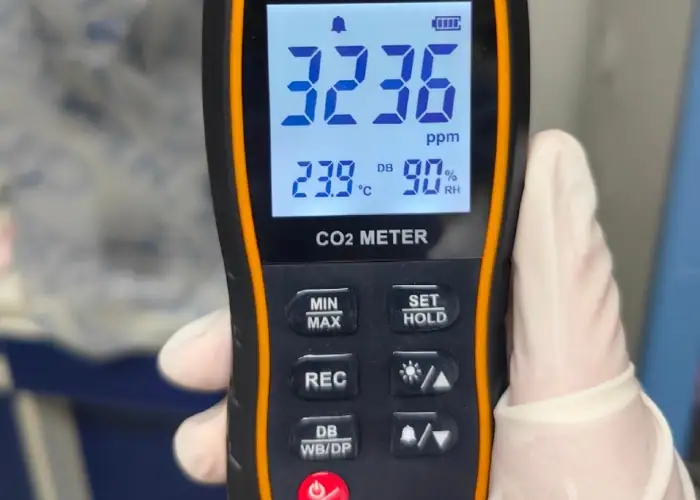
Optical and digital measuring systems are used when parts require faster data collection, non-contact measurement, or better visibility of fine features. Common examples include vision systems, optical comparators, and laser scanners. These tools are especially useful for inspecting profiles, edges, small features, and delicate surfaces that may be difficult to measure accurately with contact tools.
One advantage of these systems is that they can improve efficiency and reduce the risk of damaging sensitive parts during inspection. They are also valuable when a project involves high-volume inspection, complex feature recognition, or the need to capture measurement data digitally for reporting and traceability.
In practical manufacturing, optical and digital systems often support both quality inspection and process control. They make it easier to compare measured results with drawings, CAD data, or profile requirements, especially when traditional handheld methods become too limited for the part geometry or production speed.
Coordinate Measuring Machines
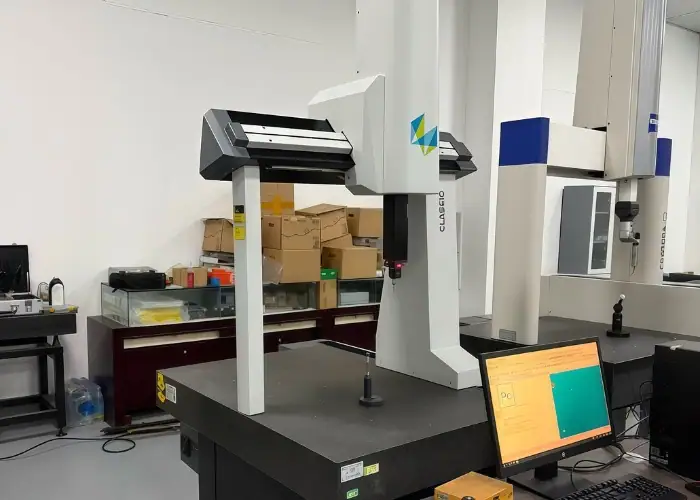
Coordinate Measuring Machines, or CMMs, are among the most important tools in modern industrial metrology. They are designed to measure part geometry with high accuracy by capturing points in three-dimensional space. CMMs are widely used for complex parts, tight tolerances, and inspection tasks where standard handheld tools are not sufficient.
A CMM is especially useful when a part includes multiple critical features that must be measured in relation to one another. It can help inspect hole positions, flatness, profiles, runout, and many other geometric requirements that are difficult to verify consistently with manual methods alone. This makes CMM inspection highly valuable in precision machining and advanced manufacturing.
In many quality systems, CMMs are used not only for final inspection but also for first article inspection, process validation, and documentation. Because they can provide detailed measurement data and repeatable results, they play a major role in supporting traceability, tolerance verification, and customer quality requirements.
Surface and Form Measurement Tools
Some metrology tools are designed not for basic size measurement, but for evaluating surface quality and geometric form. These include roughness testers, roundness testers, and profilometers. They are used when the part must meet specific surface finish or form requirements that go beyond simple dimensional inspection.
This kind of equipment is important because many parts can pass basic size checks and still fail functionally if the surface texture or geometric form is incorrect. For example, a shaft may have the right diameter but still perform poorly if roundness, straightness, or surface roughness is outside the required range.
In manufacturing, surface and form measurement tools are especially valuable for precision parts, sealing surfaces, rotating components, and high-performance assemblies. They help verify whether the part not only looks correct in size, but also performs correctly in contact, motion, and real service conditions.
How Metrology Is Used in Manufacturing
Metrology is used throughout the manufacturing process, not only at final inspection. It supports incoming material checks, in-process verification, and finished part approval by giving manufacturers reliable measurement data at each stage. This helps reduce variation, identify problems earlier, and keep production decisions based on evidence rather than guesswork.
One important use of metrology is controlling quality before problems spread. Manufacturers may inspect raw materials, supplied parts, or semi-finished components before machining begins, then continue checking key features during production. This makes it easier to catch setup issues, machine drift, tool wear, or dimensional changes before they affect an entire batch.
At the final stage, metrology confirms whether the finished part meets dimensional, geometric, and sometimes surface requirements before shipment or assembly. It also supports first article inspection, process validation, capability studies, and continuous improvement. In this way, metrology is not only a checking step after manufacturing, but a system that helps keep the whole process stable and repeatable.
Metrology in CNC Machining
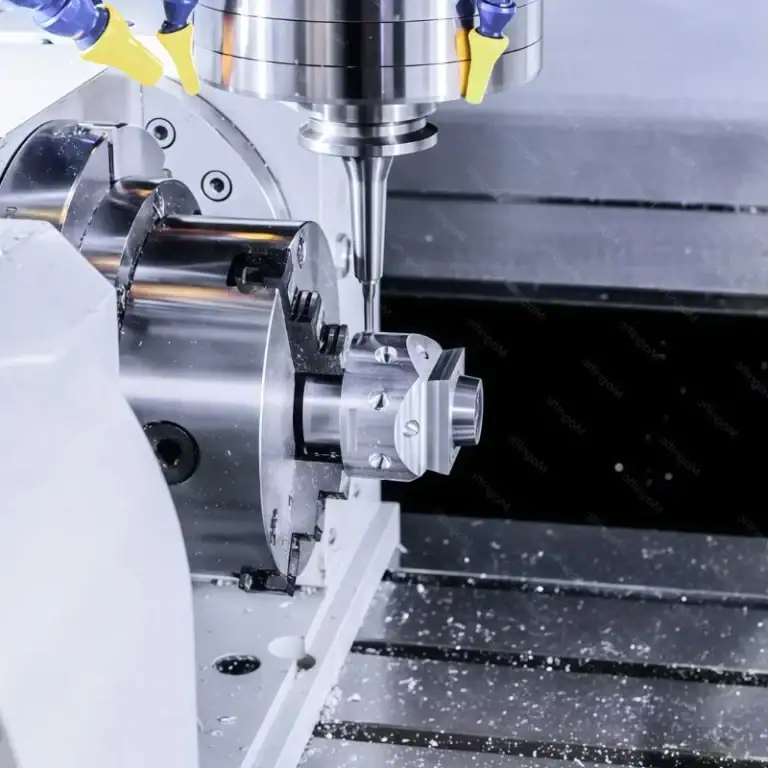
In CNC machining, metrology is more than a final quality check after the cutting is finished. It is part of how manufacturers verify dimensions, confirm geometric requirements, and keep tight-tolerance production under control. This becomes even more important when parts include complex features, close fits, or strict assembly demands.
Dimensional Verification
In CNC machining, metrology is essential for dimensional verification. Machined parts often include critical dimensions that must match the drawing within very tight tolerances. Measurement systems are used to confirm sizes such as diameters, thicknesses, depths, hole spacing, and step features so that the finished part performs as intended.
This matters because machining accuracy cannot be assumed from the process alone. Even when the machine program is correct, variation can still come from tool wear, thermal effects, setup condition, or material behavior. Metrology provides the actual evidence that the part geometry matches the required dimensions rather than only appearing correct in process.
Dimensional verification is especially important in precision components, mating parts, and assemblies where even small deviations can affect fit or function. In these cases, reliable measurement is what connects CNC machining capability to real quality performance.
GD&T and Complex Feature Inspection
Many CNC machined parts require more than simple linear dimensions. They may include geometric tolerances such as position, flatness, parallelism, runout, or profile. Metrology is what allows manufacturers to verify these more advanced requirements in a meaningful and repeatable way.
GD&T inspection often requires tools and methods beyond basic handheld measurement. Depending on the part, this may involve CMMs, height gauges, indicators, optical systems, or dedicated fixtures. These systems help determine not only the size of a feature, but also how it relates to datums, surfaces, and the rest of the part geometry.
This is especially important for parts with complex shapes, multi-axis machining features, or tight assembly relationships. Without proper metrology, a part may look acceptable in isolated dimensions while still failing its true functional or geometric requirement. That is why GD&T inspection is a major part of advanced CNC quality control.
Supporting Tight-Tolerance Production
Metrology plays a direct role in supporting tight-tolerance machining. When production targets are narrow, even small shifts in machine behavior, tool condition, or part setup can create nonconformance. Accurate measurement helps manufacturers detect those shifts early and respond before they affect a larger number of parts.
This is one reason metrology is closely tied to repeatability and process stability. In tight-tolerance work, measurement is not only used to judge finished parts. It is also used to support setup validation, in-process correction, and long-term confidence that the machining process is under control.
For customers, this means better consistency, fewer surprises, and stronger documentation. For manufacturers, it means lower scrap risk and better process visibility. In tight-tolerance CNC machining, metrology is not a secondary step after production. It is part of what makes precision production possible.
FAQs
Why is metrology more than just measuring a part?
Metrology is broader because it includes the standards, calibration methods, traceability systems, and quality rules that make a measurement result trustworthy. A simple measurement only gives a number, but metrology explains whether that number is reliable enough to support engineering or production decisions.
Why is calibration so important in metrology?
Calibration matters because even a good measuring tool can drift over time or produce misleading results if it is not checked against a known standard. In metrology, calibration helps confirm that the instrument is still giving dependable readings. Without it, inspection data may look precise but still lead to wrong quality decisions.
What can affect measurement accuracy in manufacturing?
Many factors can influence measurement accuracy, including tool condition, operator handling, calibration status, part temperature, environmental conditions, and the complexity of the feature being measured. In manufacturing, a result is only useful when the measurement system is controlled well enough to reduce these sources of variation.
When does CNC machining need advanced metrology instead of basic handheld tools?
Advanced metrology becomes more necessary when parts include tight tolerances, complex geometry, GD&T requirements, or multiple critical features that must be measured in relation to each other. In those cases, tools such as CMMs, optical systems, or dedicated inspection setups can provide more reliable results than basic handheld inspection alone.
Conclusion
Metrology is the science that makes measurement reliable, consistent, and useful in real manufacturing. It supports accuracy, inspection, process control, and quality decisions across design, machining, and production, making it an essential part of precision engineering.
At TiRapid, we provide precision CNC machining services for custom metal and plastic parts, supported by reliable inspection and quality control for industries such as automation, electronics, and industrial equipment.