Aluminium 6082 and 7075 are both widely used engineering aluminium alloys, but they are not designed for the same type of project. 6082 is usually selected for structural parts that need good corrosion resistance, weldability, and balanced machinability, while 7075 is chosen when high strength and a strong strength-to-weight ratio are the top priorities.
In this guide, you will learn how aluminium 6082 vs 7075 compares in composition, strength, corrosion resistance, weldability, CNC machining performance, cost, and application use.
What Is 6082 Aluminium?
Aluminium 6082 is a medium-to-high-strength structural alloy in the 6000 series. Its main alloying elements are magnesium, silicon, and manganese, which provide a balanced combination of mechanical strength, corrosion resistance, weldability, and CNC machinability.
Among 6000-series alloys, 6082 is widely used for load-bearing and general engineering components. In the T6 condition, it offers higher strength than common 6061 aluminium while retaining good dimensional stability and resistance to atmospheric corrosion.
Key Features Of Aluminium 6082
- Medium-to-high strength for structural and load-bearing components
- Good corrosion resistance in outdoor, industrial, and marine environments
- Excellent weldability using common MIG and TIG welding methods
- Good CNC machinability for milling, turning, drilling, and tapping
- Better strength than many standard 6000-series aluminium alloys
- Good anodizing and surface-finishing compatibility
- Suitable for welded structures, frames, brackets, plates, and machine parts
- More economical than high-strength 7000-series alloys
6082 is generally the better choice when weldability, corrosion resistance, manufacturing flexibility, and cost control are more important than achieving maximum strength.
What Is 7075 Aluminium?
Aluminium 7075 is a high-strength alloy in the 7000 series, primarily alloyed with zinc, magnesium, and copper. It is one of the strongest commercially available aluminium alloys and is widely used for components exposed to high mechanical loads, fatigue, and demanding service conditions.
In the T6 condition, 7075 provides significantly higher tensile and yield strength than 6082. Its excellent strength-to-weight ratio makes it suitable for aerospace structures, robotics components, motorsport parts, precision fixtures, tooling, and other applications where weight reduction and structural performance are critical.
Key Features Of Aluminium 7075
- Very high tensile strength, yield strength, and stiffness
- Excellent strength-to-weight ratio for lightweight structural parts
- Good fatigue resistance for high-load and repeated-motion applications
- Good CNC machinability with sharp carbide tools and stable workholding
- Suitable for tight-tolerance and high-performance precision components
- Lower weldability than 6082 and generally not preferred for welded structures
- Lower natural corrosion resistance than 6000-series aluminium
- Often anodized or coated for additional surface protection
- Higher material and machining cost compared with 6082
- Commonly used in aerospace, robotics, motorsport, tooling, and defense parts
7075 is generally the better choice when maximum strength, stiffness, fatigue resistance, and weight reduction are the main priorities, provided that welding, corrosion exposure, and material cost are properly considered.
How Do Their Alloy Series and Chemical Compositions Differ?
Their alloy series and chemical compositions differ mainly in the strengthening elements: 6082 is a 6000 series aluminium alloy based on magnesium and silicon, while 7075 is a 7000 series aluminium alloy based mainly on zinc, magnesium, and copper.
Base Aluminum and Key Alloying Elements
Both 6082 and 7075 are aluminium-based alloys, which means aluminium forms the main part of the material. The difference comes from the added alloying elements. These elements change strength, hardness, corrosion resistance, weldability, and CNC machining behavior.
6082 uses magnesium and silicon as its main alloying elements. This Mg-Si combination gives the alloy good structural strength and good corrosion resistance. Manganese also helps improve strength and stability, making 6082 suitable for frames, structural plates, and engineering components.
7075 uses zinc as the primary strengthening element, with magnesium and copper added to further improve strength and hardness. This is why 7075 can reach much higher mechanical performance than 6082, but the high copper and zinc content also reduces weldability and corrosion resistance.
Differences in Composition and Their Implications
The biggest composition difference is that 7075 contains far more zinc and copper, while 6082 contains more silicon and manganese. This means 7075 is stronger and harder, but 6082 is more corrosion-resistant and easier to join or form.
| Element | 6082 Aluminium | 7075 Aluminium | Practical Meaning |
| Silicon | About 0.7–1.3% | Up to about 0.4% | Helps 6082 with corrosion resistance and weldability |
| Magnesium | About 0.6–1.2% | About 2.1–2.9% | Improves strength and heat treatment response |
| Zinc | Up to about 0.2% | About 5.1–6.1% | Main reason 7075 has very high strength |
| Copper | Up to about 0.1% | About 1.2–2.0% | Increases strength but reduces corrosion resistance and weldability |
| Manganese | About 0.4–1.0% | Up to about 0.3% | Helps 6082 with structural stability |
| Aluminium | Balance | Balance | Base material in both alloys |
Because of this composition, 6082 is more suitable when the part must be welded, exposed to moisture, or used in structural fabrication. 7075 is more suitable when the part must resist high stress, impact, or fatigue under demanding conditions.
What Are the Mechanical Properties of 6082 vs 7075?
The mechanical properties of 6082 and 7075 differ mainly in strength and hardness. 7075 is much stronger than 6082 and is better for high-stress applications, while 6082 provides moderate-to-high strength with better ductility, easier fabrication, and better corrosion resistance. For many structural parts, 6082 is strong enough, for aerospace or racing parts, 7075 is often the better choice.
Tensile Strength and Yield Strength
Tensile strength shows how much pulling force a material can handle before breaking. Yield strength shows when the material starts to deform permanently. In both areas, 7075 is stronger than 6082, especially in the T6 temper.
| Property | 6082-T6 | 7075-T6 | What It Means |
| Tensile strength | Medium to high | Very high | 7075 handles higher pulling loads |
| Yield strength | Good | Much higher | 7075 resists permanent deformation better |
| Strength-to-weight ratio | Good | Excellent | 7075 is better where weight saving and high strength matter |
| Ductility | Better | Lower | 6082 is easier to form and fabricate |
For parts such as support frames, brackets, plates, and general load-bearing structures, 6082 often provides enough strength. For aircraft components, racing parts, high-load fixtures, and lightweight mechanical parts, 7075 gives a clear performance advantage.
Stiffness, Hardness, and Resilience
The stiffness of aluminium alloys is generally similar because most aluminium grades have a similar elastic modulus. This means 7075 is not dramatically “stiffer” in the elastic range, but it can carry much higher stress before yielding. In real design, this means 7075 can often support higher loads without permanent deformation.
7075 is also harder than 6082. Higher hardness helps with wear resistance and strength, but it can also increase tool wear during machining. 6082 is softer and more ductile, which makes it easier to cut, drill, form, and weld.
Resilience and impact performance also depend on part geometry, temper, and load direction. In high-stress dynamic applications, 7075 is often preferred because it combines high strength with low weight. In welded or formed structures, 6082 is usually more practical.
Thermal and Physical Properties
6082 and 7075 have similar density, so weight difference is usually not the main reason for choosing one over the other. The more important difference is how much strength each alloy provides at a similar weight.
In heat-related applications, 6082 can be attractive because it has good thermal behavior and is often easier to use in structural assemblies. Some comparisons note that 6082 may dissipate heat more efficiently than 7075, while 7075 may perform better in certain rapid temperature-change situations depending on the application.
For CNC parts, thermal behavior also affects dimensional stability during machining. Both materials can be machined accurately, but sharp tools, stable fixturing, suitable coolant, and proper cutting parameters are still important, especially for thin walls or tight tolerances.
Practical Implications for Structural Parts
For structural parts, 6082 is usually the better choice when the design needs welding, corrosion resistance, and predictable fabrication. It is commonly used for frames, platforms, supports, marine structures, transport components, and general engineering assemblies.
7075 is the better choice when structural strength is the main concern and welding is not required. It is often selected for parts such as aerospace fittings, racing components, high-strength brackets, jigs, fixtures, and high-load CNC machined parts.
The practical rule is simple: choose 6082 for manufacturable structures and choose 7075 for maximum strength. If the part is exposed to corrosion, needs welding, or must remain cost-effective, 6082 is often more suitable. If the part must be as strong and light as possible, 7075 is usually worth considering.
How Do Corrosion Resistance and Weldability Compare?
6082 has better corrosion resistance and weldability than 7075, making it more suitable for marine, outdoor, and welded structural applications. 7075 has only moderate corrosion resistance and is generally difficult to weld because it is prone to cracking, so it is usually used with protective finishes or alternative joining methods when strength is the main requirement.
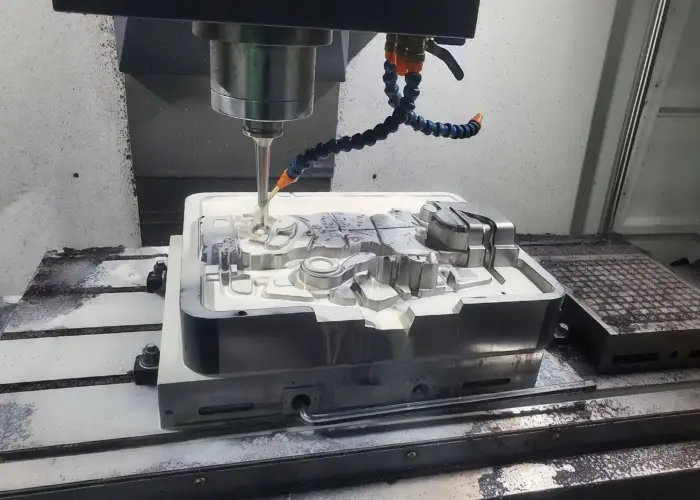
Corrosion Resistance of 6082 Aluminium
6082 offers good corrosion resistance because it belongs to the 6000 series and contains magnesium and silicon. This makes it suitable for parts exposed to air, moisture, and general outdoor environments. It is also commonly used where structural strength and environmental durability are both required.
In marine-related applications, 6082 is often a better option than 7075 because it resists environmental degradation more effectively. It is suitable for ship equipment, outdoor frames, bridge structures, transport frames, and other components exposed to weather or humidity.
Surface treatments such as anodizing, powder coating, or painting can further improve the corrosion resistance and appearance of 6082 parts. For CNC machined components, anodizing is also often used to improve surface durability and provide a more consistent finish.
Corrosion Resistance of 7075 Aluminium
7075 has lower corrosion resistance than 6082 because of its high zinc and copper content. These elements improve strength, but they also make the alloy more vulnerable in corrosive environments.
This does not mean 7075 cannot be used outdoors or in demanding industries. It means the part design should consider protective treatments. Anodizing, hard coating, painting, or other protective finishes are often used to reduce corrosion risk.
For aerospace and racing parts, 7075 is often selected because strength is more important than natural corrosion resistance. However, if the part will face salt spray, marine moisture, or long-term outdoor exposure, the surface finish and maintenance requirements should be carefully reviewed.
Weldability Comparison
6082 is much easier to weld than 7075. It can be welded using common methods such as TIG or MIG welding, although the heat-affected zone may lose some strength and may require post-weld treatment depending on performance requirements.
7075 is generally considered poor for welding because its high zinc content makes it prone to hot cracking. Even if special welding methods are used, the welded area may not provide reliable performance for demanding structural applications.
For this reason, 7075 parts are often assembled by mechanical fastening, riveting, bolting, adhesive bonding, or precision CNC machining from solid billet instead of welding. If welding is required, 6082 is usually the safer material choice.
Suitability for Marine and High-Stress Applications
For marine or outdoor structural parts, 6082 is usually more suitable because it combines good corrosion resistance, weldability, and structural strength. It can be used for frames, platforms, supports, ship equipment, and outdoor mechanical structures.
For high-stress applications, 7075 is usually more suitable because it offers much higher strength and excellent strength-to-weight performance. It is used in aerospace, racing, high-end sports equipment, high-load brackets, and precision mechanical parts.
If the application is both high-stress and corrosive, the decision becomes more complex. In that case, 7075 may still be chosen for strength, but protective finishing and careful design are necessary. If corrosion and welding are more important than maximum strength, 6082 is usually the more reliable choice.
What Are Their Machining Methods And Performance?
Both 6082 and 7075 can be processed using standard CNC machining methods, but their performance varies significantly depending on the process. 6082 is easier to machine, more forgiving, and better suited for structural and cost-sensitive parts, while 7075 delivers superior strength and precision but requires stricter machining control, higher tool quality, and optimized cutting conditions.
CNC Milling
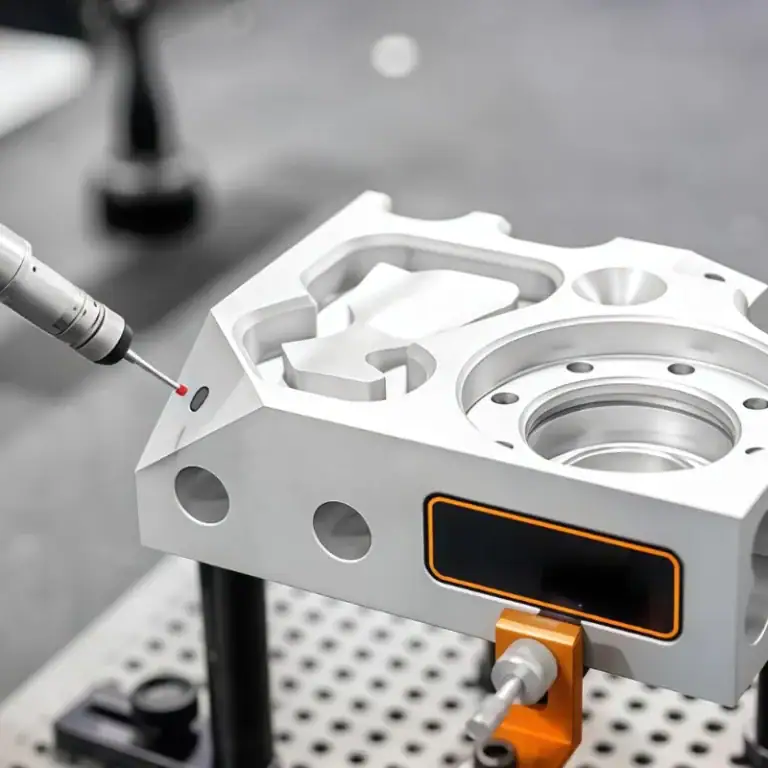
CNC milling is the primary machining method for both alloys, especially for plates, housings, brackets, and complex geometries.
- 6082 Aluminium
- Lower hardness (~HB 90–100) enables easier cutting
- Lower cutting forces reduce spindle load and vibration
- Better for roughing and medium-precision machining
- Suitable for large structural parts and welded assemblies
- 7075 Aluminium
- Higher hardness (~HB 140–160) improves dimensional stability
- Produces shorter, more controlled chips
- Requires coated carbide or high-performance tooling
- Better suited for tight tolerances (±0.01 mm or better)
Typical machining comparison:
| Parameter | 6082 | 7075 |
| Cutting speed | Higher | Moderate |
| Tool wear | Low | Medium to high |
| Surface finish stability | Good | Excellent (with control) |
| Machining difficulty | Easy | Moderate |
In milling operations, 6082 allows higher feed rates and faster cycle times, while 7075 requires optimized parameters but delivers better performance in precision parts.
5-Axis CNC Machining For Complex Parts
5-axis CNC machining is critical for complex geometries, multi-angle features, and lightweight structural designs.
- 6082 Aluminium
- Stable for large-scale components
- Lower cutting resistance improves tool life
- Suitable for complex but lower-stress parts
- Less risk of deformation during machining
- 7075 Aluminium
- Ideal for high-strength, lightweight structures
- Common in aerospace brackets, robotic arms, and fixtures
- Better performance in thin-wall designs (<2 mm)
- Requires rigid fixturing and vibration control
In 5-axis machining, 7075 is preferred for performance-critical parts where both geometry complexity and mechanical strength are required.
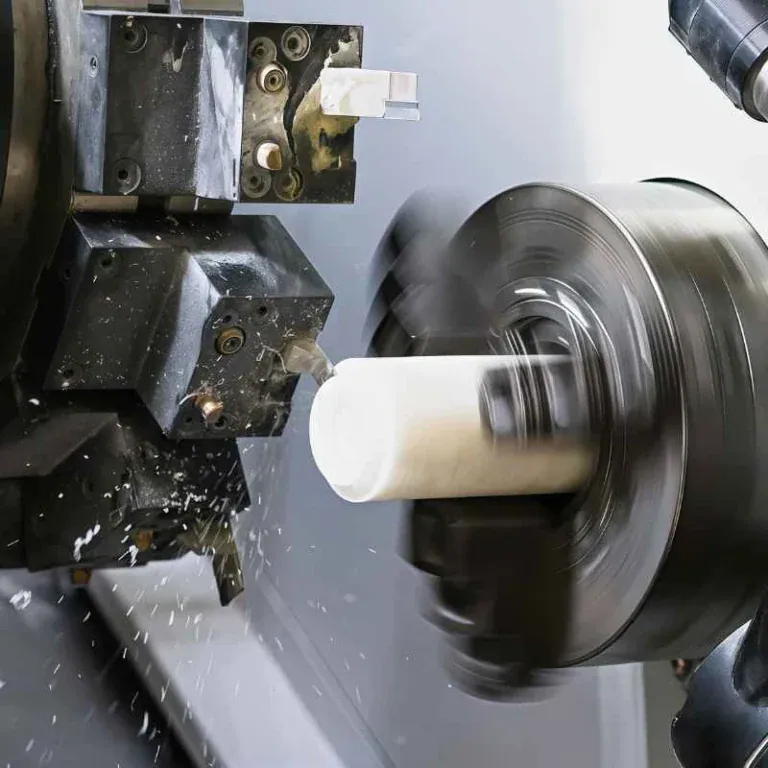
CNC Turning
CNC turning is used for rotational parts such as shafts, bushings, threaded components, and spacers.
- 6082 Aluminium
- Smooth cutting behavior with continuous chips
- Suitable for medium-load rotational components
- Lower machining cost in batch production
- 7075 Aluminium
- Higher strength improves load-bearing capacity
- Better for precision shafts and high-stress parts
- Slightly higher tool wear due to hardness
Typical applications:
- 6082 → spacers, housings, general shafts
- 7075 → high-load shafts, aerospace fasteners, precision bushings
Both alloys machine well in turning, but 7075 is preferred when mechanical performance and fatigue resistance are critical.
Tool Wear, Cutting Conditions, And Surface Finish
Tool wear and cutting stability are key differences between these alloys.
- 6082 Aluminium
- Lower hardness reduces abrasive wear
- Allows higher cutting speeds (up to ~300–600 m/min depending on tooling)
- More stable for long production runs
- Lower tooling cost
- 7075 Aluminium
- Higher hardness increases tool wear and heat generation
- Requires optimized parameters:
- Lower cutting speed
- Controlled feed rate
- Efficient coolant application
- Tool coatings (TiAlN, DLC) recommended
Surface finish considerations:
Both materials can achieve Ra 0.8–1.6 μm or better, but results depend on:
- Tool geometry and coating
- Cutting strategy
- Material condition (T6, T651)
- Post-processing
7075 typically produces sharper edges and better edge definition, while 6082 is more forgiving but may produce slight burrs if parameters are not optimized.
Forming And Joining
Forming and joining performance strongly influence manufacturing method selection.
- 6082 Aluminium
- Good ductility (~8–12%)
- Suitable for bending, forming, and fabrication
- Excellent weldability (TIG/MIG)
- Ideal for hybrid manufacturing (machining + welding)
- 7075 Aluminium
- Lower ductility (~5–11%)
- Prone to cracking during forming
- Poor weldability due to hot cracking sensitivity
- Typically used as fully machined components
This makes 6082 more suitable for structural assemblies, while 7075 is better for monolithic (one-piece) machined parts.
Welding, Riveting, And Assembly Considerations
Joining method selection is critical in early design stages.
- 6082
- Weldable using conventional methods
- Strength reduction in heat-affected zone (HAZ) may occur
- Post-weld heat treatment may be required
- Suitable for frames, supports, and fabricated assemblies
- 7075
- Not recommended for welding
- Hot cracking risk due to high Zn and Cu content
- HAZ strength loss can exceed 30–50%
- Preferred assembly methods:
- Bolting
- Riveting
- Threaded inserts
- Adhesive bonding
For CNC machined assemblies:
- Both alloys support:
- Tapping
- Drilling
- Countersinking
- Additional design considerations for 7075:
- Minimum thread engagement ≥1.5× diameter
- Avoid sharp internal corners to reduce stress concentration
- Reinforce thin-wall sections under load
Practical Machining Selection Summary
| Requirement | Recommended Alloy |
| Cost-efficient CNC machining | 6082 |
| Welded or fabricated structures | 6082 |
| High-speed machining | 6082 |
| High-strength precision parts | 7075 |
| Thin-wall complex geometry | 7075 |
| Aerospace or high-load applications | 7075 |
| Hybrid manufacturing (machining + welding) | 6082 |
| One-piece high-performance components | 7075 |
What Are Their Typical Applications?
6082 is typically used in structural, marine, transport, construction, and general engineering applications, while 7075 is typically used in aerospace, racing, high-performance automotive, tooling, and high-stress CNC machined components. The best choice depends on whether your project values corrosion resistance and weldability or maximum strength and lightweight performance.
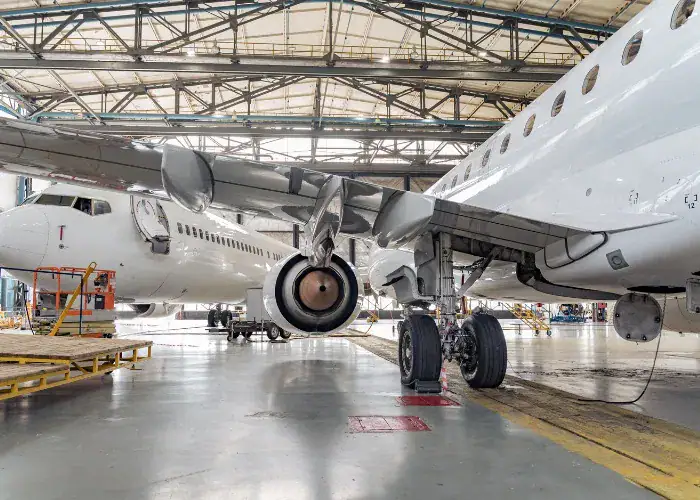
Aerospace Applications
7075 is commonly used in aerospace because it offers very high strength and a strong strength-to-weight ratio. It is suitable for aircraft fittings, structural brackets, high-load components, and other parts where weight reduction and strength are critical.
6082 may also appear in aerospace-related support parts or less critical structures, but it is not usually the first choice when maximum strength is required. Its main advantage is easier fabrication and better corrosion resistance.
For aerospace CNC machining, 7075 is often chosen when the part is machined from solid material and does not require welding. Surface protection and inspection requirements should be confirmed early because aerospace parts often require strict control over material certificates, tolerances, and finishes.
Automotive Applications
In automotive applications, 6082 is useful for structural frames, brackets, supports, and components that require good machinability and corrosion resistance. It can also be used for parts that may need welding or assembly into larger systems.
7075 is more suitable for racing and high-performance automotive components. Examples include suspension parts, wheel hubs, lightweight brackets, motorsport components, and high-strength custom machined parts.
For normal automotive production, 6082 can be more cost-effective. For performance vehicles, racing, or lightweight upgrades, 7075 may justify its higher cost because it can provide better strength at a similar weight.
Marine Applications
6082 is generally better for marine applications because it has stronger natural corrosion resistance than 7075. It is suitable for ship equipment, marine frames, outdoor structural parts, and components exposed to humid or coastal environments.
7075 is not usually preferred for direct marine exposure unless protective coatings are used. Its high strength can be valuable, but corrosion protection must be considered carefully.
If the part will face salt spray, seawater, or long-term outdoor moisture, 6082 is usually the safer first choice. If 7075 is required for strength, anodizing, coating, sealing, or another protective finish should be specified.
Construction and General Engineering Applications
6082 is widely used in construction and general engineering because it combines structural strength, corrosion resistance, weldability, and good availability. It is suitable for frames, bridges, platforms, supports, machine structures, and transport equipment.
7075 is less common in construction because its higher cost and poor weldability are usually not necessary for large fabricated structures. It is more likely to be used in smaller high-load components rather than large welded assemblies.
For general CNC machining, 6082 is often the more practical material. It is easier to machine, easier to source, more cost-effective, and suitable for many industrial components that do not require the highest aluminium strength.
High-Strength vs Corrosion-Resistant Scenarios
The choice between high strength and corrosion resistance is the core decision in aluminium 6082 vs 7075. If the part must handle high load and weight reduction is important, choose 7075. If the part must survive moisture, welding, and structural fabrication, choose 6082.
| Industry / Scenario | Recommended Alloy | Reason |
| Semiconductor equipment frames | 6082 | Good stability, machinability, and corrosion resistance |
| Automation components | 6082 or 7075 | 6082 for structures, 7075 for high-load moving parts |
| Industrial equipment | 6082 | Cost-effective and suitable for structural machining |
| Electronics housings | 6082 | Easier machining and surface finishing |
| Robotics components | 7075 | Better for lightweight, high-strength arms or brackets |
| Aerospace parts | 7075 | High strength-to-weight ratio |
| Medical device fixtures | 6082 or 7075 | Depends on load, finish, and weight requirements |
| Automotive parts | 6082 or 7075 | 6082 for general parts, 7075 for racing or high-stress parts |
| Marine equipment | 6082 | Better corrosion resistance and weldability |
| Consumer products | 6082 | Better cost control and easier manufacturing |
How Do Costs and Benefits Compare Between 6082 and 7075?
6082 is usually more cost-effective and easier to process, while 7075 is more expensive but offers much higher strength. If a project does not require the maximum strength of 7075, 6082 can reduce material cost, machining difficulty, and fabrication risk. If the part must be lightweight and highly loaded, 7075 may deliver better long-term performance despite the higher price.
Material and Manufacturing Costs
7075 usually costs more than 6082 because it contains higher levels of zinc, magnesium, and copper, and it is often used for more specialized high-strength applications. It may also require more controlled machining and protective surface treatment.
6082 is generally more available and cost-effective for structural and general engineering use. It is easier to weld, easier to fabricate, and usually less demanding during production.
For CNC machining, the final cost is not only material price. It also depends on part geometry, tolerance, surface finish, batch size, tooling, machining time, and inspection requirements. A simple 7075 part may still be economical, but a complex high-precision 7075 part can become much more expensive.
Performance Benefits
The main benefit of 6082 is balanced performance. It offers good strength, good corrosion resistance, weldability, and practical manufacturability. This makes it suitable for many industrial and structural applications.
The main benefit of 7075 is high strength. It is one of the strongest aluminium alloys used in commercial engineering applications and can replace heavier materials in certain lightweight structural designs.
The benefit comparison is not about which alloy is “better” overall. It is about which alloy gives the best performance for the actual working environment, load condition, manufacturing method, and budget.
Key Considerations for Selection
Before choosing 6082 or 7075, the designer should confirm the part’s load, environment, joining method, surface treatment, tolerance, and production quantity.
Choose 6082 when:
- The part needs good corrosion resistance.
- Welding or fabrication is required.
- The project needs a cost-effective structural alloy.
- The part will be used outdoors, in marine environments, or in general engineering.
- Medium-to-high strength is enough.
Choose 7075 when:
- The part needs very high strength.
- Weight reduction is important.
- Welding is not required.
- The part will be CNC machined from billet or plate.
- Aerospace, racing, robotics, or high-load performance is the main concern.
Which Aluminium Alloy Should You Choose?
You should choose 6082 if your project needs corrosion resistance, weldability, easier fabrication, and lower cost. You should choose 7075 if your project needs maximum strength, excellent strength-to-weight ratio, and high performance under stress. For most welded structures and marine parts, 6082 is better, for aerospace and racing parts, 7075 is usually the better choice.
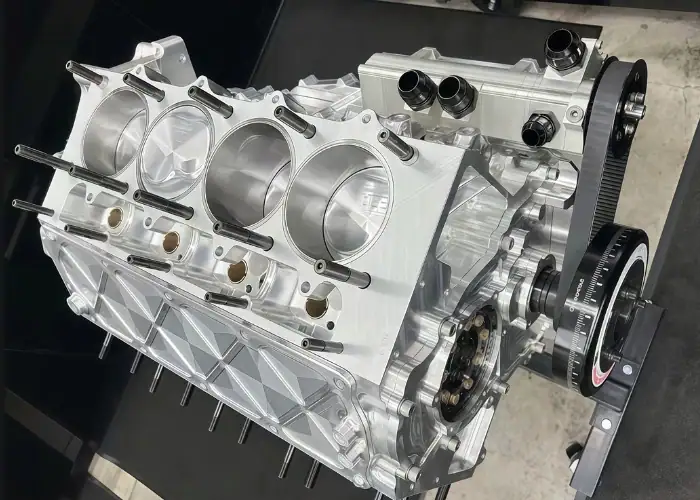
Selection Guidelines Based on Application Needs
The easiest way to choose between 6082 and 7075 is to start with the part’s function. If the part mainly supports a structure, resists corrosion, or needs welding, 6082 is often the right choice. If the part mainly carries high mechanical loads while staying lightweight, 7075 is stronger.
| Project Requirement | Recommended Alloy |
| Welded frame or structure | 6082 |
| Marine or outdoor exposure | 6082 |
| Cost-effective CNC machined part | 6082 |
| High-strength aerospace bracket | 7075 |
| Racing or high-performance automotive part | 7075 |
| Lightweight robotic arm or link | 7075 |
| Large structural fabrication | 6082 |
| High-load machined fixture | 7075 |
| General industrial component | 6082 |
| Part requiring anodizing and high strength | 7075, with finish review |
Expert Recommendations and Practical Tips
If both alloys seem possible, start by checking whether welding is required. If yes, 6082 is usually the safer option. 7075 should normally be avoided for welded structures because it is prone to cracking and strength loss during welding.
Next, check the service environment. If the part will face moisture, salt spray, or outdoor exposure, 6082 is usually more reliable unless 7075 is protected with a suitable surface finish.
Finally, review the real strength requirement. Many projects do not need the maximum strength of 7075. In these cases, 6082 can provide enough strength while keeping machining, fabrication, and material costs more manageable.
FAQs
What Is Aluminium 6082 Equivalent To?
Aluminium 6082 is broadly equivalent to alloys like 6061 in the 6xxx series, offering similar Mg-Si strengthening mechanisms. Typical tensile strength ranges from ~290–340 MPa (T6), with good corrosion resistance and weldability. In European standards, 6082 is often preferred for structural applications, while 6061 is more common in the US, but their performance overlap is significant.
What Is Another Name For 7075 Aluminum?
Another common designation for 7075 aluminum is EN AW-7075 under European standards, or UNS A97075 in the Unified Numbering System. It is also frequently referred to as “aircraft-grade aluminum” due to its high strength-to-weight ratio (~570 MPa tensile strength) and widespread use in aerospace and high-performance engineering applications.
Why Can’t 7075 Be Welded?
7075 aluminum cannot be reliably welded because its high zinc (~5–6%) and copper (~1–2%) content makes it highly susceptible to hot cracking during solidification. The heat-affected zone (HAZ) also experiences significant strength loss, sometimes over 30–50%. As a result, mechanical fastening or machining from solid is typically preferred over welding.
Conclusion
Aluminium 6082 and 7075 are both widely used, but they are not interchangeable. 6082 is usually the better choice for corrosion resistance, weldability, and cost-effective structural parts, while 7075 is better for high-strength, lightweight, and high-load applications.Choosing the right alloy early affects not only performance, but also machining, finishing, and total cost.
At TiRapid, we help you select the right material based on your application. Share your drawings or requirements, and we’ll support the best-fit solution for your project.